Gentle Movement for Anxiety-Related Pain
Gentle movement for anxiety-related pain can feel confusing.
When pain and anxiety overlap, many people worry that moving will make things worse.
At the same time, complete rest often leads to stiffness, increased sensitivity, and more fear around normal sensations.
This article explains why gentle movement helps calm both pain and anxiety—and how to approach it without pushing, forcing, or ignoring your body.
Why Anxiety Changes How Movement Feels
Anxiety puts the nervous system on high alert. In this state:
- Muscles stay slightly tense
- Pain signals are amplified
- The brain watches movement closely for danger
Because of this, even safe movements can feel uncomfortable or threatening.
This doesn’t mean damage is occurring. It means the nervous system is being protective.
Understanding this context helps movement feel less scary.
Why Avoidance Often Makes Pain Louder
When pain triggers anxiety, it’s natural to reduce activity. In the short term, this can feel helpful.
Over time, however, avoidance can lead to:
- Increased stiffness
- Reduced confidence in the body
- Heightened pain sensitivity
- Stronger fear responses
The nervous system learns from experience.
If movement is avoided repeatedly, the brain may label it as dangerous—even when tissues are safe.
This pain–fear cycle is explored more broadly on the Beyond Pain Relief homepage:
👉 https://beyond-pain-relief.com/
What “Gentle Movement” Actually Means
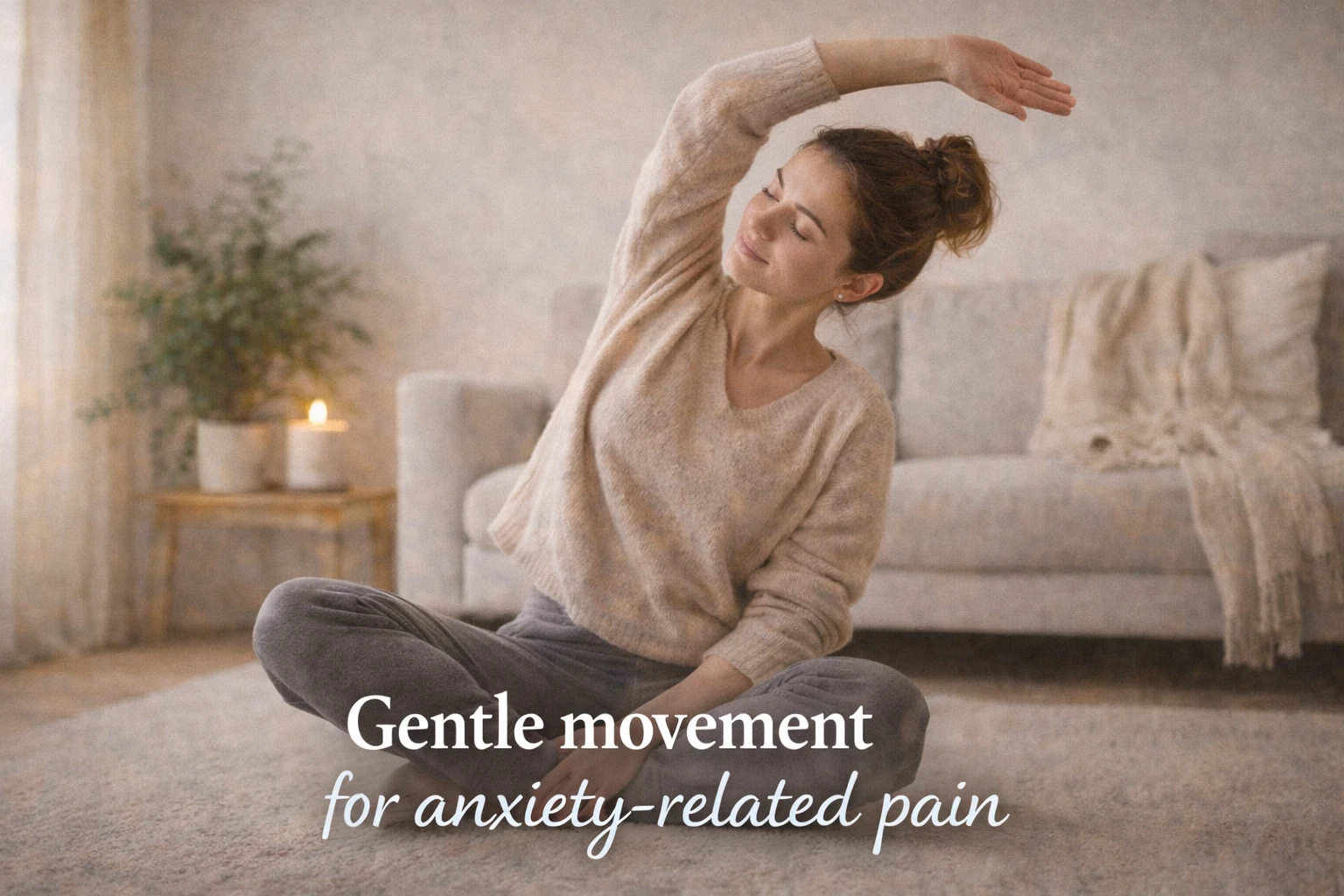
Gentle movement is not exercise in the traditional sense. It is movement used as reassurance.
Examples include:
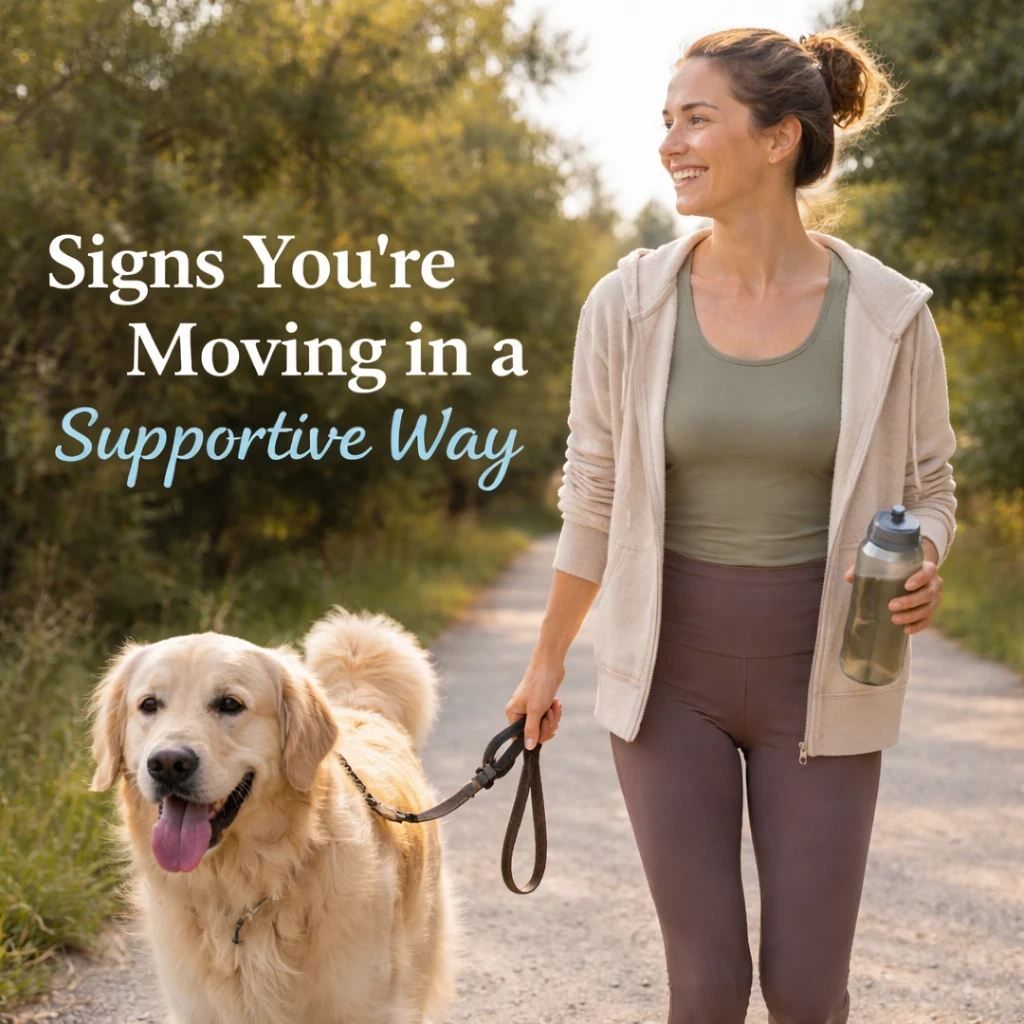
- Short, relaxed walks
- Light stretching without forcing range
- Everyday tasks done slowly and mindfully
- Changing positions regularly
The goal is to send the message: movement is safe. Performance and intensity do not matter.
Movement as Nervous System Reassurance
When movement stays within comfortable limits, it can:
- Reduce muscle guarding
- Improve circulation
- Lower pain sensitivity over time
- Build confidence in the body
This approach works best when movement is paired with calm breathing and a relaxed mindset, rather than effort or determination.
The relationship between movement load and pain sensitivity is explained in detail here:
👉 https://beyond-pain-relief.com/movement-load-and-pain-sensitivity/
Pacing: Doing Less Than You Think You Can
One of the most helpful strategies for anxiety-related pain is pacing.
Pacing means:
- Stopping before pain or anxiety spikes
- Leaving some energy in reserve
- Repeating small amounts consistently
This helps prevent flare-ups and teaches the nervous system that activity doesn’t automatically lead to danger.
Signs You’re Moving in a Supportive Way
Gentle movement is likely appropriate if:
- Pain settles shortly after you stop
- Anxiety decreases rather than increases
- Confidence slowly improves over days or weeks
Movement that leaves you tense, fearful, or flared for long periods may be too much for now.
When Movement Feels Hard Mentally
On anxious days, the hardest part is often starting. Helpful approaches include:
- Breaking movement into very small steps
- Focusing on how the body feels after, not during
- Pairing movement with calming cues like music or breathing
Progress does not need to be linear to be meaningful.
Reducing Back Strain Helps Movement Feel Easier
Movement is easier when the body isn’t under constant physical stress. Simple changes can help:
- Using supportive seating
- Adjusting desk or screen height
- Reducing prolonged static postures
Lowering daily strain gives the nervous system more capacity to tolerate movement.
You can explore this aspect here:
👉 https://beyond-pain-relief.com/ergonomic-office-chairs-for-back-pain-relief/
A Reassuring Perspective
Gentle movement for anxiety-related pain is not about fixing pain through exercise.
What it does mean though is building up that trust again between your brain and your body.
Some days will feel easier than others. That’s normal.
What matters most is consistency, reassurance, and patience—not pushing through discomfort.
How This Supports the Pillar Page
This article supports the pillar Pain Relief Techniques for Anxiety by showing how movement can calm pain rather than aggravate it.
When fear reduces, the nervous system often becomes less sensitive—and pain can gradually soften.
Reference
https://pmc.ncbi.nlm.nih.gov/articles/PMC3721087/