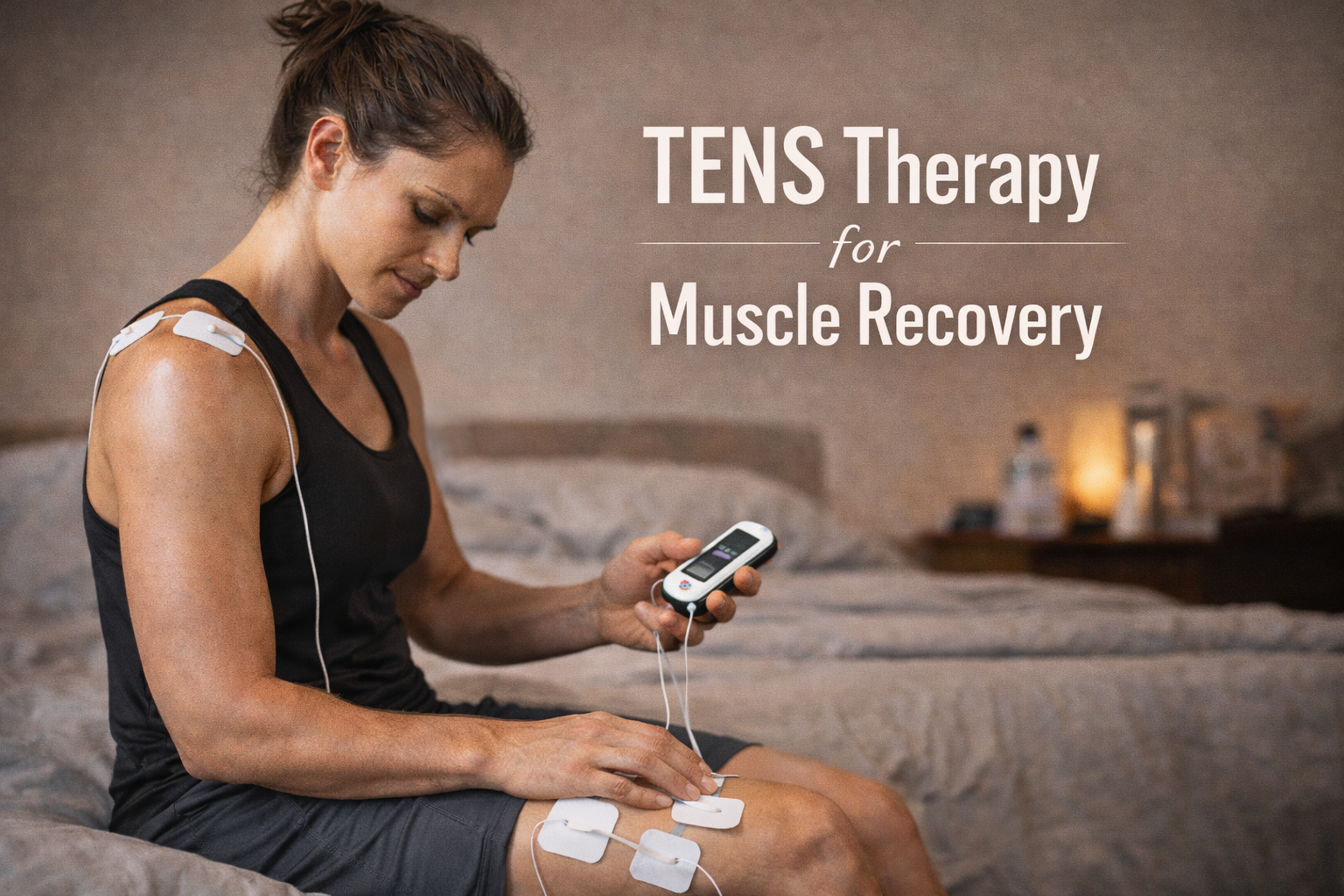
TENS Therapy For Muscle Recovery TENS Therapy For Muscle Recovery
TENS Therapy for Muscle Recovery
TENS therapy for muscle recovery is becoming a popular option for people looking to reduce soreness, improve circulation, and support recovery after exercise or physical strain.
It is simple to use, non-invasive, and often used at home as part of a broader recovery routine.
For people dealing with tight muscles, post-workout fatigue, or general muscle discomfort, TENS may offer a practical way to ease pain and improve comfort without relying only on medication.
Quality Assured Tens Therapy Devices Shop Here
What Is TENS Therapy?
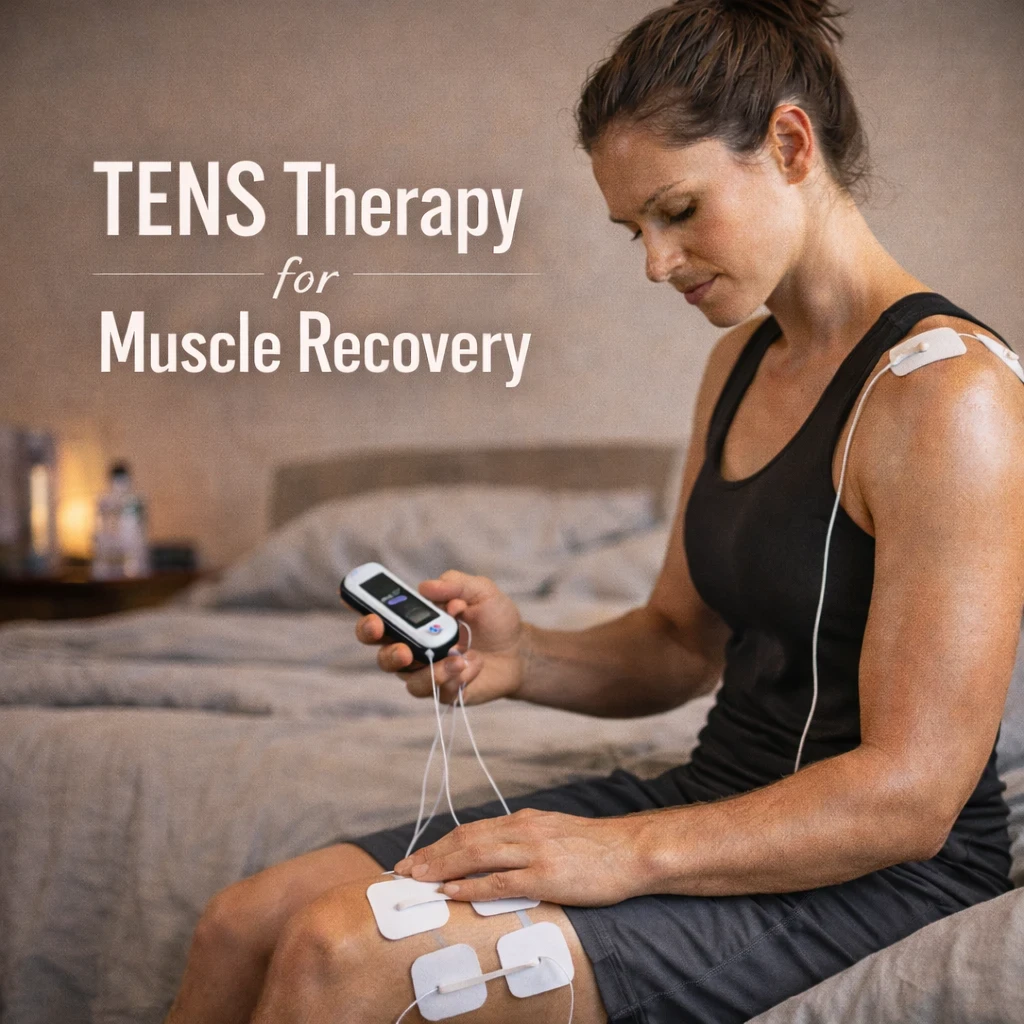
TENS stands for transcutaneous electrical nerve stimulation. It uses a small device that sends gentle electrical pulses through pads placed on the skin.
These pulses help influence pain signals and may encourage the release of the body’s natural pain-relieving chemicals.
If you want a broader introduction, you can read more about what TENS therapy does for pain relief.

How TENS Therapy for Muscle Recovery May Help
TENS therapy is often used because it may support relief in a few different ways at once.
It can help reduce discomfort, relax tight muscles, and make recovery feel more manageable after training or heavy physical work.
Possible benefits include:
Reduced soreness after exercise
Relief from muscle tightness
Better comfort during recovery days
Support for normal movement
A non-drug option for recovery support

Many people also use it alongside stretching, hydration, massage, and rest.
When to Use TENS Therapy for Muscle Recovery
Timing can make a difference. TENS therapy for muscle recovery is often used after activity rather than before it.
This is when muscles may feel tired, tense, or sore.
Common times to use it include:
After gym sessions
After sports or running
After long work shifts
During recovery from muscle strain
On rest days when muscles still feel tight
Some people use short sessions once or twice daily depending on their comfort and needs.
Best Areas to Use It
TENS therapy for muscle recovery may be used on several muscle groups, depending on where soreness or tightness shows up most.
Popular areas include:
Shoulders
Upper back
Lower back
Thighs
Hamstrings
Calves
Forearms
The pads should usually be placed around the sore muscle area rather than directly over a joint.
Always follow the instructions that come with the device.
What TENS Therapy Can and Cannot Do
It helps to stay realistic. TENS therapy can be a useful supportive tool, but it is not a magic fix.
What it may do:
Ease soreness
Reduce pain signals
Help muscles relax
Support a recovery routine
What it cannot do:
Instantly heal damaged tissue
Replace sleep and hydration
Fix serious injuries on its own
Take the place of medical advice when symptoms are severe
That balanced view is important if you want to use it well.

Choosing the Right TENS Unit
A reliable device can make TENS therapy for muscle recovery easier and more comfortable to use.
Shop Quality Assured Here.
Not every model is the same, so useful features matter.
Look for:
Adjustable intensity
Multiple pulse modes Easy controls
Reusable pads
Portable design
Rechargeable battery If you are comparing options, this guide on buying a TENS unit for home use is a good place to start.
Tips to Get Better Results
Using TENS therapy properly often makes a real difference.
A few simple habits can improve comfort and results.
Try these tips:
Start with a lower setting
Increase intensity gradually
Keep the skin clean before pad placement
Stay relaxed during the session
Use it consistently instead of only once in a while
Combine it with gentle stretching and hydration It also helps to avoid overdoing exercise while sore muscles are still recovering.
TENS Therapy as Part of a Bigger Recovery Plan On its own, TENS therapy can be useful.
But it often works best when it is part of a broader recovery plan.
That might include:
Rest
Light movement
Mobility work
Foam rolling
Good sleep Enough protein and fluids
For a wider look at where it fits into pain support, see TENS therapy for pain relief.
What Research Suggests
Research suggests TENS may help with short-term pain relief and comfort, especially when used correctly and consistently.
It is commonly studied for pain modulation rather than direct tissue repair, which is why it is usually seen as a supportive recovery tool rather than a full treatment by itself.
External study: PubMed study on TENS and pain relief
Final Thoughts
TENS therapy products can be a useful option for people who want a simple and drug-free way to manage post-activity soreness and muscle tension.
It may not solve every recovery problem, but it can support comfort, movement, and day-to-day relief when used properly.
For many people, the best results come from combining it with rest, hydration, stretching, and sensible training habits.

Frequently Asked Questions
What is TENS therapy for muscle recovery used for?
TENS therapy for muscle recovery is mainly used to reduce muscle soreness, ease tension, and improve comfort after physical activity.
It is often used after exercise, sports, or long periods of physical work.
How often should I use TENS therapy for muscle recovery?
Many people use TENS therapy for muscle recovery once or twice a day for short sessions, often around 15 to 30 minutes.
It depends on comfort, device instructions, and the level of soreness.
Can TENS therapy help with delayed onset muscle soreness?
Yes, TENS therapy for muscle recovery may help reduce the discomfort linked to delayed onset muscle soreness by easing pain signals and helping muscles relax.
Where should I place the pads?
When using TENS therapy for muscle recovery, place the pads around the sore muscle area rather than directly on the joint itself.
Always follow the device instructions for safe placement.
Is TENS therapy safe to use every day?
For many people, TENS therapy for muscle recovery is safe for regular use when used correctly.
However, it should be avoided in certain situations, such as over broken skin or by people with pacemakers unless medically advised.
Can TENS therapy speed up healing?
TENS therapy for muscle recovery may support comfort and circulation, but it does not directly repair muscle tissue.
It works best as part of a full recovery plan.
What intensity should I use?
Start low and increase slowly. With TENS therapy for muscle recovery, the feeling should be noticeable but comfortable, not sharp or painful.
Can I combine TENS therapy with stretching or massage?
Yes, TENS products for recovery is often used alongside stretching, massage, mobility work, and hydration for better overall recovery support.