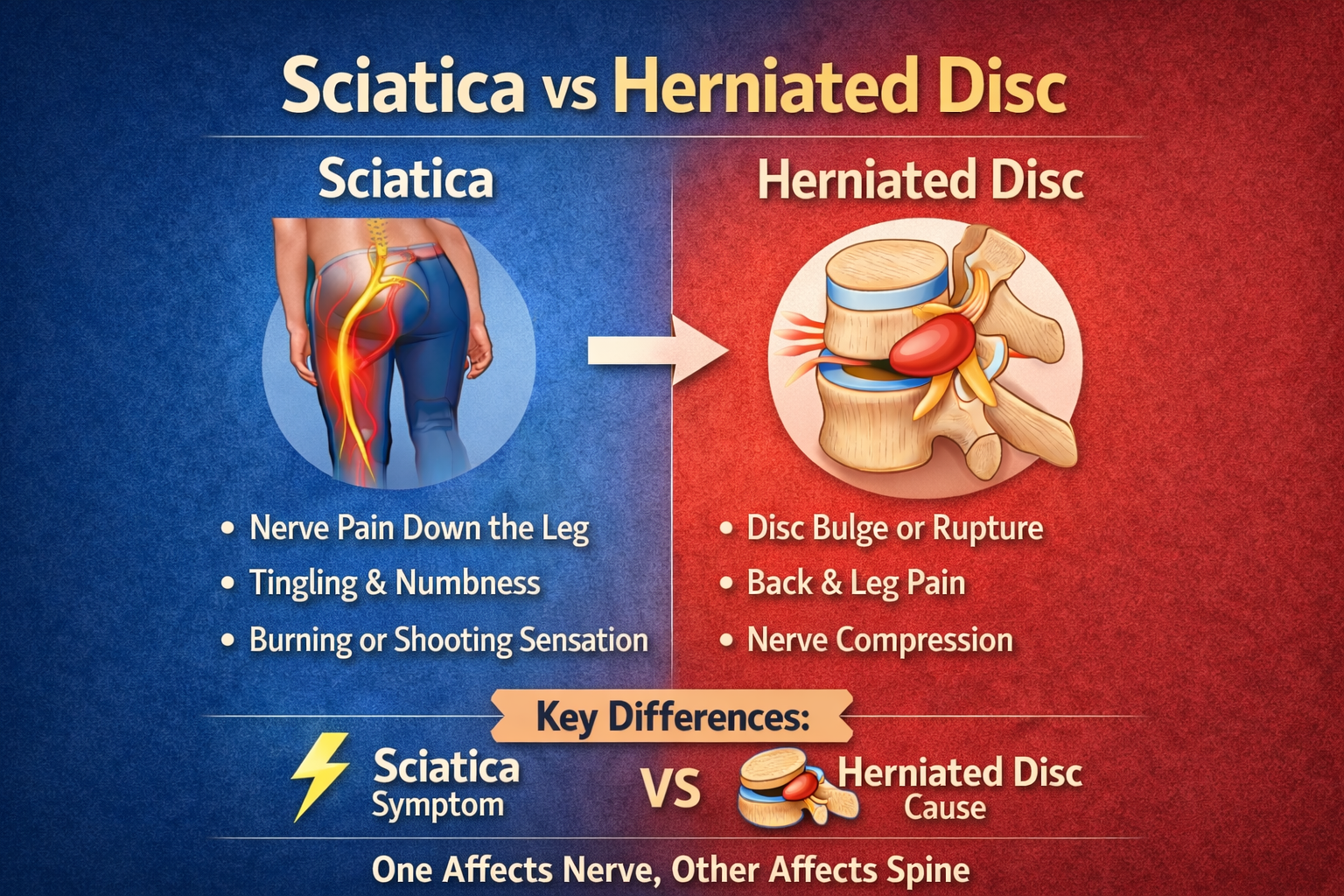
Sciatica Vs Herniated Disc: What’s The Difference And Why
Sciatica vs Herniated Disc
Sciatica vs herniated disc is a common comparison people search for when trying to understand back and leg pain.
While the two are closely related, they are not the same thing.
Knowing the difference can help you make better decisions about treatment, recovery, and long-term pain management.
In simple terms, one describes a symptom pattern, while the other is a specific structural problem in the spine.
What Is Sciatica vs Herniated Disc? (Simple Explanation)
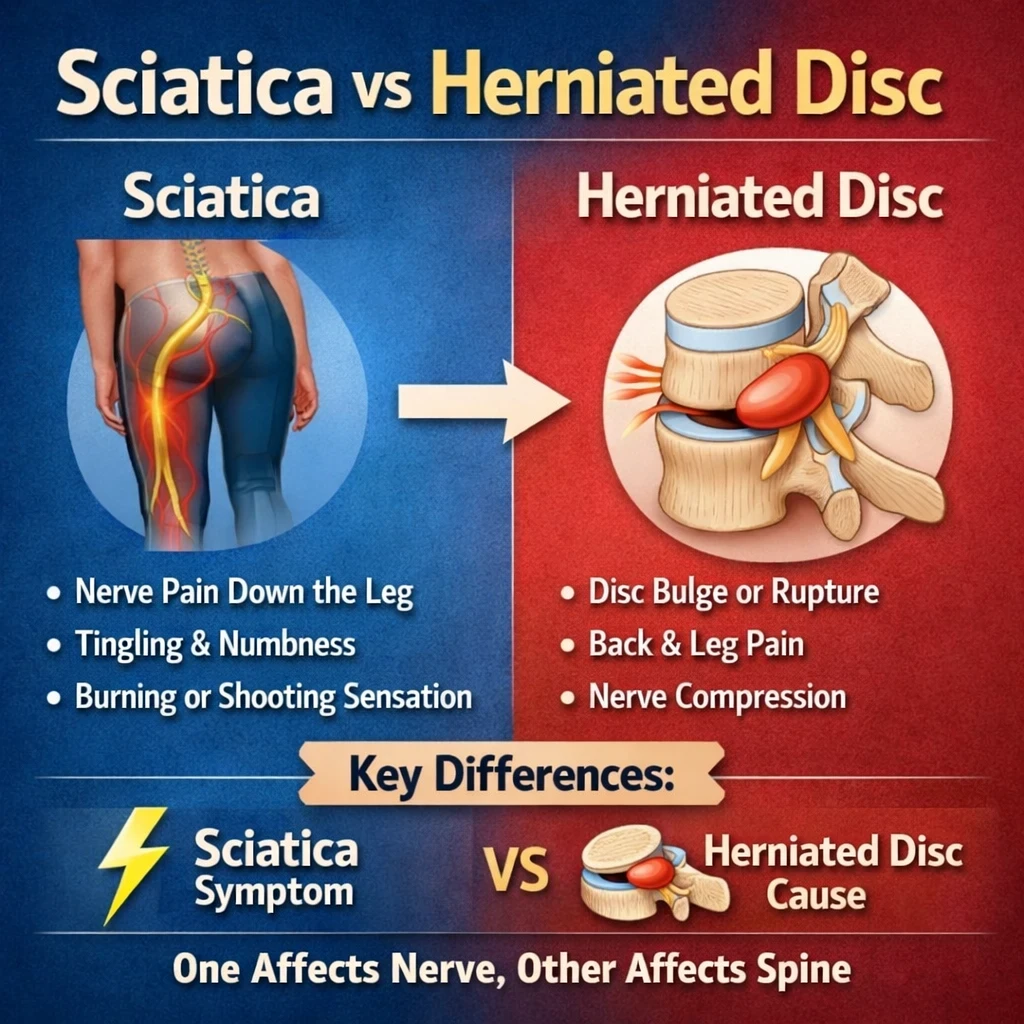
When looking at sciatica compared to a herniated disk it helps to break it down clearly.
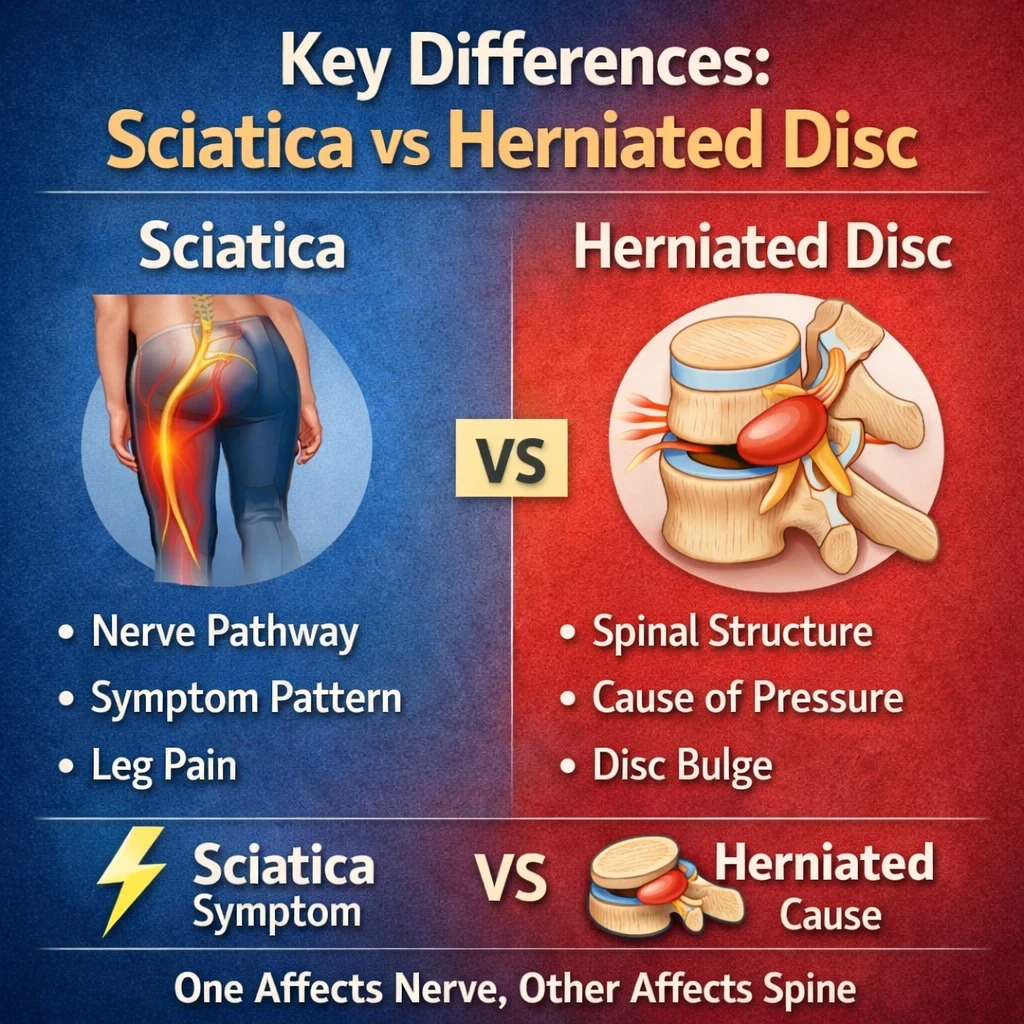
Sciatica refers to nerve pain that travels along the sciatic nerve, while a herniated disc is a structural issue where a spinal disc bulges or ruptures.
Understanding sciatica compared to a herniated disc matters because one can exist without the other, even though they often overlap.
What Is Sciatica?
Sciatica describes irritation or compression of the sciatic nerve.
Common symptoms include:
Sharp or burning pain in one leg Tingling or “pins and needles”
Numbness in the lower body
Pain that worsens when sitting In the sciatica vs herniated disc comparison, sciatica is not a diagnosis—it is a symptom pattern linked to nerve irritation. —
What Is a Herniated Disc?
A herniated disc occurs when the inner gel of a spinal disc pushes through its outer layer.
This can lead to:
Localised lower back pain
Nerve compression
Reduced Pain that may radiate into the leg
In discussions around the difference between sciatica and/or a herniated disc the herniated disc is often the physical cause behind nerve pressure.
Key Differences Sciatica vs Herniated Disc
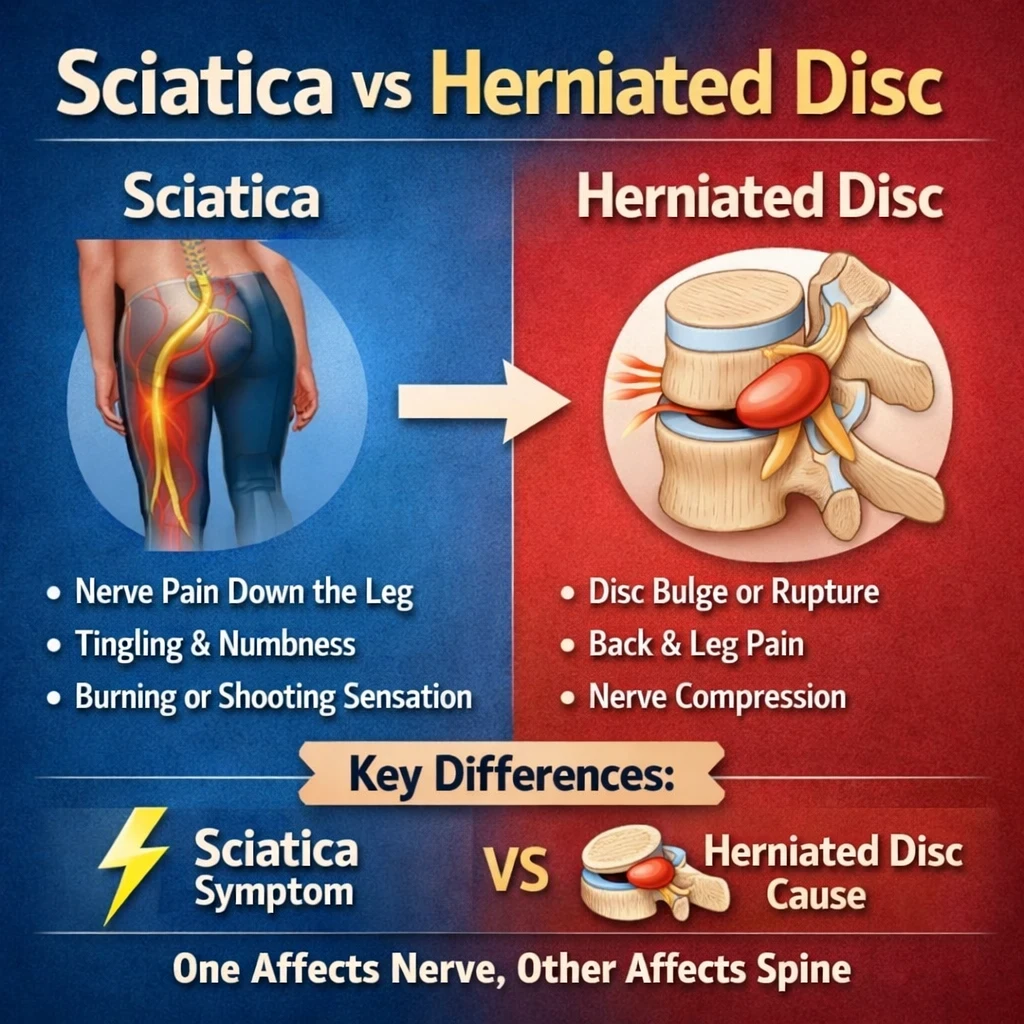
Understanding difference between sciatica and disc helps remove confusion.
Sciatica is a symptom
A herniated disc is a structural condition
Sciatica follows a nerve pathway
A herniated disc affects the spine
A herniated disc can trigger sciatica, but not all sciatica comes from a disc issue.
How They Are Connected
The relationship between sciatica and/or a herniated disc is where most overlap occurs.
A herniated disc can press on the sciatic nerve, causing inflammation and pain that travels down the leg.
This is one of the most common reasons people experience sciatica.
However, other causes can include muscle tightness or narrowing around the nerve.
That’s why difference between sciatica and disc issues should not be treated as identical conditions.
Symptoms Comparison: Sciatica vs Herniated Disc
Sciatica symptoms often include:
Radiating leg pain
Tingling or numbness
Electric shock-like sensations
Herniated disc symptoms may include:
Lower back stiffness
Pain when bending or lifting
Muscle weakness
In the sciatica vs herniated disc comparison, leg-dominant pain usually points toward sciatica, while localised back pain suggests a disc issue.
What Causes Sciatica vs Herniated Disc?
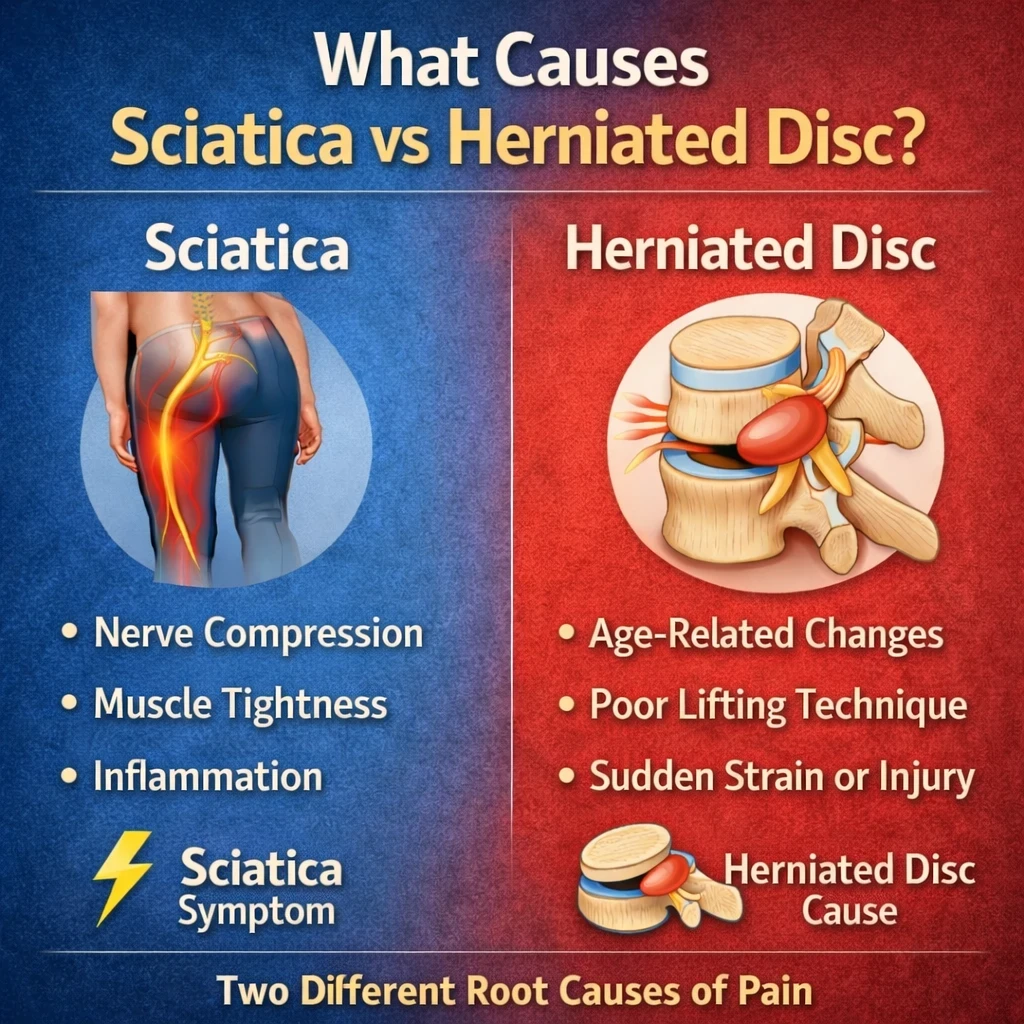
Sciatica is typically caused by nerve irritation, while a herniated disc develops due to structural stress on the spine.
Common contributors include:
Repetitive strain Poor lifting mechanics
Age-related disc changes
Understanding these causes helps clarify why sciatica compared to a herniated disc requires slightly different approaches.
Diagnosis How to Tell the Difference
A proper diagnosis is important when comparing sciatica vs herniated disc.
Healthcare professionals may use:
Physical assessment
Movement testing
Imaging such as MRI
Sciatica is usually identified through symptoms, while a herniated disc is confirmed through imaging.
Treatment Options: Sciatica vs Herniated Disc
Treatment often overlaps, but the focus can differ depending on the cause.
Gentle movement is one of the most effective starting points.
Structured routines like sciatica pain exercises for relief can help reduce nerve pressure and improve mobility.
Many people also explore natural remedies for sciatica to support recovery alongside movement and lifestyle changes.
In addition, some turn to herbs for sciatica pain relief as part of a broader approach to calming irritation and supporting the nervous system.
In the context of sciatica compared to a herniated disc the goal is not just symptom relief but reducing pressure on the nerve and improving overall function.
Recovery Time What to Expect
Recovery depends on severity and underlying cause.
Sciatica often improves within a few weeks, while a herniated disc may take longer depending on how much the disc is affecting nearby nerves.
This is why understanding sciatica compared to a herniated disc helps set realistic expectations for recovery.
When to Seek Help
You should seek medical advice if you experience:
Severe or worsening pain
Loss of bladder or bowel control
Progressive weakness
These may indicate a more serious issue linked to sciatica vs herniated disc.
What This Post Can and Can’t Tell You
What it can tell you:
The likely source of your pain Whether a nerve is involved
The direction of treatment
What it cannot tell you:
Exact recovery timelines
How your body will respond
Whether intervention will be needed
Practical Takeaway When thinking about sciatica vs herniated disc, remember:
Sciatica is a symptom
A herniated disc is a cause
They often overlap but are not the same
This simple understanding can make a big difference in how you approach recovery.
Frequently Asked Questions
Is sciatica always caused by a herniated disc?
No. Other factors like muscle tightness or narrowing around the nerve can also cause it.
Can you have a herniated disc without sciatica?
Yes. Some disc issues cause only local back pain.
Which is more painful: sciatica vs herniated disc?
Sciatica often feels more intense because nerve pain can travel down the leg.
Do both conditions improve naturally?
Many cases improve with time, movement, and supportive care.
Can exercise help both conditions?
Yes. Gentle, targeted movement is often beneficial.
Scientific Reference https://www.ncbi.nlm.nih.gov/books/NBK441822/