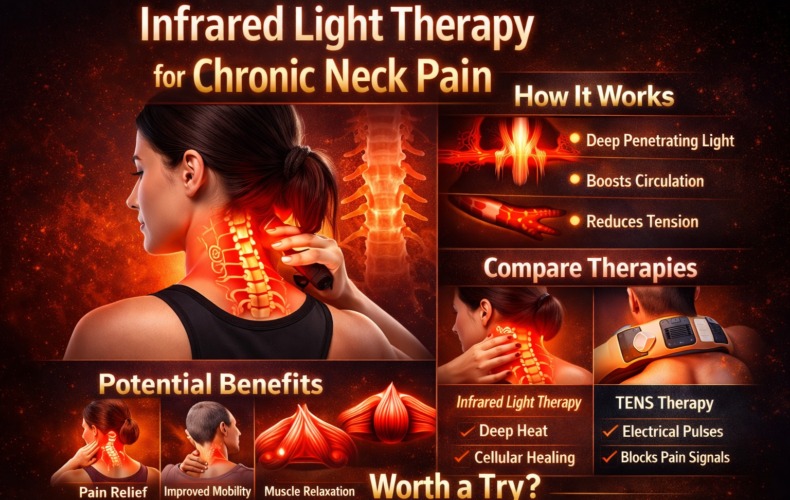
Infrared Light Therapy For Chronic Neck Pain How Therapy Like This Can Alleviate Pain
Infrared Light Therapy for Chronic Neck Pain
Infrared light therapy for chronic neck pain is gaining attention as a gentle, non-invasive option for people dealing with stiffness, tension, and long-term discomfort.
If you spend hours at a desk, struggle with poor posture, or wake up with a tight neck, this approach may be worth understanding.
This guide explains how it works, when it may help, and what to expect—so you can make an informed decision.

What Is Infrared Light Therapy?
Infrared light therapy uses specific wavelengths of light to penetrate beneath the skin and reach muscles, joints, and soft tissues.
Unlike surface heat, this light goes deeper, which is why many people consider infrared light therapy for chronic neck pain as a more targeted approach.
It is commonly used in handheld devices, wrap systems, and panels designed for home use.
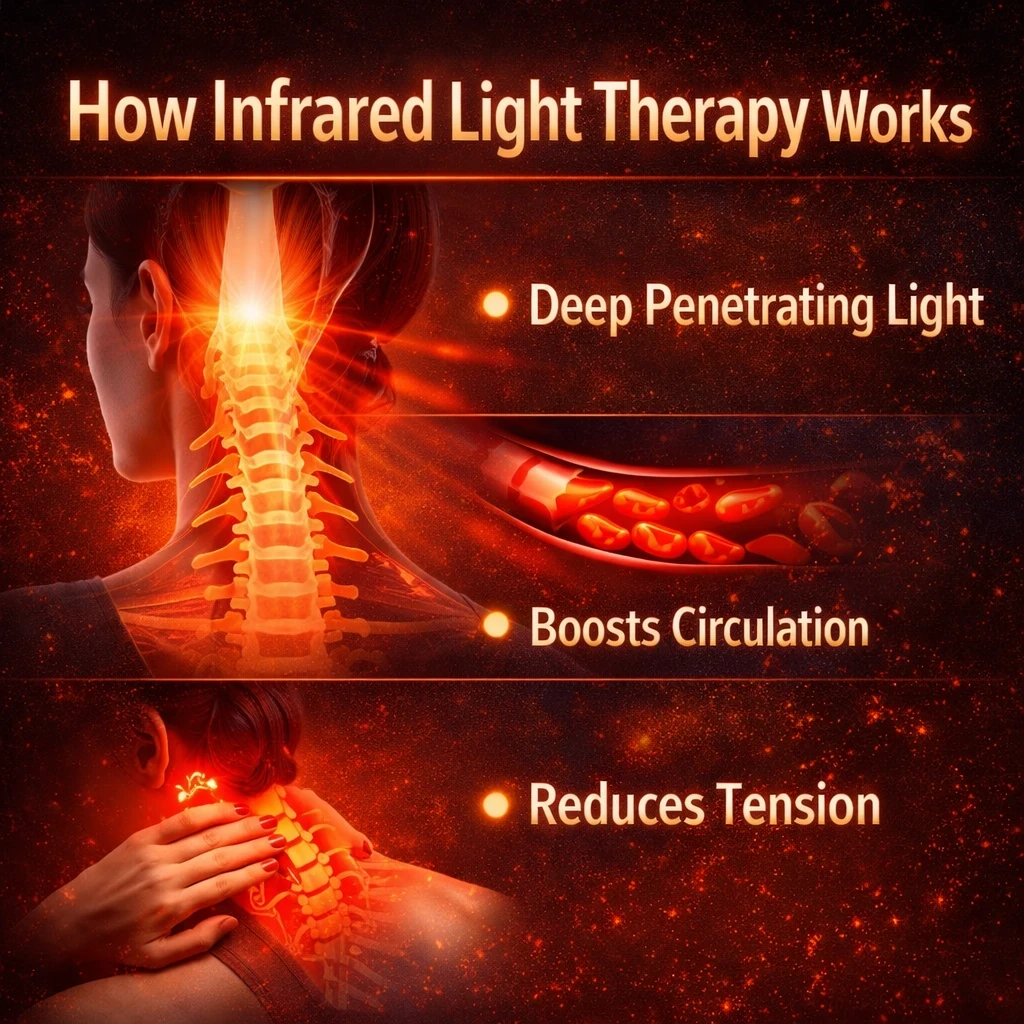
How Infrared Light Therapy Works
The idea behind infrared therapy is simple. Light energy enters the skin and interacts with cells, encouraging better circulation and cellular activity.
This may help:
Increase blood flow to tight neck muscles
Support tissue repair
Reduce stiffness and discomfort
Promote relaxation in overworked areas
For a deeper understanding of pain relief technology, you can also explore how electrical stimulation compares in this guide on how TENS therapy works.
While both approaches aim to reduce pain, they work in very different ways.

Why Chronic Neck Pain Happens
Chronic neck pain often develops gradually. It is rarely caused by a single issue.
Common contributing factors include:
Poor posture (especially screen use)
Muscle overuse or strain
Stress-related tension
Reduced mobility over time
Previous injuries
Because these causes are ongoing, many people look for supportive therapies like infrared light therapy for chronic neck pain to manage symptoms rather than relying solely on short-term fixes.
When Infrared Light Therapy May Help
Infrared therapy is not a cure, but it may support relief in certain situations.
You may benefit if you experience:
Persistent stiffness in the neck
Tight muscles after long periods of sitting
Mild to moderate chronic pain
Reduced flexibility or range of motion
If you are unsure whether light therapy is suitable, this guide on neck pain relief light therapy offers a helpful starting point.

What a Daily Session Feels Like
Most people describe infrared therapy as a gentle, warming sensation—not hot or uncomfortable.
A typical session:
Lasts between 10–20 minutes
Targets the back or side of the neck
Conveniently easy to use sitting or whilst lying down.
Requires consistent use over time
There is no downtime, which makes infrared light therapy for chronic neck pain easy to fit into a daily routine.
Shop Best Infrared Therapy Devices Here.
Comparing Infrared Therapy and TENS
Both infrared therapy and TENS are popular options for managing neck pain, but they work differently.
Infrared therapy:
Uses light to stimulate deeper tissues
Focuses on circulation and healing
Feels like a gentle heat
TENS therapy:
Uses electrical impulses
Interrupts pain signals to the brain
Often produces a tingling sensation
If you’re considering alternatives, this guide on TENS units for pain relief explains how they can be used at home.
Some people even use both approaches depending on their needs.
Shop Best Infrared Therapy Devices Here.
What Does The Research Say
Emerging research suggests that infrared light may help reduce pain and improve function in certain musculoskeletal conditions.
Some findings indicate:
Improved circulation in treated areas
Reduced muscle tension
Temporary relief from chronic discomfort
However, results vary, and more long-term studies are needed. This is why infrared light therapy for chronic neck pain is best seen as part of a broader management plan.

Choosing the Right Device
Not all infrared devices are the same. If you are considering trying this therapy, look for:
Adjustable intensity settings
Targeted design for neck and shoulders
Comfortable fit or easy positioning
Reliable build quality
Consistency matters more than complexity. A simple device used regularly often delivers better results than an advanced device used occasionally.
Safety and Considerations
Infrared therapy is generally considered safe when used correctly, but there are a few things to keep in mind:
Avoid using on broken or irritated skin
Do not exceed recommended session times
Consult a professional if you have underlying conditions
Stop if discomfort increases
As with any therapy, listening to your body is key.
Limitations
It is important to stay realistic. Infrared light therapy for chronic neck pain does not address every cause of pain.
It may not help if:
Pain is nerve-related or severe
Structural issues are present
Lifestyle factors remain unchanged
For best results, combine therapy with:
Posture improvements
Gentle stretching
Regular movement
Stress management
Conclusion
Infrared therapy can be a useful supportive tool, but it works best alongside other healthy habits.
Think of it as part of a bigger picture:
It may ease discomfort
It may improve mobility
It may support recovery
But it is not a standalone solution.
Frequently Asked Questions
How often should I use infrared light therapy for chronic neck pain?
Most people start with 10–20 minutes per session, once or twice daily. Consistency is more important than intensity.
Is infrared therapy better than heat packs?
Infrared light penetrates deeper than standard heat packs, which may provide more targeted relief for some people.
Can I use it alongside other treatments?
Yes, many people combine it with stretching, massage, or TENS therapy for better results.
How long before I notice results?
Some people feel relief quickly, while others need several weeks of regular use.
Scientific Reference
https://www.ncbi.nlm.nih.gov/pmc/articles/PMC5523874/
