Alkaline Phosphatase Function In The Body
Alkaline phosphatase function in the body
Alkaline phosphatase function in the body plays a central role in bone mineralization, liver performance, and metabolic regulation.
Most people only notice alkaline phosphatase (ALP) when reviewing blood test results.
However, this enzyme works quietly behind the scenes every day.
A clear understanding of alkaline phosphatase function in the body helps explain why doctors include it in routine lab panels.
When you understand what it does, lab results feel far less intimidating.
What Is Alkaline Phosphatase?
Alkaline phosphatase is an enzyme found mainly in:
- Bone
- Liver
- Bile ducts
- Intestinal lining
- Kidneys
Its primary role is to remove phosphate groups from molecules.
This process is called dephosphorylation.
That reaction supports mineral balance, cellular signaling, and metabolic efficiency.
Because ALP exists in multiple tissues, blood levels reflect activity across several systems — not just one.
Core Alkaline Phosphatase Function in the Body
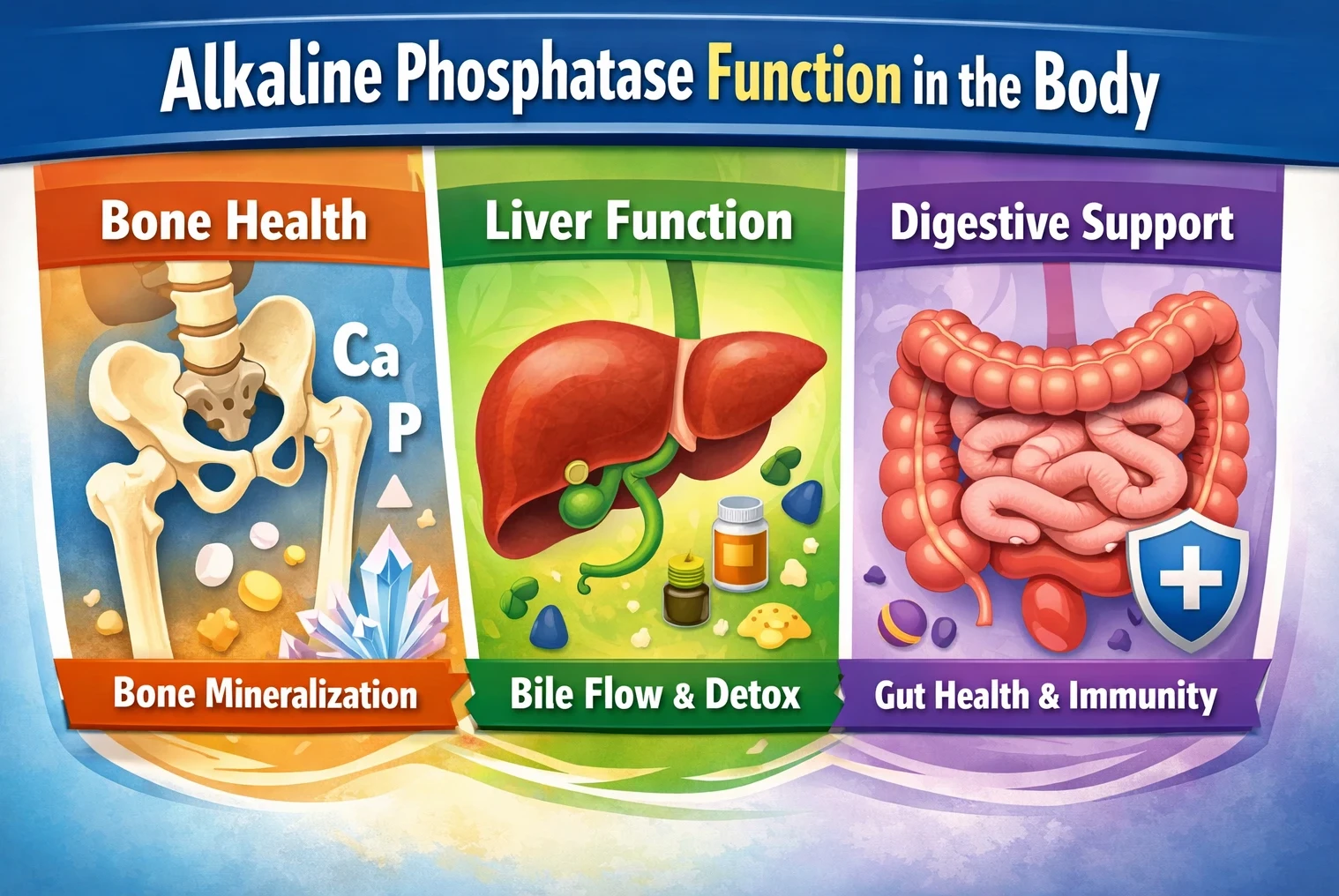
The alkaline phosphatase function in the body centers around three key areas:
- Bone mineralization
- Liver and bile flow
- Gut and immune regulation
1. Bone Mineralization
Bone cells called osteoblasts produce ALP.
This enzyme helps regulate calcium and phosphate so bones can harden properly.
Without adequate activity, mineralization may be impaired.
Children and teenagers naturally have higher ALP levels because their bones are growing quickly.
In addition, mineral cofactors such as magnesium and zinc support enzyme efficiency.
If you’re exploring magnesium support in more detail, this guide on natural remedies for muscle tension explains its broader metabolic role:
https://beyond-pain-relief.com/natural-remedies-for-muscle-tension/

2. Liver and Bile Flow
The liver produces a concentrated form of alkaline phosphatase within bile ducts.
Bile is essential for digesting fats and clearing waste products.
However, if bile flow becomes restricted, ALP levels may rise.
Doctors interpret ALP alongside ALT, AST, and GGT to assess liver stress patterns.
Because nutrient status influences enzyme production, deficiencies may contribute to subtle metabolic disruption.
For instance, low folate levels affect cellular turnover and energy metabolism. You can explore that further here:
https://beyond-pain-relief.com/symptoms-of-low-folic-acid-levels/
3. Intestinal and Immune Regulation
Alkaline phosphatase in the gut lining may help neutralize inflammatory molecules.
Although research is still evolving, alkaline phosphatase function in the body appears to extend beyond bones and liver alone.
In other words, it reflects broader metabolic balance.

Why Doctors Test ALP
Alkaline phosphatase is commonly included in routine blood panels.
Testing may be recommended for:
- Persistent fatigue
- Bone discomfort
- Digestive symptoms
- Abnormal liver markers
Because alkaline phosphatase function in the body reflects both bone and liver activity, it serves as a broad metabolic indicator.
While mild fluctuations are common, trends over time are more meaningful.
High Alkaline Phosphatase Levels
Elevated ALP may be linked to:
- Rapid bone growth
- Healing fractures
- Vitamin D deficiency
- Liver or bile duct stress
- Certain medications
In adults, bone turnover naturally shifts with age.
Consequently, changes in mineral metabolism may influence lab results.
Because micronutrient intake plays a role in enzyme efficiency, maintaining adequate folate intake supports healthy cellular turnover.
If you’re reviewing dietary strategies, this guide outlines practical steps:
https://beyond-pain-relief.com/how-to-increase-folic-acid-intake/
Importantly, doctors usually confirm elevated readings with repeat testing.
Low Alkaline Phosphatase Levels
Low ALP is less common.
However, it may relate to:
- Zinc deficiency
- Magnesium deficiency
- Protein malnutrition
- Severe micronutrient depletion
- Rare genetic disorders
Because alkaline phosphatase function in the body depends on nutrient cofactors, low levels sometimes signal insufficient intake.
Similarly, long-term dietary imbalance may influence enzyme production.
If you’re exploring deficiency patterns more closely, this resource explains key signs:
https://beyond-pain-relief.com/how-to-identify-folic-acid-deficiency/
Age and Life Stage Differences
ALP levels change naturally across life.
Children show higher values during growth.
Pregnancy increases levels due to placental production.
Meanwhile, older adults may experience shifts depending on bone remodeling and liver function.
These variations are physiological.
How to Interpret Results Calmly
An out-of-range number does not automatically mean disease.
Instead, healthcare providers typically:
- Review symptoms
- Compare related markers
- Evaluate medications
- Repeat labs if needed
In many cases, levels normalize.
Ultimately, alkaline phosphatase function in the body reflects activity — not damage.
It’s a signal, not a diagnosis.
Supporting Healthy Enzyme Activity
You cannot safely “boost” ALP directly.
However, you can support the systems it depends on.
Since alkaline phosphatase function in the body relies on nutrient availability and organ health, strengthening foundational habits often supports balanced enzyme activity.
Focus on:
- Adequate vitamin D
- Sufficient protein
- Magnesium and zinc intake
- Resistance exercise
- Moderate alcohol use
- Consistent sleep
Over time, small habits influence lab trends more than quick fixes.
Go to HerbsPro for approved quality alkaline phosphatase enzymes supplements.
Balanced Perspective
Alkaline phosphatase is a biomarker tied to bone health, liver function, and metabolic balance.
Therefore, when levels shift, the goal is investigation — not panic.
Understanding alkaline phosphatase function in the body gives context to lab results.
And context reduces unnecessary worry.
Scientific Study Links
https://pubmed.ncbi.nlm.nih.gov/21477268/
https://pubmed.ncbi.nlm.nih.gov/18974732/