Best Treatments For Migratory Pain
Best Treatments for Migratory Pain
Best treatments for migratory pain are increasingly searched by people experiencing pain that seems to move from one area of the body to another.
One day the discomfort may be in the shoulder, the next it may shift to the lower back, hip, or knee.
This pattern can be confusing and sometimes worrying.
However, in many cases, migratory pain is related to how the nervous system processes pain signals rather than a serious structural injury.
Understanding the best treatments for migratory pain can help people manage symptoms, stay active, and gradually calm the body’s pain response.

What Is Migratory Pain?
Migratory pain refers to discomfort that moves or shifts location over time.
Unlike acute injury pain that stays in one place, migratory pain may appear in different muscles, joints, or regions of the body.
Common patterns include:
• Pain shifting between shoulders and neck
• Lower back pain that moves to the hips
• Leg discomfort that changes sides
• Joint pain appearing in different joints
In many cases, migratory pain occurs when the nervous system becomes over-protective and sensitive to movement or stress.
You can learn more about how this process works in this guide to understanding pain mechanisms.
Why Migratory Pain Happens
To understand the best treatments for migratory pain, it helps to understand why symptoms move around the body.
Several factors can contribute.
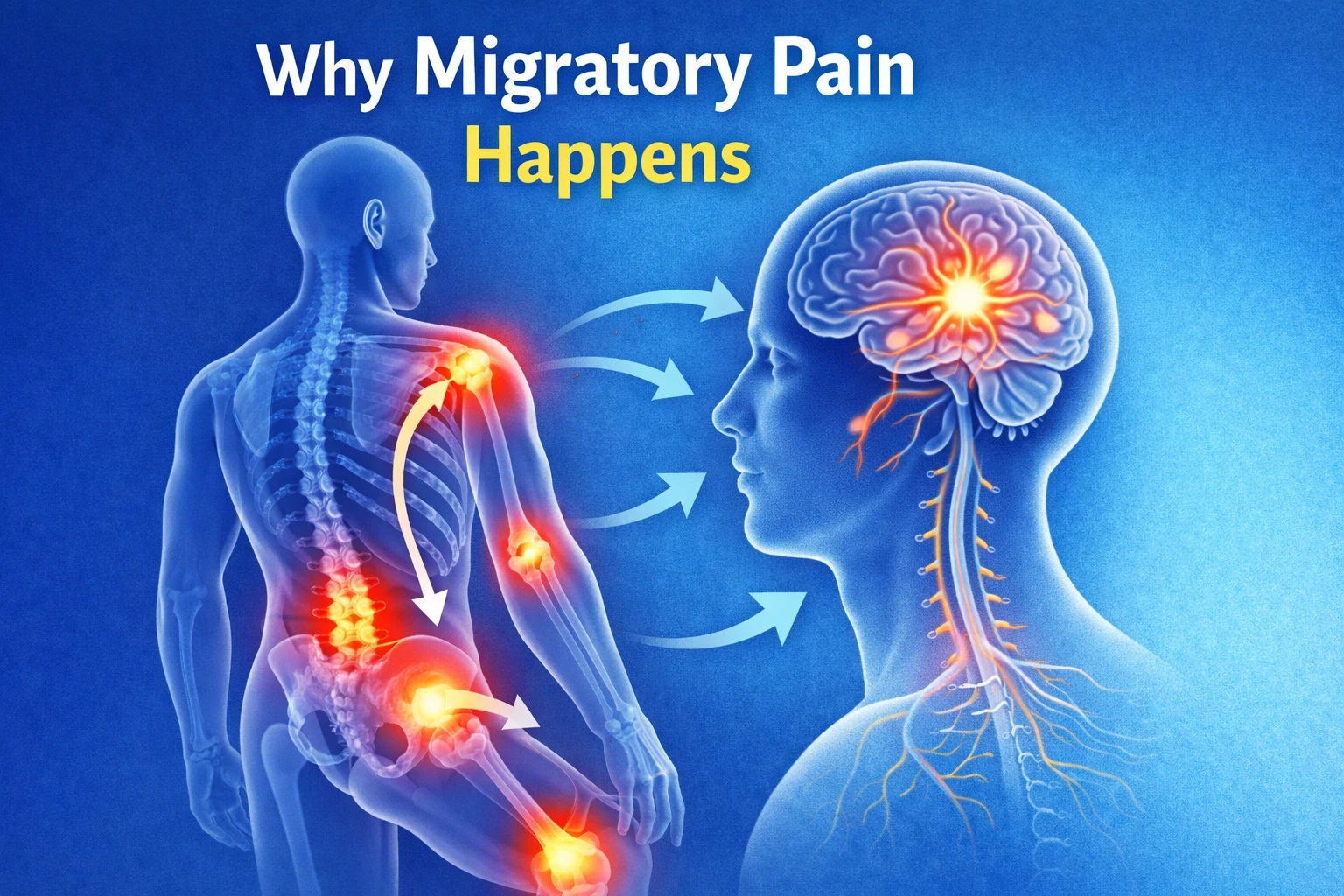
Nervous System Sensitisation
When the nervous system becomes sensitised, it can interpret normal sensations as painful.
This does not mean the pain is imaginary. The signals are real, but the brain may be overestimating threat levels.
This concept is explored further in natural pain relief.
Muscle Guarding and Reduced Movement
When pain appears in one area, people often move less or change posture to avoid discomfort.
This protective behaviour can lead to muscle stiffness and strain in other areas, which may cause pain to appear somewhere new.
Stress and Emotional Load
Stress can strongly influence the nervous system.
Periods of emotional strain often increase muscle tension and pain sensitivity, which may cause pain to shift locations.
Best Treatments for Migratory Pain
The best treatments for migratory pain focus on calming the nervous system, improving movement, and gradually restoring confidence in the body.
These strategies are commonly recommended by pain specialists.
Gentle Movement and Physical Activity
One of the most effective best treatments for migratory pain is gradual movement.
Avoiding activity completely can increase stiffness and nervous system sensitivity.
Helpful activities may include:
• Walking
• Swimming
• Light stretching
• Yoga or mobility exercises
Gentle movement helps maintain joint health and reassures the nervous system that the body is safe to move.
This principle is explained in movement, load and pain sensitivity.
Pain Education and Reassurance
Understanding pain is one of the most powerful best treatments for migratory pain.
When people learn that shifting pain can occur due to nervous system sensitivity, it often reduces fear and panic.
Pain education helps individuals:
• Understand how pain works
• Reduce fear of movement
• Build confidence in recovery
• Avoid unnecessary medical worry
Education is increasingly recognised as a key component of modern pain management.

Improving Sleep and Recovery
Sleep plays a major role in pain sensitivity.
Poor sleep can increase inflammation, muscle tension, and nervous system reactivity.
Practical steps that may help include:
• Maintaining consistent sleep routines
• Reducing screen time before bed
• Practising relaxation techniques
• Supporting comfortable sleeping positions
If pain is disrupting sleep, this guide on why pain gets worse at night explains why symptoms often increase overnight.
Stress Reduction Strategies
Stress management is another important element among the best treatments for migratory pain.
The nervous system reacts strongly to emotional stress, which can amplify pain signals.
Helpful strategies include:
• Deep breathing exercises
• Mindfulness meditation
• Gentle exercise
• Time outdoors
• Social connection
Reducing stress often reduces muscle tension and nervous system sensitivity.
Anti-Inflammatory Nutrition
Diet may also support recovery.
Certain foods contain natural compounds that help regulate inflammation and support overall health.
Foods that may support pain management include:
• Omega-3 fatty acids (fish, flaxseed)
• Leafy green vegetables
• Berries and antioxidant-rich fruits
• Turmeric and ginger
• Nuts and seeds
Balanced nutrition supports tissue health and nervous system function.

Supportive Tools That May Help
Some people find additional relief using supportive tools alongside lifestyle strategies.
Examples include:
• Heat therapy for muscle relaxation
• Foam rollers or massage tools
• Ergonomic cushions or posture supports
• Gentle stretching equipment
These tools can help reduce muscle tension and encourage movement.
However, they are most effective when combined with active recovery strategies rather than used alone.
When Migratory Pain May Need Medical Assessment
Although migratory pain is often related to nervous system sensitivity, medical evaluation may be important if symptoms include:
• Persistent swelling or redness in joints
• Fever or unexplained illness
• Severe fatigue
• Sudden unexplained weight loss
• Progressive neurological symptoms
These signs may indicate conditions such as inflammatory arthritis or infection and should be assessed by a healthcare professional.
Long-Term Outlook
For most people, the best treatments for migratory pain involve a combination of movement, education, stress management, and lifestyle support.
The nervous system is highly adaptable and capable of change.
With gradual exposure to safe movement and better understanding of pain mechanisms, many people experience significant improvement over time.
Recovery is often gradual rather than immediate, but consistent strategies can lead to lasting improvements in comfort and confidence.
Scientific Research and Evidence
https://pubmed.ncbi.nlm.nih.gov/30586064/
https://pubmed.ncbi.nlm.nih.gov/24559675/
https://pubmed.ncbi.nlm.nih.gov/28186073/