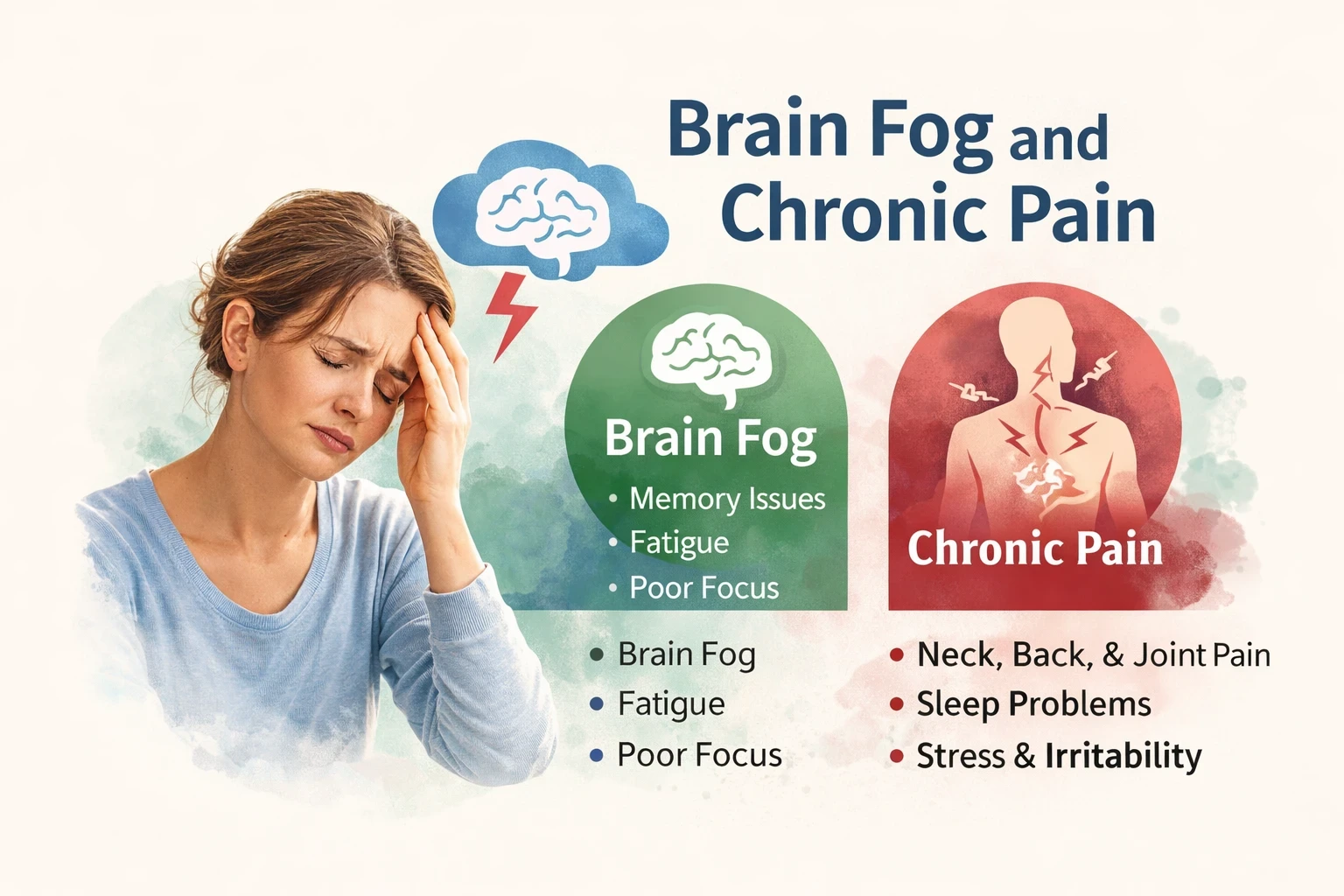
Brain Fog And Chronic Pain How one affects the other
Brain Fog and Chronic Pain
Brain fog and chronic pain often occur together, creating a frustrating combination of physical discomfort and reduced mental clarity.
Many people dealing with long-term pain notice that their focus, memory, and energy levels are also affected.
Understanding this connection is essential for improving both symptoms.
What Is Brain Fog in Chronic Pain?
Brain fog refers to a group of cognitive symptoms, including difficulty concentrating, forgetfulness, mental fatigue, and slow thinking. When combined with chronic pain, these symptoms can feel more intense and persistent.
In many cases, both are not separate issues. Instead, they are linked through the nervous system, which plays a key role in both physical sensation and cognitive function.
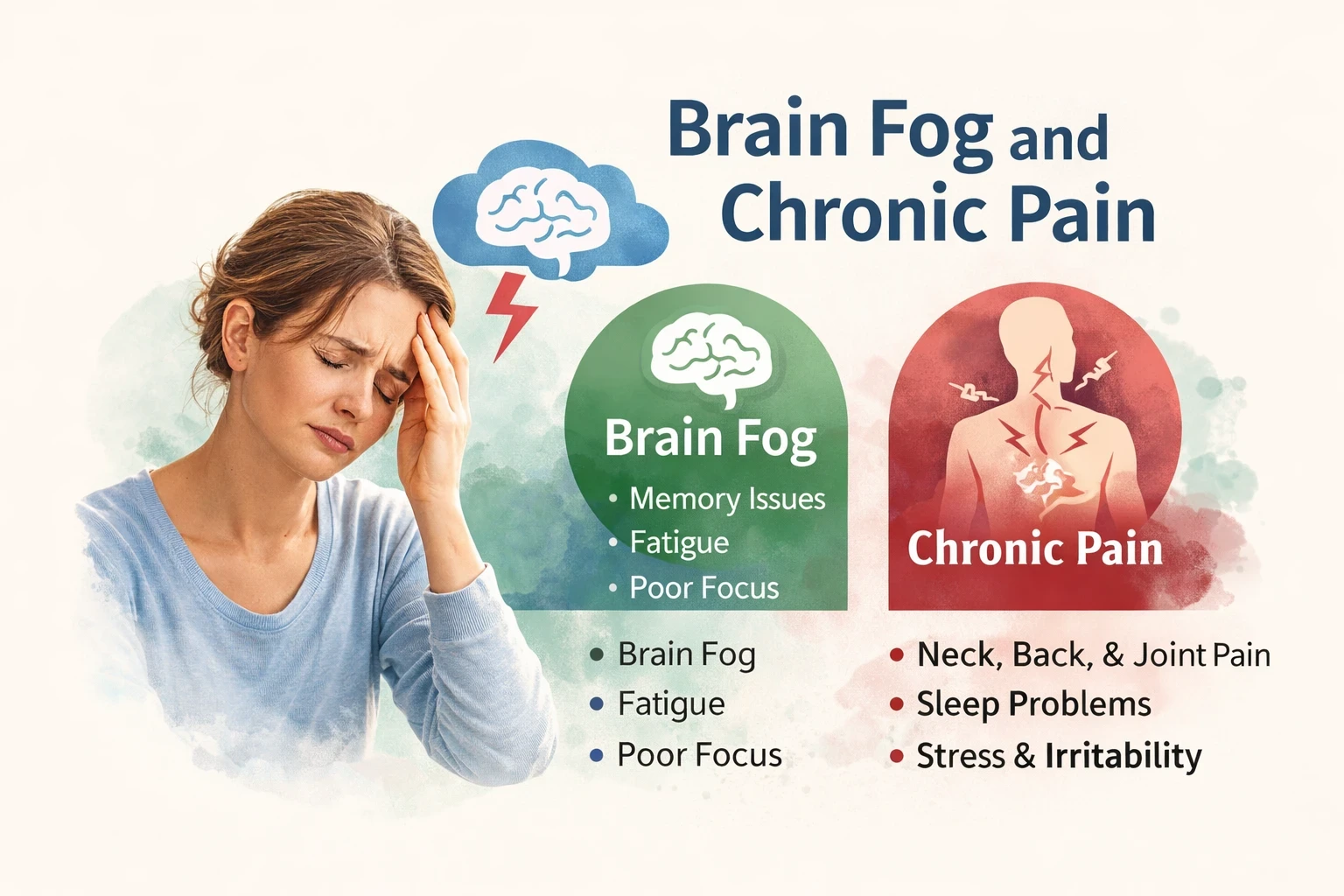
Why Chronic Pain Affects the Brain
Chronic pain constantly sends signals to the brain.
As a result, the brain must prioritise processing these signals, leaving fewer resources available for thinking, memory, and focus.
Over time, this can lead to:
Reduced attention span
Slower information processing
Increased mental fatigue
Difficulty completing everyday tasks
This is one of the main reasons why brain fog and chronic pain tend to appear together.
The Role of the Nervous System
The nervous system acts as a communication network between the body and brain.
When pain becomes persistent, this system can become overactive.
As a result:
The brain stays in a constant alert state
Stress hormones remain elevated
Cognitive performance begins to decline
Therefore, calming the nervous system is a key part of managing both brain fog and chronic pain.
Sleep Disruption and Mental Fatigue
Sleep problems are extremely common in people with chronic pain.
Unfortunately, poor sleep directly affects brain function.
When sleep quality is low:
Memory consolidation is reduced
Focus becomes more difficult
Mental clarity declines
This creates a cycle where pain disrupts sleep, and poor sleep worsens both pain and brain fog.
Inflammation and Brain Function
Inflammation is another important factor. Chronic pain conditions often involve ongoing inflammation, which can affect how the brain communicates.
This may lead to:
Slower cognitive processing
Increased fatigue
Reduced mental sharpness
Reducing inflammation can therefore support improvements in both physical and mental symptoms.
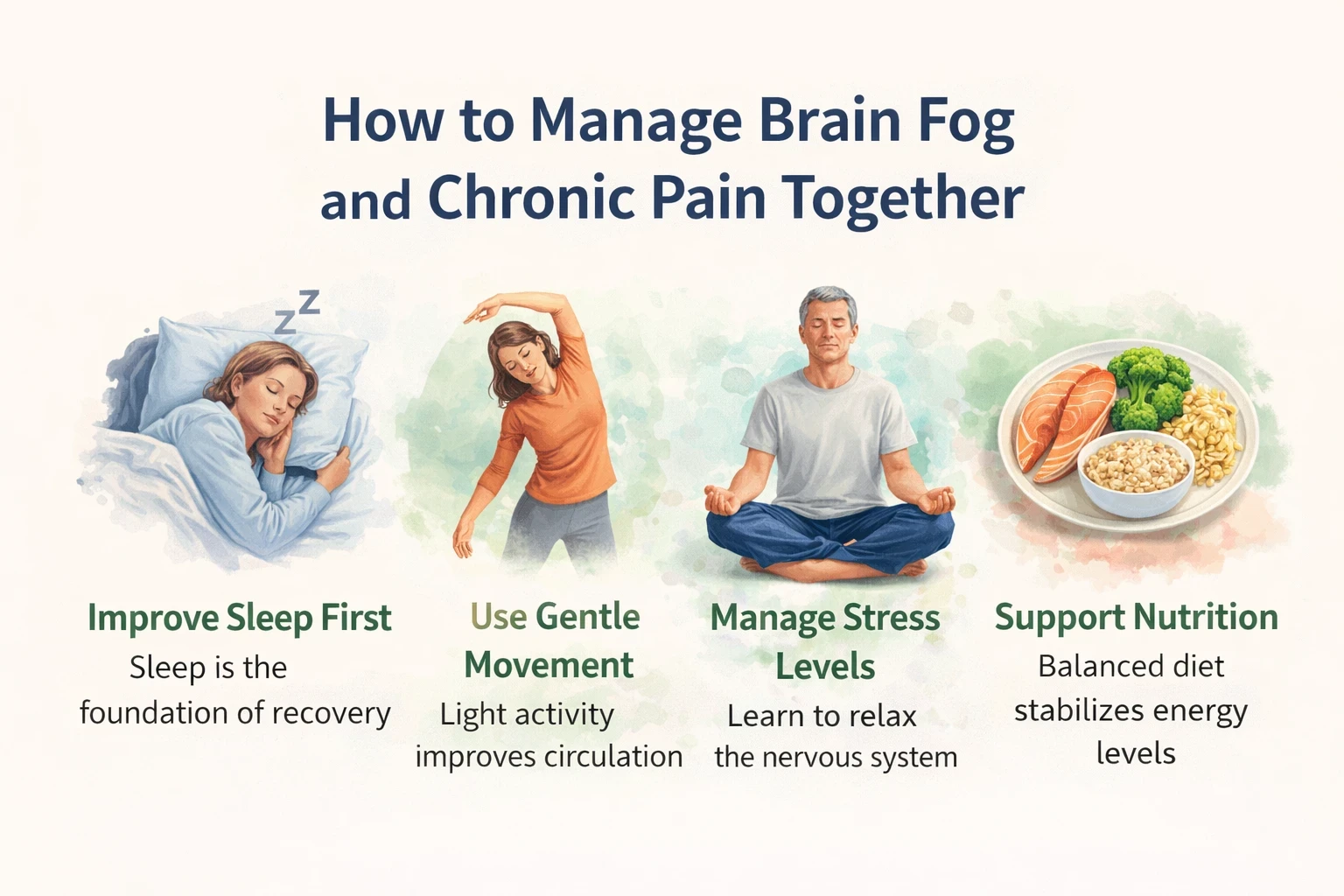
How to Manage Brain Fog and Chronic Pain Together
The most effective approach is to treat both issues at the same time.
Instead of focusing only on pain or only on cognitive symptoms, combining strategies produces better results.
Improve Sleep First
Sleep is the foundation of recovery. Better sleep supports both pain reduction and cognitive function.
Use Gentle Movement
Light activity improves circulation and reduces stiffness without overloading the body.
Manage Stress Levels
Stress increases both pain sensitivity and mental fatigue. Learning to relax the nervous system is essential.
Support Nutrition
Balanced nutrition helps stabilise energy levels and supports brain performance.
Together, these strategies help break the cycle of brain fog and chronic pain.
Daily Habits That Make a Difference
Consistency is key when managing symptoms. Small daily changes can have a significant impact over time.
Helpful habits include:
Staying hydrated
Taking regular movement breaks
Avoiding long periods of inactivity
Keeping a consistent routine
Pacing activities throughout the day
Over time, these habits help improve both clarity and comfort.
When Symptoms Fluctuate
It is normal for symptoms to vary from day to day. Some days may feel easier, while others may bring more fatigue or discomfort.
This does not mean progress is lost. Instead, it reflects how the body responds to stress, activity, and recovery.
Understanding this can help reduce frustration and support long-term improvement.
How This Connects to the Bigger Picture
Because the two conditions are so closely linked, it is important to understand the broader approach to managing them together.
For a deeper and more complete guide, explore
brain fog and pain management.
This will help you see how different strategies work together to improve both physical and cognitive symptoms.
Limitations and Expectations
There is no instant solution for brain fog and chronic pain. Progress takes time and consistency.
However, many people notice gradual improvements when they address sleep, stress, movement, and nutrition together.
Take a look at my top 3 supplements for brain fog.
FAQ: Brain Fog and Chronic Pain
Why does chronic pain cause brain fog?
Chronic pain uses up mental resources, making it harder for the brain to focus and process information.
Can brain fog improve if pain improves?
Yes. As pain decreases, cognitive function often improves as well.
Is brain fog permanent in chronic pain conditions?
In most cases, no. Symptoms can improve with the right approach.
What is the best starting point?
Improving sleep and reducing stress are usually the most effective first steps.
Scientific Studies
https://pmc.ncbi.nlm.nih.gov/articles/PMC4405805/