
Brain Fog And Sleep Problem’s What You Can Do Is
Brain Fog and Sleep Problems
Brain fog and sleep problems often go hand in hand, making daily life feel harder than it should.
When sleep quality drops, focus, memory, and mental clarity usually suffer as well.
For many people, poor sleep is one of the main reasons brain fog becomes more noticeable and more persistent.

What Is the Link Between Brain Fog and Sleep Problems?
The connection between brain fog and sleep problems is strong because the brain depends on quality sleep to restore energy, process information, and regulate mood.
Without enough deep sleep, the brain cannot fully reset.
As a result, poor sleep can lead to:
- Slower thinking
- Reduced concentration
- Short-term memory problems
- Low energy during the day
Therefore, improving sleep is often one of the most effective ways to reduce brain fog naturally.
How Poor Sleep Affects Brain Function
During sleep, the brain clears waste products, supports memory, and restores mental performance.
However, when sleep is broken, too short, or low quality, these recovery processes are disrupted.
This means that brain fog and sleep problems can quickly turn into a cycle.
Poor sleep worsens concentration and fatigue, while daytime stress and fatigue can make sleep even harder the next night.
Common Sleep Issues Linked to Brain Fog
Several sleep-related problems may contribute to mental fog. These include:
- Trouble falling asleep
- Waking up often during the night
- Sleeping for enough hours but not feeling refreshed
- Stress-related sleep disruption
- Pain-related sleep problems
Because of this, identifying the specific reason for poor sleep is an important part of recovery.
Why Stress Makes It Worse
Stress is one of the biggest drivers of both poor sleep and mental fatigue. When stress levels stay high, the nervous system remains alert, making it difficult to relax at night.
As a result, people dealing with brain fog and sleep problems often feel tired but unable to settle properly. This leads to shallow sleep and less mental recovery.
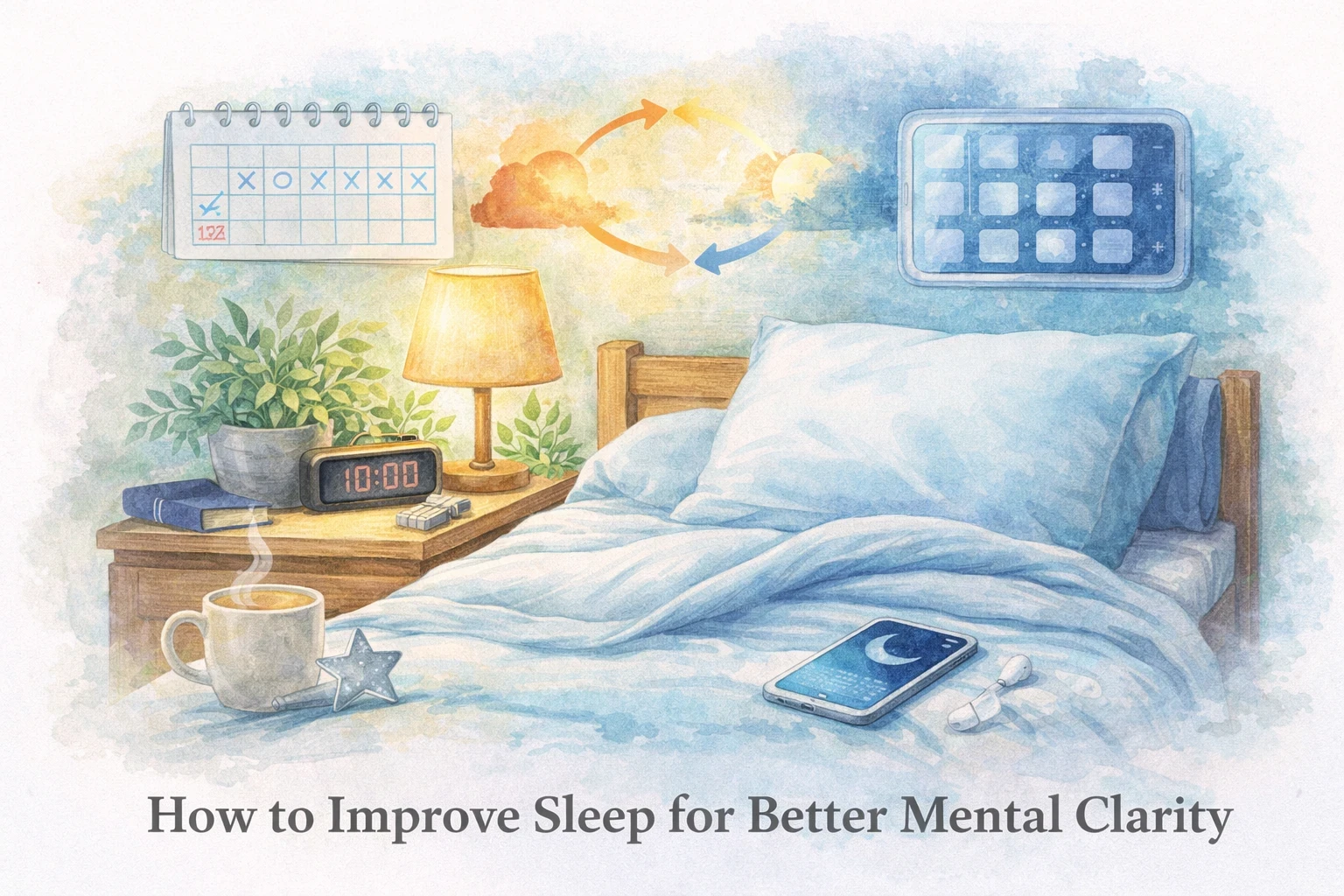
How to Improve Sleep for Better Mental Clarity
There is no single fix, but several practical changes can make a real difference.
Keep a Consistent Sleep Schedule
Going to bed and waking up at the same time each day helps regulate your internal body clock.
Reduce Evening Screen Time
Too much light and stimulation before bed can make it harder to fall asleep.
Create a Better Sleep Environment
A cool, dark, and quiet room usually improves sleep quality.
Wind Down Properly
Gentle stretching, reading, or breathing exercises can help the body shift into rest mode.
These changes support both sleep quality and clearer thinking. You can also explore brain fog recovery strategies that improve focus and clarity for additional support.
The Role of Pain and Physical Discomfort
For some people, pain is a major reason sleep suffers. Ongoing discomfort can make it hard to settle into a comfortable position or stay asleep for long.
This is why brain fog and sleep problems are often worse in people dealing with chronic pain, inflammation, or stiffness.
Addressing physical discomfort can improve sleep and, in turn, improve mental clarity. Learn more about chronic pain treatment and long-term recovery strategies.

Daily Habits That Help
Simple daytime habits can support better sleep at night and reduce brain fog over time.
Helpful habits include:
- Getting natural light in the morning
- Staying active during the day
- Avoiding heavy meals late at night
- Limiting caffeine late in the day
- Keeping daily stress under better control
You may also benefit from natural remedies for brain fog and mental clarity as part of your daily routine.
When Improvement Takes Time
Sleep recovery is often gradual. Some people notice changes within a few days, while others need several weeks of consistency.
That is normal. The important thing is to stay steady with the basics and avoid expecting instant results.
How This Connects to the Bigger Picture
Because sleep affects both cognitive and physical health, it is important to see it as part of a wider strategy.
For a broader understanding of how these factors work together, explore
brain fog and pain management
This helps connect sleep improvement with overall recovery from mental and physical symptoms.
Limitations and Expectations
There is no overnight solution for brain fog and sleep problems. However, small changes can build into meaningful improvements over time.
For many people, better sleep is one of the most effective foundations for clearer thinking and better daily function.
You could read my top 3 supplements for brain fog that may help.
FAQ: Brain Fog and Sleep Problems
Can poor sleep really cause brain fog?
Yes. Poor sleep reduces mental recovery, which affects focus, memory, and alertness.
How quickly can brain fog improve with better sleep?
Some people notice changes within a few days, while others need a few weeks of steady improvement.
Does stress affect both sleep and brain fog?
Yes. Stress can keep the nervous system alert, making sleep worse and increasing mental fatigue.
What is the best first step?
Start with a consistent bedtime and a calmer evening routine.
Scientific Studies
https://pubmed.ncbi.nlm.nih.gov/30376495/
https://www.ncbi.nlm.nih.gov/pmc/articles/PMC5449130/