Causes Of Hip Pain At Night How to Relieve it
Causes of Hip Pain at Night
Causes of hip pain at night are a common issue for people who struggle to get comfortable in bed.
Whether the discomfort feels sharp, dull, or deep in the joint, night-time pain can disrupt sleep and slow recovery.
Understanding the underlying reasons helps you take practical steps toward relief.
Why Hip Pain Feels Worse at Night
There are several reasons why symptoms intensify after dark.
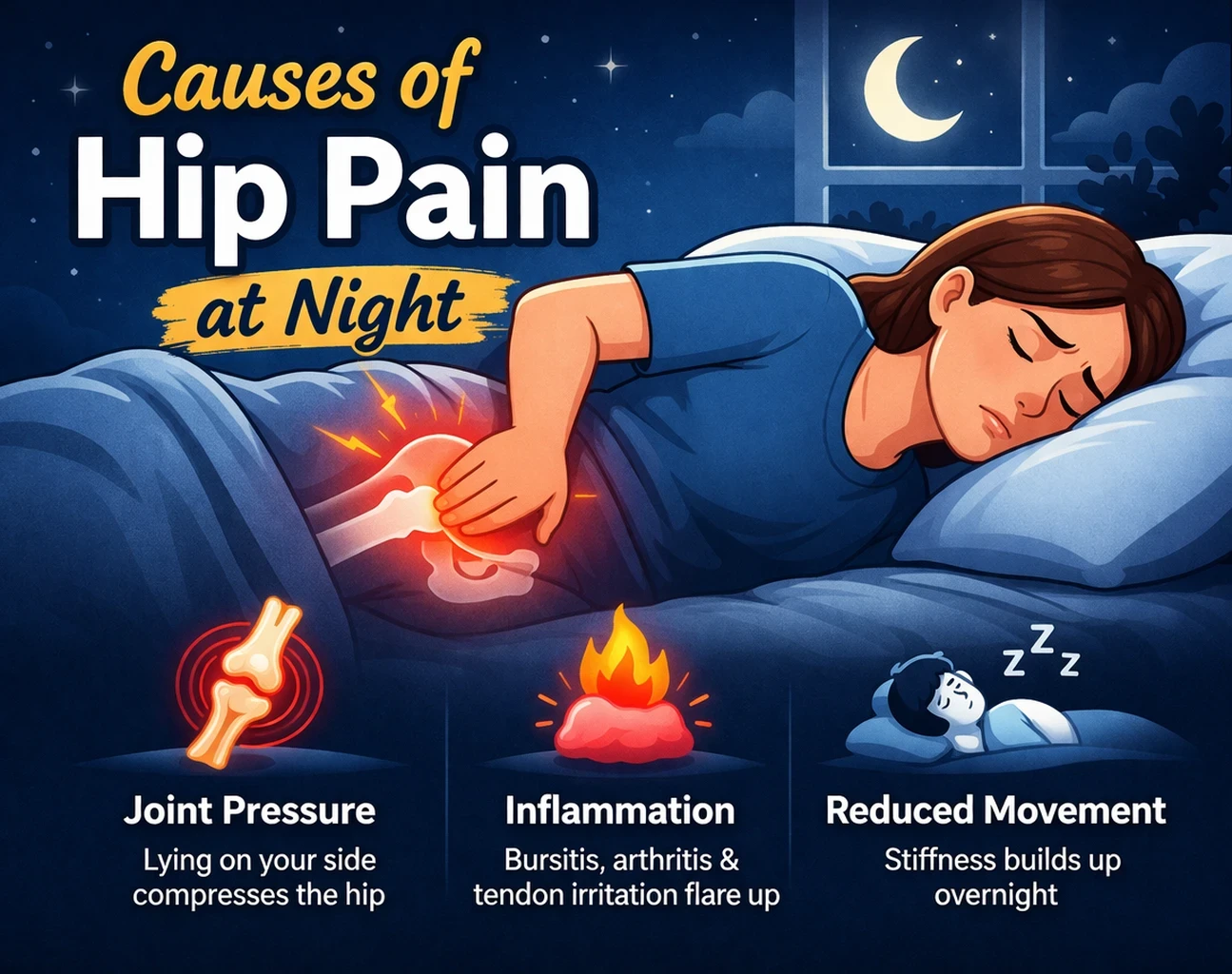
First, the body becomes still, allowing stiffness to build in the joint.
Second, fewer distractions mean your brain becomes more aware of pain signals.
In addition, certain sleeping positions can place pressure directly on sensitive areas.
These combined factors make the causes of hip pain at night more noticeable and often more frustrating.
Common Causes of Hip Pain at Night
1. Hip Bursitis
Hip bursitis is one of the leading causes of night discomfort. It happens when the cushioning sacs around the hip become inflamed.
Pain often increases when lying on the affected side because pressure compresses the irritated area.
If this sounds familiar, exploring a hip bursitis treatment guide can help you understand effective recovery strategies.
2. Osteoarthritis
Osteoarthritis causes gradual wear and tear in the hip joint. As cartilage breaks down, movement becomes stiff and painful.
At night, reduced activity allows stiffness to settle in. This is why many people experience worsening symptoms when trying to sleep.
It remains one of the most common causes of hip pain at night, particularly as we age.
3. Muscle Imbalances and Tightness
Tight or weak muscles around the hips can create uneven stress on the joint. Over time, this leads to irritation and discomfort.
When you lie still, these tight structures can compress surrounding tissues.
This contributes directly to the causes of hip pain at night and often leads to aching or stiffness.
4. Sleeping Position
Your sleeping posture plays a major role in hip health. Side sleeping without support can increase pressure on one hip for hours.
Placing a pillow between your knees helps keep the hips aligned and reduces strain.
This simple change can significantly ease the causes of hip pain at night.
5. Tendon Irritation (Tendinopathy)
Tendons around the hip can become sensitive due to overuse or repetitive strain. This is known as tendinopathy.
At night, the lack of movement can increase stiffness and sensitivity.
This makes tendon irritation another key factor behind the causes of hip pain at night.
6. Referred Pain from the Lower Back
Not all hip pain originates in the hip itself. Sometimes, the issue comes from the lower back and travels into the hip area.
Understanding this connection is important.
You can explore this further in a back pain treatment complete guide to see how spinal health affects hip pain.
The Role of Inflammation in Night-Time Pain
Inflammation naturally increases during rest. The body shifts into repair mode, releasing chemicals that can heighten sensitivity.
While this process supports healing, it can make symptoms feel worse.
This explains why inflammatory conditions are strongly linked to the causes of hip pain.
How Sleep Surfaces Affect Hip Pain
Your mattress and pillow setup can either help or worsen symptoms.
A mattress that is too firm may create pressure points, while one that is too soft may reduce proper support.
Maintaining alignment is essential.
If your hips are unsupported, stress builds in the joint. Improving your sleep setup can reduce the causes of hip pain at night significantly.

Lifestyle Factors That Contribute
Daily habits play a bigger role than many people realise. Sitting for long periods tightens the hip flexors, while sudden increases in activity can overload the joint.
Balancing movement and recovery is key. For example, following structured routines like best exercises for hip pain can help improve strength and flexibility.
In addition, exploring hip pain treatment complete guide to relief recovery and long-term management provides a broader understanding of long-term solutions.
When to Take Hip Pain Seriously
Occasional discomfort is normal, but persistent pain should not be ignored. If symptoms regularly disrupt sleep or limit movement, it’s time to take action.
Early intervention can prevent long-term issues and reduce the overall causes of hip pain at night.
Simple Ways to Reduce Night-Time Hip Pain
Small changes can make a big difference:
Use a pillow between your knees
Avoid lying directly on the painful side
Stretch before bed
Maintain regular movement during the day
Choose a supportive mattress
Try hot and cold therapy supports. Go here
These strategies help reduce pressure and improve comfort over time.
Final Thoughts
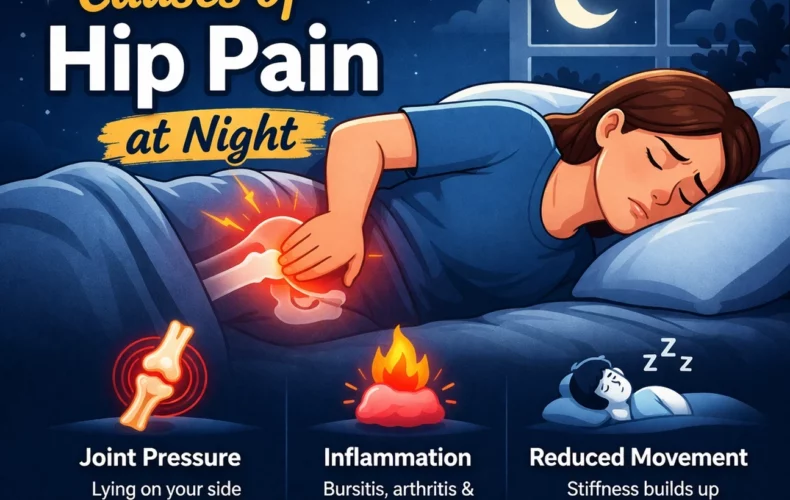
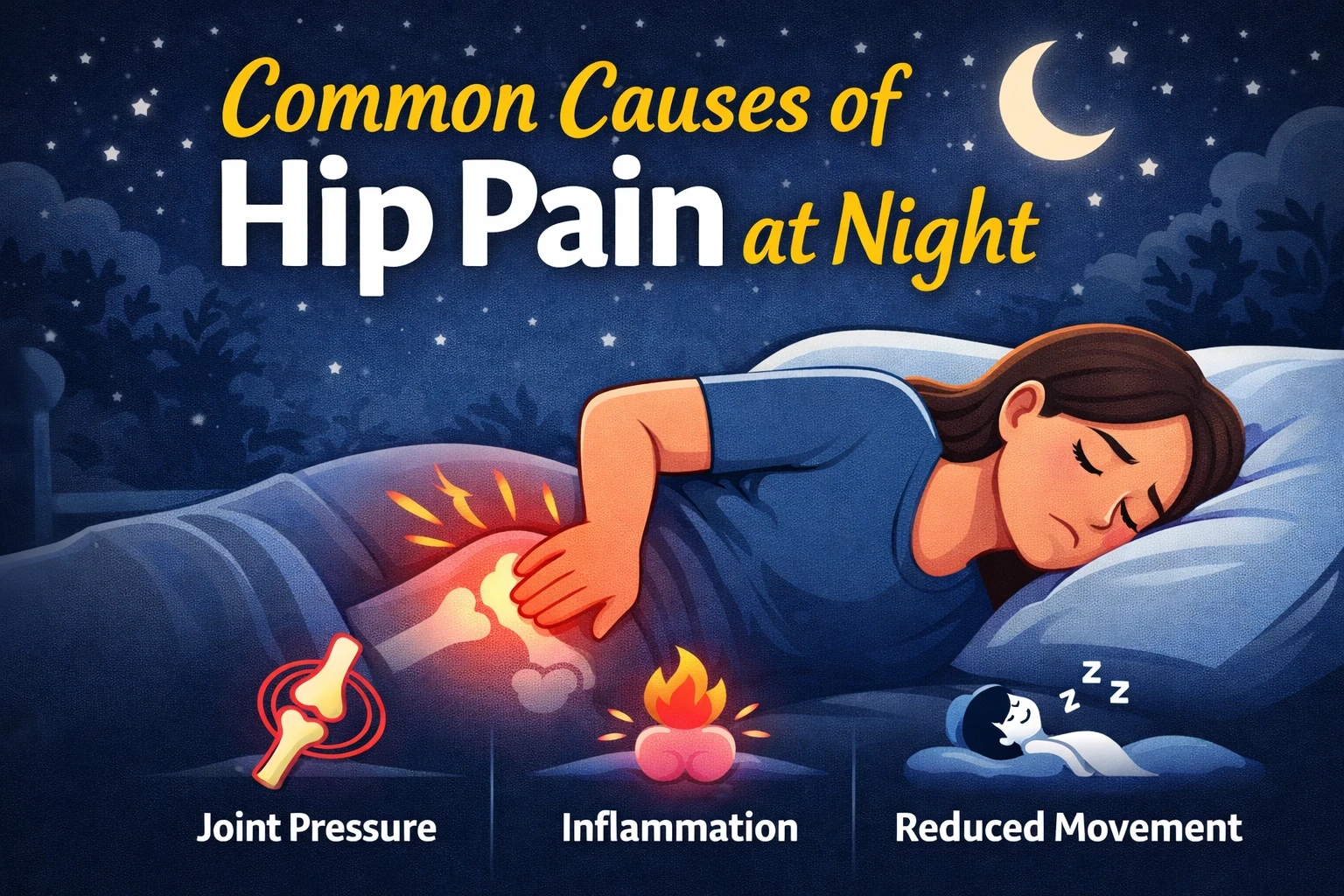
The causes of hip pain at night often come down to pressure, inflammation, and reduced movement.
While the discomfort can feel persistent, most cases improve with simple adjustments.
By addressing the root causes and improving your sleep setup, you can reduce pain, sleep better, and support long-term hip health.
Scientific Studies
https://pubmed.ncbi.nlm.nih.gov/23970373/
https://www.ncbi.nlm.nih.gov/pmc/articles/PMC3764356/
