Hip Pain During Sleep Causes And What to Do About It
Hip Pain During Sleep Causes
Hip pain during sleep causes are a common reason people wake up sore, stiff, and frustrated after what should have been a restful night.
When the hip becomes painful in bed, the problem is often linked to pressure, irritation, poor positioning, or an underlying condition that becomes more noticeable once the body is still.
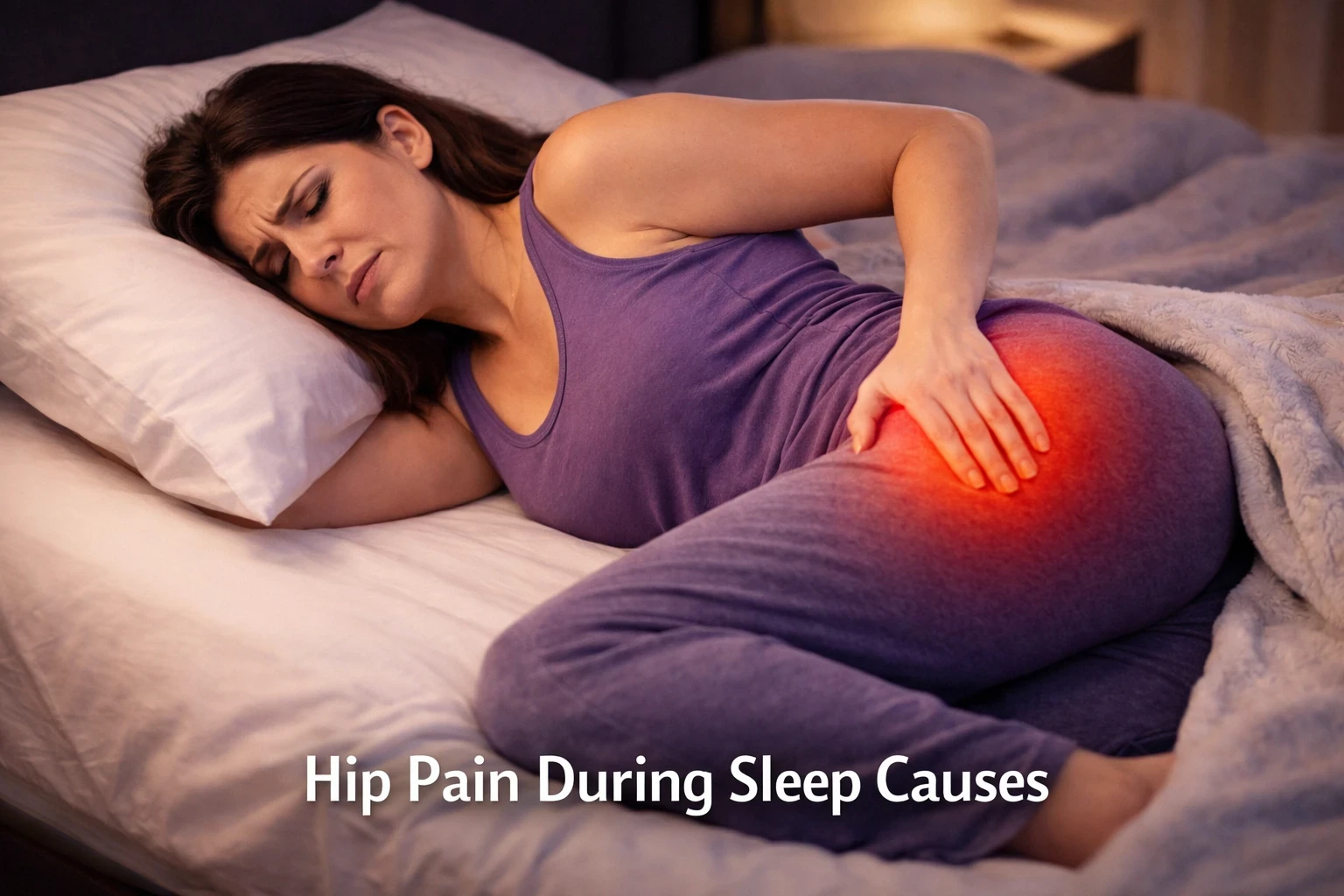
Why Hip Pain Often Feels Worse at Night
One reason hip pain during sleep causes become so noticeable at night is that daytime distractions are gone.
During the day, walking, changing positions, and staying busy can reduce how much attention you give the area.
At night, however, the body stays in one position for longer, which can increase pressure on sensitive tissues.
Sleep can also expose weaknesses in your setup.
A mattress that is too firm may press directly into the outside of the hip, while one that is too soft may let the pelvis sink and twist.
Both situations can increase discomfort. If you want a broader overview of treatment strategies, read hip pain treatment.
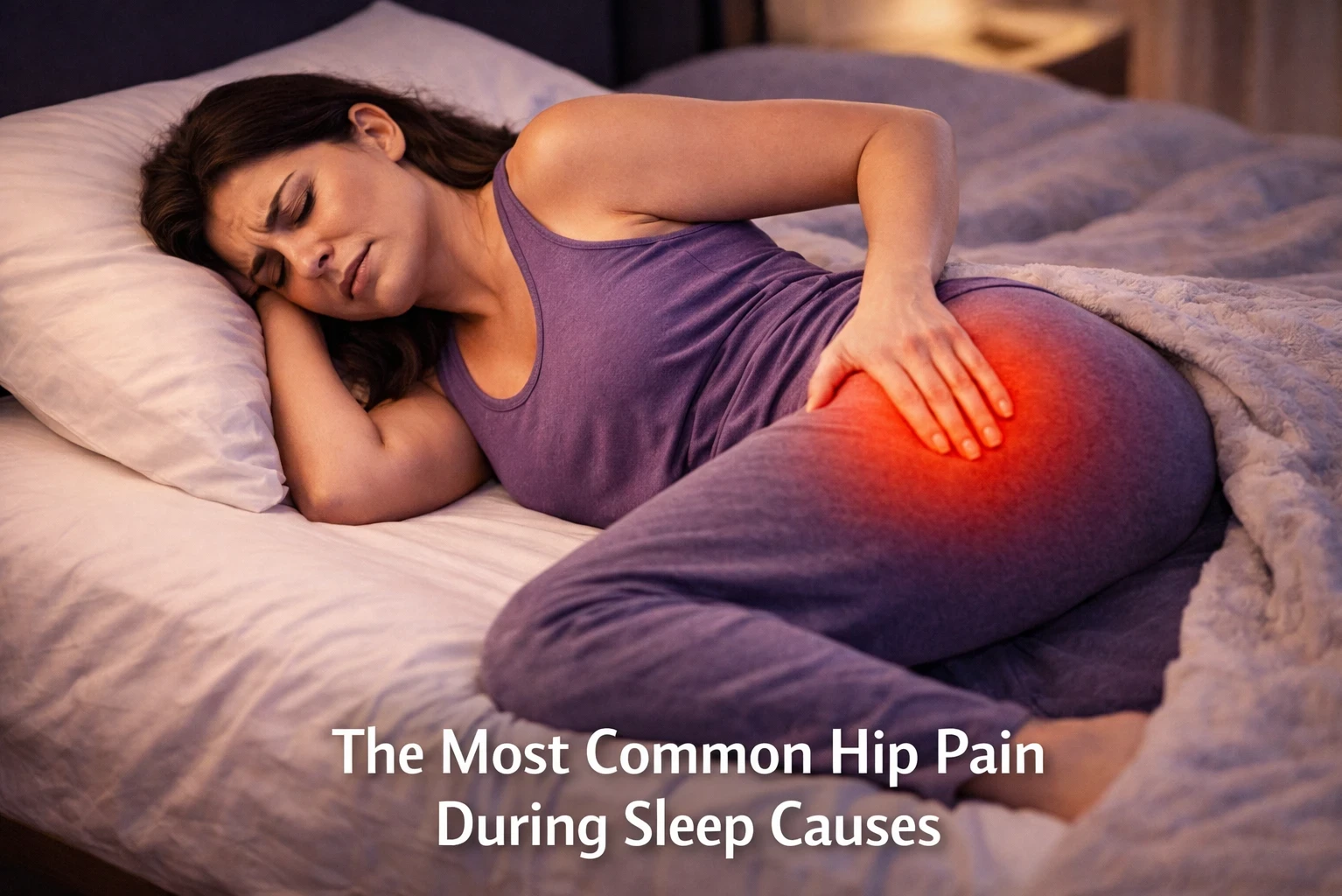
The Most Common Hip Pain During Sleep Causes
Several issues can explain why the hip starts hurting once you lie down.
1. Pressure on the Outer Hip
This is one of the biggest hip pain during sleep causes, especially for side sleepers.
When you lie on the same side for hours, the tissues around the greater trochanter can become compressed.
That repeated pressure may irritate the bursa, nearby tendons, or the muscles that stabilise the hip.
2. Hip Bursitis
Hip bursitis is a frequent cause of night pain. The small fluid-filled sacs around the hip are designed to reduce friction.
When irritated, even light contact with the mattress may trigger pain. This is why many people with bursitis struggle to sleep on the affected side.
3. Gluteal Tendon Irritation
Tendons on the outside of the hip can become overloaded over time. Once irritated, they often react badly to compression during sleep. This makes tendon-related problems one of the more overlooked hip pain during sleep causes.
4. Arthritis and Joint Stiffness
Hip arthritis can create an aching pain that feels worse after inactivity.
Since sleep involves long periods without movement, the joint may stiffen and become more painful during the night or first thing in the morning.
For additional non-drug ideas, see natural remedies for hip pain.
Sleeping Position and Hip Pain
Sleeping position has a major effect on symptoms.
In many cases, hip pain during sleep causes are not just about the hip itself but about how the body is aligned in bed.
Side sleeping can be the biggest problem because it places body weight directly through one hip.
If the top leg drops forward, it can also twist the pelvis and increase stress through the joint and surrounding tendons.
Back sleeping is often better tolerated because weight is distributed more evenly.
Still, if the lower back arches too much, the hips can remain under tension.
Stomach sleeping is usually the least hip-friendly position because it rotates the pelvis and can place both the low back and hips in an awkward posture.
A good sleep-position guide already live on your site is hip pain when sleeping is more common than you think.

Muscle Tightness and Weakness
Another reason hip pain during sleep causes can persist is that the muscles around the hip are not doing their job well during the day.
Weak glutes, tight hip flexors, or reduced control around the pelvis can change how the joint is loaded.
This does not always create pain immediately.
However, over time, the tissues can become more sensitive.
Then when you lie still at night, the area becomes sore more easily.
Referred Pain Can Mimic Hip Pain
Not all night-time hip pain begins in the hip joint.
Sometimes the lower back, sacroiliac region, or even tight muscles in the buttock can refer pain into the side of the hip.
That means some hip pain during sleep causes may actually start somewhere nearby rather than in the hip itself.
That is one reason symptoms should always be looked at as part of the bigger picture rather than assuming the problem is only the joint.
For a causes-focused article on your site, use hip pain symptoms and causes and treatment options.
Simple Ways to Reduce Night-Time Hip Pain
Once you understand the likely hip pain during sleep causes, a few simple changes can often help:
Avoid lying directly on the painful hip
Put a pillow between the knees when side sleeping
Try back sleeping with a pillow under the knees
Use a mattress topper if the surface feels too firm
Change sides during the night when possible
Do light stretching or mobility work before bed
These steps do not solve every case, but they can reduce pressure and improve comfort enough to support better sleep.
When to Get Help
If hip pain during sleep causes keep disturbing your sleep for weeks, or the pain is severe, worsening, or linked with limping, swelling, or reduced weight-bearing, it is worth getting assessed.
Persistent pain may need a more targeted plan, especially if bursitis, tendon irritation, or arthritis is involved. Scientific Studies https://pubmed.ncbi.nlm.nih.gov/28994635/ https://www.ncbi.nlm.nih.gov/pmc/articles/PMC5359522/