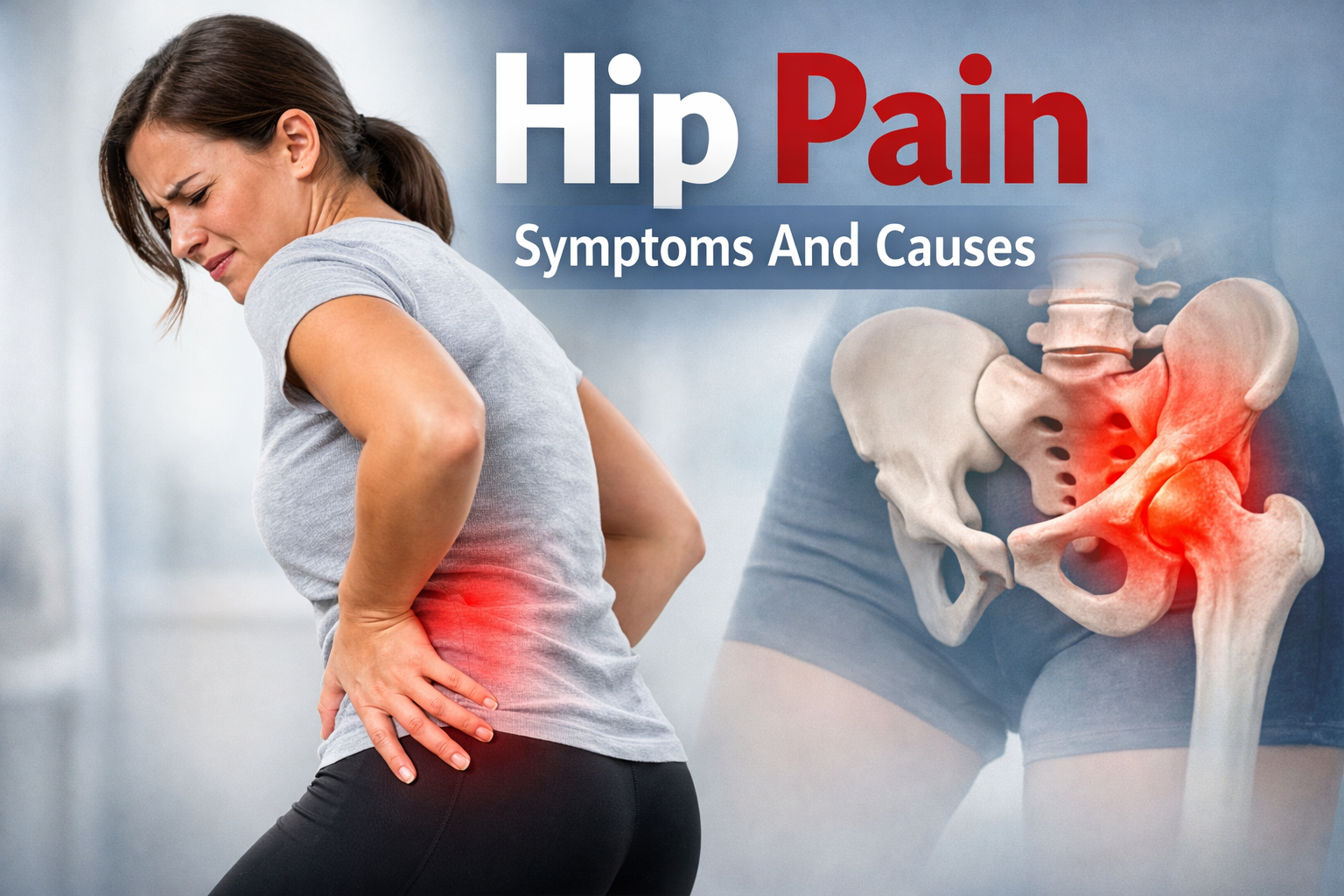
Hip Pain Symptoms And Causes And Treatment Options
Hip Pain Symptoms and Causes
Hip pain symptoms and causes are among the most common reasons people search for information about joint discomfort and mobility problems.
The hip joint plays a major role in walking, standing, sitting, and maintaining balance.
When pain develops in this area, even simple daily movements can become difficult.
Understanding hip pain symptoms and causes can help people recognise early warning signs, identify possible triggers, and explore strategies that may help reduce discomfort.
Common Hip Pain Symptoms
Hip pain symptoms can vary depending on the underlying issue.
Some people feel a sharp pain during movement, while others experience stiffness or a dull ache that gradually worsens.
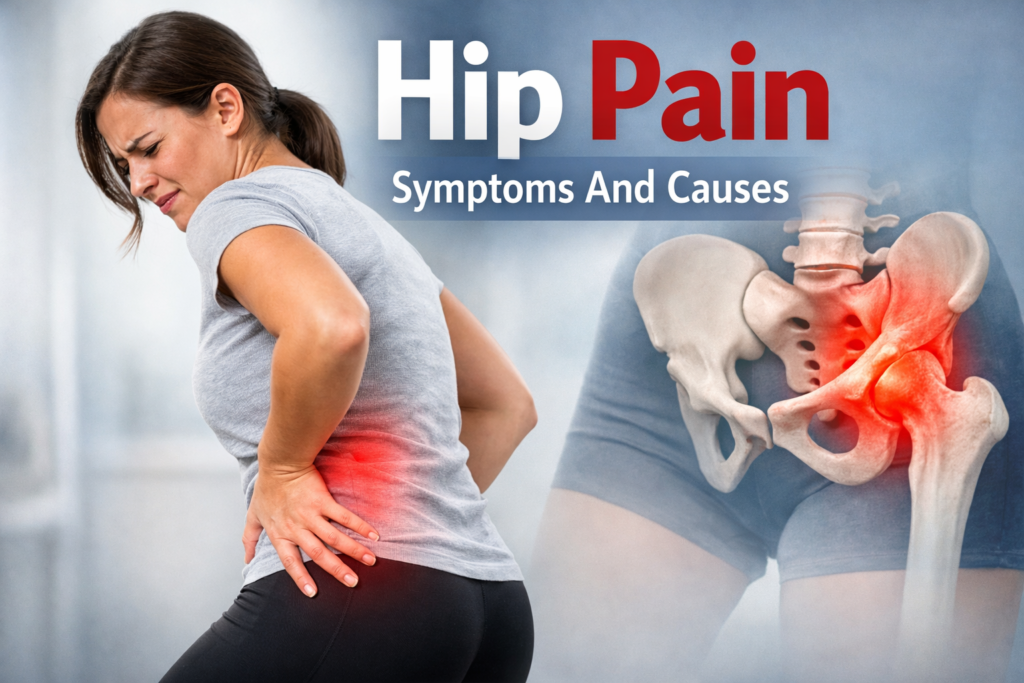
Common hip pain symptoms include:
• Pain in the hip joint or groin
• Discomfort when walking or standing
• Stiffness after sitting for long periods
• Reduced range of motion
• Pain spreading to the thigh or lower back
• Clicking or catching sensations in the joint
For some people, hip pain symptoms may worsen during physical activity such as climbing stairs, running, or getting out of a chair.
Tracking symptoms and noticing patterns can help identify possible causes of hip discomfort.
Muscle Strain and Overuse
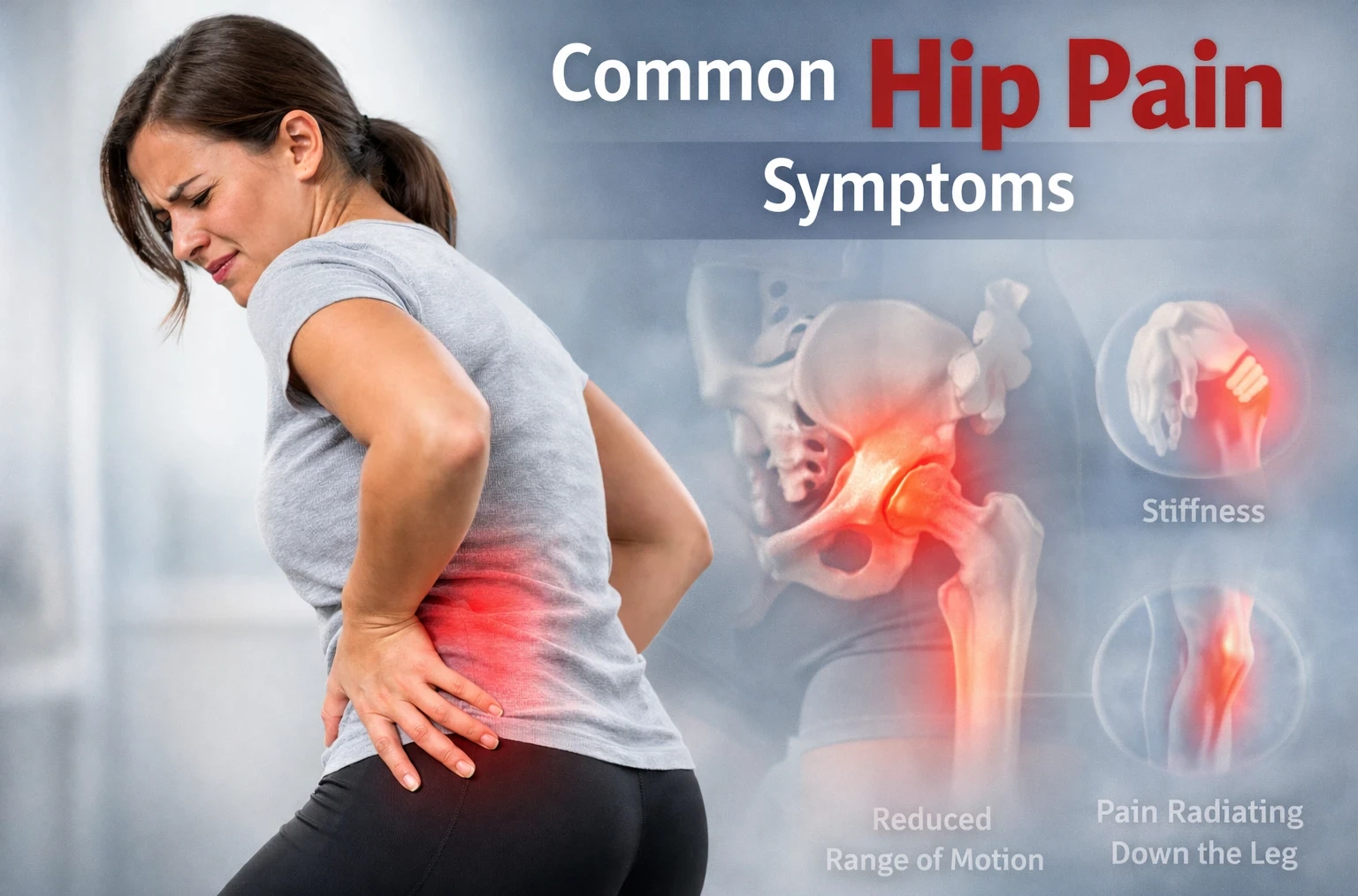
One of the most common hip pain symptoms and causes is muscle strain or overuse.
The hip joint is surrounded by muscles and tendons that stabilise movement.
Repetitive activities such as running, cycling, or prolonged standing can place excessive stress on these tissues.
When muscles are overloaded, small tears may occur in muscle fibres.
This can lead to inflammation and pain.
Typical signs of muscle-related hip pain include:
• Tenderness around the hip
• Pain during movement
• Mild swelling or stiffness
• Pain that improves with rest
Athletes and physically active individuals are particularly prone to hip strain injuries.
Hip Bursitis
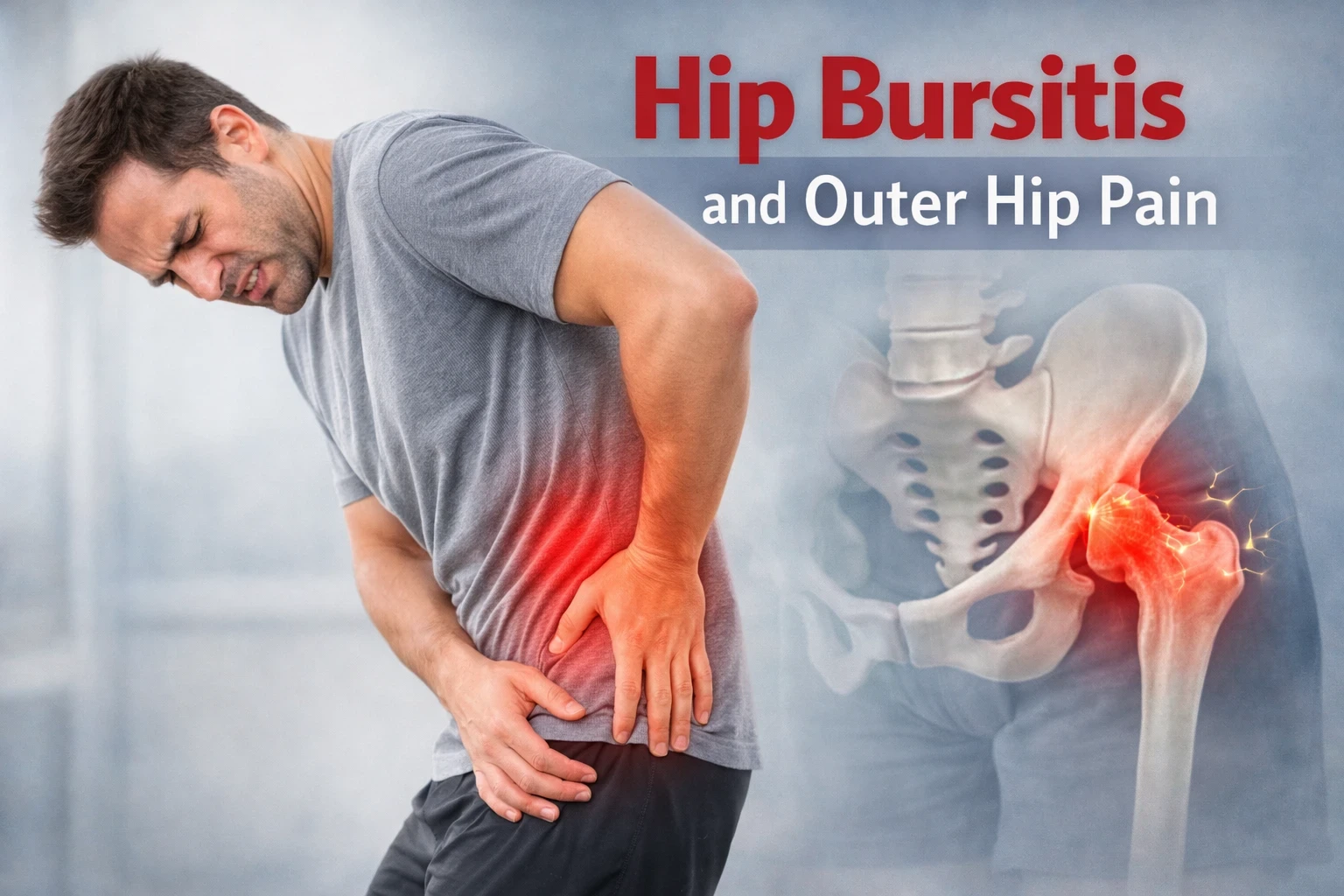
Another important cause of hip pain is bursitis. Bursae are small fluid-filled sacs that help reduce friction between bones, muscles, and tendons.
When these sacs become irritated or inflamed, hip bursitis can develop.
Symptoms often include:
• Pain on the outer side of the hip
• Pain when lying on the affected side
• Tenderness around the hip joint
• Pain when climbing stairs or walking
Hip bursitis frequently occurs due to repetitive movement, prolonged pressure on the hip, or muscle imbalances.
Arthritis and Joint Degeneration
Joint degeneration is another major contributor to hip pain symptoms and causes, particularly in older adults.
Osteoarthritis occurs when the cartilage that cushions the hip joint gradually wears down.
As cartilage becomes thinner, bones may rub together and create pain.
Common symptoms of hip arthritis include
• Morning stiffness in the hip
• Pain that worsens with activity
• Limited joint mobility
• Grinding sensations during movement
Learning how the body processes pain signals can also help explain why joint discomfort sometimes persists.
You can explore this further in understanding pain mechanisms.
Injuries and Structural Hip Problems
Injuries are another possible explanation for hip pain symptoms and causes.
Trauma, sports injuries, or structural problems within the joint may disrupt normal hip movement.
Examples include:
• Hip labral tears
• Hip fractures
• Tendon injuries
• Hip impingement
These problems may cause deep joint pain, catching sensations, or instability when walking.
Hip discomfort may sometimes be linked to issues in nearby areas such as the lower back.
You can learn more about spinal-related pain in back pain treatment.
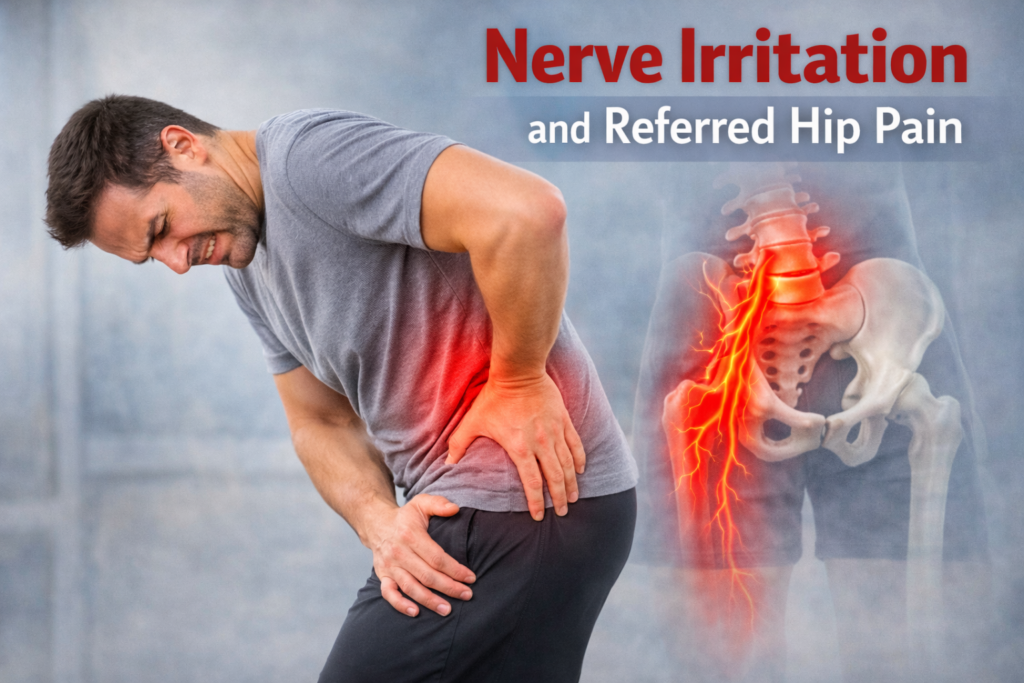
Nerve Irritation and Referred Pain
Not all hip pain originates directly from the hip joint. In some cases, the real cause may come from nerve irritation in the lower back.
Conditions such as sciatica or lumbar disc problems can send pain signals into the hip region.
Typical symptoms of nerve-related hip pain include:
• Burning or shooting pain
• Tingling sensations
• Numbness in the thigh or leg
• Pain travelling down the leg
Understanding how the body processes pain signals may help explain why discomfort sometimes spreads beyond the original injury site.
This topic is discussed further in why pain persists.
Lifestyle Factors That Influence Hip Pain Symptoms and Causes
Several lifestyle factors may contribute to hip pain symptoms and causes.
These include:
• Prolonged sitting
• Weak hip muscles
• Poor posture
• Limited mobility
• Excess body weight
Over time, these factors may increase pressure on the hip joint and surrounding tissues.
Regular movement, strengthening exercises, and good posture can help reduce unnecessary strain on the hip.

Solutions and Treatments for Hip Pain
Understanding hip pain symptoms and causes is important, but many people also want to know what may help reduce discomfort.
Treatment approaches usually depend on the underlying cause of hip pain.
Common strategies include:
Gentle Movement and Exercise
Regular movement helps maintain joint lubrication and muscle strength.
Low-impact activities such as walking, swimming, or cycling can support hip mobility.
Strengthening Hip Muscles
Weak glute and core muscles can increase pressure on the hip joint.
Strengthening these muscles may help stabilise the pelvis and improve joint function.
Lifestyle Adjustments
Small daily changes can also support hip health.
Helpful adjustments may include:
• Avoiding prolonged sitting
• Maintaining healthy body weight
• Improving posture
• Wearing supportive footwear
For a deeper guide exploring science-based approaches and natural strategies for hip discomfort, see top rated hip pain relief.
When Hip Pain Should Be Checked by a Professional
While mild hip pain often improves with rest and movement adjustments, certain symptoms should be evaluated by a healthcare professional.
Seek medical advice if hip pain:
• Persists for several weeks
• Occurs after a fall or injury
• Causes difficulty walking
• Includes swelling or fever
• Is accompanied by numbness or weakness
Early evaluation can help identify underlying problems and prevent further complications.
Frequently Asked Questions
What are the early hip pain symptoms?
Early hip pain symptoms may include stiffness, aching in the groin or outer hip, reduced flexibility, and discomfort when walking or standing.
What is the most common cause of hip pain?
Muscle strain, hip bursitis, and osteoarthritis are among the most common causes of hip pain.
Can hip pain come from the lower back?
Yes. Nerve irritation in the lower back can cause referred pain that travels into the hip or thigh region.
What helps relieve hip pain?
Hip pain relief may include gentle movement, strengthening exercises, posture improvements, and lifestyle adjustments that reduce stress on the joint.
Scientific Research
Hip pain in adults: evaluation and differential diagnosis
Greater trochanteric pain syndrome and hip bursitis