How To Improve Sleep With Fibromyalgia Your Options
How to improve sleep with fibromyalgia
How to improve sleep with fibromyalgia is one of the most important questions for anyone living with this condition.
Poor sleep doesn’t just cause fatigue. It increases pain sensitivity, slows recovery, and affects mood regulation.
When sleep quality improves, symptom intensity often becomes more manageable.
Because fibromyalgia affects how the nervous system processes pain, sleep disruption becomes part of the cycle.
Therefore, restoring deeper rest is not optional — it’s foundational.

What Makes Sleep Difficult in Fibromyalgia?
Fibromyalgia is linked to heightened nervous system activity.
As a result, many people struggle to reach deep, restorative sleep stages. Even if you spend enough hours in bed, the sleep may feel light and broken.
Common patterns include:
• Trouble falling asleep
• Frequent awakenings
• Morning stiffness
• Unrefreshing sleep
If you’ve explored fibromyalgia pain symptoms: widespread and confusing, you’ll know that sleep disruption is rarely isolated. It’s part of a broader sensitivity pattern.
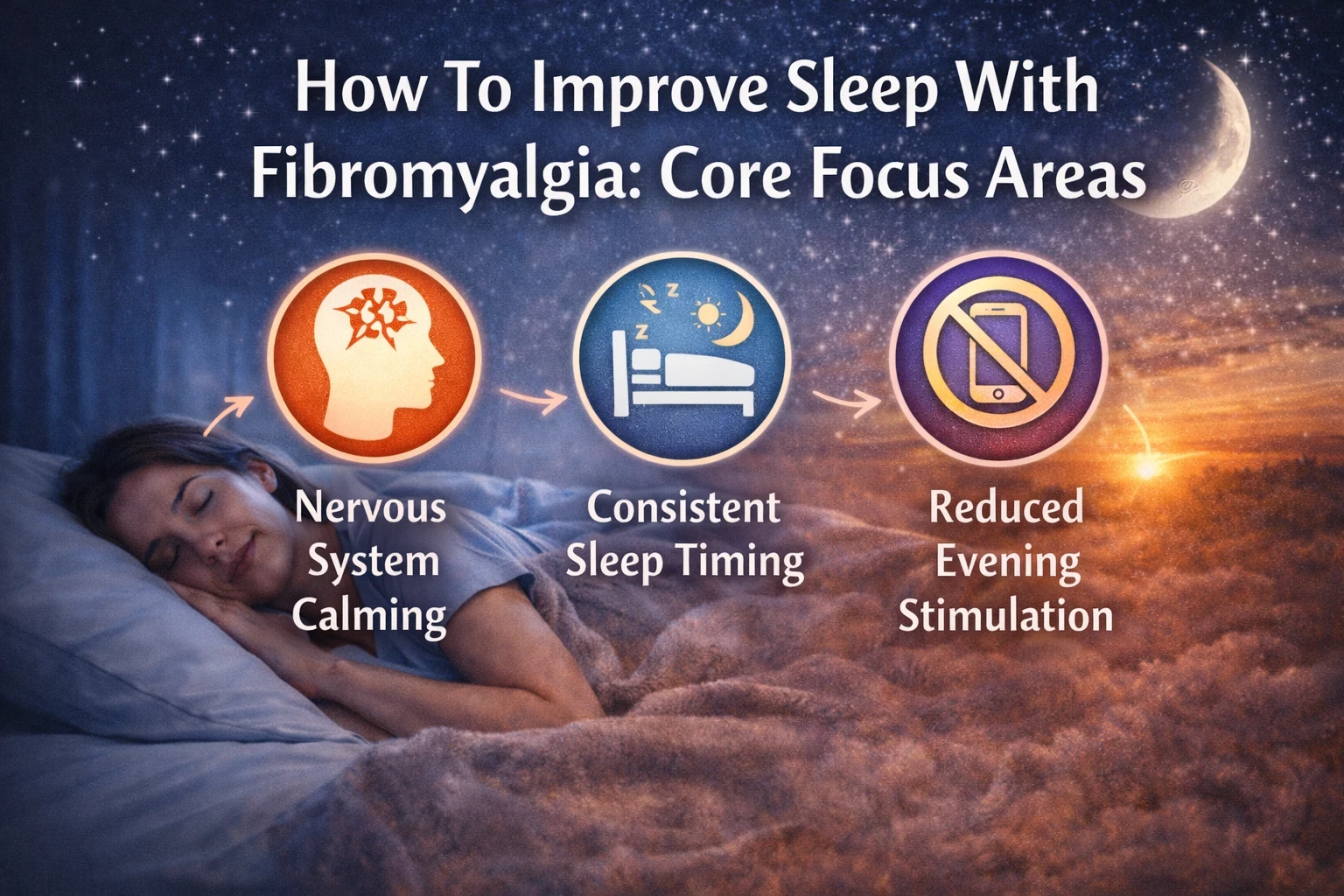
How to improve sleep with fibromyalgia Core Focus Areas
When looking at how to improve sleep with fibromyalgia, three mechanisms matter most:
1. Nervous system calming
2. Consistent sleep timing
3. Reduced evening stimulation
Rather than chasing quick fixes, long-term consistency works better.
In fact, this same principle appears in fibromyalgia pain management strategies — small, repeatable habits tend to outperform extreme interventions.
Set a Consistent Sleep Window
Going to bed and waking up at the same time daily stabilizes your internal clock. Even on weekends, aim for consistency.
Although it may feel tempting to “sleep in” after a bad night, irregular timing can worsen future sleep quality. Instead, protect your wake-up time first. Gradually, the body adapts.
Lower Evening Stimulation
Next, reduce nervous system activation before bed.
At least 60 minutes before sleep:
• Dim overhead lights
• Limit screens
• Avoid stressful conversations
• Pause problem-solving
Instead, choose calming activities such as gentle stretching, breathing exercises, or quiet reading. These cues signal safety to the brain.
Importantly, overstimulation late at night keeps the stress response active — and that delays sleep onset.
Gentle Movement During the Day
Movement improves sleep depth when done correctly. However, intensity matters.
Light walking, stretching, or paced activity earlier in the day can support sleep without triggering flare-ups.
If you’ve reviewed treatment options for fibromyalgia pain, you’ll notice that gradual progression is consistently recommended.
Avoid high-intensity exercise close to bedtime.
Use Heat Strategically
Heat relaxes muscles and increases circulation. Therefore, a warm shower or heating pad 45–60 minutes before bed may reduce stiffness and ease nighttime pain.
For some individuals, this simple step makes a noticeable difference in falling asleep faster.

Targeted Supplements (Cautiously)
Magnesium glycinate, low-dose melatonin, or certain herbal blends are sometimes used to support sleep.
However, supplements should complement lifestyle adjustments — not replace them.
Start low, introduce one change at a time, and monitor patterns for several weeks.
Consistency in timing often matters more than dosage escalation.
For more on targeted sleep supplements go to HerbsPro.
Supportive Sleep Environment Tweaks
Small environmental adjustments can help:
• Breathable bedding
• Supportive pillows
• White noise machines
• Weighted blankets (if tolerated)
Sometimes it’s the combination of minor changes that improves overall rest.
Go here to get more information on supportive sleep products.

Secondary Benefits of Better Sleep
When sleep improves, benefits often extend beyond fatigue.
You may notice:
• Reduced next-day pain sensitivity
• Improved mental clarity
• More stable mood
• Fewer flare triggers
Because fibromyalgia involves central pain processing, sleep quality directly influences symptom perception.
That’s why understanding how to improve sleep with fibromyalgia is central to overall management.
Research and Evidence
https://pubmed.ncbi.nlm.nih.gov/23054432/
https://pubmed.ncbi.nlm.nih.gov/19647498/
Limitations and Realistic Expectations
Improvement rarely happens overnight.
Some nights will still be restless. That doesn’t mean progress isn’t occurring. Instead, focus on weekly trends rather than single nights.
Gradual nervous system regulation takes time.
Balanced Perspective
How to improve sleep with fibromyalgia is not about achieving perfect sleep.
It’s about creating conditions where your body feels safe enough to rest.
Start with:
• Consistent timing
• Reduced evening stimulation
• Gentle daily movement
• Strategic heat use
Layer changes slowly.
Over time, small improvements compound. And when sleep stabilizes, every other fibromyalgia strategy tends to work more effectively.