How To Use TENS Therapy At Home (Simple, Safe, And
How to Use TENS Therapy at Home
If you’re looking for a drug-free way to manage pain, learning how to use TENS therapy at home can be a practical step.
TENS (Transcutaneous Electrical Nerve Stimulation) is widely used for back pain, joint discomfort, nerve irritation, and muscle tension.
The key is using it correctly—because placement, settings, and timing all matter.
This guide breaks everything down into simple, easy-to-follow steps so you can use TENS therapy safely and confidently at home.
What Is TENS Therapy and Why Use It at Home?
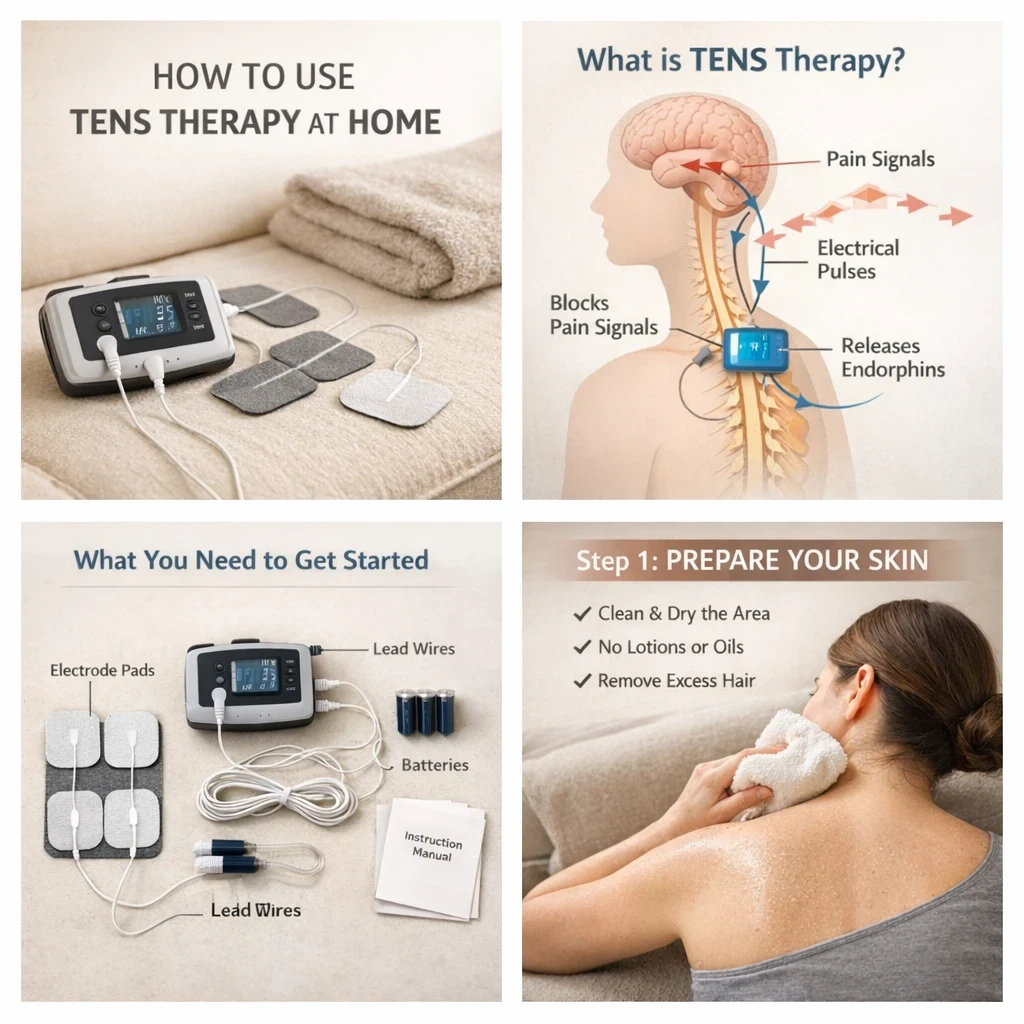
TENS therapy uses a small device that sends low-voltage electrical pulses through the skin. These pulses interact with nerves to:
Block pain signals travelling to the brain
Stimulate endorphins (natural painkillers)
Relax tight or overworked muscles
When used correctly, understanding how to use TENS therapy at home allows you to manage pain on your own schedule without relying solely on medication.
The benefits of this type of pain therapy are worth looking at.
What You Need Before You Start
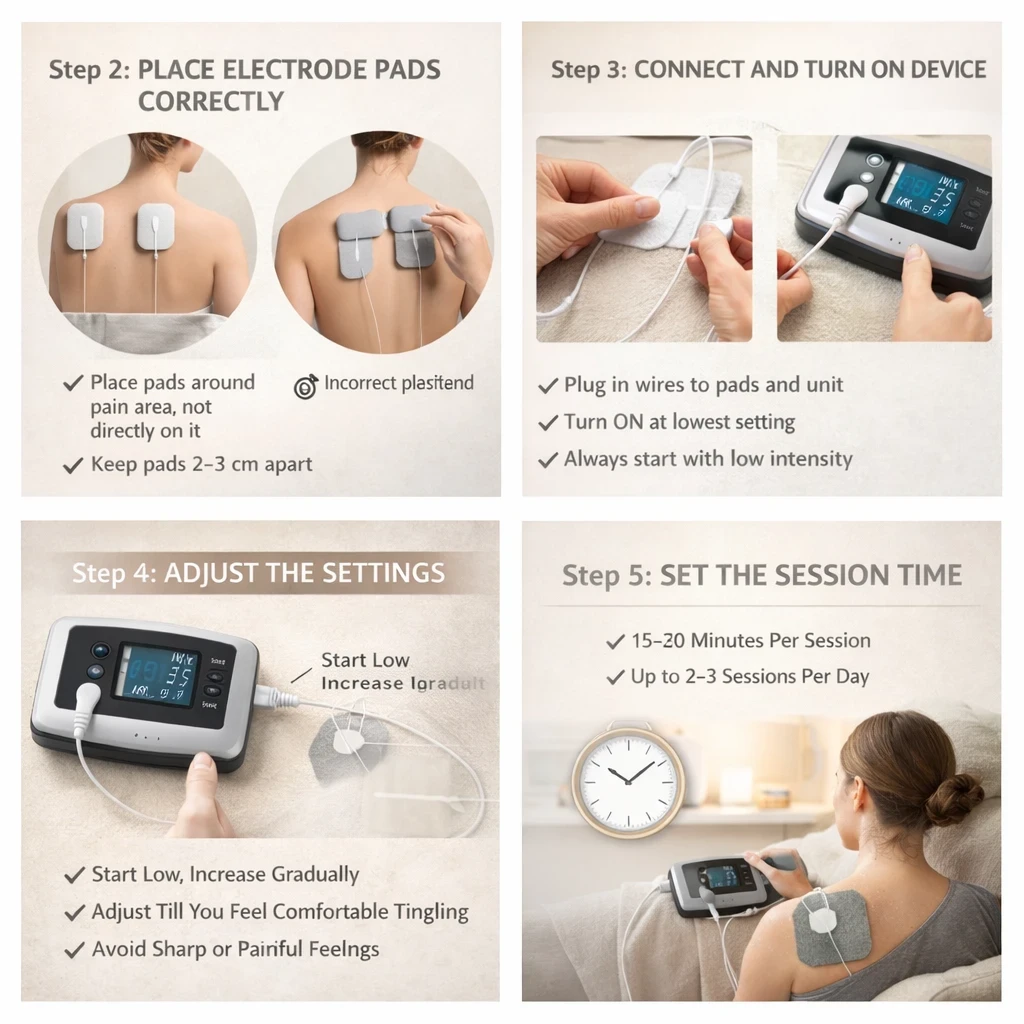
Before learning how to use TENS therapy at home, make sure you have:
A TENS unit (portable device)
Electrode pads (adhesive gel pads)
Lead wires (connect pads to device)
Fresh batteries or charged unit
Optional but helpful:
A mirror (for placing pads on your back)
Clean towel (for skin prep)
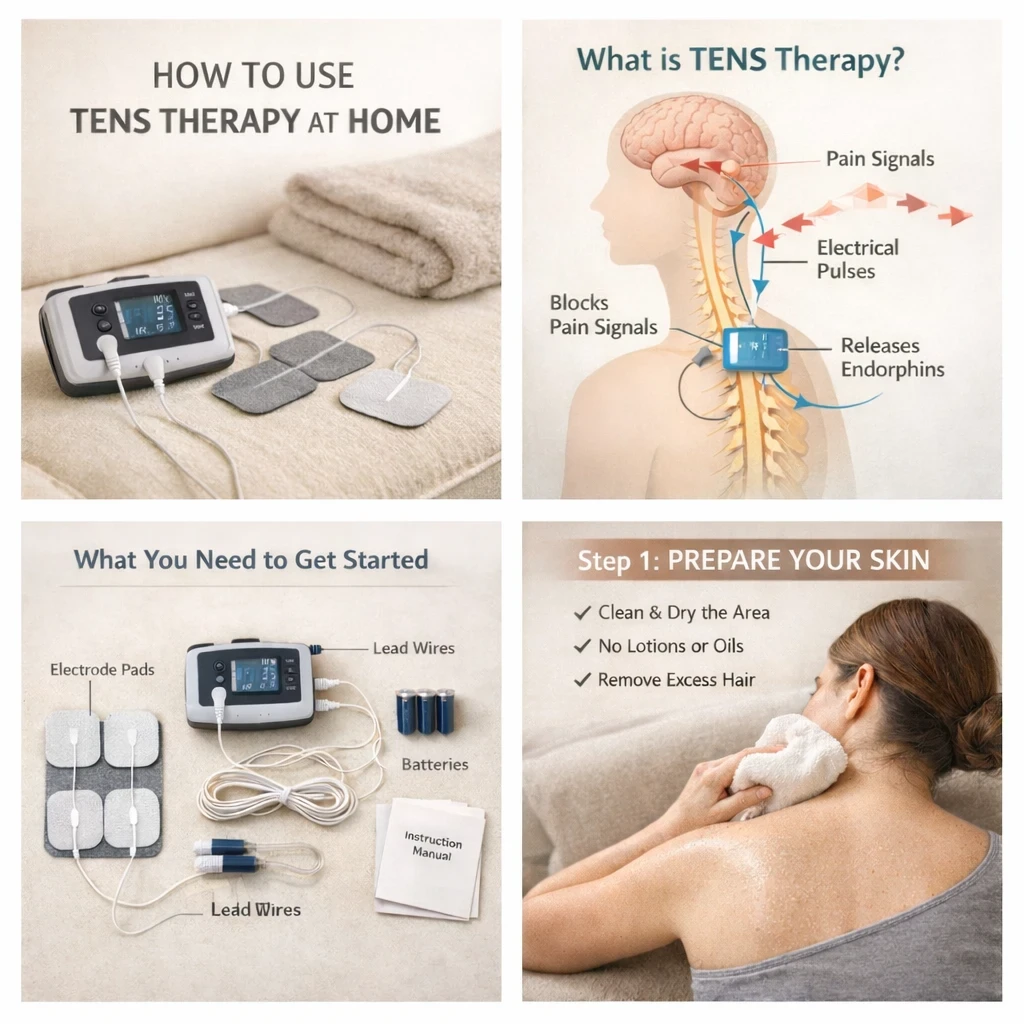
Step 1: Prepare Your Skin
Proper preparation improves effectiveness and comfort.
Clean the skin with water (no oils or lotions)
Dry the area completely
Remove excess hair if needed
Good skin contact ensures the electrical signals are delivered evenly.
This is a small step, but it makes a big difference when applying how to use TENS therapy at home in practice.
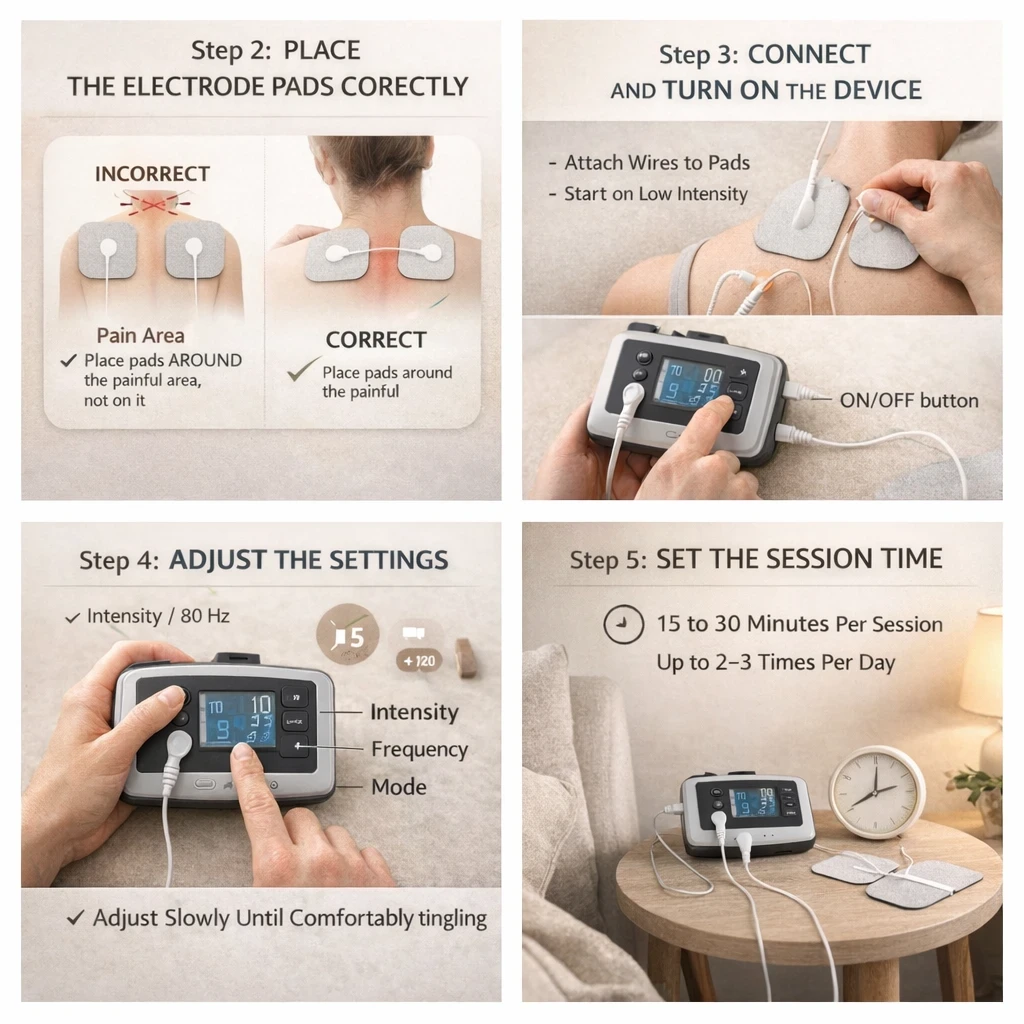
Step 2: Place the Electrode Pads Correctly
Pad placement is one of the most important parts of how to use TENS therapy at home.
General Placement Guidelines:
Place pads around the painful area, not directly on it
Keep pads at least 2–3 cm apart
Use symmetrical placement when possible
Examples:
Lower back pain → pads on either side of the spine
Knee pain → above and below the joint
Shoulder pain → front and back of the shoulder
Avoid placing pads:
On broken skin
Near the heart
On the front of the neck
Correct placement helps the therapy target nerves more effectively.
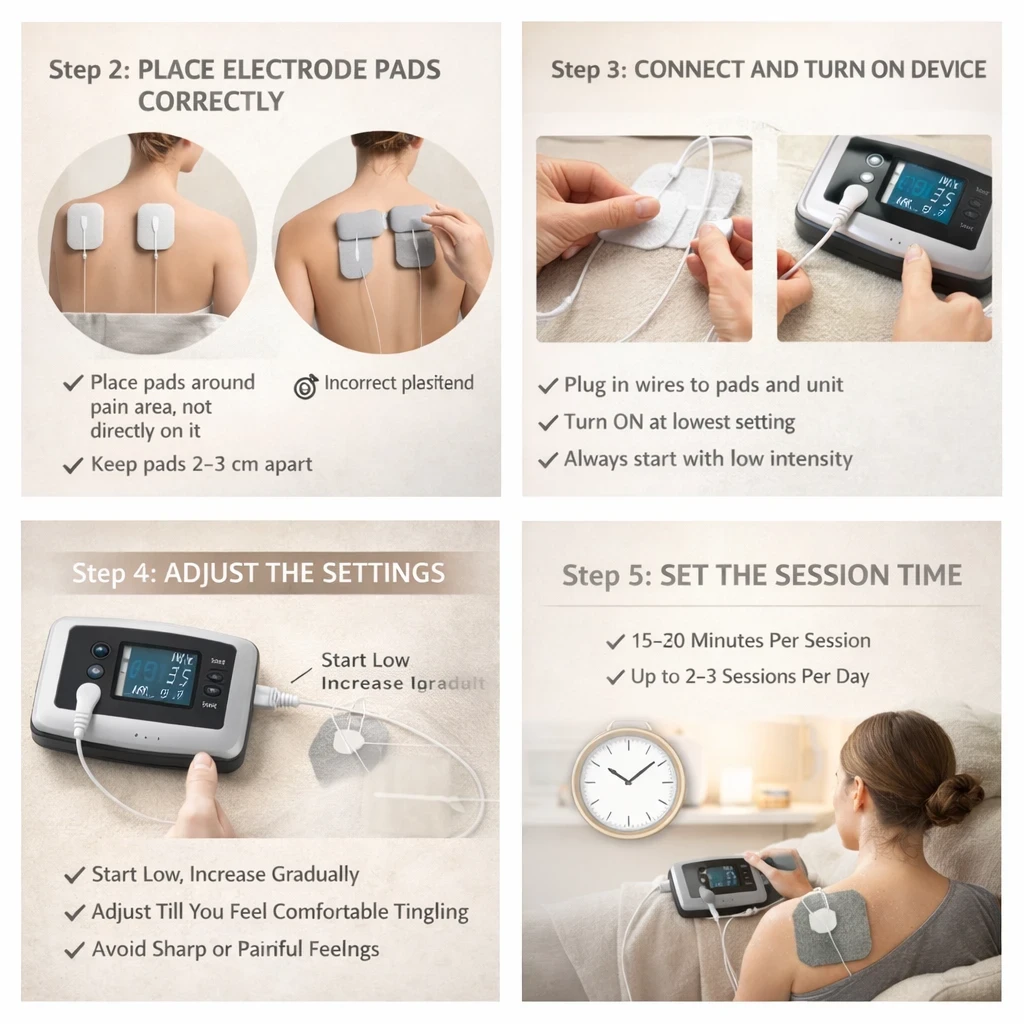
Step 3: Connect and Turn On the Device
Attach lead wires to the pads.
Connect wires to the TENS unit.
Turn the device on at the lowest setting.
When learning how to use TENS therapy at home, always start low.
You can increase intensity gradually once you understand how your body responds.
Step 4: Adjust the Settings
Most TENS units allow you to control:
Intensity (strength of pulses)
Frequency (speed of pulses)
Mode (pattern of stimulation)
Beginner Recommendation:
Start with low intensity
Increase until you feel a strong but comfortable tingling
Avoid sharp or painful sensations
A common mistake when applying how to use TENS therapy at home is turning the intensity too high too quickly.
Strong doesn’t mean better—comfortable and consistent is what works.
For more on this therapy for pain relief go here.
Step 5: Set the Session Time
Typical session length:
15 to 30 minutes per session
Up to 2–3 sessions per day
You can adjust based on comfort and results. Some people benefit from shorter, more frequent sessions.
When following how to use TENS therapy at home, consistency is often more effective than long, occasional sessions.
Shop Quality Assured TENS Therapy Here.
Step 6: Relax During Treatment
While the device is running:
Sit or lie in a comfortable position
Avoid moving too much (pads may shift)
Let muscles relax
You should feel:
A steady tingling sensation
No pain or discomfort
If anything feels sharp or uncomfortable, reduce intensity or stop the session.
Learn more at Vive Health Store.
Step 7: Turn Off and Remove Pads Safely
After your session:
Turn off the device first
Gently remove pads from skin
Place pads back on their protective film
Proper care extends pad life and keeps them effective for future use.
Best Practices for Better Results
To get the most out of how to use TENS therapy at home, follow these tips:
Rotate pad placement slightly each session
Stay hydrated (muscle tissue responds better)
Combine with gentle stretching
Use regularly rather than only during severe pain
These small adjustments can significantly improve results over time.
Common Mistakes to Avoid
Even though how to use TENS therapy at home is simple, these mistakes can reduce effectiveness:
Placing pads too close together
Using it on broken or irritated skin
Turning intensity too high
Expecting instant results every time
Not using it consistently
TENS therapy works best as part of a routine, not a one-off fix.
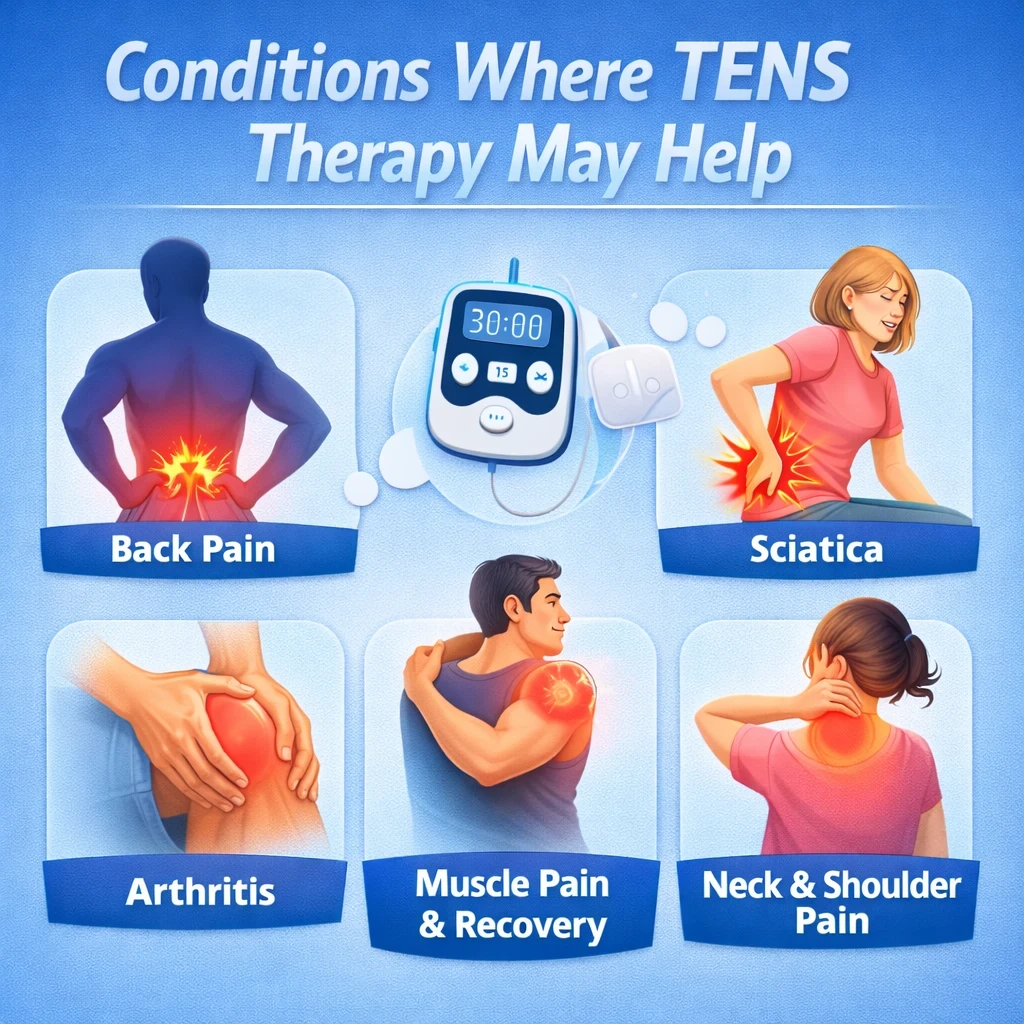
Conditions Where TENS Therapy May Help
Many people explore how to use TENS therapy at home for:
Lower back pain
Sciatica
Arthritis
Neck and shoulder tension
Muscle strains
Post-exercise soreness
While results vary, TENS is widely used as a supportive tool for managing everyday pain.
Safety Considerations
TENS therapy is generally safe, but there are situations where caution is needed.
Avoid using TENS if you:
Have a pacemaker
Are pregnant (unless advised by a professional)
Have epilepsy (consult a doctor first)
Stop use if you experience:
Skin irritation
Unusual discomfort
Dizziness
Understanding safety is a key part of learning how to use TENS therapy at home responsibly.
What TENS Therapy Can and Can’t Do
A balanced view matters.
TENS Therapy May:
Reduce pain perception
Improve comfort during movement
Support recovery routines
TENS Therapy Does Not:
Cure underlying conditions
Replace medical treatment when needed
Work the same for everyone
Keeping expectations realistic helps you use TENS more effectively.
Frequently Asked Questions
How often should I use TENS therapy at home?
You can use it 1–3 times per day depending on your comfort and needs.
Can I use TENS every day?
Yes, many people use it daily as part of a pain management routine.
How strong should the setting be?
Strong but comfortable. You should feel tingling, not pain.
Can I move around while using TENS?
It’s better to stay still to keep pad placement consistent.
How long does it take to feel results?
Some people feel relief quickly, while others notice gradual improvement over several sessions.
Final Thoughts
Learning how to use TENS therapy at home is straightforward, but using it well comes down to consistency, correct pad placement, and comfortable settings.
Start simple. Pay attention to how your body responds. Adjust gradually.
Over time, TENS therapy can become a reliable, easy-to-use tool in your overall approach to managing pain—right from the comfort of home.
Reference
https://bmjopen.bmj.com/content/12/2/e051073