Knee Bursitis Pain Relief Options: A Clear, Practical Guide
Knee Bursitis Pain Relief Options
Knee bursitis pain relief options are often the first thing people search for when knee swelling and discomfort begin to interfere with everyday movement.
Your options here will look closely at reducing irritation, support your recovery and assist you in returning to normal everyday activities without any more stress on the knee joint.
What Is Knee Bursitis?
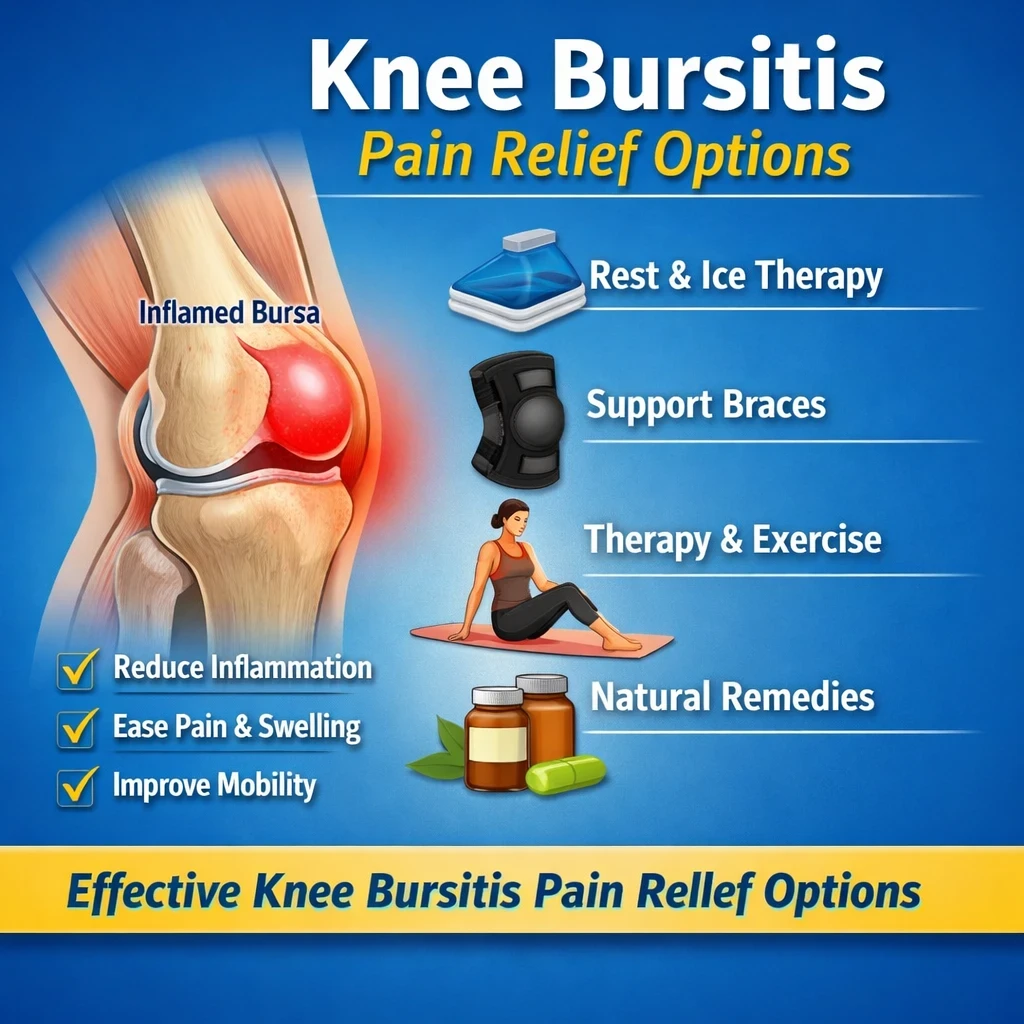
Knee bursitis occurs when one of the small fluid-filled sacs (bursae) around the knee becomes inflamed.
These sacs act as cushions, reducing friction between bones, tendons, and soft tissue.
When irritated, symptoms may include:
Swelling at the front or side of the knee
Pain when kneeling or applying pressure
Warmth or redness
Restricted or stiff movement
Understanding the condition is the first step toward choosing the right Knee bursitis pain relief options.
How Knee Bursitis Affects Movement
The knee depends on smooth interaction between tissues. When a bursa becomes inflamed, movement can feel uncomfortable or limited.
People often compensate without realising it, which can lead to:
Reduced flexibility
Muscle imbalances
Extra strain on surrounding joints
That’s why effective Knee bursitis pain relief options should include both symptom relief and movement restoration.
Common Causes of Knee Bursitis
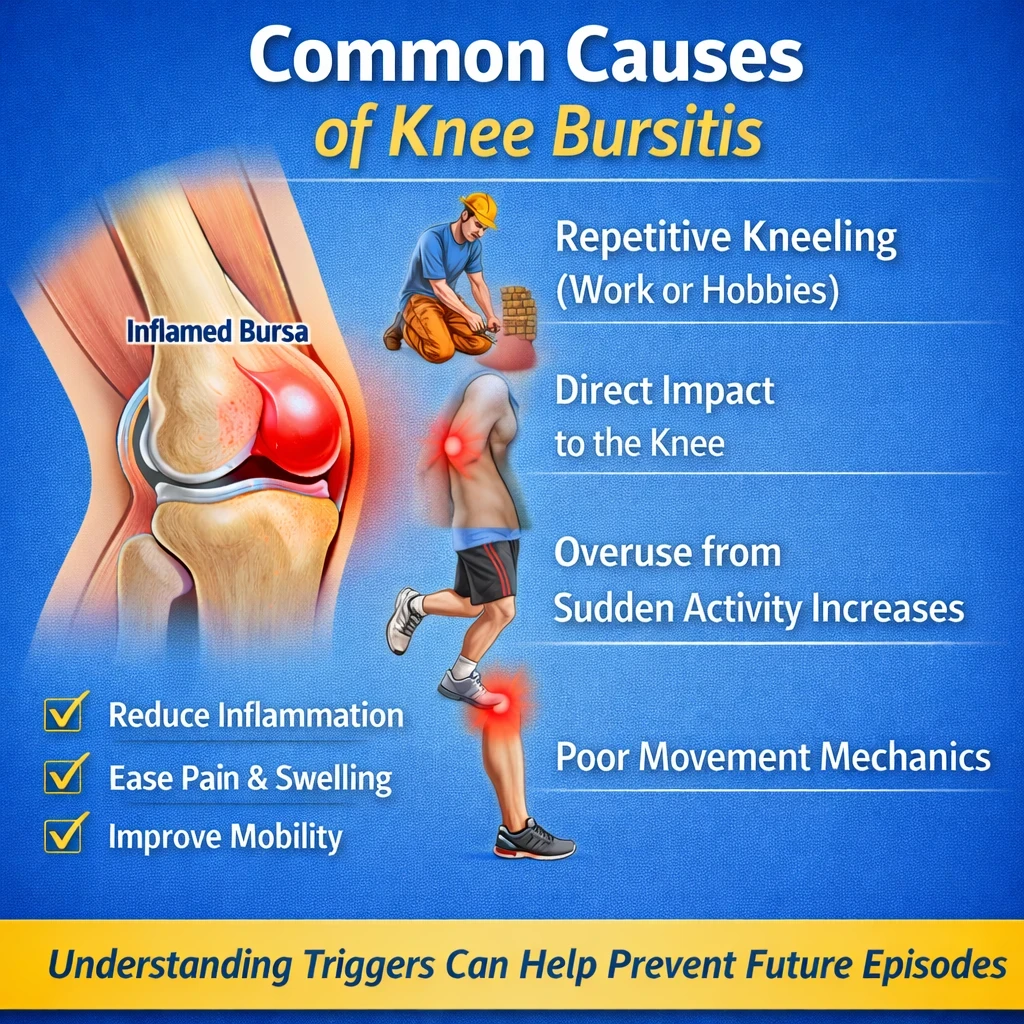
Identifying the cause helps prevent recurrence.
Common triggers include:
Repetitive kneeling (work or hobbies)
Direct impact to the knee
Overuse from sudden activity increases
Poor movement mechanics
Addressing these factors is essential for long-term success.
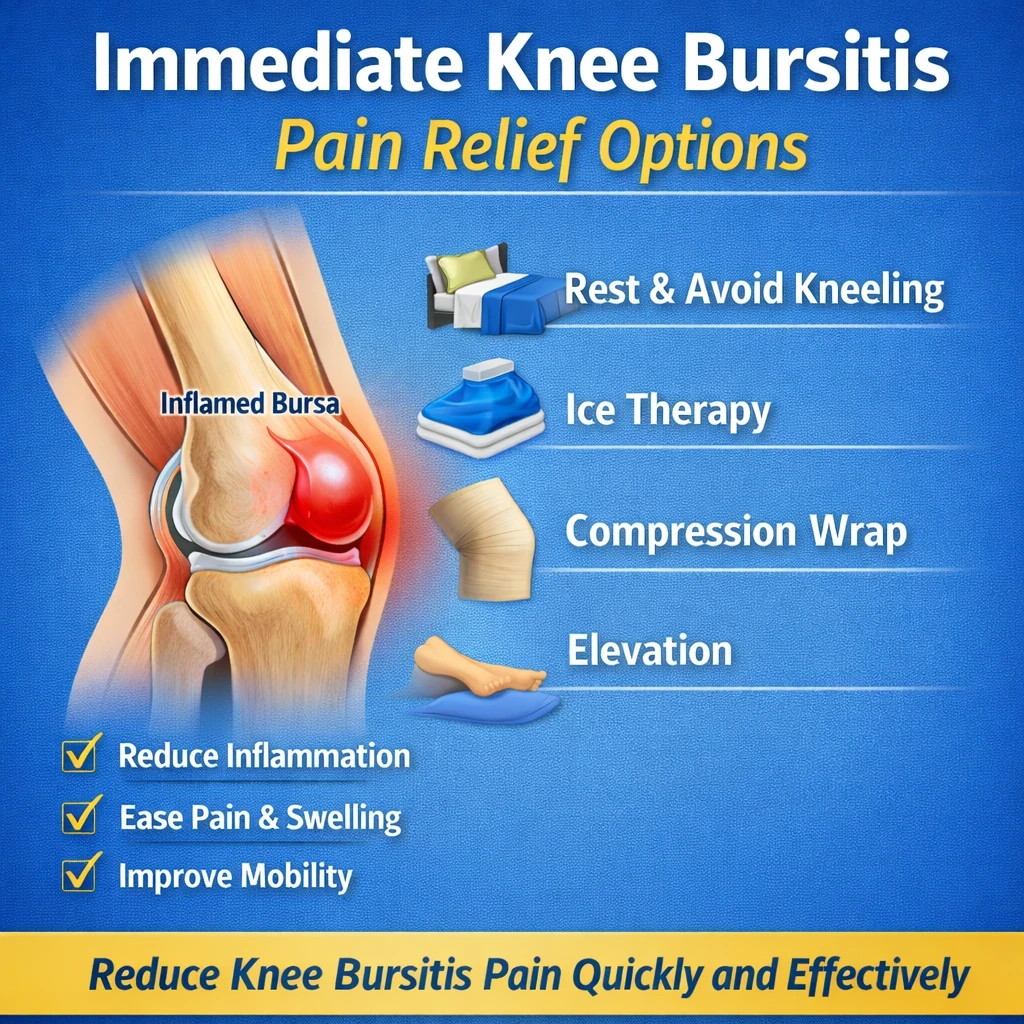
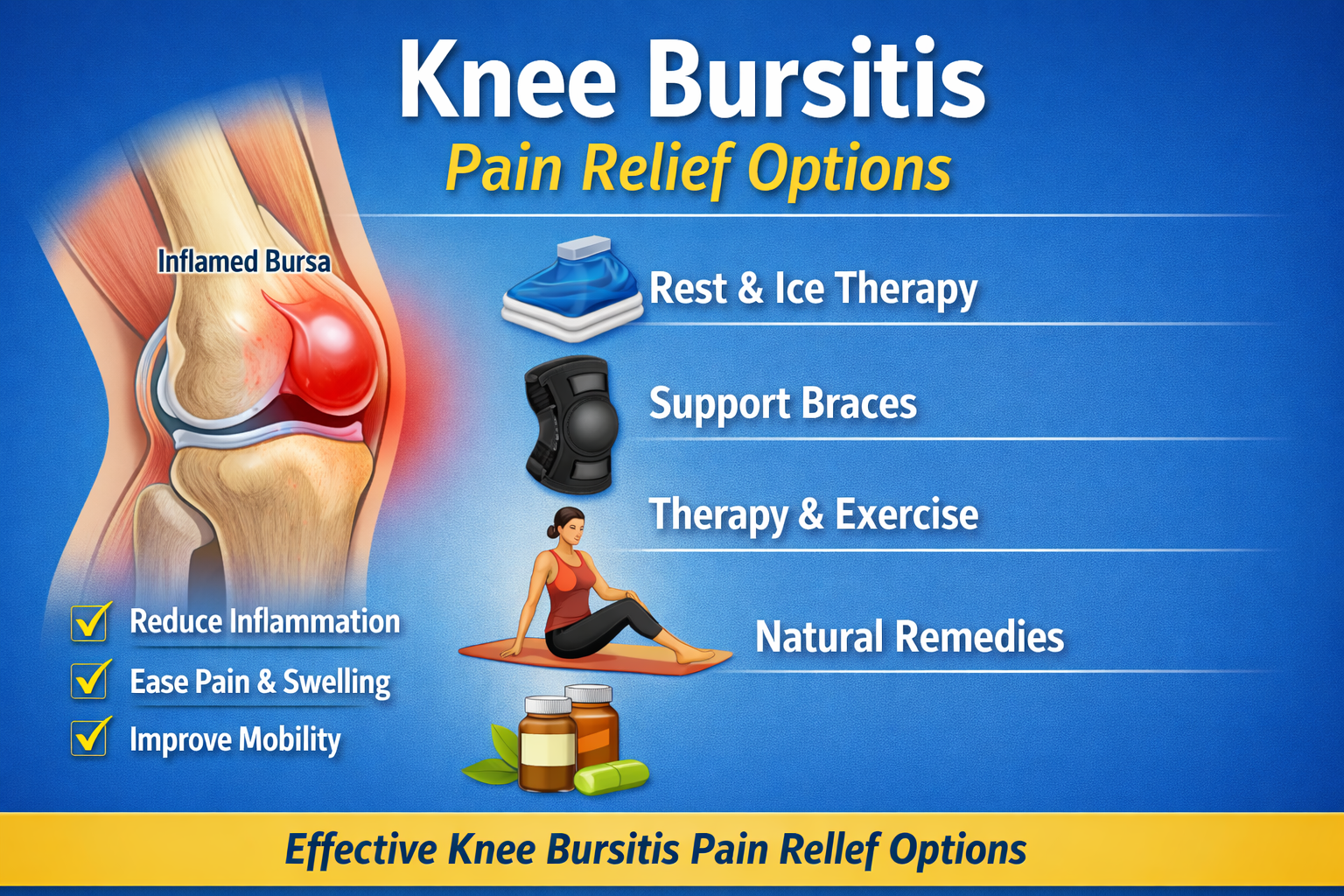
Immediate Knee Bursitis Pain Relief Options
Early management can significantly reduce symptoms.
1. Rest and Load Management
Avoid activities that aggravate the knee while keeping light movement to prevent stiffness.
2. Cold Therapy
Applying ice for 10–15 minutes helps reduce swelling and calm inflammation.
This remains one of the most reliable Knee bursitis pain relief options during flare-ups.
3. Compression and Elevation
A light support bandage and elevating the leg can reduce fluid buildup and improve comfort.
4. Short-Term Anti-Inflammatory Support
Over-the-counter options may help temporarily, but they should be used with care and not as a long-term solution.
Movement-Based Recovery Strategies
Once pain begins to settle, movement becomes part of recovery.
Gentle exercises can:
Improve circulation
Restore joint flexibility
Prevent stiffness
Examples include:
Controlled knee bends
Straight leg raises
Light stretching of surrounding muscles
A structured approach can help guide safe and effective movement during recovery.
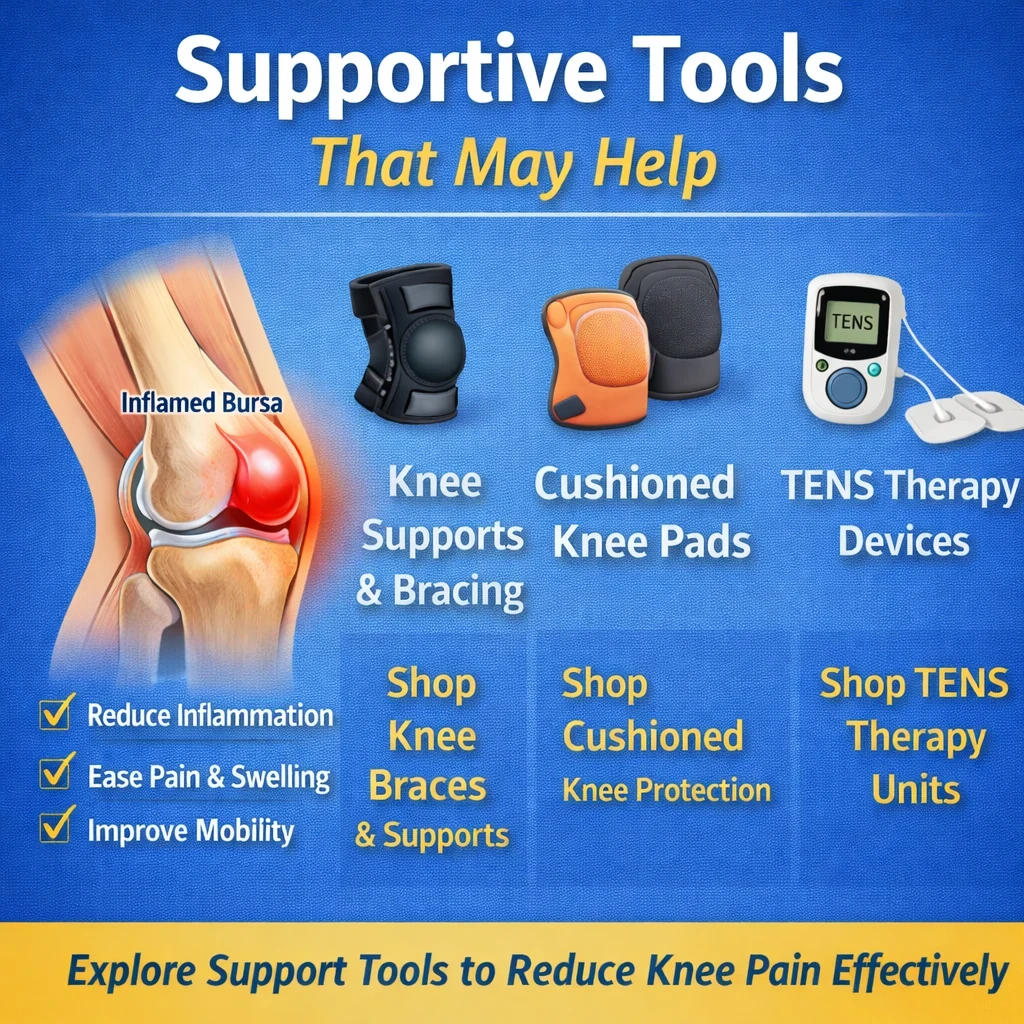
Supportive Tools That May Help
Combining supportive tools with movement often improves outcomes.
Knee Supports and Bracing
These can reduce pressure on the inflamed area and provide stability during daily activity.
Shop here for supportive knee braces and compression supports
Cushioned Protection
Using knee pads when kneeling helps prevent further irritation.
Shop here for cushioned knee protection and joint support
Therapy-Based Support
Targeted approaches such as TENS units for pain relief may help manage discomfort by influencing pain signals.
Shop here for TENS therapy devices for knee pain relief
You can also explore additional
infrared pain relief products that work as part of a broader recovery strategy.
Natural and Complementary Options
Natural approaches can support recovery when used alongside core strategies.
Heat Therapy (Later Stages)
Once swelling reduces, heat may help relax muscles and improve mobility.
Gentle Massage
Light soft tissue work around the knee (avoiding direct pressure on the bursa) can ease tension.
Anti-Inflammatory Nutrition
Balanced nutrition supports the body’s natural healing response.
Shop here for quality assured joint support supplements
These approaches can complement other Knee bursitis pain relief options without replacing essential care.
When to Seek Medical Advice beyond knee bursitis pain options
Most cases improve with simple management, but some require professional input.
Seek advice if:
Swelling persists or worsens
Pain increases over time
There are signs of infection
Movement becomes severely restricted
Medical support may include:
Fluid drainage
Guided rehabilitation
Further assessment if needed
Preventing Recurrence
Preventing future flare-ups is key.
Helpful strategies include:
Avoid prolonged pressure on the knees
Use protective padding when needed
Strengthen surrounding muscles
Maintain proper movement patterns
Consistency with these habits supports long-term results.
What Knee Bursitis Pain Relief Options Can and Can’t Do
What They Can Do:
Reduce inflammation and discomfort
Improve mobility
Support gradual return to activity
What They Can’t Do:
Provide instant permanent relief
Replace proper movement habits
Prevent recurrence without lifestyle changes
A balanced approach always delivers better outcomes.
Frequently Asked Questions
How long does knee bursitis take to heal?
Mild cases may improve within a few weeks, while more persistent cases can take longer depending on activity and care.
Is walking okay with knee bursitis?
Gentle walking is usually fine if it does not increase pain. Avoid overloading the joint during flare-ups.
Should I use heat or ice?
Ice is best early on for swelling. Heat may help later when stiffness is the main issue.
Can knee bursitis go away on its own?
Yes, many cases settle with rest and proper care, but ignoring symptoms can delay recovery.
Scientific Study
https://www.ncbi.nlm.nih.gov/books/NBK513340/