
Magnesium Benefits For Sleep Calming Relaxing Sleep
Magnesium Benefits for Sleep
Magnesium benefits for sleep are gaining attention as more people look for natural ways to improve rest.
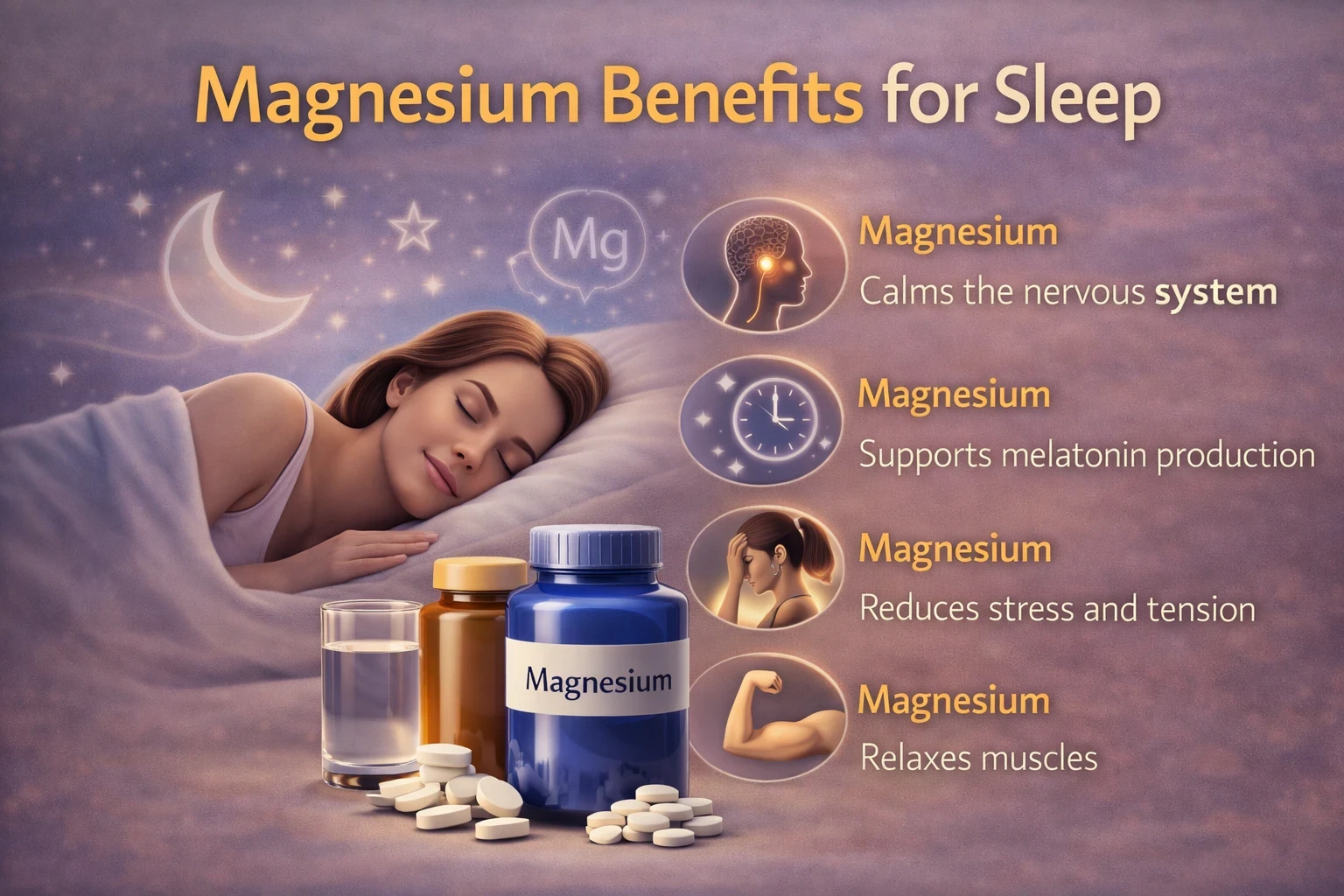
If you struggle to fall asleep or stay asleep, this essential mineral may offer gentle support without harsh side effects. Magnesium plays a key role in calming the nervous system, relaxing muscles, and supporting sleep hormones.
These combined effects make it a useful option for improving sleep quality over time.
What Is Magnesium and Why It Matters for Sleep
Magnesium is involved in hundreds of processes in the body, including nerve function and muscle control.
One of its most important roles is helping the body shift into a relaxed state. The magnesium benefits for sleep come from its ability to regulate neurotransmitters and support melatonin production.
When magnesium levels are low, sleep problems often follow.
Common signs of low magnesium include:
Difficulty falling asleep Waking during the night Muscle tension Increased stress These factors can all disrupt deep, restorative sleep.
How Magnesium Supports Better Sleep
The reason magnesium benefits for sleep are so effective lies in how it works with your body’s natural systems.
Calms the Nervous System
Magnesium supports the parasympathetic nervous system, helping your body relax before sleep.
Supports Melatonin Balance
Healthy magnesium levels help regulate melatonin, improving your sleep-wake cycle.
Reduces Stress
Magnesium helps lower cortisol levels, making it easier to unwind at night. To understand this connection further, see natural remedies for pain and sleep.
Relaxes Muscles
Tension in the body can interrupt sleep. Magnesium helps muscles release and relax.
Quality Assured Magnesium Supplements
If you want to support better rest naturally, a well-made supplement can help you get more from the magnesium benefits for sleep, especially when combined with a steady bedtime routine.
Shop Here
👉 Quality Assured Magnesium Supplements Shop Here Or Choose a Sleep Support Option 👉 Melatonin-Balanced Sleep Aid Shop Here
Why People Choose These Options
Quality assured support Easy to add to a night-time routine Designed for relaxation and sleep support
Conditions That May Benefit
The magnesium benefits for sleep may be especially helpful if your sleep issues are linked to:
Stress or anxiety
Mild insomnia
Muscle tightness
Night-time discomfort
For a broader overview, explore benefits of magnesium what you need to know.

Types of Magnesium for Sleep
Different forms of magnesium work differently in the body.
Magnesium glycinate – calming and well absorbed
Magnesium citrate – effective but may affect digestion
Magnesium threonate – supports brain function
All types of quality assured Magnesium Supplements available through HerbsPro Here.
Choosing the right type can influence how well you experience the magnesium benefits for sleep.
How to Use Magnesium Safely
Magnesium is generally safe when used correctly.
200–400 mg daily
Take 1–2 hours before bed
Start with a lower dose If you are active or recovering from exercise, see magnesium benefits for athletes.
Additional Benefits
Beyond improving rest, the magnesium benefits for sleep often include:
Better muscle recovery
Reduced tension
Improved relaxation
These effects support deeper, more consistent sleep.
Lifestyle Tips to Improve Results
Magnesium works best alongside good habits:
Keep a consistent bedtime
Reduce screen exposure
Limit caffeine late in the day
Create a calm sleep environment
Combining these habits with magnesium benefits for sleep can improve overall results.
FAQ: Magnesium Benefits for Sleep
Does magnesium help you sleep better? Yes, magnesium supports relaxation and hormone balance, which can improve sleep quality.
How long does it take to work? Some people notice changes within days, while others may need a few weeks of consistent use.
What type is best? Magnesium glycinate is often preferred for sleep support.
Can you take it every night? Yes, daily use is generally safe within recommended doses.
Are there side effects? High doses may cause digestive discomfort, so start low and increase gradually.
Limitations
Magnesium is helpful but not a cure-all.
Severe sleep issues may need medical advice
Lifestyle habits still matter
Underlying conditions may need attention
Final Thoughts
The growing interest in magnesium benefits for sleep reflects a move toward natural solutions.
By supporting relaxation and balance, magnesium can play a useful role in improving sleep quality over time. —
Scientific References https://pubmed.ncbi.nlm.nih.gov/23853635/ https://pubmed.ncbi.nlm.nih.gov/28654669/