Muscle Soreness Recovery Tips A Practical Guide To Recover Smarter
Muscle Soreness Recovery Tips
Muscle soreness recovery tips matter more than most people realise.
Whether you’ve pushed harder in the gym, walked further than usual, or simply changed your routine, that stiff, achy feeling can creep in the next day.
The good news? Soreness is common, manageable, and often a sign that your body is adapting.
This guide breaks down simple, realistic strategies you can start using immediately.

What Causes Muscle Soreness?
Most soreness after exercise is known as delayed onset muscle soreness (DOMS). It typically peaks 24–48 hours after activity.
It happens when muscle fibres experience small amounts of stress.
This isn’t dramatic damage — it’s more like microscopic strain that triggers repair and adaptation.
If you’d like a deeper breakdown of how pain signals work, see our guide on
aches, tension, & soreness explained.
Understanding this process is essential because muscle soreness recovery tips work best when you support the repair cycle instead of trying to shut soreness down aggressively.
1. Keep Moving (Gently)
One of the most effective muscle soreness recovery tips is light movement.
Complete rest often makes stiffness worse. Instead, try:
- A slow walk
- Easy cycling
- Gentle yoga
- Controlled mobility drills
Light movement increases circulation.
Better circulation means nutrients reach sore tissues faster and metabolic by-products clear more efficiently.
We explore this further in
movement, load, and pain sensitivity, where gradual exposure is explained in more depth.
The key word is gentle. This is not the day to chase personal records.
2. Hydration Matters More Than You Think
Dehydration can amplify soreness and fatigue.
Water helps maintain circulation, joint lubrication, and cellular recovery.
Adding electrolytes after intense sweating sessions can also support muscle function.
Consistent hydration is one of the simplest and most overlooked recovery strategies.
3. Prioritise Quality Sleep
Recovery largely happens while you sleep.
Growth hormone release, tissue repair, and nervous system recalibration all occur overnight.
If sleep is short or fragmented, soreness can linger longer.
You can improve sleep quality with the strategies outlined in
sleep hygiene tips that improve sleep quality.
If you’re serious about muscle soreness recovery tips, improving sleep quality should be near the top of your list.
4. Use Heat or Cold Strategically
Both heat and cold can help — but they serve different purposes.
Cold therapy may reduce acute inflammation immediately after intense exercise.
Heat therapy tends to feel better once stiffness sets in.
Warm showers, heating pads, or light sauna sessions can relax tight tissues and increase blood flow.
According to research published in the Journal of Strength and Conditioning Research, cold water immersion may reduce delayed onset muscle soreness in some cases:
https://pubmed.ncbi.nlm.nih.gov/24077348/
Good recovery strategies involve matching the tool to the timing of soreness rather than using one method blindly.
5. Focus on Nutrition That Supports Repair
Muscle repair requires fuel.
Key nutritional considerations include:
Adequate protein intake
Anti-inflammatory foods (berries, leafy greens, olive oil)
Omega-3 fatty acids
Magnesium-rich foods
These supplements are helpful for muscle recovery.
See the full range at HerbsPro go here.
Protein provides the building blocks for tissue repair.
Carbohydrates replenish glycogen stores.
Healthy fats support cellular integrity.
These foundational habits consistently appear in evidence-based muscle soreness recovery tips.
A broader scientific review on recovery strategies can be found here:
https://pubmed.ncbi.nlm.nih.gov/26701122/
6. Try Gentle Self-Massage or Foam Rolling
Foam rolling and massage may reduce the perception of soreness by improving circulation and influencing pain signalling.
Keep pressure moderate. Aggressive rolling can irritate tissues further.
Slow passes over sore areas for 30–60 seconds are usually enough.
When used properly, this becomes one of the more practical muscle soreness recovery tips because it can be done at home without special equipment.
7. Manage Training Load
Sometimes soreness isn’t just about recovery — it’s about programming.
If soreness is extreme or persistent, your workload may be increasing too quickly.
Smart progression includes:
- Gradually increasing volume
- Rotating muscle groups
- Scheduling lighter recovery sessions
- Allowing 48 hours before reloading the same muscle group
Sustainable progress often depends on applying muscle soreness recovery tips before soreness becomes overwhelming.
8. Support Your Nervous System
Recovery isn’t just muscular — it’s neurological.
Stress, poor sleep, and mental fatigue can increase pain sensitivity.
Breathing exercises, short relaxation sessions, or even quiet outdoor walks can lower stress levels and indirectly reduce soreness perception.
Often, muscle soreness recovery tips work best when they address both the body and the nervous system together.
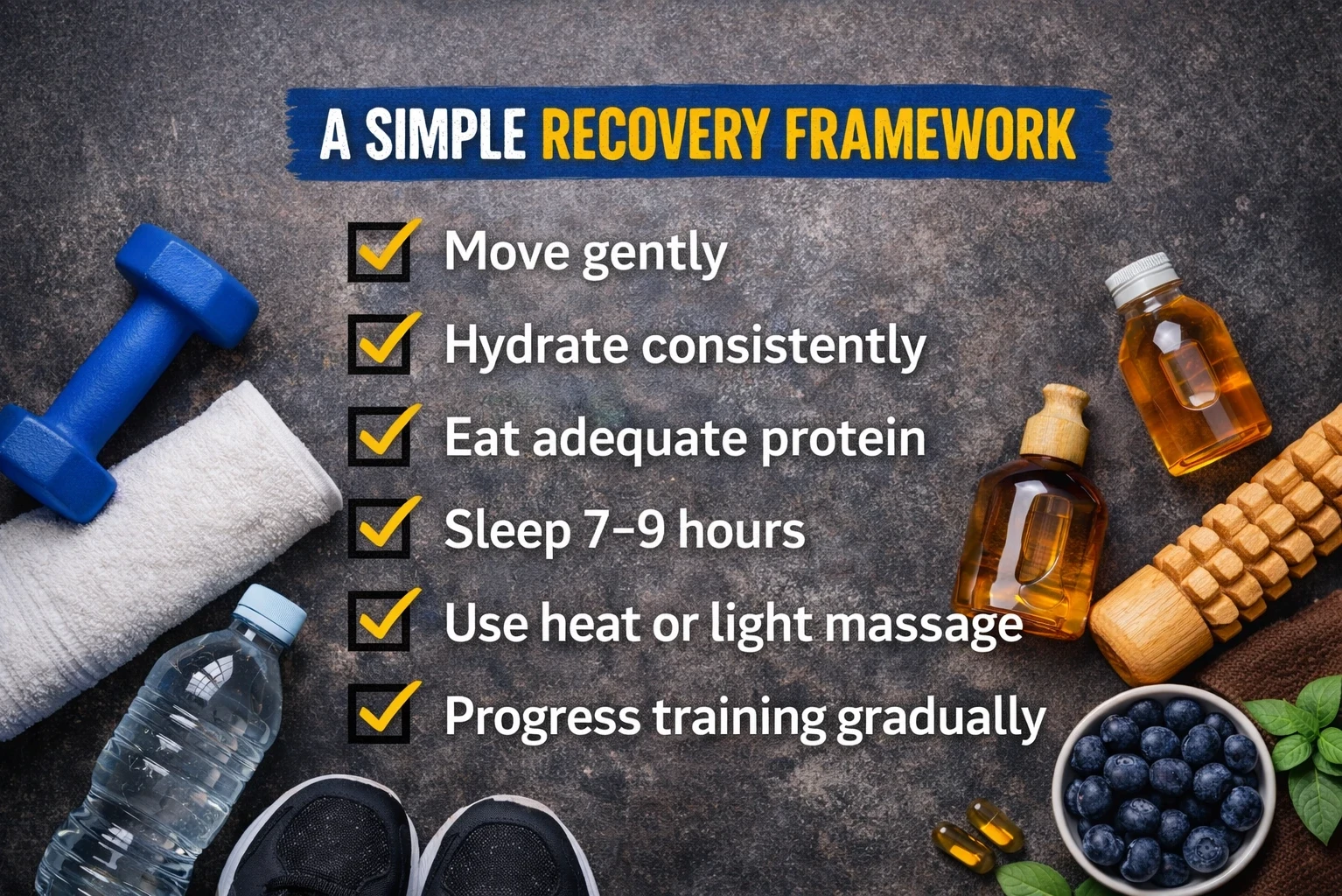
A Simple Recovery Framework
If you want to simplify everything above, here’s a practical checklist:
Move gently
Hydrate consistently
Eat adequate protein
Sleep 7–9 hours
Use heat or light massage
Progress training gradually
This balanced approach makes muscle soreness recovery tips sustainable rather than overwhelming.
Final Thoughts
Muscle soreness is part of physical adaptation. It doesn’t mean you’ve failed — it often means you’ve challenged your system.
The most effective muscle soreness recovery tips are not extreme or complicated.
They revolve around consistency, smart training progression, and basic lifestyle habits that support tissue repair.
Focus on steady recovery behaviours.
Over time, you’ll notice not only less lingering soreness, but better overall performance and resilience.