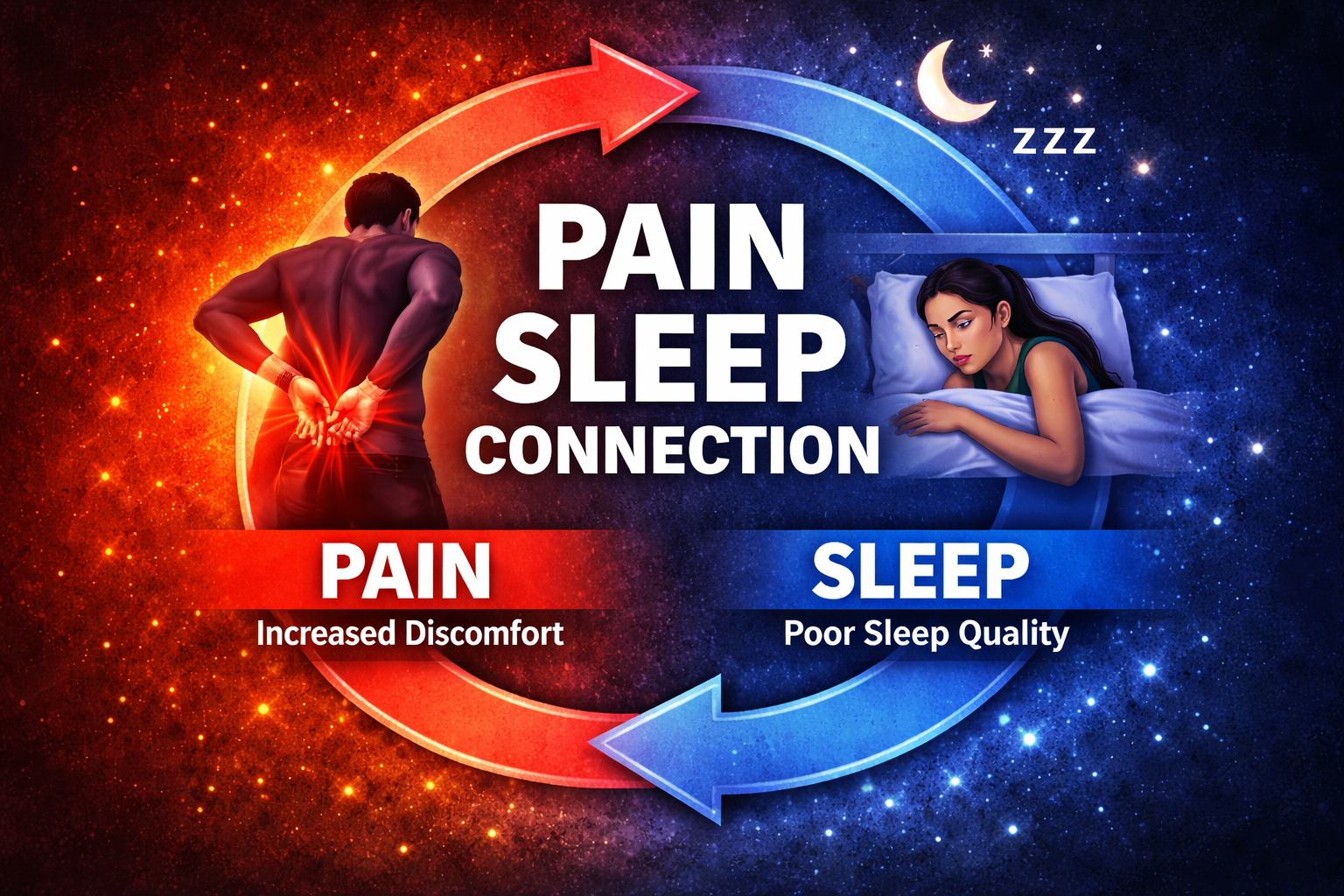
Pain Sleep Connection The Complete Guide To Better Sleep And Pain Relief
Pain Sleep Connection
Pain sleep connection is one of the most important yet underestimated factors influencing recovery, inflammation, and overall wellbeing.
If you’ve ever experienced worse pain after a poor night’s sleep—or struggled to fall asleep because of discomfort—you’ve already felt how powerful the pain sleep connection can be.
Understanding the pain sleep connection is not just helpful—it’s essential.
When you improve sleep, pain often improves. When pain reduces, sleep becomes deeper and more restorative. This creates a positive cycle that supports long-term health.
What Is the Connection?
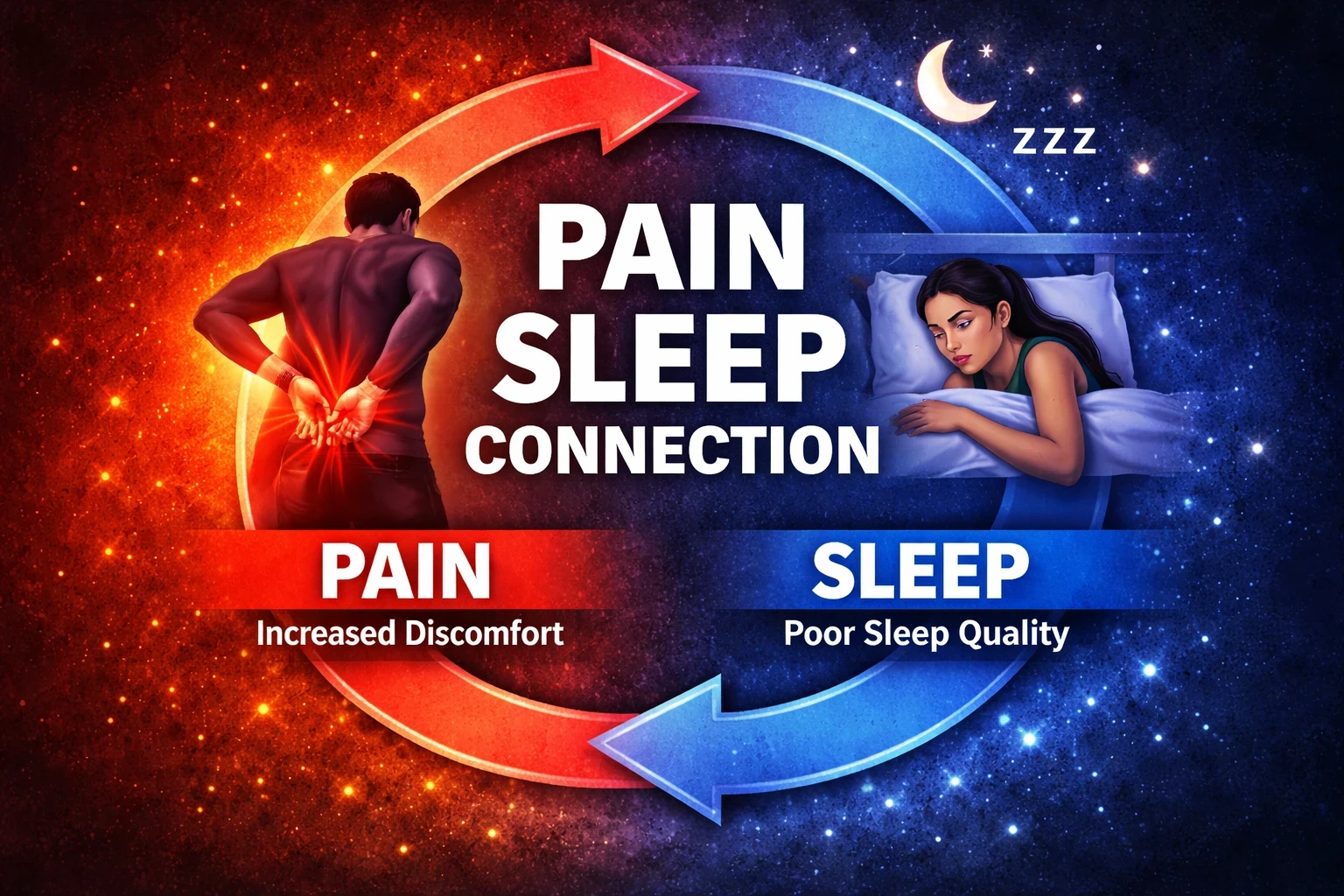
The connection describes the two-way relationship between sleep quality and pain levels. Poor sleep increases pain sensitivity, while pain disrupts sleep quality.
Over time, this creates a repeating loop that can either worsen symptoms or, when managed correctly, improve them.
Sleep is when the body heals. During deep sleep, tissues repair, inflammation decreases, and the nervous system resets.
However, when sleep is poor, these processes are interrupted. As a result, the pain sleep connection becomes stronger in a negative way.
If you’re exploring natural ways to improve both areas, start with natural remedies for pain and sleep.
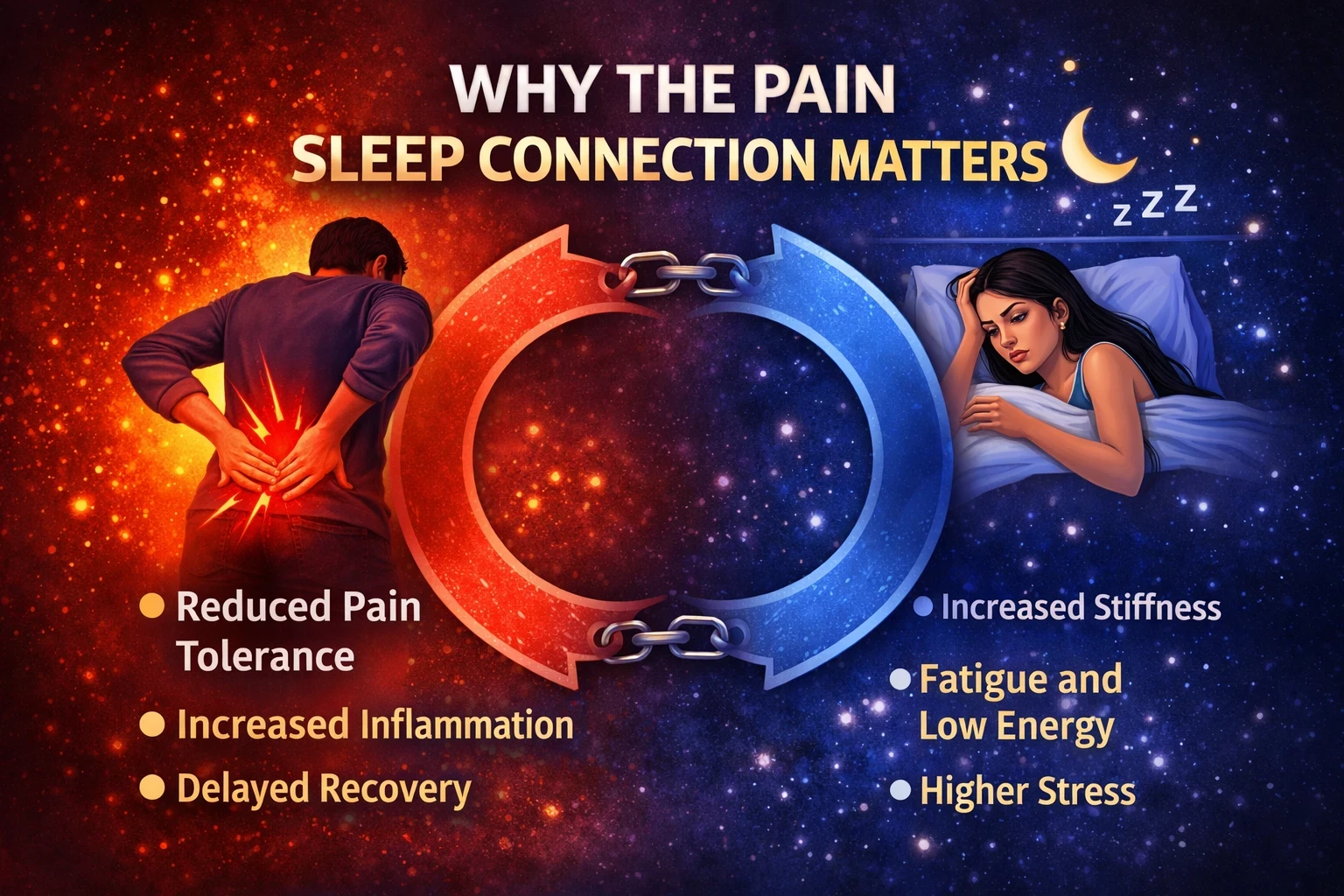
Why the Connection Matters
The connection affects far more than just night-time discomfort. It influences how your body feels, moves, and recovers throughout the day.
When sleep is poor:
Pain thresholds decrease
Inflammation increases
Muscle recovery slows
Stress hormones rise
Energy levels drop
Because of this, even small improvements in the connection can lead to noticeable benefits.
For example, improving sleep quality can reduce next-day stiffness and sensitivity.
To understand how pain becomes long-term, see understanding pain persistence.
How the Connection Works in the Body
The connection is controlled by the nervous system, brain, and hormonal balance. During deep sleep stages, the body performs critical functions:
Tissue repair and regeneration
Reduction of inflammatory markers
Regulation of pain-processing pathways
Hormonal balancing
However, disrupted sleep leads to a more sensitive nervous system. This means the brain amplifies pain signals. The same physical issue can feel worse simply because sleep was poor.
This explains why the connection often feels stronger after stressful or restless nights.
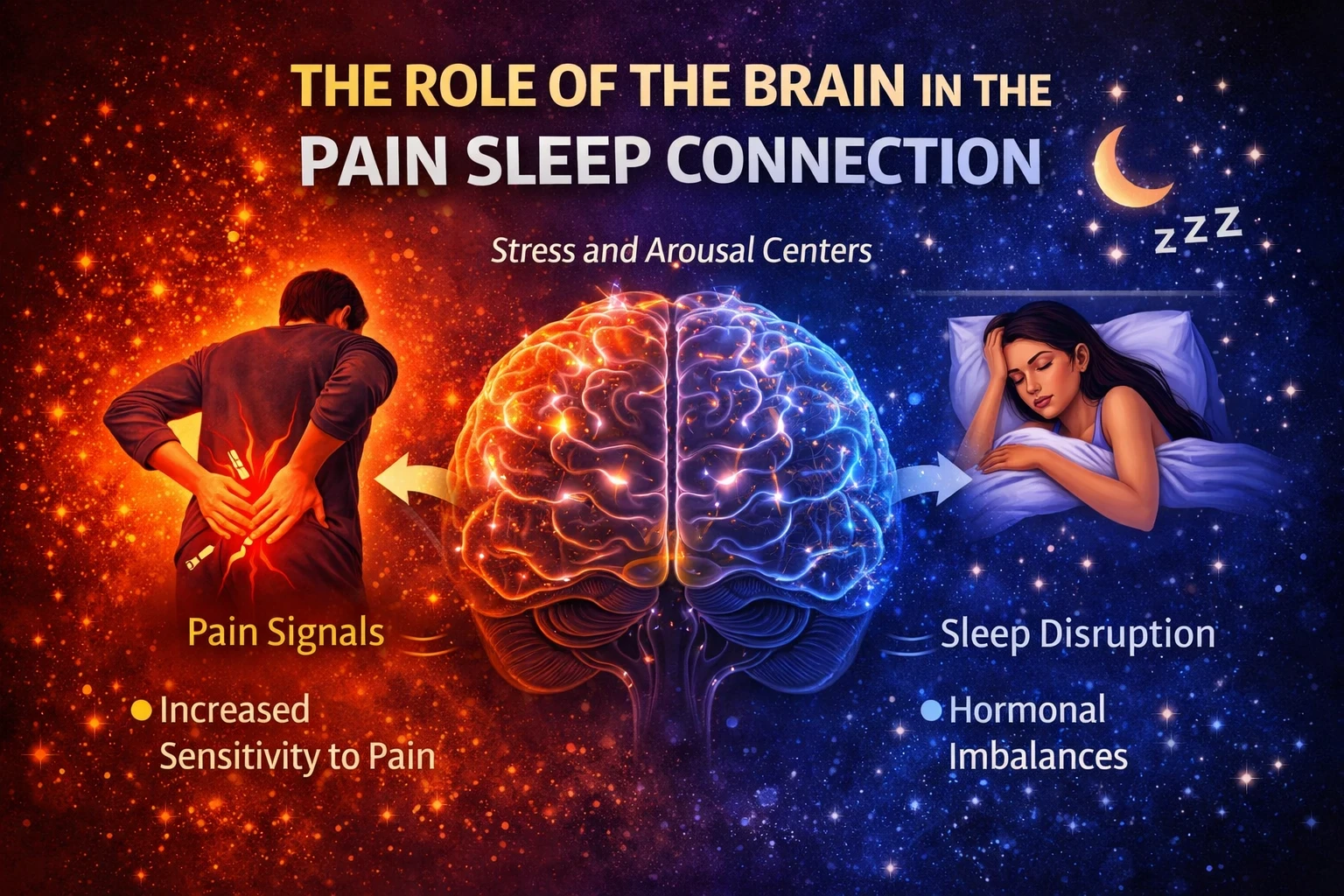
The Role of the Brain
The brain is at the centre of the pain sleep connection. Pain is not just physical—it is interpreted by the brain based on context, fatigue, and emotional state.
When sleep is disrupted:
Pain signals are amplified
Emotional responses increase
Coping ability decreases
Relaxation becomes harder
This creates a feedback loop where poor sleep increases pain, and increased pain further disrupts sleep.
For more insight into how injuries influence long-term pain patterns, explore impact of injuries on chronic pain.
Why Pain Disrupts Sleep
The connection becomes most noticeable when pain directly interferes with sleep. Several factors contribute to this:
Difficulty finding a comfortable position
Increased awareness of pain at night
Muscle stiffness and joint pressure
Inflammation patterns that peak at night
Stress and anxiety linked to discomfort
For example, many people struggle with side sleeping due to hip discomfort. You can explore this further in hip pain during sleep causes.
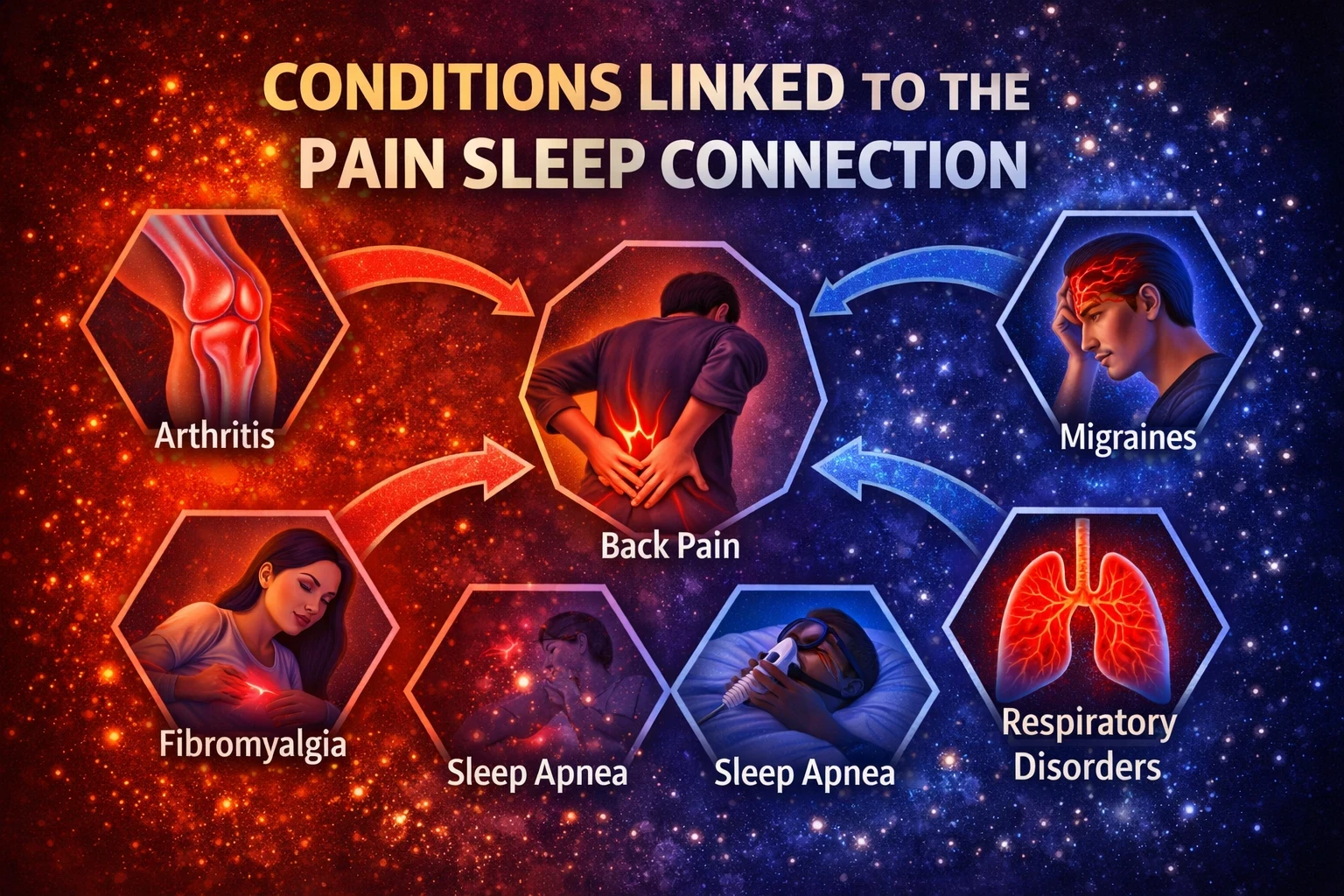
Conditions Linked to the Pain Sleep Connection
The connection is especially strong in certain conditions:
Chronic back pain
Hip bursitis
Arthritis
Fibromyalgia
Nerve-related pain
Post-injury recovery
These conditions often worsen at night due to reduced movement and increased stiffness.
If positioning is an issue, hip pain relief sleeping on side provides practical guidance.
How Poor Sleep Increases Pain Sensitivity
One of the most important aspects of the pain sleep connection is how sleep loss affects pain perception.
Research shows that even one night of poor sleep can:
Increase sensitivity to pressure
Lower pain tolerance
Increase inflammation
Reduce recovery capacity
This means the pain sleep connection is not just about long-term habits—it can affect you immediately.
Breaking the Pain Sleep Connection Cycle
Breaking the connection cycle requires consistency, not perfection. Small changes can lead to significant improvements over time.
1. Improve Sleep Position
Proper alignment reduces pressure on joints and muscles:
Side sleeping with knee support
Back sleeping with leg elevation
Neutral spine alignment
2. Build a Sleep Routine
Consistent sleep and wake times regulate the body clock, improving sleep depth and quality.
3. Reduce Evening Stimulation
Limit screens, caffeine, and intense activity. These interfere with the body’s ability to relax and worsen the pain sleep connection.
4. Use Heat Therapy
Heat can reduce stiffness and improve circulation, making it easier to fall asleep.
5. Gentle Evening Movement
Light stretching or mobility work can reduce tension and improve sleep comfort.
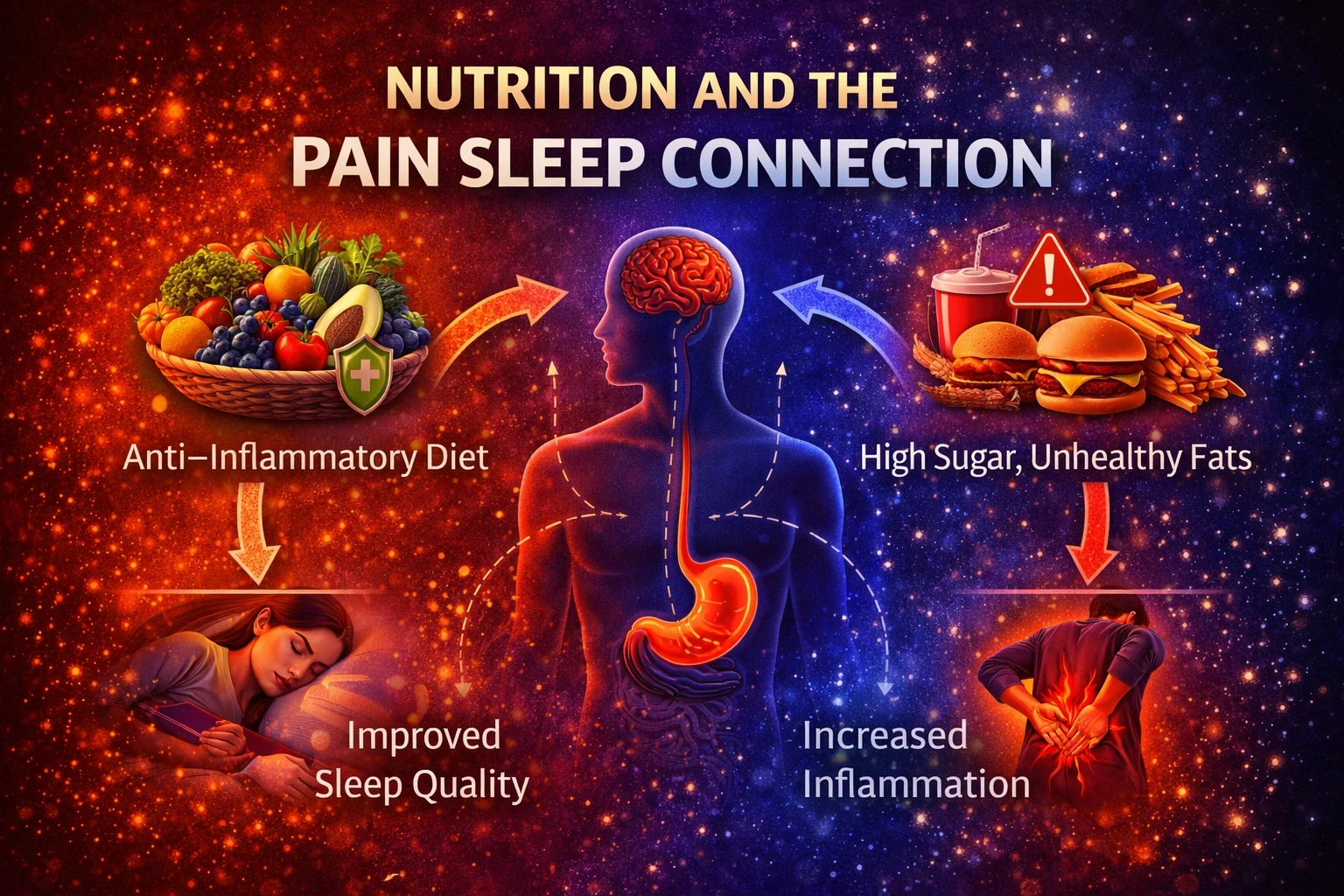
Nutrition is important
Nutrition plays a supportive role in the pain sleep connection. Key nutrients include:
Magnesium for muscle relaxation. Go here
Omega-3 fatty acids for inflammation. Go here.
Protein for tissue repair
Hydration for joint health
Balanced nutrition supports recovery during sleep and helps regulate inflammation.
Supportive Tools That May Help
Improving connection often involves practical tools:
Orthopaedic pillows. Go here.
Heated blankets. Go here.
Sleep-focused apps
Herbal supplements. Go here.
For deeper sleep support, explore best herbal supplements for sleep and natural remedies for insomnia.
CBD products are sometimes explored as an additional option for relaxation and discomfort. Learn more in CBD oil for chronic pain.
Daily Habits That Improve the Pain Sleep Connection
Simple daily habits can strengthen the pain sleep connection in a positive way:
Morning sunlight exposure
Regular movement
Stress management
Consistent sleep schedule
Creating a calm sleep environment
These habits improve both sleep quality and pain regulation over time.
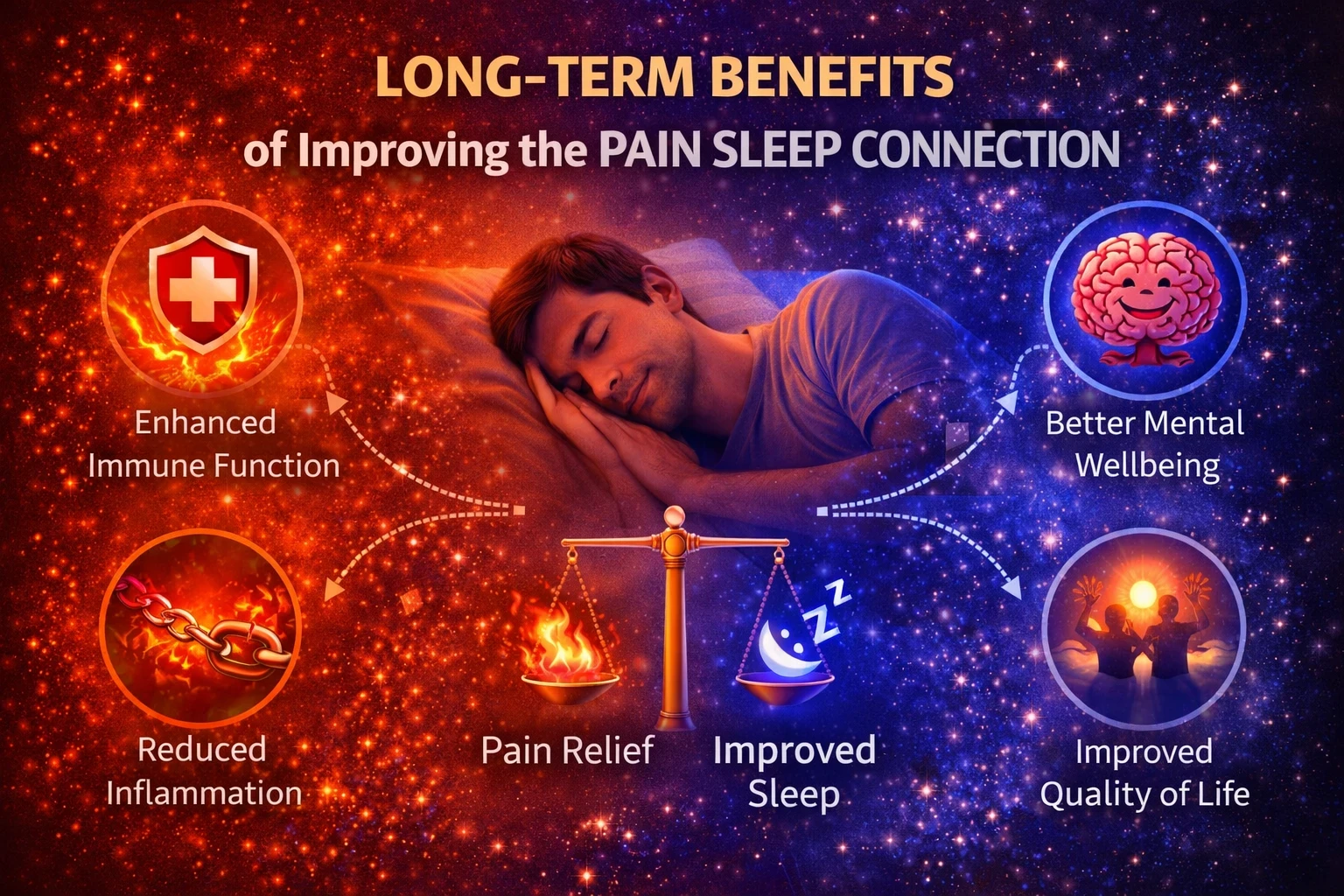
Long-Term Benefits of Improving the Pain Sleep Connection
When the pain sleep connection improves, the benefits extend beyond just sleep:
Reduced pain intensity
Better energy levels
Improved mood
Faster recovery
Enhanced quality of life
This creates a positive cycle where better sleep leads to less pain, and less pain leads to better sleep.
Limitations and Realistic Expectations
The connection is powerful, but it is not a quick fix. Some people experience rapid improvements, while others need a structured approach involving rehabilitation or professional support.
Consistency is the key factor. Gradual improvements in sleep can significantly reduce pain over time.
Conclusion
The connection is one of the most important factors in long-term health and recovery. Pain affects sleep, and sleep affects pain—creating a cycle that can either work against you or in your favour.
By understanding this relationship and applying simple strategies, you can begin to break the cycle.
Over time, improving the pain sleep connection can lead to deeper sleep, reduced discomfort, and a more balanced life.
FAQ
What is the pain sleep connection?
It is the two-way relationship where poor sleep increases pain sensitivity and pain disrupts sleep.
Can better sleep reduce pain?
Yes. Deep sleep helps regulate inflammation and improves pain tolerance.
Why does pain feel worse at night?
Pain becomes more noticeable due to reduced distractions and natural inflammation patterns.
How do I break the pain sleep cycle?
Improve sleep habits, reduce inflammation, and use supportive tools consistently.
Are natural remedies effective?
Yes, many natural approaches can support both sleep and pain relief.
Scientific Studies
https://www.ncbi.nlm.nih.gov/pmc/articles/PMC5449130/
https://www.ncbi.nlm.nih.gov/pmc/articles/PMC4047294/