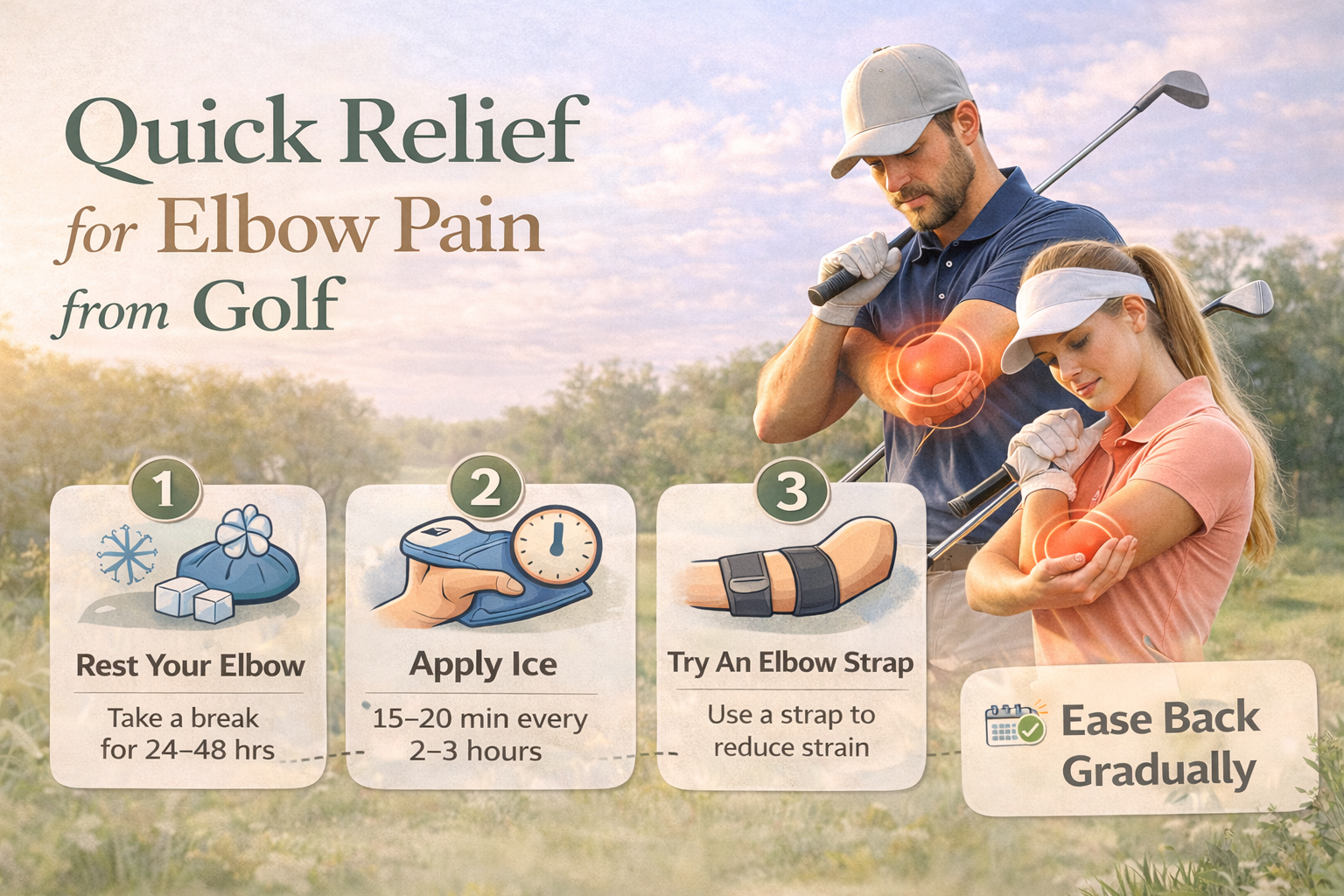
Quick Relief For Elbow Pain From Golf Can You Get Quick Relief.?
Quick Relief for Elbow Pain from Golf
Quick relief for elbow pain from golf often comes down to a mix of immediate care, smart movement, and a few well-chosen supportive tools.
Whether you’re dealing with a mild flare-up or a more persistent ache, the right approach can ease discomfort quickly and help you get back to playing with confidence.
What Causes Elbow Pain in Golfers?
Elbow pain from golf is most commonly linked to overuse of the forearm muscles and tendons.
This condition is often called golfer’s elbow (medial epicondylitis), though it can also affect players through poor swing mechanics, repetitive strain, or gripping the club too tightly.
Small micro-tears develop in the tendons that attach to the inner elbow.
Without proper recovery, these can lead to inflammation, stiffness, and ongoing discomfort.
Immediate Steps for Quick Relief
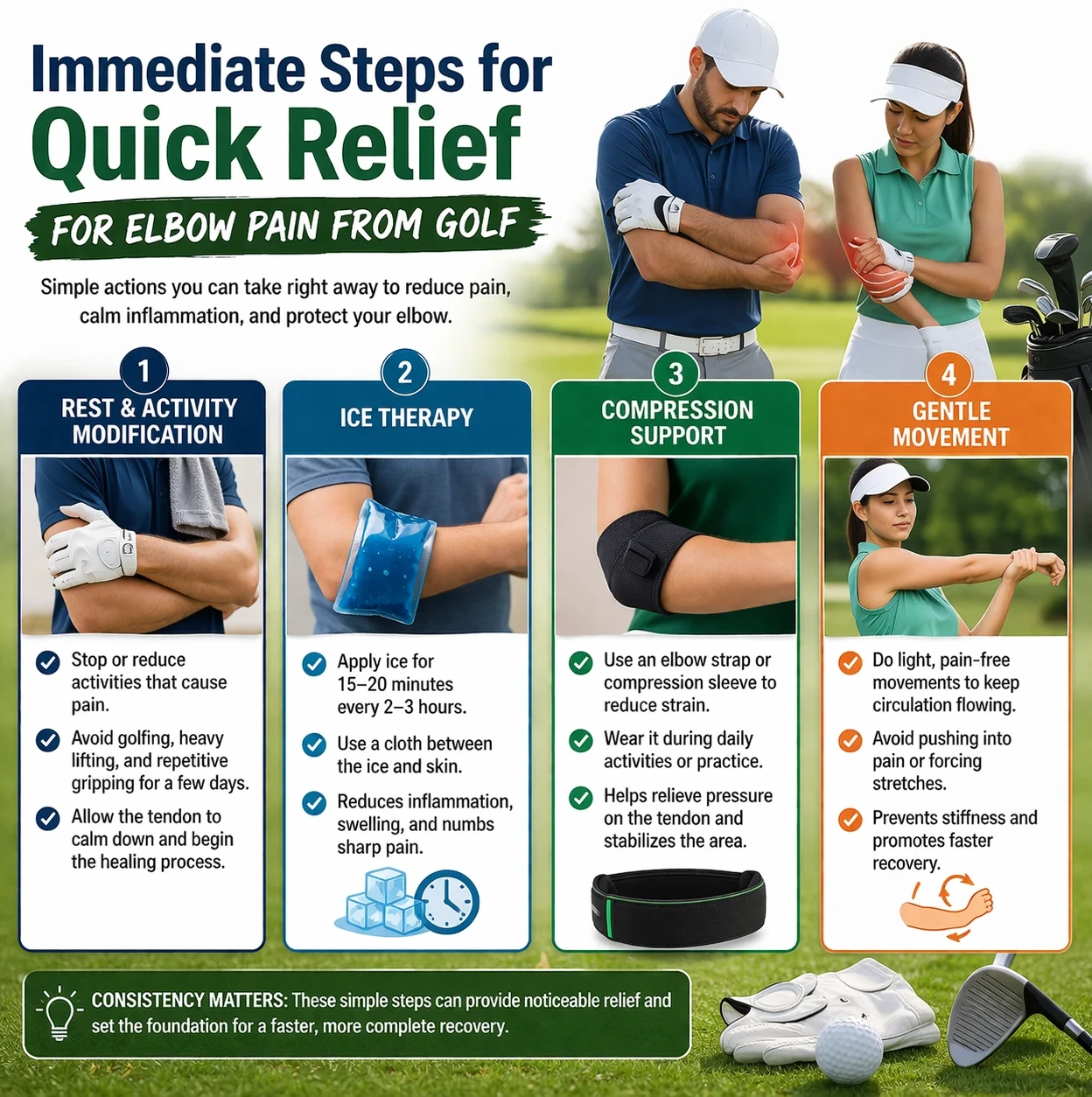
If you’re looking for quick relief for elbow pain from golf, start with these simple but effective steps:
1. Rest and Activity Modification
Give your elbow a break from repetitive strain. Avoid golfing or heavy gripping activities for a few days to allow the tissue to settle.
2. Ice Therapy
Apply ice for 15–20 minutes every 2–3 hours during the first 48 hours.
This helps reduce inflammation and numbs the pain.
3. Compression Support
Using an elbow strap or compression sleeve can reduce strain on the tendon and provide noticeable relief during daily activities.
4. Gentle Movement
Complete rest isn’t always ideal. Light, pain-free movement helps maintain circulation and prevents stiffness.
Fast-Acting Exercises That Help Movement
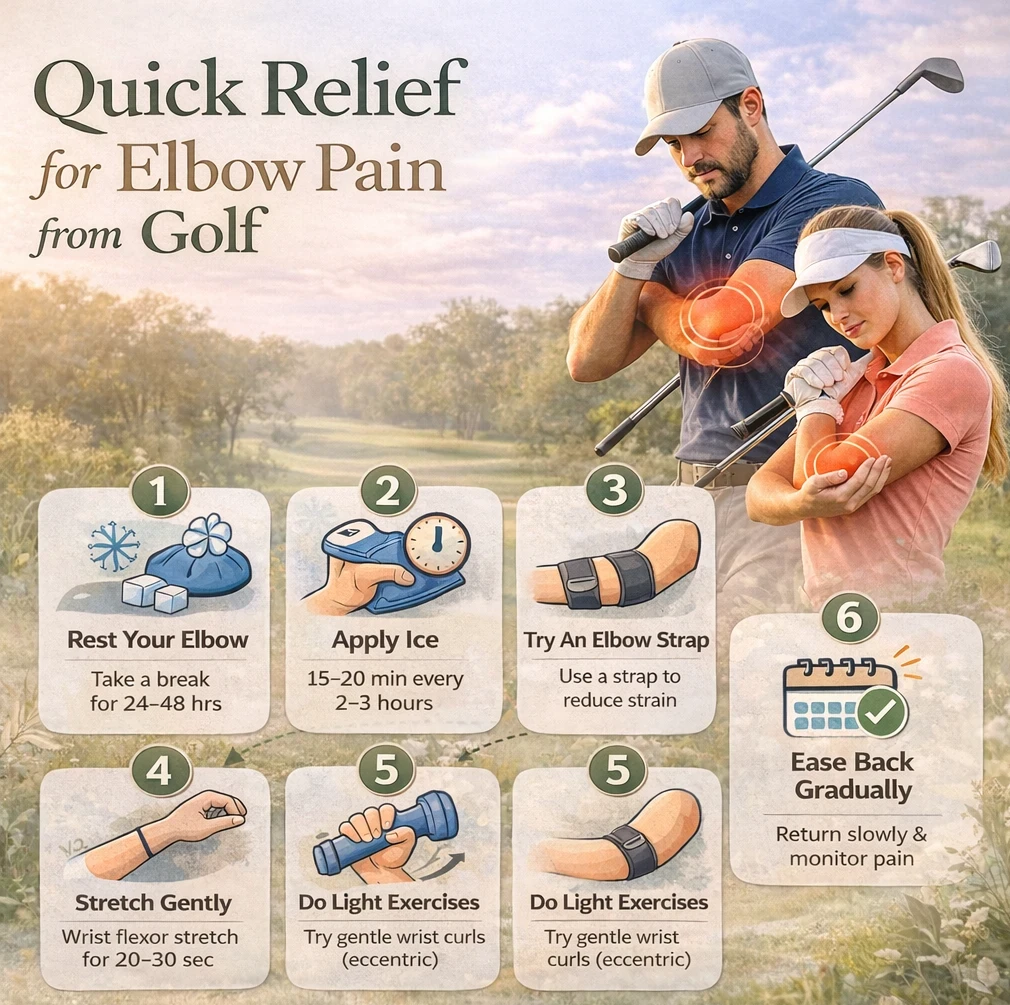
Is one of the most effective ways to get quick relief for elbow pain from golf when done correctly.
For a full routine, see best exercises for golfers elbow, but here are a few key ones:
Wrist Flexor Stretch Extend your arm in front
Use your other hand to gently pull the fingers back Hold for 20–30 seconds
Eccentric Wrist Curl
Hold a light weight Use your other hand to lift the wrist
Slowly lower it down using the affected arm
Forearm Rotation Hold a light object (like a hammer)
Slowly rotate your palm up and down
These movements improve tendon strength and help reduce long-term irritation.
Why Technique Matters More Than You Think
Poor swing mechanics are a major cause of elbow strain.
Even small adjustments can significantly reduce stress on the joint.
If you’re unsure whether your swing is contributing, it’s worth exploring broader golfers elbow treatment methods to identify contributing factors and correct them early.
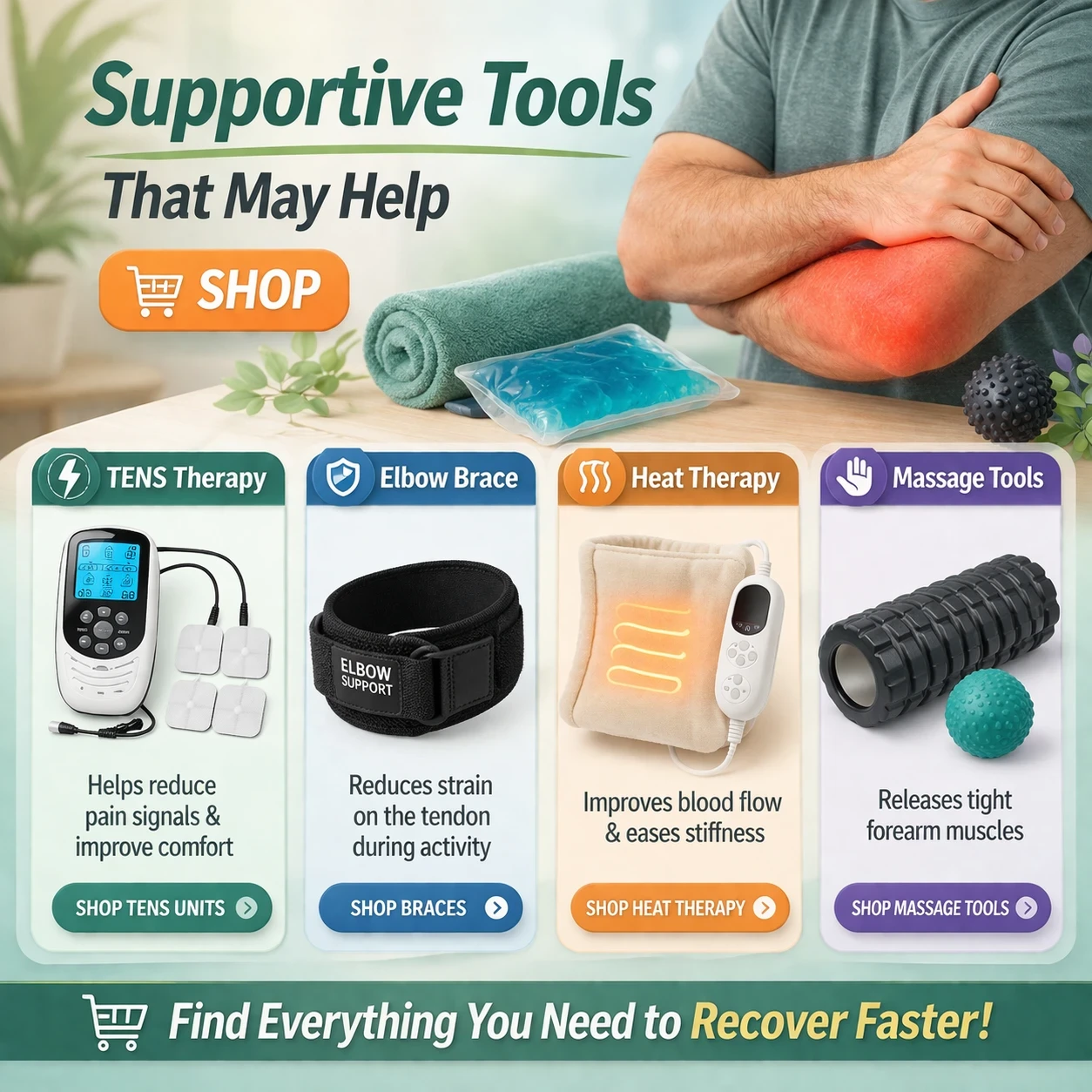
Supportive Tools That May Help
Alongside rest and exercise, certain tools can provide quick relief for elbow pain from golf:
Elbow Straps
These reduce tension on the tendon and are particularly helpful during activity.
Shop Elbow Straps Here.
Massage Tools
Targeted massage can help release tight forearm muscles and improve blood flow.
Heat Therapy (Later Stage)
After the initial inflammation settles, heat can relax muscles and improve flexibility.
Shop for Heat therapy Here.
Anti-Inflammatory Gels
Topical creams can provide short-term relief without systemic side effects.
Shop ancient Ayurvedic anti-inflammatory Gels Here.
When Pain Might Not Be Golfer’s Elbow
Not all elbow pain from golf is the same.
Some players experience pain on the outer elbow (tennis elbow), which requires a slightly different approach.
Understanding the difference is important.
This guide on golfers elbow vs tennis elbow can help you pinpoint what you’re dealing with.
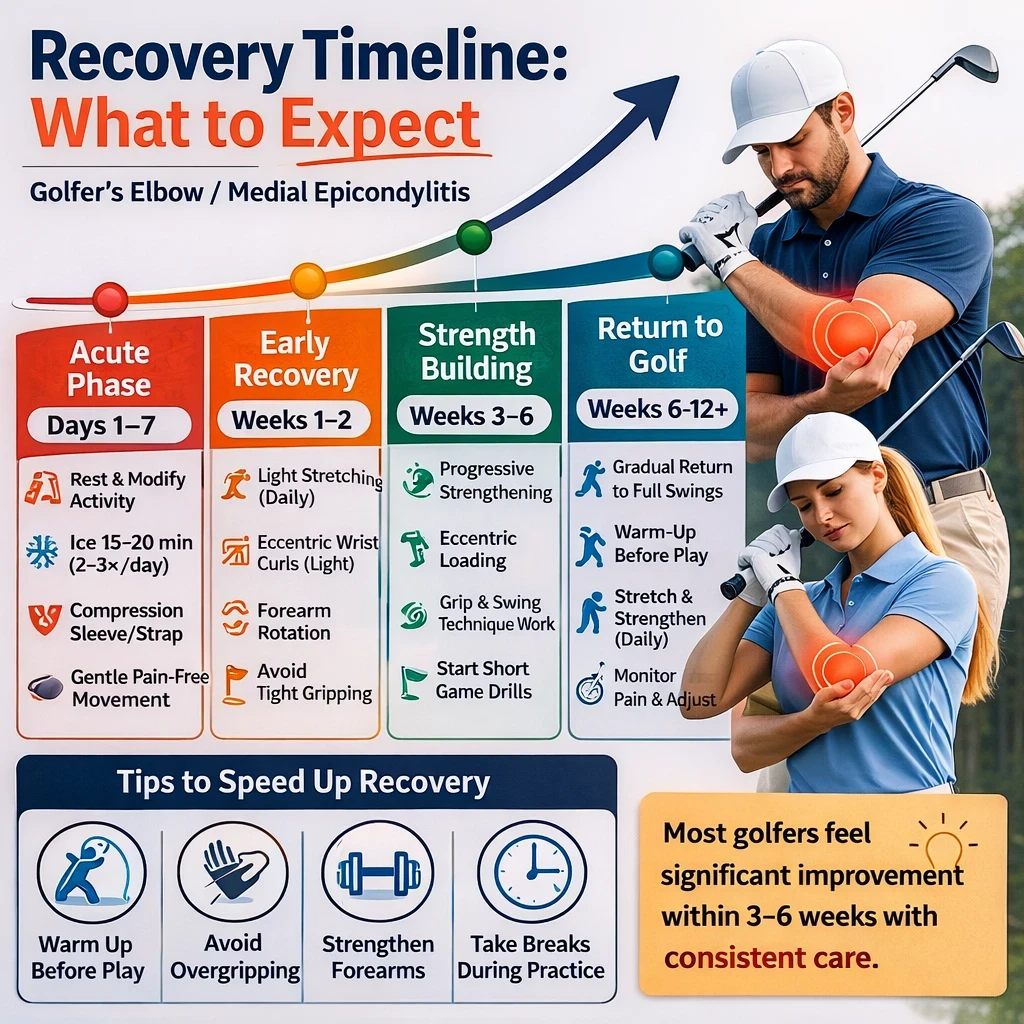
Recovery Timeline: Is Quick Relief for Elbow Pain from Golf Possible
Mild cases can improve within a few days to weeks with proper care.
More persistent cases may take several weeks or longer, especially if the underlying cause isn’t addressed.
Consistency is key.
Quick fixes help, but lasting relief comes from combining short-term care with long-term habits.
Daily Habits That Speed Up Recovery
To get faster results and prevent recurrence:
Warm up properly before playing
Avoid gripping the club too tightly
Strengthen forearm muscles regularly
Take breaks during long practice sessions
Use proper equipment (grip size matters more than most think)
These small changes can make a noticeable difference over time.
When to Seek Professional Help
If pain continues despite rest and self-care, it may be time to consult a professional.
Persistent symptoms could indicate more significant tendon damage or another underlying issue.
Early intervention often leads to quicker recovery and prevents chronic problems.
What Research Suggests
Research supports a combination of rest, eccentric strengthening, and gradual return to activity as the most effective approach.
A useful reference is this study from National Center for Biotechnology Information: https://www.ncbi.nlm.nih.gov/pmc/articles/PMC3445067/
A Balanced Perspective
Quick relief for elbow pain from golf is achievable, but it’s important to stay realistic. Pain relief methods can reduce symptoms quickly, but healing takes time.
The goal isn’t just to feel better today—it’s to prevent the pain from coming back next week.
Frequently Asked Questions
How long does golfer’s elbow take to heal?
Mild cases may improve in 1–3 weeks, while more severe cases can take several months.
Should I stop playing golf completely?
Short-term rest is helpful, but a gradual return with proper technique is usually better than complete avoidance.
Are braces effective?
Yes, elbow straps can reduce strain and provide noticeable relief, especially during activity.
Can exercises make it worse?
If done incorrectly or too aggressively, yes. Start gently and progress gradually.
Scientific Reference
https://pmc.ncbi.nlm.nih.gov/articles/PMC12093526/