Signs Of Folate Deficiency You Should Know About
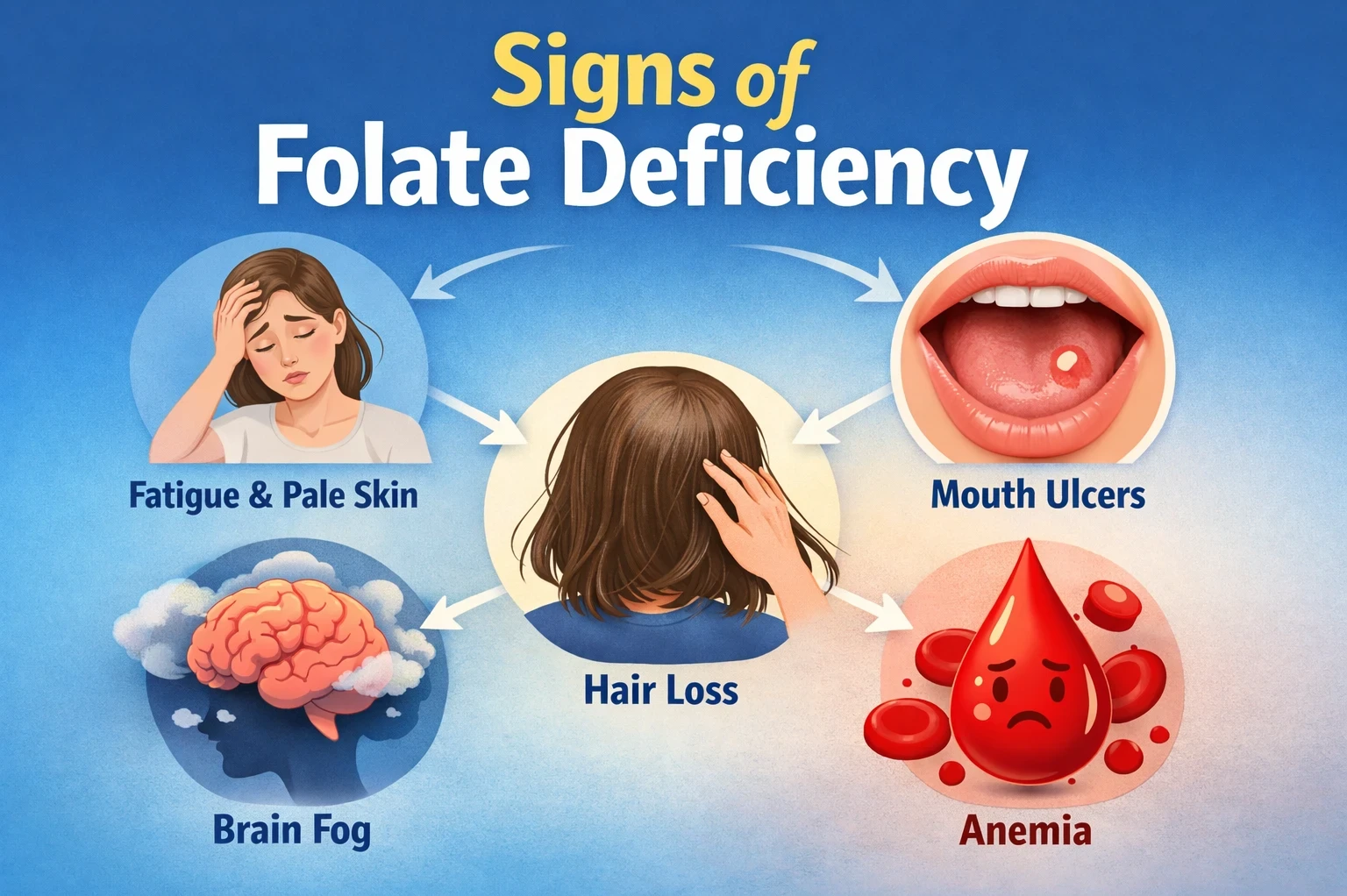
Signs of Folate Deficiency
Signs of folate deficiency can be subtle at first. Many people dismiss early changes as stress, poor sleep, or simply a busy period.
However, folate plays a central role in red blood cell production, DNA synthesis, and nervous system balance. When levels drop, your body gradually signals that something is off.
Understanding these signals early can prevent longer-term complications.
What Is Folate and Why It Matters
Folate, also known as vitamin B9, is a water-soluble B vitamin found naturally in leafy greens, legumes, citrus fruits, and fortified grains. It supports cell division, tissue repair, and healthy blood formation.
Because folate is required for red blood cell production, low levels often affect energy first.
It also works closely with vitamin B12, meaning deficiencies can overlap.
If intake is consistently low, absorption is impaired, or demand increases, signs of folate deficiency may begin to appear.
You can explore a deeper breakdown in this guide on
https://beyond-pain-relief.com/how-to-identify-folic-acid-deficiency/
Early Signs of Folate Deficiency
In the beginning, symptoms are usually mild.
Common early indicators include:
Persistent fatigue
Weakness
Pale skin
Reduced concentration
Mild shortness of breath during activity
Fatigue is often the first noticeable issue.
Since folate supports healthy red blood cell production, low levels can reduce oxygen delivery throughout the body.
As a result, daily tasks may suddenly feel more draining.
If these symptoms sound familiar, you may also want to review
https://beyond-pain-relief.com/low-folic-acid-symptoms/
Changes in the Mouth and Digestive System
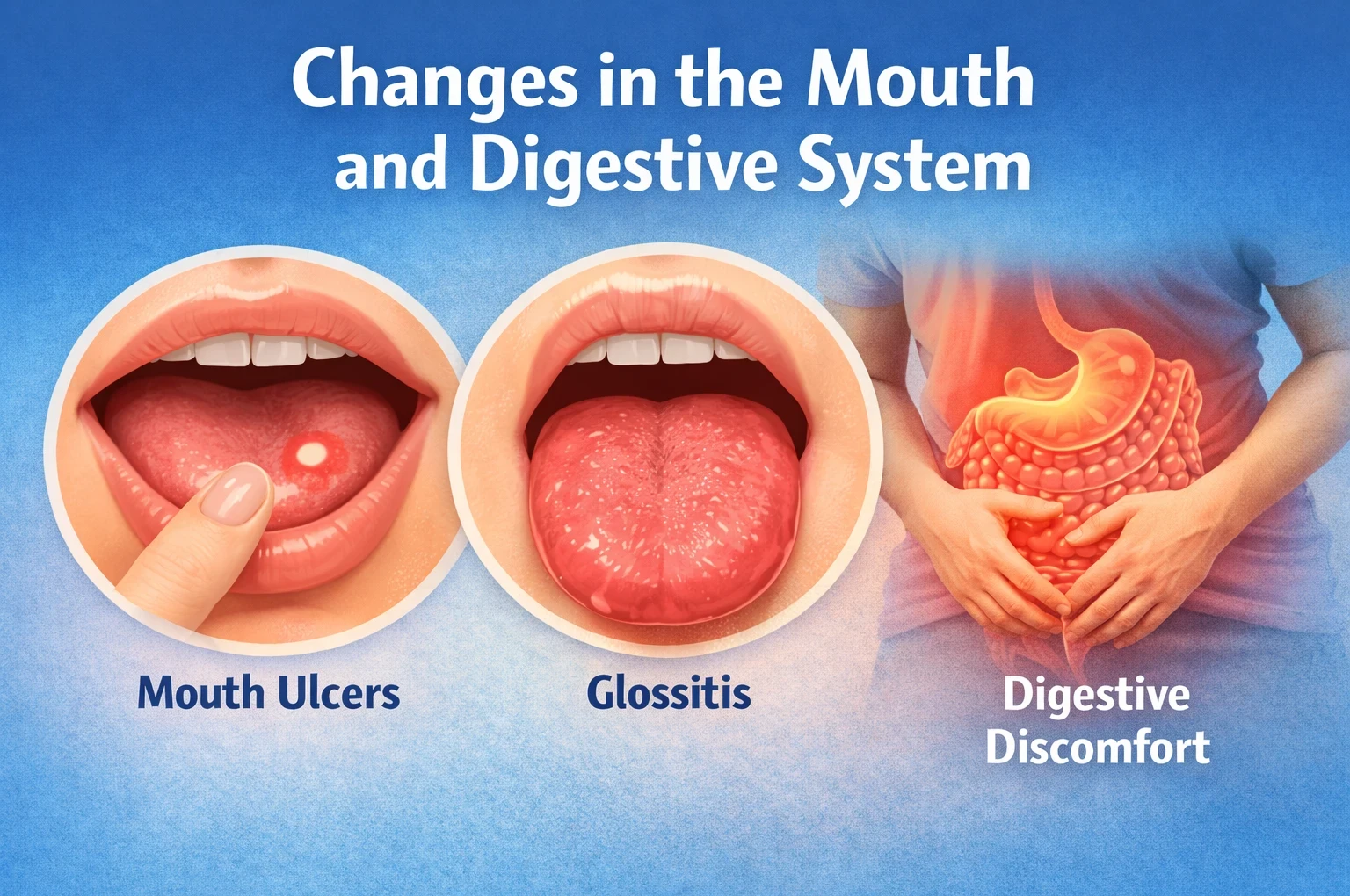
The digestive tract renews rapidly. Because folate supports cell turnover, these tissues can show changes early.
Possible symptoms include:
- Mouth ulcers
- A swollen or red tongue
- Cracks at the corners of the mouth
- Reduced appetite
- Digestive discomfort
These are often clearer signs of folate deficiency, especially when paired with fatigue.
Additionally, some people experience mild weight loss due to appetite changes.
Neurological and Emotional Changes
Folate contributes to brain chemistry and neurotransmitter balance. Therefore, low levels may influence mood and cognition.
You might notice:
Irritability
Low mood
Brain fog
Difficulty concentrating
Mild memory lapses
While these symptoms are not exclusive to folate issues, persistent cognitive shifts alongside physical fatigue should not be ignored.
Folate also works closely with B12. If neurological symptoms are present, both nutrients should be evaluated.
Signs of Folate Deficiency in Women
Women of childbearing age are at higher risk, particularly during pregnancy. Folate demand increases significantly during early development.
Low levels during pregnancy have been linked to neural tube defects.
For this reason, supplementation is commonly recommended before conception and during early pregnancy.
Women experiencing hormonal changes may also benefit from understanding the connection between nutrients and wellbeing. For more context, see
https://beyond-pain-relief.com/folic-acid-levels-and-womens-health/
Who Is at Higher Risk?
Certain groups are more vulnerable to developing signs of folate deficiency:
Individuals with limited vegetable intake
People with digestive absorption issues
Those who consume excessive alcohol
Pregnant women
Older adults
Individuals taking certain medications
Alcohol interferes with folate storage and absorption. Meanwhile, digestive conditions such as celiac disease may reduce nutrient uptake.
Understanding your risk factors makes early detection easier.
When Symptoms Progress
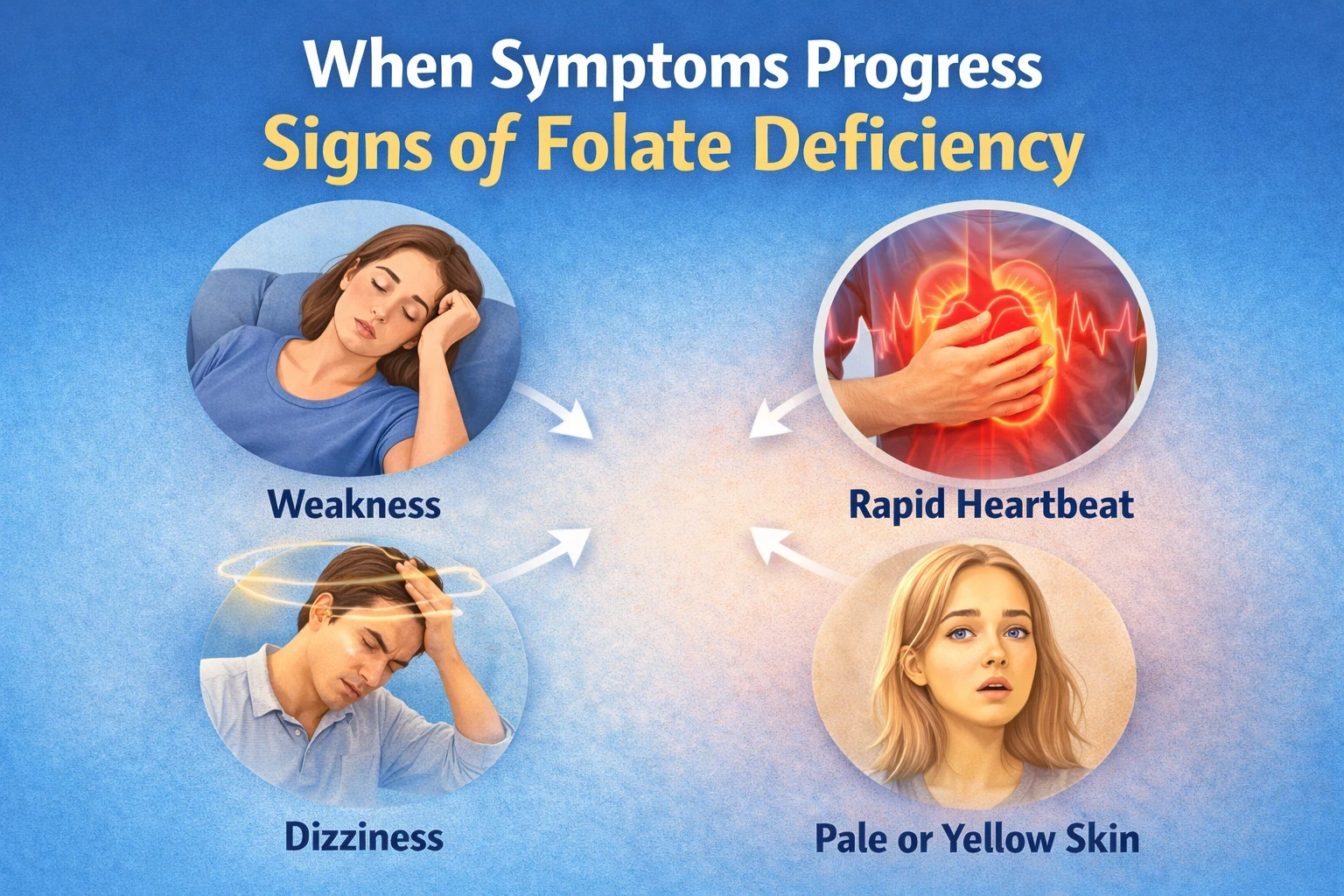
If deficiency continues untreated, anemia may develop.
More advanced symptoms can include:
Pronounced weakness
Dizziness
Rapid heartbeat
Persistent shortness of breath
Pale or slightly yellowish skin
At this stage, medical evaluation is important. Blood tests can confirm serum and red blood cell folate levels.
Testing and Diagnosis
Diagnosis is straightforward.
Doctors typically assess:
Serum folate
Red blood cell folate
Complete blood count (CBC)
Because B12 deficiency can mask or mimic folate deficiency, testing both is often recommended.
Self-diagnosis based on symptoms alone is not reliable, since overlap between nutrient deficiencies is common.
Correcting Low Folate Levels
Treatment depends on the cause.
Dietary sources of folate include:
Spinach
Broccoli
Lentils
Chickpeas
Citrus fruits
Fortified grains
In mild cases, improving diet may be sufficient. However, moderate or persistent deficiency may require supplementation.
If you are unsure how to adjust your intake safely, this guide may help:
https://beyond-pain-relief.com/how-to-increase-folic-acid-intake/
Most people respond well to treatment. Energy levels often improve within weeks once levels normalize.
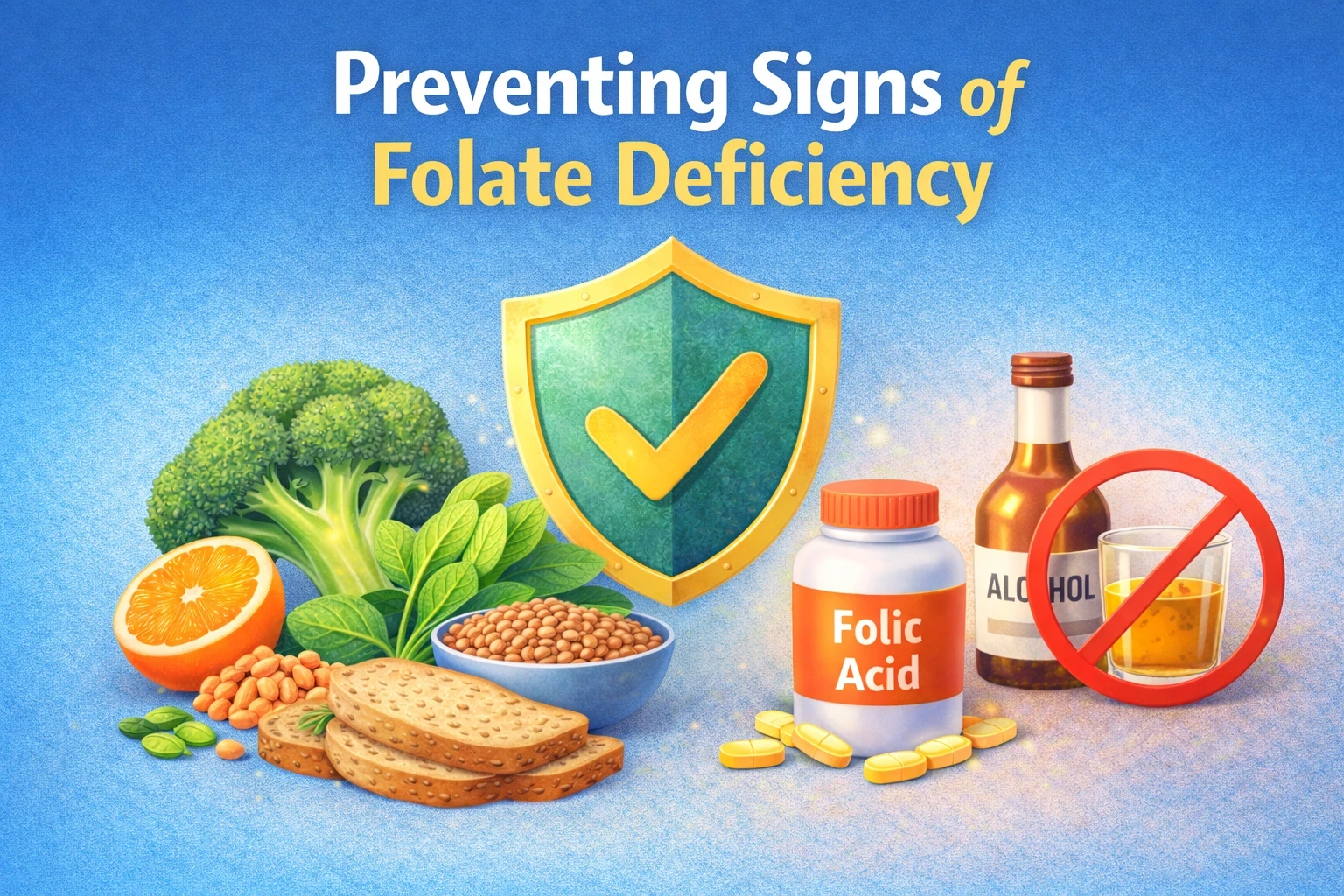
Preventing Signs of Folate Deficiency
Prevention is usually simple.
Balanced nutrition, moderate alcohol intake, and appropriate supplementation during higher-demand periods significantly reduce risk.
The important thing to remember is this: signs of folate deficiency rarely appear overnight.
They develop gradually. Listening to early symptoms such as unexplained fatigue, mouth changes, or brain fog allows you to act early.
When addressed promptly, recovery is typically straightforward and highly effective.
Scientific Study Links
https://pubmed.ncbi.nlm.nih.gov/30224719/
https://pubmed.ncbi.nlm.nih.gov/28491241/