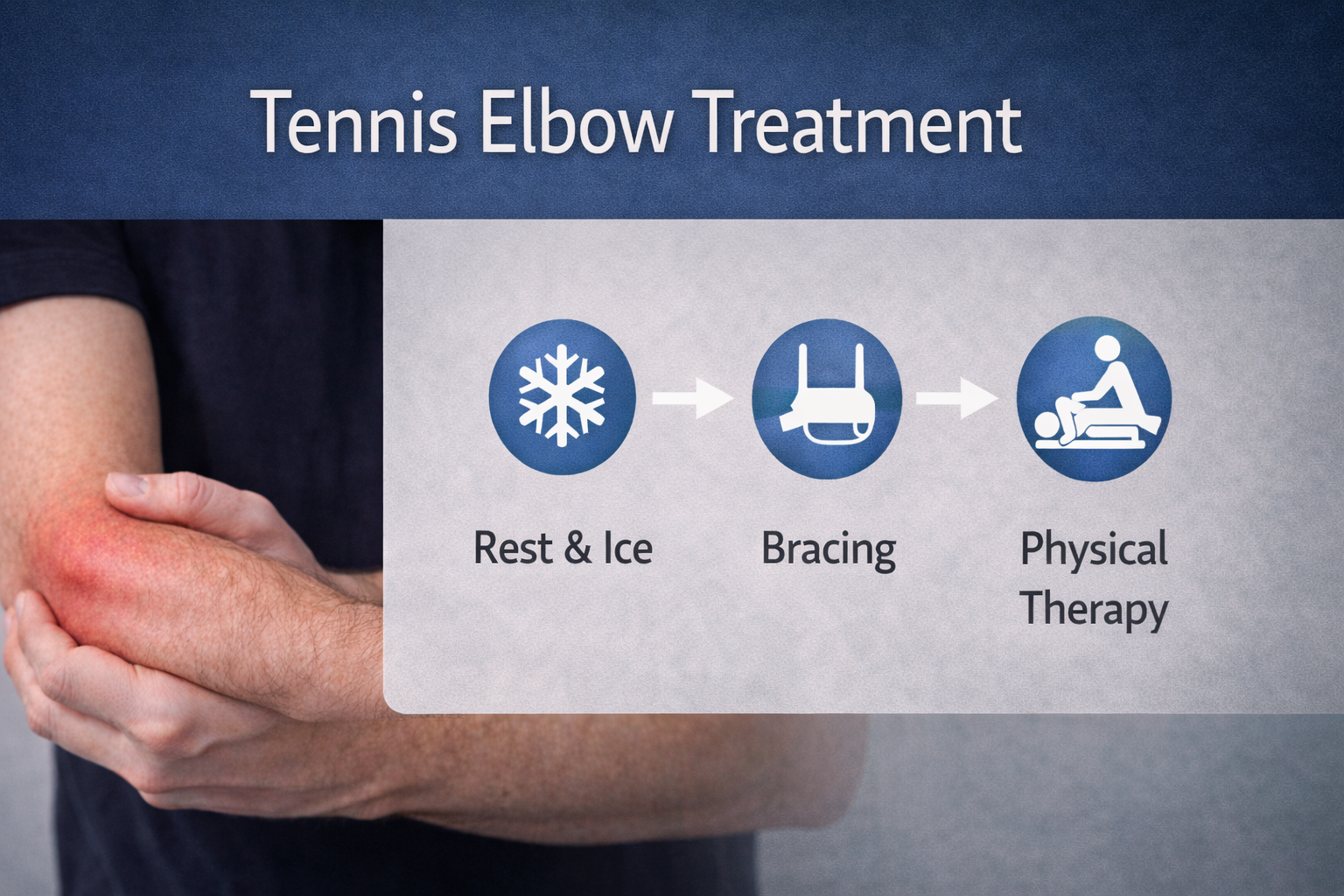
Tennis Elbow Treatment: A Clear Guide To Pain Relief And
Tennis Elbow Treatment
Tennis elbow treatment is one of the most searched topics for people dealing with persistent outer elbow pain.
Whether it starts from sport, work, or everyday strain, understanding how to manage it properly can make a big difference in recovery time and long-term comfort.
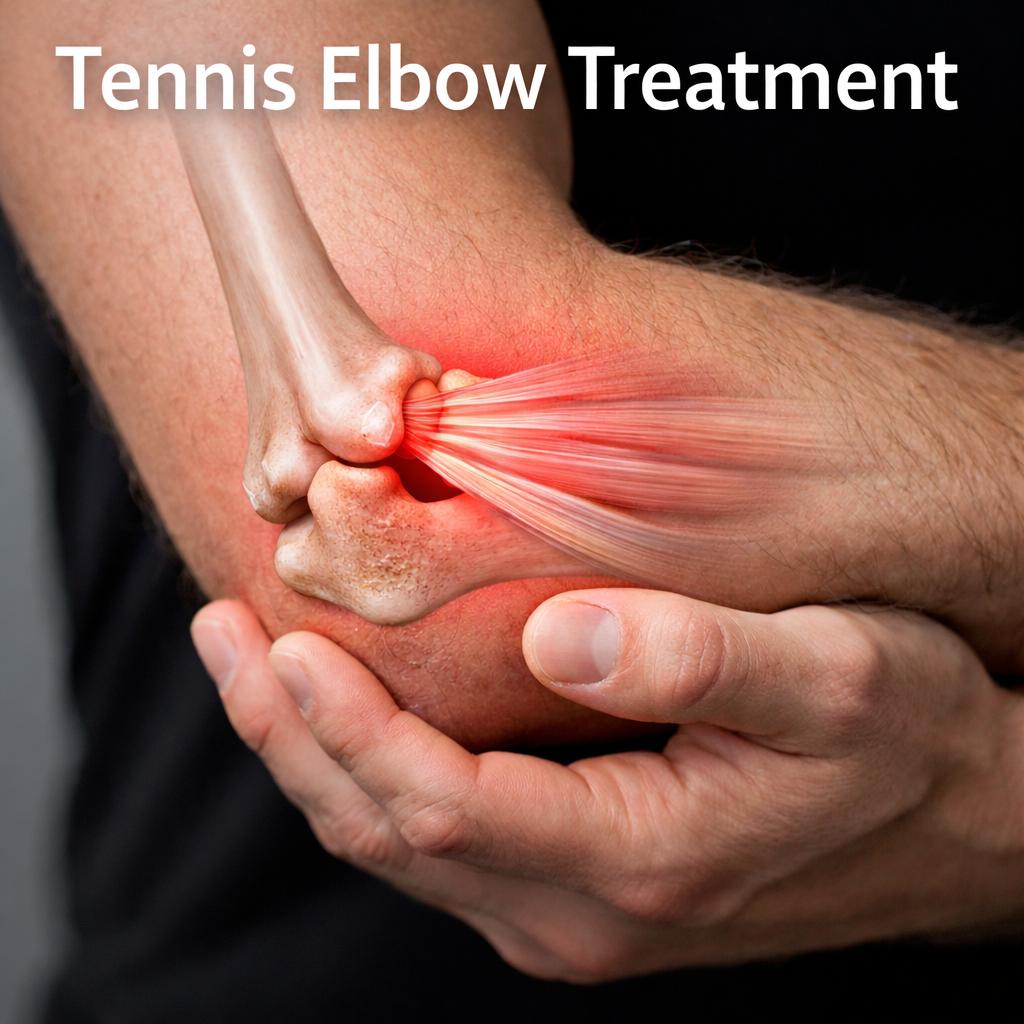
What Is Tennis Elbow?
Tennis elbow, also known as lateral epicondylitis, affects the outer part of the elbow. It develops when the tendons that attach to the lateral epicondyle become overloaded due to repetitive stress.
Despite the name, most people who need tennis elbow treatment don’t actually play tennis. It’s commonly caused by:
- Repetitive lifting or gripping
- Using tools like screwdrivers or drills
- Typing or mouse overuse
- Gym exercises with poor form
The pain often starts gradually and can worsen if ignored.

Common Symptoms to Watch For
Recognising symptoms early makes tennis elbow treatment more effective.
Typical signs include:
- Pain on the outer elbow
- Weak grip strength
- Discomfort when lifting objects
- Pain when extending the wrist
Even simple tasks like holding a cup or turning a door handle can become uncomfortable.
Why Tennis Elbow Happens
At its core, this condition is about tendon overload, not just inflammation.
When the forearm extensor muscles are used repeatedly without enough recovery, tiny micro-tears can develop in the tendon. Over time, this leads to pain and reduced function.
If you want a deeper breakdown of recovery strategies, see how to relieve golfer’s elbow pain
https://beyond-pain-relief.com/how-to-relieve-golfers-elbow-pain-complete-guide-for-lasting/
This is why modern tennis elbow treatment focuses on managing load and gradually rebuilding strength rather than complete rest.
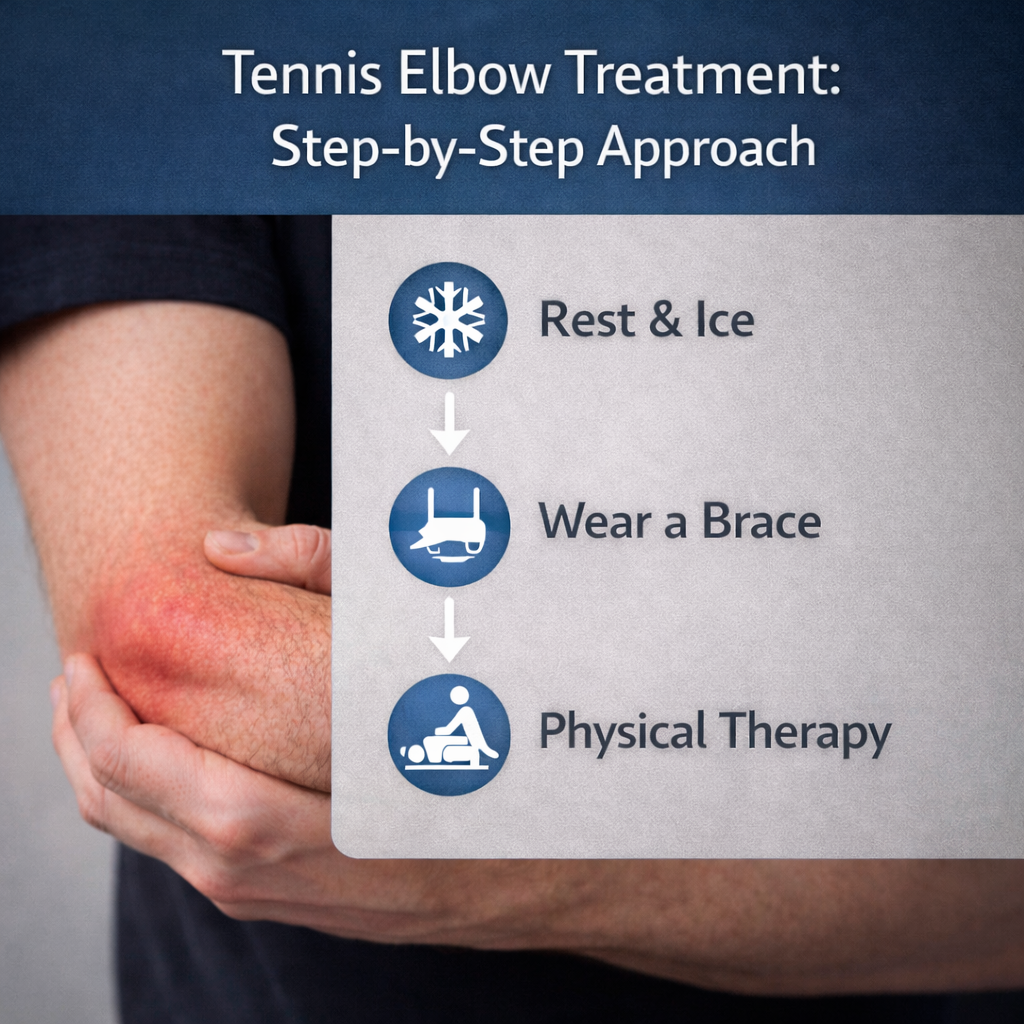
Tennis Elbow Treatment: Step-by-Step Approach
A structured approach works best. Rushing recovery or ignoring symptoms can delay healing.
1. Reduce Aggravating Activities
The first step in tennis elbow treatment is identifying what caused the issue.
- Avoid repetitive gripping
- Modify lifting techniques
- Take breaks from strain-heavy tasks
2. Gentle Mobility and Stretching
Stretching the forearm extensors can help reduce tension.
- Keep stretches light and controlled
- Avoid pushing into sharp pain
3. Progressive Strengthening
Once pain begins to settle, strengthening becomes key.
- Start with light resistance
- Focus on slow, controlled movements
- Build gradually over time
For additional structured guidance, explore golf elbow pain treatment
https://beyond-pain-relief.com/golf-elbow-pain-treatment/
4. Supportive Tools That May Help
Braces, compression sleeves, and massage tools can reduce strain during daily tasks.
If you’re comparing conditions, understanding golfers elbow vs tennis elbow differences can help guide the right approach.
What Research Suggests
Research shows that tendon-related conditions respond well to progressive loading strategies.
A clinical review available via the supports this approach:
https://www.ncbi.nlm.nih.gov/pmc/articles/PMC3445129/
This reinforces why effective tennis elbow treatment focuses on movement rather than immobilisation.
Common Mistakes That Slow Recovery
Many people unknowingly delay healing by:
- Resting completely for too long
- Returning to activity too quickly
- Ignoring pain signals
- Using incorrect exercises
Balancing rest and movement is essential.
How Long Does Recovery Take?
Recovery time varies depending on severity and consistency.
- Mild cases → a few weeks
- Moderate cases → several weeks to months
- Chronic cases → longer with structured rehab
The key is sticking with your tennis elbow treatment plan even when symptoms improve.
A Balanced Perspective
Tennis elbow can feel frustrating, especially when it interferes with everyday tasks. The encouraging part is that most cases improve with a consistent and structured approach.
However:
- There’s rarely a quick fix
- Progress is gradual
- Long-term results depend on consistency
Conclusion
tennis elbow treatment works best when it focuses on reducing strain, restoring movement, and rebuilding strength over time. While symptoms can be uncomfortable, the condition is manageable with the right approach.