Top Ways To Treat Golfer’s Elbow 10 Easy Steps
Top Ways to Treat Golfer’s Elbow
Top ways to treat golfers elbow is a topic many people search when pain starts affecting simple daily movements like gripping, lifting, or even shaking hands.
Golfer’s elbow, also known as medial epicondylitis, is a common overuse injury—but the good news is that it’s very treatable with the right approach.
This guide walks you through practical, evidence-based strategies to help you recover, reduce pain, and prevent it from coming back.
What Is Golfer’s Elbow?
Golfer’s elbow affects the tendons on the inside of your elbow. These tendons connect your forearm muscles to the bone, helping control wrist and finger movements.
When overused, these tendons develop small tears, leading to pain and stiffness.
Common symptoms include:
Pain on the inner side of the elbow
Pain when flexing the fingers
Discomfort when bending the elbow
Weak grip strength
Understanding the condition is the first step when exploring the top ways to treat golfers elbow effectively.
Why Golfer’s Elbow Happens
Golfer’s elbow is not just caused by golf. It can develop from:
Repetitive wrist or forearm movements
Lifting incorrectly
Poor posture during work or exercise
Overuse in sports like tennis, weightlifting, or manual work
If left untreated, the condition can become chronic, which is why early action matters.
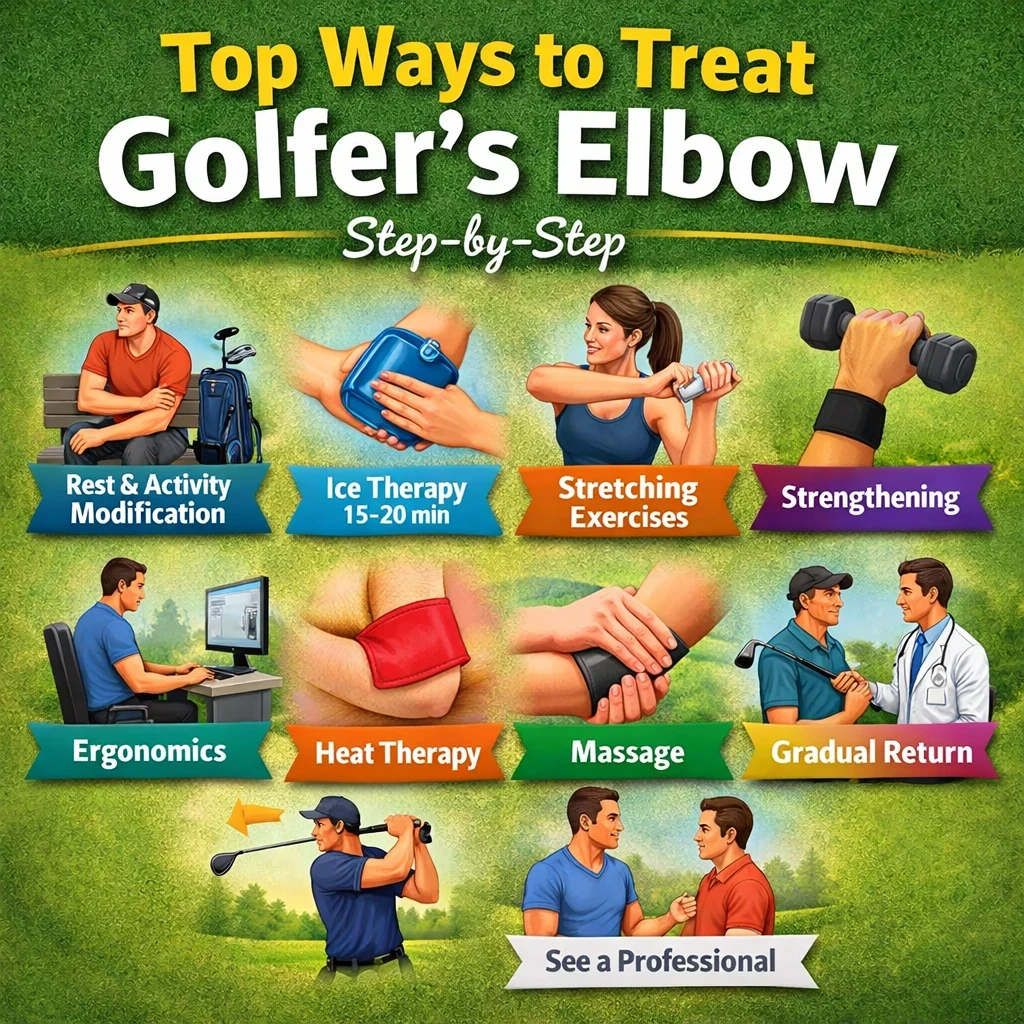
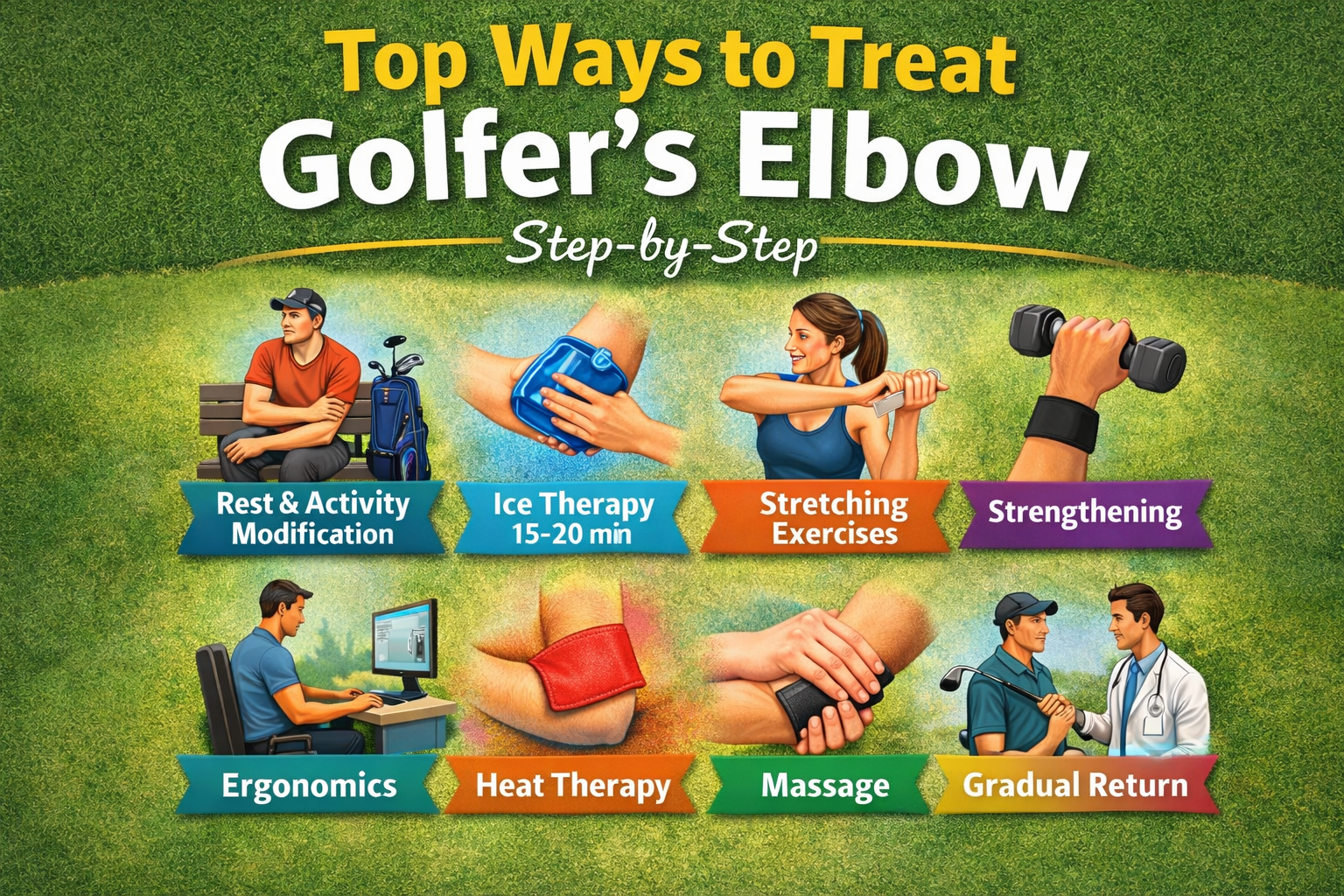
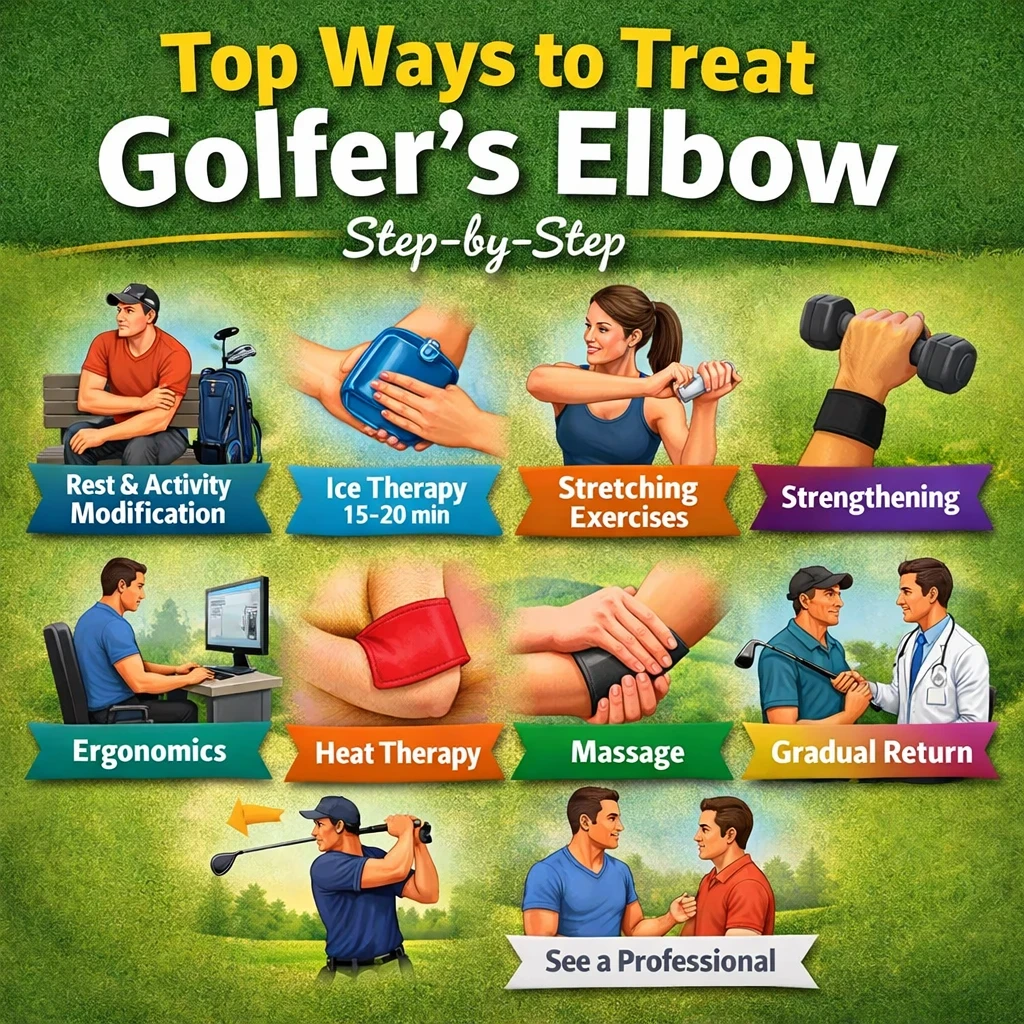
Top Ways to Treat Golfer’s Elbow (Step-by-Step)
1. Rest and Activity Modification
One of the most important top ways to treat golfers elbow is simply reducing strain.
This doesn’t mean complete inactivity. Instead:
Avoid movements that trigger pain
Modify your grip or technique
Take regular breaks from repetitive tasks
Rest allows the tendon to begin healing without constant irritation.
2. Ice Therapy for Pain Relief
Applying ice can reduce inflammation and numb pain.
How to do it:
Apply ice for 15–20 minutes
Repeat 2–3 times daily
Always use a cloth barrier to protect skin
This is one of the quickest ways to manage flare-ups.
3. Gentle Stretching and Mobility Work
Stretching helps restore flexibility and reduce tension in the tendon.
Simple stretch:
Extend your arm straight
Use your other hand to gently pull fingers back
Hold for 15–30 seconds
Consistent stretching is one of the most overlooked top ways to treat golfers elbow, yet it plays a big role in recovery.
For deeper recovery strategies, you can explore guides like understanding elbow pain differences.
4. Strengthening the Forearm Muscles
Once pain reduces, strengthening becomes essential.
Focus on:
Light resistance exercises
Eccentric loading (slow lowering movements)
Grip strengthening tools
Stronger muscles reduce the load placed on the tendon.
5. Use Supportive Bracing
A forearm brace can reduce strain during activity.
Benefits include:
Redistributes pressure away from the tendon
Allows continued movement with less pain
Supports recovery during daily tasks
Supportive tools are often included among the top ways to treat golfers elbow because they offer immediate relief.
You may also find helpful tools in supportive recovery product guides that follow similar principles.
6. Improve Technique and Ergonomics
Poor movement patterns are a major cause of golfer’s elbow.
Consider:
Adjusting sports technique
Improving desk setup
Using proper lifting form
Small changes here can prevent long-term recurrence.
7. Heat Therapy for Stiffness
While ice helps inflammation, heat is useful later in recovery.
Heat can:
Increase blood flow
Reduce stiffness
Improve mobility
Use heat before activity to loosen the area. Go to Vive Health to shop.
8. Massage and Soft Tissue Work
Massage helps improve circulation and reduce muscle tension.
Options include:
Self-massage with a ball or roller
Professional sports massage
Trigger point therapy
This supports healing and reduces tightness around the elbow.
Top quality range of golf elbow pain relief products at Vive Health Here.
9. Gradual Return to Activity
Returning too quickly can set you back.
Instead:
Increase activity slowly
Monitor pain levels
Stop if symptoms worsen
A gradual approach is one of the safest top ways to treat golfers elbow long term.
10. When to Seek Professional Help
If symptoms persist beyond a few weeks, consider:
Physiotherapy
Manual therapy
Guided rehabilitation programs
Early guidance can prevent long-term issues.
For a broader understanding of recovery approaches, see chronic pain treatment strategies.
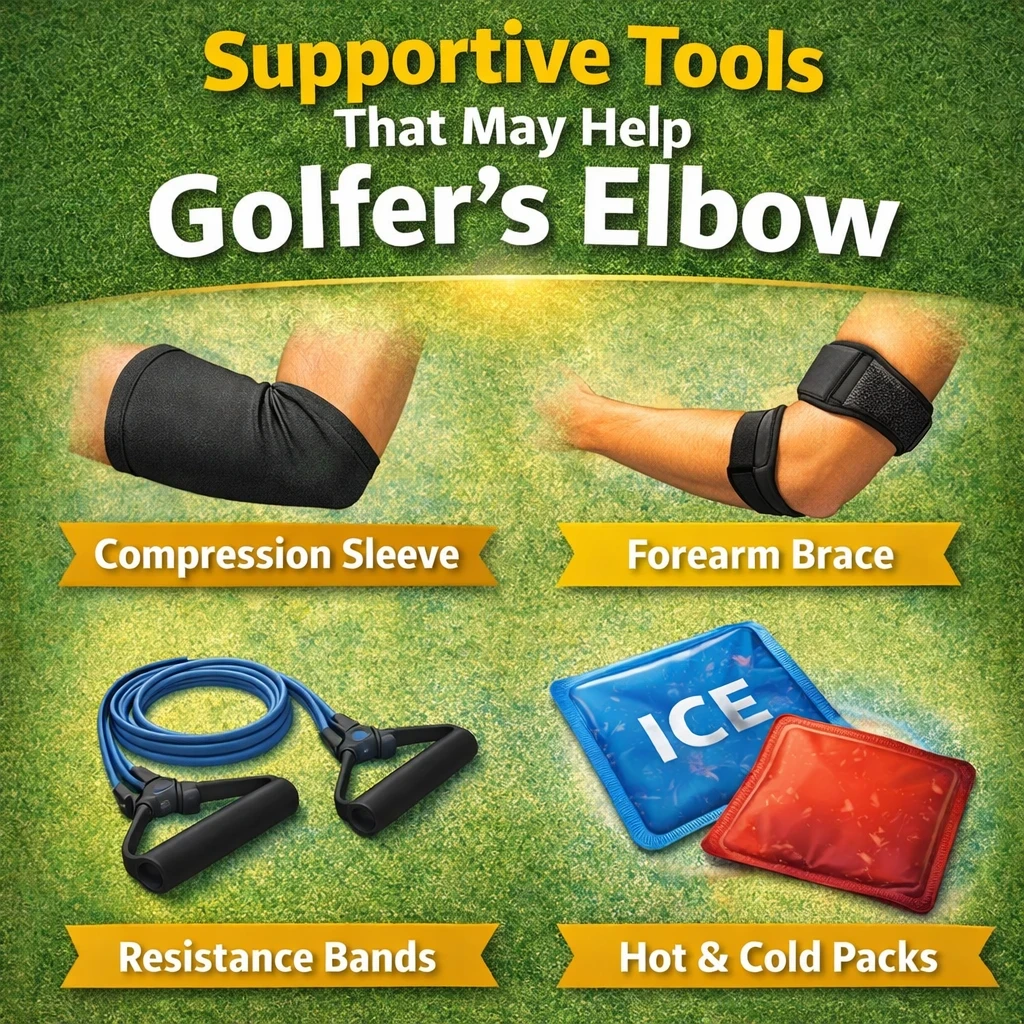
Supportive Tools That May Help
Certain tools can support recovery:
Compression sleeves
Forearm braces
Resistance bands
Heat and cold packs
These don’t replace treatment—but they can enhance it.
What The Research Suggests
Research shows that a combination of rest, progressive loading, and physical therapy is the most effective approach.
A study published by the National Institutes of Health highlights that structured rehabilitation programs improve long-term tendon health and reduce recurrence rates.
What These Treatments Can and Can’t Do
It’s important to stay realistic.
These methods can:
Reduce pain
Improve strength and mobility
Support long-term recovery
But they may not:
Provide instant results
Work without consistency
Prevent recurrence without lifestyle changes
Consistency is key when applying the top ways to treat golfers elbow.
Frequently Asked Questions (FAQ)
What is the fastest way to treat golfer’s elbow?
The fastest way involves a combination of rest, ice, and gentle stretching.
Avoid aggravating movements while gradually introducing strengthening exercises.
There is no instant fix, but early action speeds up recovery.
Can I keep playing golf with golfer’s elbow?
You can, but it’s important to modify your activity.
Reduce intensity, adjust your grip, and stop if pain increases.
Continuing without changes may worsen the condition.
How do I know if it’s golfer’s elbow or something else?
Golfer’s elbow typically causes pain on the inside of the elbow, especially when gripping or flexing the wrist.
If pain is on the outside, it may be tennis elbow. Severe or unclear symptoms should be assessed professionally.
Are braces actually effective?
Yes, braces can help reduce strain on the tendon during activity.
They don’t cure the condition but are useful as part of a wider recovery plan.
When should I see a physiotherapist?
If symptoms last longer than 4–6 weeks or interfere with daily activities, it’s worth getting professional guidance to avoid long-term issues.
Does golfer’s elbow require surgery?
Surgery is very rare and only considered in severe, long-term cases that do not respond to conservative treatment.
Final Thoughts
Finding the top ways to treat golfers elbow comes down to a simple principle: reduce strain, restore strength, and stay consistent.
Small daily actions—like stretching, modifying activity, and using supportive tools—can make a significant difference over time.
Stick with the process, listen to your body, and recovery becomes much more achievable.
Scientific Reference
https://www.ncbi.nlm.nih.gov/pmc/articles/PMC3718355/