Understanding Pain Mechanisms Is One Of The Most Important Elements
Understanding Pain Mechanisms
Understanding pain mechanisms is one of the most important steps in learning how pain works and why it sometimes persists.
Many people assume pain always means physical damage is occurring in the body.
However, modern research shows that pain is actually a protective signal created by the nervous system.
Learning about understanding pain mechanisms can help reduce fear, support recovery, and make it easier to choose treatments that improve long-term health.
What Are Pain Mechanisms?
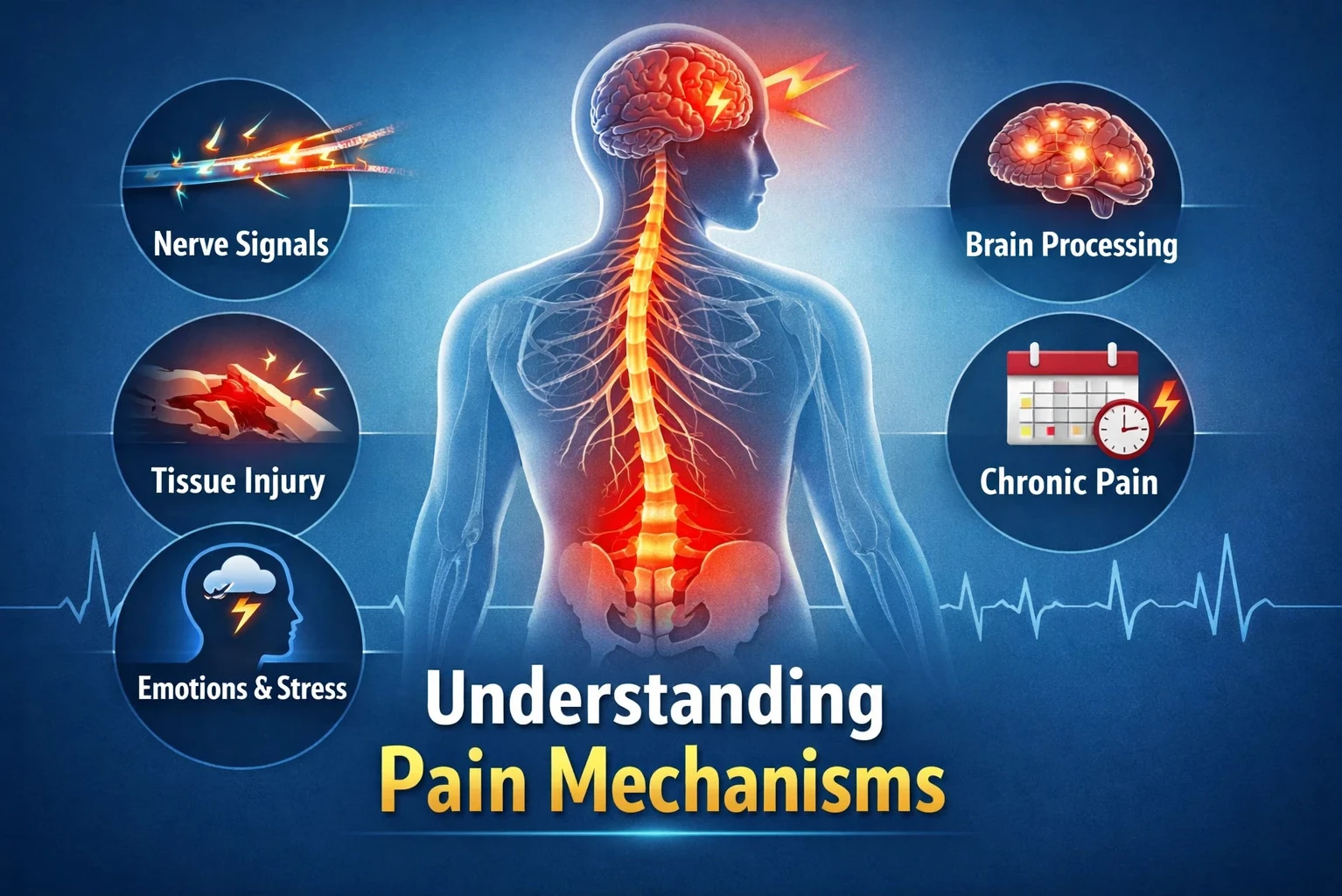
Pain mechanisms describe how the body detects potential danger and sends warning signals to the brain.
Specialized nerve endings called nociceptors detect mechanical pressure, inflammation, or chemical signals that may indicate injury.
These signals travel through nerves into the spinal cord and eventually reach the brain.
The brain then decides whether pain should be produced.
This means pain is not simply a direct measurement of tissue damage.
Instead, pain is a protective response designed to keep the body safe.
A deeper explanation of this protective system can be found in the guide to pain education and how pain works.
How the Nervous System Processes Pain
The nervous system plays a central role in understanding pain mechanisms.
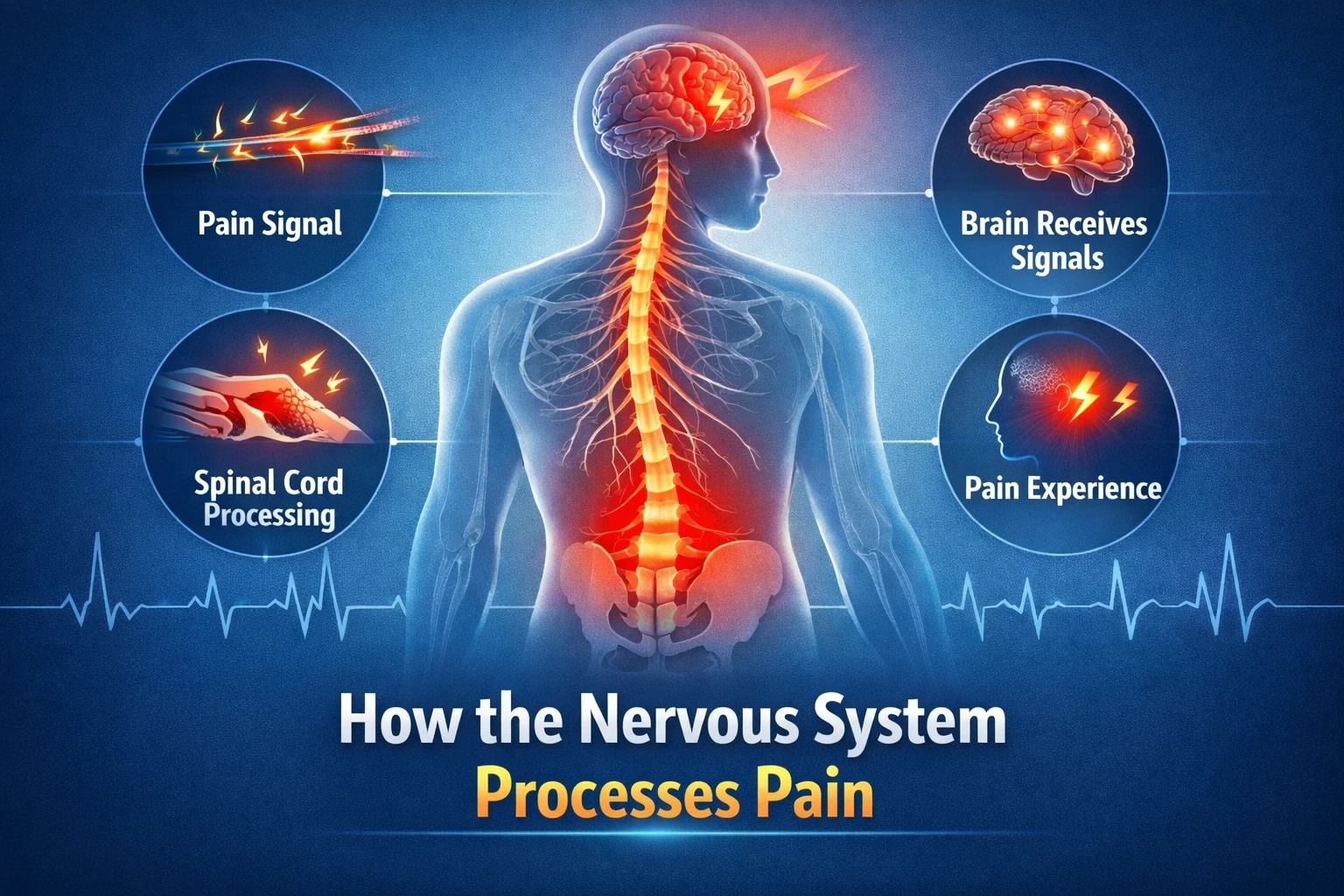
Signals from injured or irritated tissue travel along peripheral nerves toward the spinal cord.
At the spinal cord level, these signals may be amplified or reduced before reaching the brain.
Once the signals arrive in the brain, several regions become active.
These areas are responsible for sensation, emotional response, and memory.
Because of this complex interaction, pain often involves both physical and emotional components.
Stress, fatigue, and anxiety may increase sensitivity in the nervous system.
On the other hand, relaxation and confidence in movement may reduce pain signals.
The connection between movement and pain sensitivity is explored further in movement, load and pain sensitivity.
Acute Pain vs Chronic Pain Mechanisms
A key part of understanding pain mechanisms involves recognising the difference between acute and chronic pain.
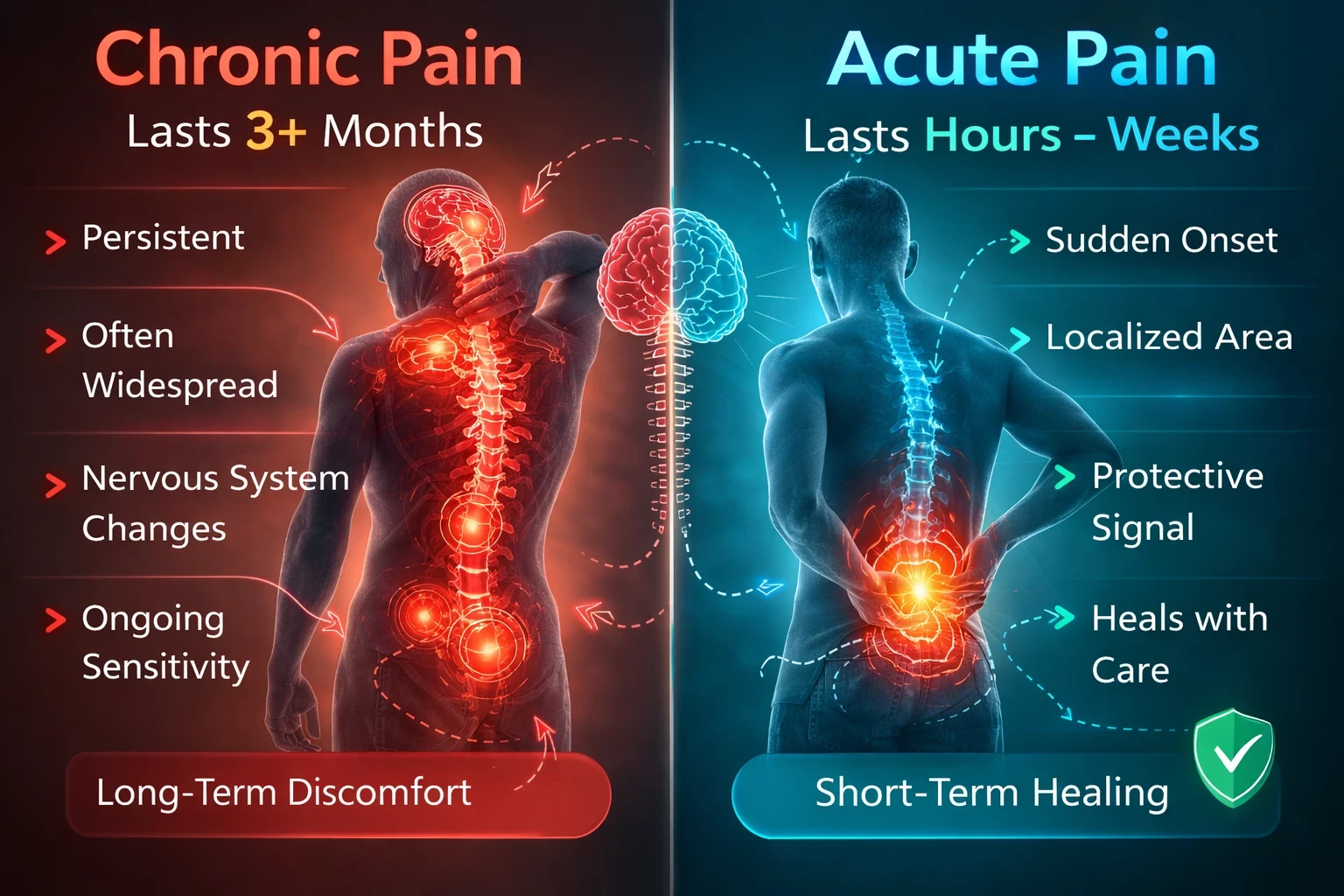
Acute pain usually occurs after injury or inflammation. It often improves as tissues heal.
Chronic pain is different.
Pain may continue for months or even years after tissues have healed.
Research suggests that long-term pain often involves changes in the nervous system itself.
These changes may include increased nerve sensitivity or stronger pain signalling within the brain.
You can learn more about this process in the article chronic pain explained.
Why Pain Can Persist
One of the most surprising discoveries in modern pain science is that pain can continue even when medical scans show little or no structural damage.
Understanding pain mechanisms helps explain why this occurs.
Over time, the nervous system may become more sensitive.
This process is sometimes called central sensitization.
When the nervous system becomes overly protective, everyday movements or mild sensations may trigger pain signals.
Several factors may contribute to persistent pain sensitivity:
• previous injuries
• chronic stress
• poor sleep
• inactivity
• inflammation
• emotional strain
Because of this, long-term pain management often involves addressing both physical and lifestyle factors.

The Brain’s Role in Pain
The brain ultimately decides whether pain should be produced.
It constantly evaluates incoming signals alongside information about safety, past experiences, and emotional state.
This helps explain why pain may increase during stressful periods and decrease when someone feels calm or supported.
For example, athletes sometimes continue competing despite injuries because the brain temporarily suppresses pain signals during high-focus situations.
Understanding this brain-body interaction is a key part of understanding pain mechanisms and can help people approach recovery with greater confidence.
Movement and Recovery
Movement is one of the most important tools for restoring healthy pain signalling.
Avoiding activity for long periods can weaken muscles and increase stiffness.
Over time, this may make the nervous system even more sensitive.
Gradual movement helps retrain the brain and nervous system to interpret normal sensations as safe again.
Gentle exercise can also improve circulation, reduce inflammation, and stimulate natural pain-relieving chemicals within the body.
Many recovery strategies are discussed in the guide to back pain recovery exercises.
Lifestyle Factors That Influence Pain
Pain is influenced by many lifestyle factors that affect the nervous system.
Important influences include:
• sleep quality
• nutrition
• stress levels
• emotional wellbeing
• physical activity
• social connection
When these areas improve, the nervous system often becomes less reactive and pain signals may reduce.
Lifestyle strategies are discussed further in natural remedies for pain relief.
When Professional Help May Be Needed
Although many people benefit from education and lifestyle changes, medical guidance is sometimes necessary.
Persistent pain may require evaluation from healthcare professionals trained in musculoskeletal medicine, neurology, or pain management.
Treatment options may include:
• physiotherapy
• targeted rehabilitation programs
• medication when appropriate
• injections or specialised therapies
Understanding pain mechanisms does not replace medical treatment. Instead, it helps people make informed decisions about recovery.
Balanced Perspective
Modern pain science shows that pain is a complex interaction between the body, brain, and environment.
Understanding pain mechanisms allows people to see pain differently.
Instead of assuming damage is always present, it becomes possible to view pain as a protective signal that sometimes becomes overly sensitive.
Combining education, movement, lifestyle strategies, and appropriate medical care offers the best approach to long-term recovery.
Scientific Studies
Understanding Pain Mechanisms and the Nervous System
https://pubmed.ncbi.nlm.nih.gov/25864633/
Central Sensitization in Chronic Pain
https://pubmed.ncbi.nlm.nih.gov/24898770/
Neurobiology of Pain Processing
https://pubmed.ncbi.nlm.nih.gov/18480654/