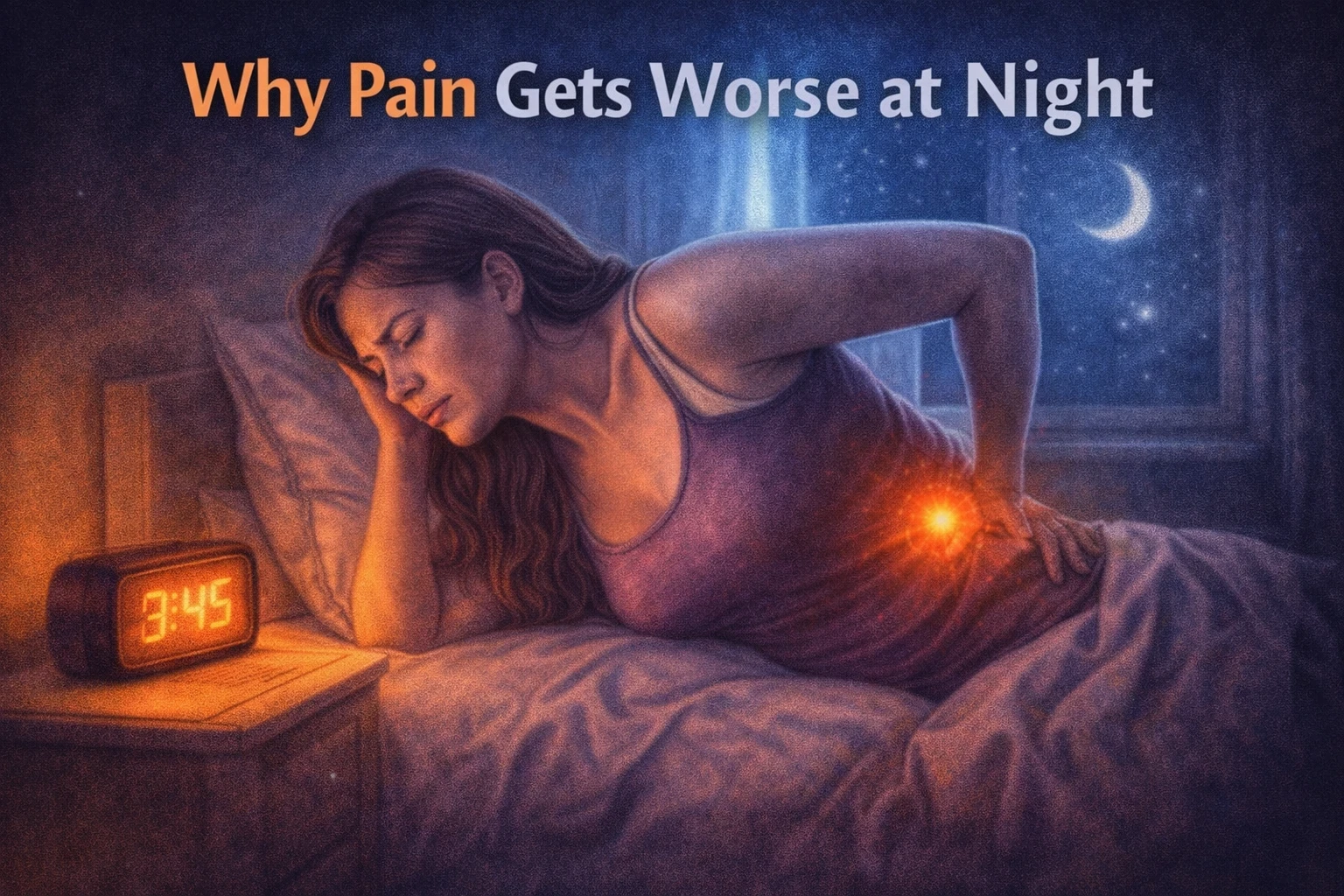
Why Pain Gets Worse At Night What You Can Do
Why Pain Gets Worse at Night
Why pain gets worse at night is a question many people ask when discomfort seems to increase just as they are trying to sleep.
Nighttime pain can affect the back, joints, muscles, and nerves, making it difficult to relax or stay asleep. Understanding why pain gets worse at night can help people identify possible causes and take practical steps to reduce symptoms.
Several factors can contribute to increased pain during the night, including reduced movement, inflammation, nervous system sensitivity, and sleep posture.
In many cases, nighttime pain is linked to how the body and nervous system respond when activity slows down.
Why Pain Gets Worse at Night: A Simple Explanation
The reason why pain gets worse at night often relates to changes in body activity and nervous system awareness.
During the day, the body is constantly moving, and the brain is distracted by tasks and sensory input.
At night, activity slows down and the environment becomes quiet. This allows the brain to focus more on signals coming from the body.
As a result, pain sensations that were less noticeable during the day may feel stronger when trying to sleep.
Understanding how the nervous system processes pain can help explain this effect.
For example, this guide on understanding pain mechanisms explains how the brain interprets signals from injured or sensitive tissues.
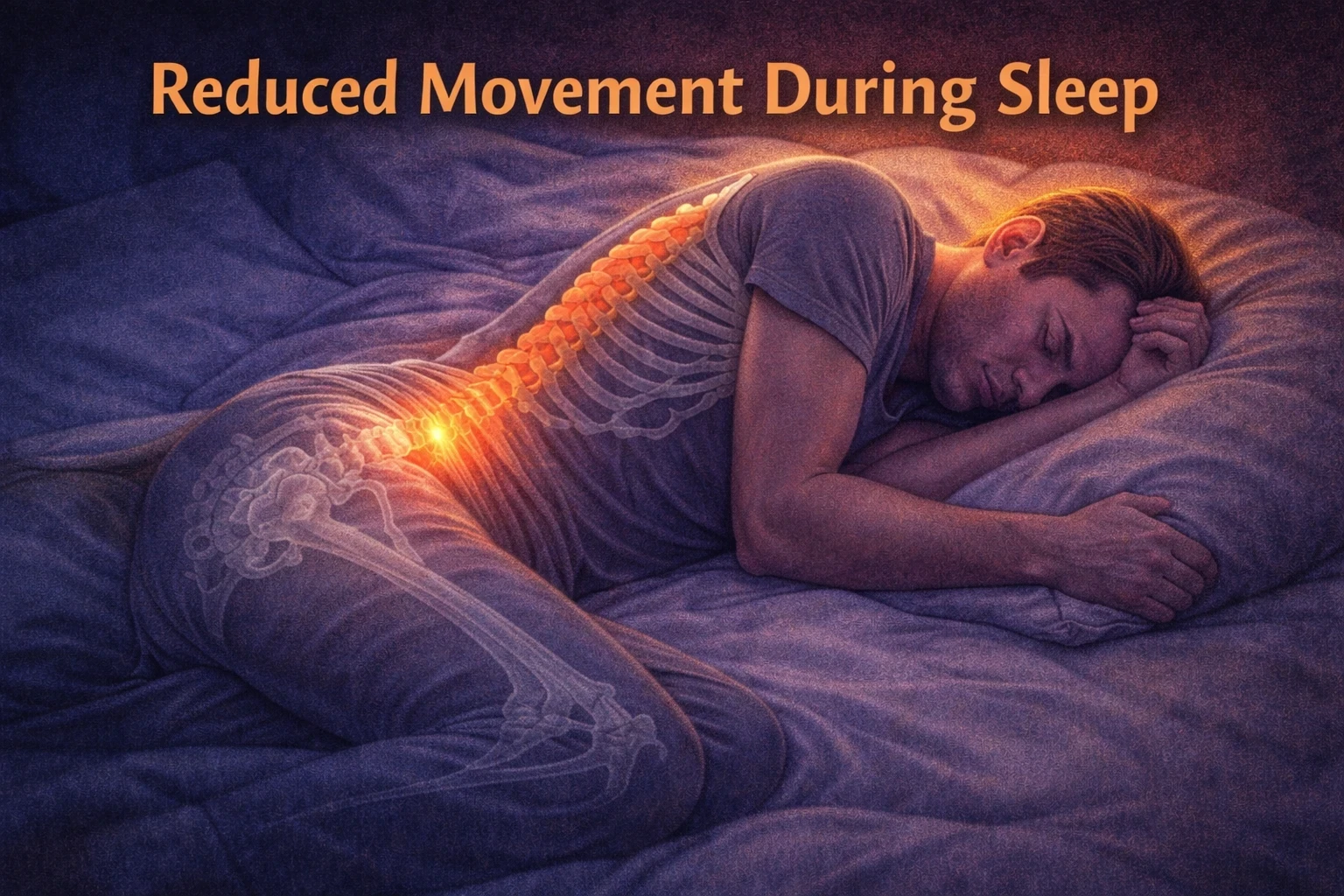
Reduced Movement During Sleep
One reason why pain gets worse at night is reduced movement.
During the day, joints and muscles are regularly used, which helps maintain circulation and flexibility.
When lying still for long periods during sleep, joints may stiffen and muscles can tighten.
This is particularly common in people with arthritis, back pain, or previous injuries.
Limited movement can increase pressure on certain areas of the body, which may trigger pain signals.
Changing sleeping position or using supportive pillows can sometimes help reduce this effect.
Inflammation and Fluid Changes
Inflammation may also play a role in explaining why pain gets worse at night.
During sleep, the body’s inflammatory processes can become more active as it works to repair tissues.
In some people, this can increase swelling around joints or nerves.
When inflammation increases, it may place additional pressure on nearby tissues, which can intensify discomfort.
This is one reason conditions such as joint pain, arthritis, and muscle injuries sometimes feel more painful at night.
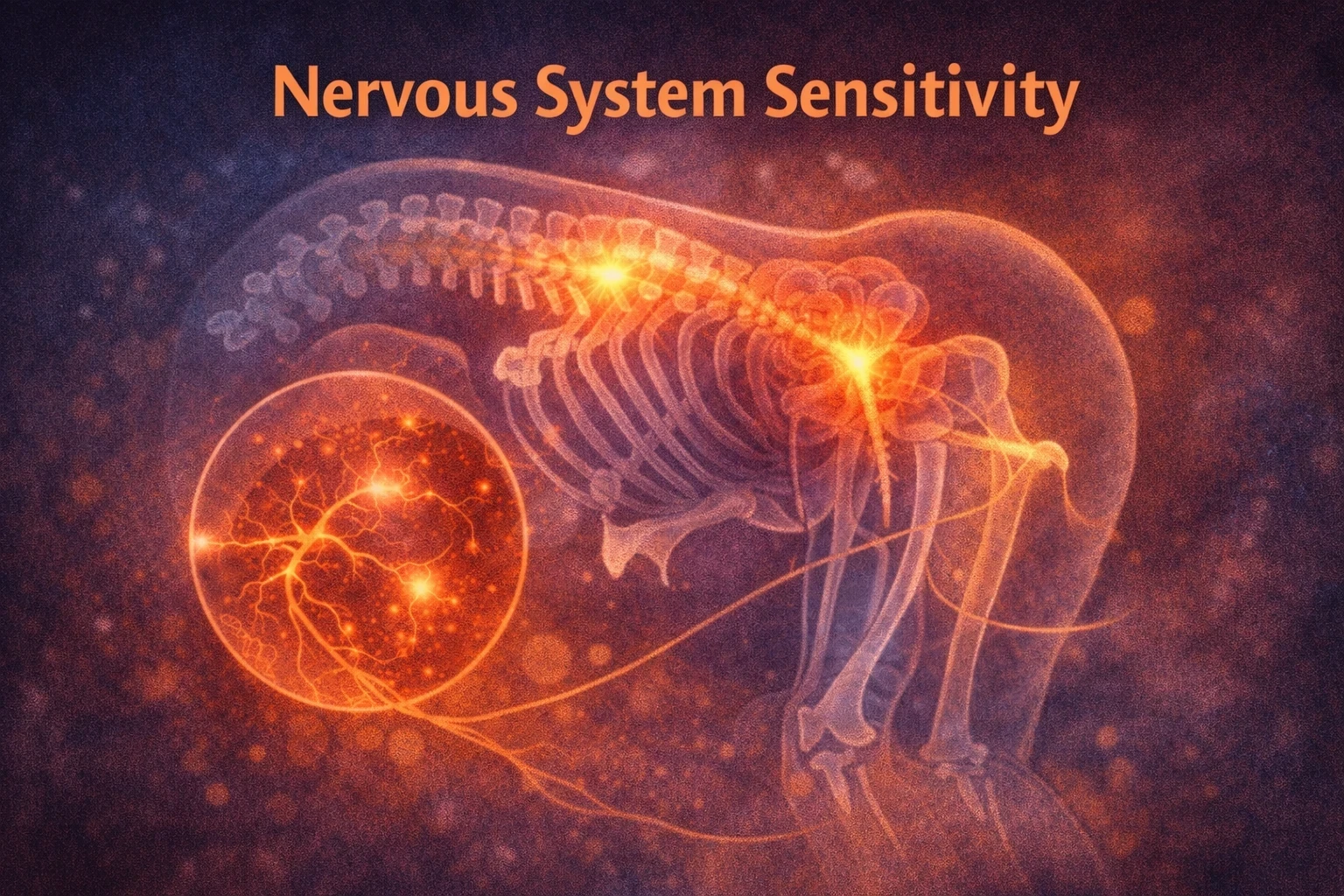
Nervous System Sensitivity Why Pain Gets Worse at Night
Another important reason why pain gets worse at night involves nervous system sensitivity.
When pain has been present for a long time, the nervous system can become more sensitive to signals from muscles, joints, or nerves.
This process is sometimes called sensitisation.
At night, when the brain has fewer distractions, these signals may be interpreted as stronger or more noticeable.
For example, people experiencing long-term pain may notice that discomfort becomes more obvious when lying quietly in bed.
If you want to understand this process further, this overview of chronic pain explained explores how persistent pain develops.

Sleep Position and Body Support
Sleep posture is another factor that can influence why pain gets worse at night.
When the spine, hips, or shoulders are not properly supported, certain tissues may experience increased pressure.
Over several hours, this pressure can irritate joints, muscles, or nerves.
For example, people with back pain may experience increased symptoms when the spine is not aligned during sleep.
Choosing supportive pillows, adjusting mattress firmness, and experimenting with sleep positions can sometimes reduce pressure on sensitive areas.
This guide on back pain recovery exercises explains how strengthening muscles and improving mobility may help support the spine.
Stress and Mental Load
Stress can also influence why pain gets worse at night.
During the day, the brain is busy processing tasks and external stimuli.
At night, when distractions disappear, thoughts and emotional stress may become more noticeable.
Stress hormones can increase muscle tension and heighten nervous system sensitivity, which may amplify pain signals.
Relaxation techniques, breathing exercises, and gentle evening routines may help reduce nervous system activation before sleep.
Additional practical strategies can be found in this guide on chronic pain treatment solutions.

Gradual Strategies That May Help
Although understanding why pain gets worse at night can be helpful, managing nighttime pain often involves simple lifestyle adjustments.
Some supportive strategies may include:
• maintaining gentle daily movement
• improving sleep posture
• using supportive pillows
• practising relaxation before bedtime
• strengthening muscles that support joints
Small changes in sleep habits and physical activity may gradually reduce nighttime discomfort.
A Balanced Perspective
Understanding why pain gets worse at night helps explain why symptoms sometimes increase during periods of rest.
Reduced movement, inflammation, nervous system sensitivity, and sleep posture can all contribute to nighttime discomfort.
Although nighttime pain can be frustrating, identifying possible triggers often helps people find practical ways to improve sleep and manage symptoms more effectively.
Scientific Study
https://pubmed.ncbi.nlm.nih.gov/27068566/