Swollen Knee Swelling CausesAre One Of The Most Common
Swollen knee swelling causes are one of the most common reasons people search for answers about sudden joint discomfort.
When your knee becomes puffy, tight, or visibly enlarged, it’s usually a signal — not a random event.
Understanding swollen knee swelling causes helps reduce fear, guide smart decisions, and prevent unnecessary overreaction.
A swollen knee simply means fluid has accumulated inside or around the joint.
That fluid can come from irritation, injury, overload, inflammation, or sometimes infection.
The key is identifying why it’s happening.
Let’s break it down clearly.
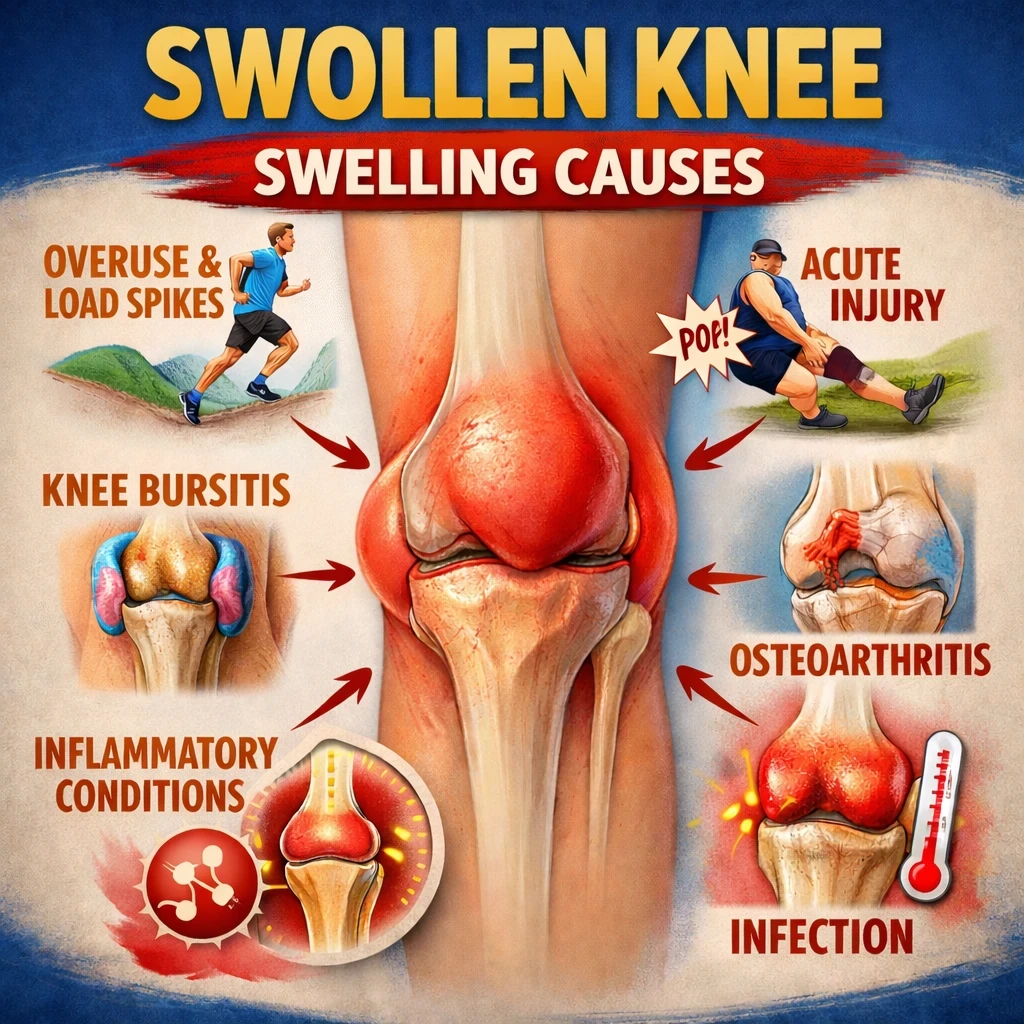
What Does Knee Swelling Actually Mean?
The knee joint is surrounded by synovial fluid, ligaments, cartilage, tendons, and small protective sacs called bursae.
When one of these tissues becomes irritated, the body increases fluid production as part of its protection response.
Swelling may feel like:
• Tightness when bending
• Puffiness above or below the kneecap
• Warmth
• Mild stiffness
• Pain with pressure
In many cases, swelling is protective — not dangerous.
Most Common Swollen Knee Swelling Causes
1. Overuse and Load Spikes
One of the most overlooked swollen knee swelling causes is a sudden increase in activity.
Examples:
• Starting a new exercise routine
• Walking more than usual
• Deep squats after a long break
• Long hikes without preparation
Your knee tissues adapt gradually. When load increases too quickly, irritation can follow. This is often temporary and settles with smart pacing.
If you’re unsure how load affects joints, see: https://beyond-pain-relief.com/movement-load-and-pain-sensitivity/
Understanding load prevents repeated flare-ups.
2. Acute Injury
Swelling that appears quickly — especially within hours — may follow:
• A fall
• A twist
• A sports collision
• Sudden directional change
Ligament sprains, meniscus irritation, or joint capsule strain can all trigger fluid buildup.
Rapid swelling with instability or inability to bear weight needs medical review.
3. Knee Bursitis
Knee bursitis is another common contributor to swollen knee swelling causes.
Bursae are small fluid-filled sacs that reduce friction. When irritated (often from kneeling or repetitive pressure), they can enlarge noticeably.
You may see visible swelling at the front of the knee or below the kneecap.
For a deeper explanation, see: https://beyond-pain-relief.com/knee-bursitis-causes-and-symptoms-knee-bursitis-causes-and-symptoms/
4. Osteoarthritis
In people over 40, especially with a history of joint stress, osteoarthritis can cause intermittent swelling.
This doesn’t always mean “bone on bone.” It often reflects sensitivity and fluid shifts in the joint lining.
Swelling from arthritis tends to:
• Fluctuate
• Worsen after activity
• Ease with gentle movement
Understanding what chronic pain actually means can reduce fear: https://beyond-pain-relief.com/what-is-chronic-pain-a-clear-human-explanation/
5. Inflammatory Conditions
Autoimmune conditions such as rheumatoid arthritis can cause persistent knee swelling.
These cases often include:
• Morning stiffness over 30 minutes
• Swelling in multiple joints
• Fatigue
This type of swelling needs professional evaluation.
6. Infection (Less Common but Important)
A hot, red, extremely painful swollen knee combined with fever may signal infection.
This is uncommon — but urgent. Seek medical care immediately.
What Swelling Can and Cannot Tell You
Swelling does not automatically mean severe damage.
Fluid is part of healing.
However, swelling that is:
• Severe
• Rapid
• Accompanied by instability
• Linked with fever
…requires assessment.
Most mild to moderate swelling improves with:
• Relative rest
• Gentle movement
• Compression
• Elevation
• Load adjustment
Avoid complete immobilisation unless directed by a clinician. Total rest often slows recovery.
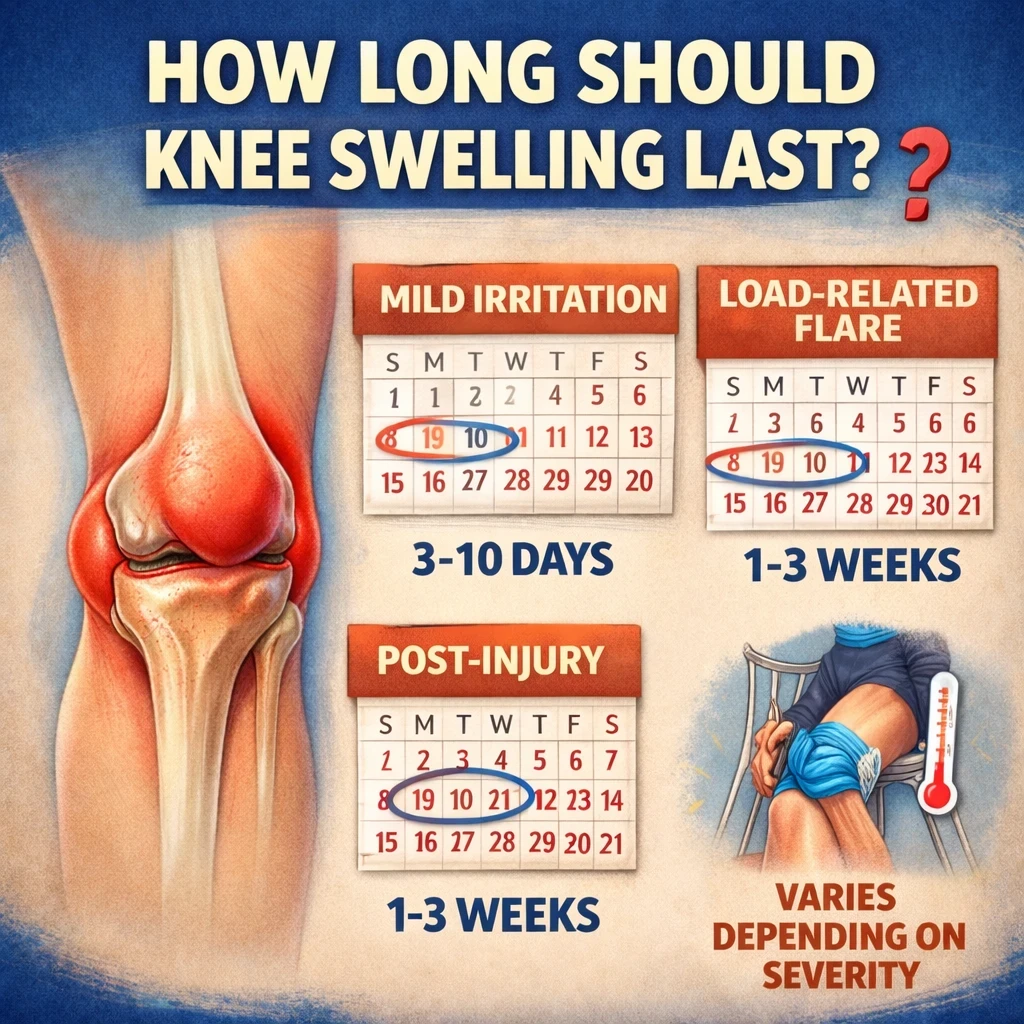
How Long Should Knee Swelling Last?
• Mild irritation: 3–10 days
• Load-related flare: 1–3 weeks
• Post-injury: varies depending on severity
If swelling persists beyond 3–4 weeks without improvement, it’s reasonable to get checked.
Supportive Tools That May Help
When dealing with swollen knee swelling causes, some people find temporary support useful.
Options include:
• Light compression sleeves
• Brief use of braces during activity
• Contrast therapy (heat and cool)
• Gentle self-massage tools
For the best quality assured supportive tools go to Ober Health Products Website.
These tools can support comfort — but they do not fix underlying load issues.
Supplements like turmeric, magnesium, or omega-3 may support inflammatory balance when appropriate, but they are adjuncts — not primary solutions.
For the best quality assured supplements go to HerbsPro here.
When to Seek Medical Advice
You should seek evaluation if:
• You cannot bear weight
• The knee locks or gives way
• Swelling follows trauma
• There is fever
• Swelling continues worsening
Otherwise, gradual improvement is expected in most non-serious cases.
A Calm Perspective on Swollen Knee Swelling Causes
Swollen knee swelling causes are often mechanical and load-related rather than catastrophic.
The knee is a responsive joint. It reacts when stress exceeds capacity — and settles when load is adjusted appropriately.
The goal is not to eliminate movement.
The goal is to find the right level of movement.
Fear increases tension. Tension increases guarding. Guarding can increase discomfort.
Education reduces fear.
And reduced fear improves outcomes.
If your swelling came on gradually after activity, think load before you think damage.
Your knee is communicating. Not collapsing.
Scientific Research Study
https://pubmed.ncbi.nlm.nih.gov/33676867/
https://pubmed.ncbi.nlm.nih.gov/30535211/
Understanding swollen knee swelling causes allows you to respond intelligently rather than react emotionally. In most cases, the knee improves with patience, progressive loading, and steady reassurance.
 Previous Post
 Next Post