Impact Of Injuries On Chronic Pain What you can do
Impact of Injuries on Chronic Pain
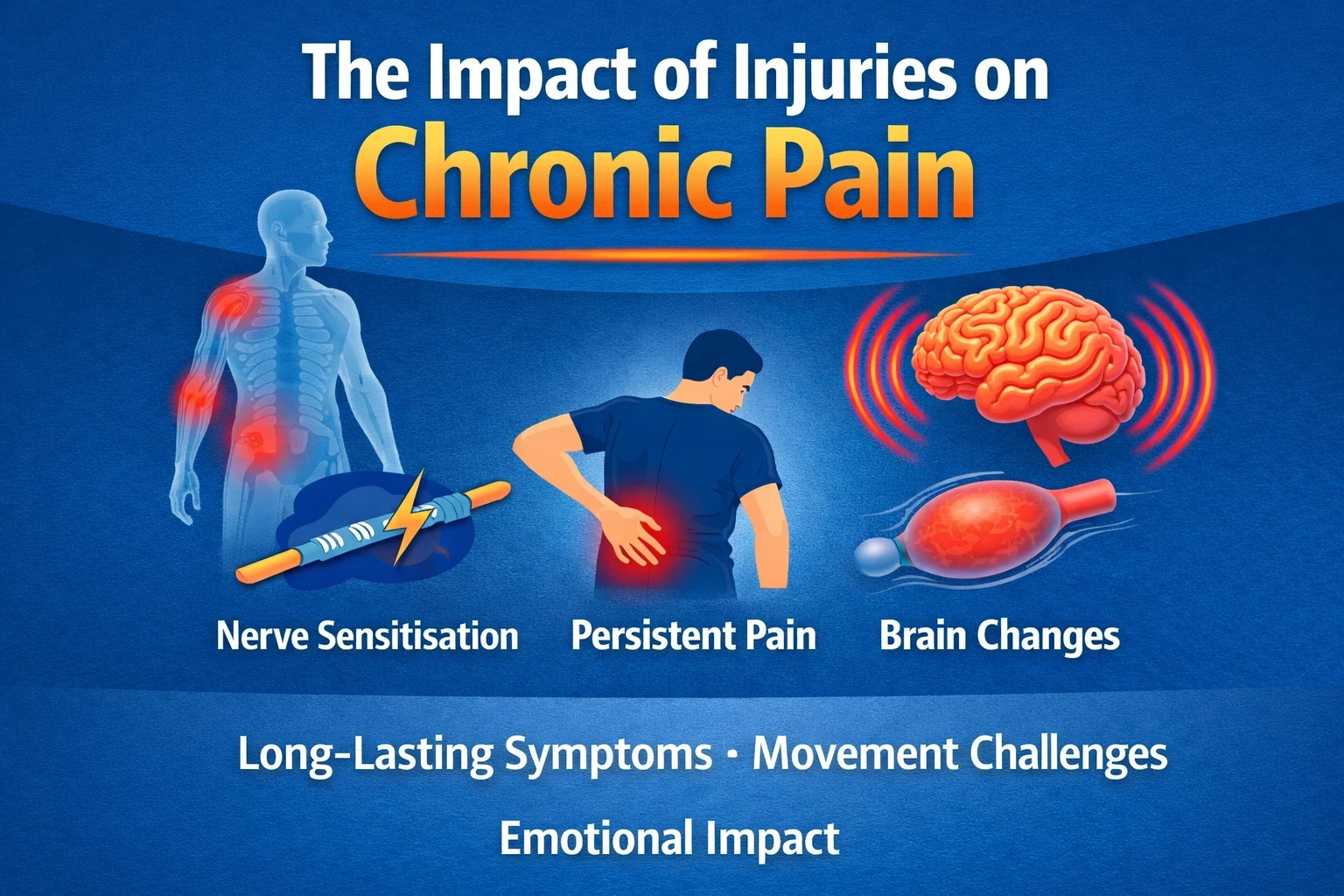
The impact of injuries on chronic pain is often underestimated, yet it plays a major role in how pain develops, persists, and affects daily life.
Many people assume pain should fade once an injury heals, but in reality, the body and brain can continue to produce pain signals long after tissues recover.
Understanding this connection is essential if you want to manage symptoms effectively and avoid long-term discomfort.
What Is Chronic Pain After Injury?
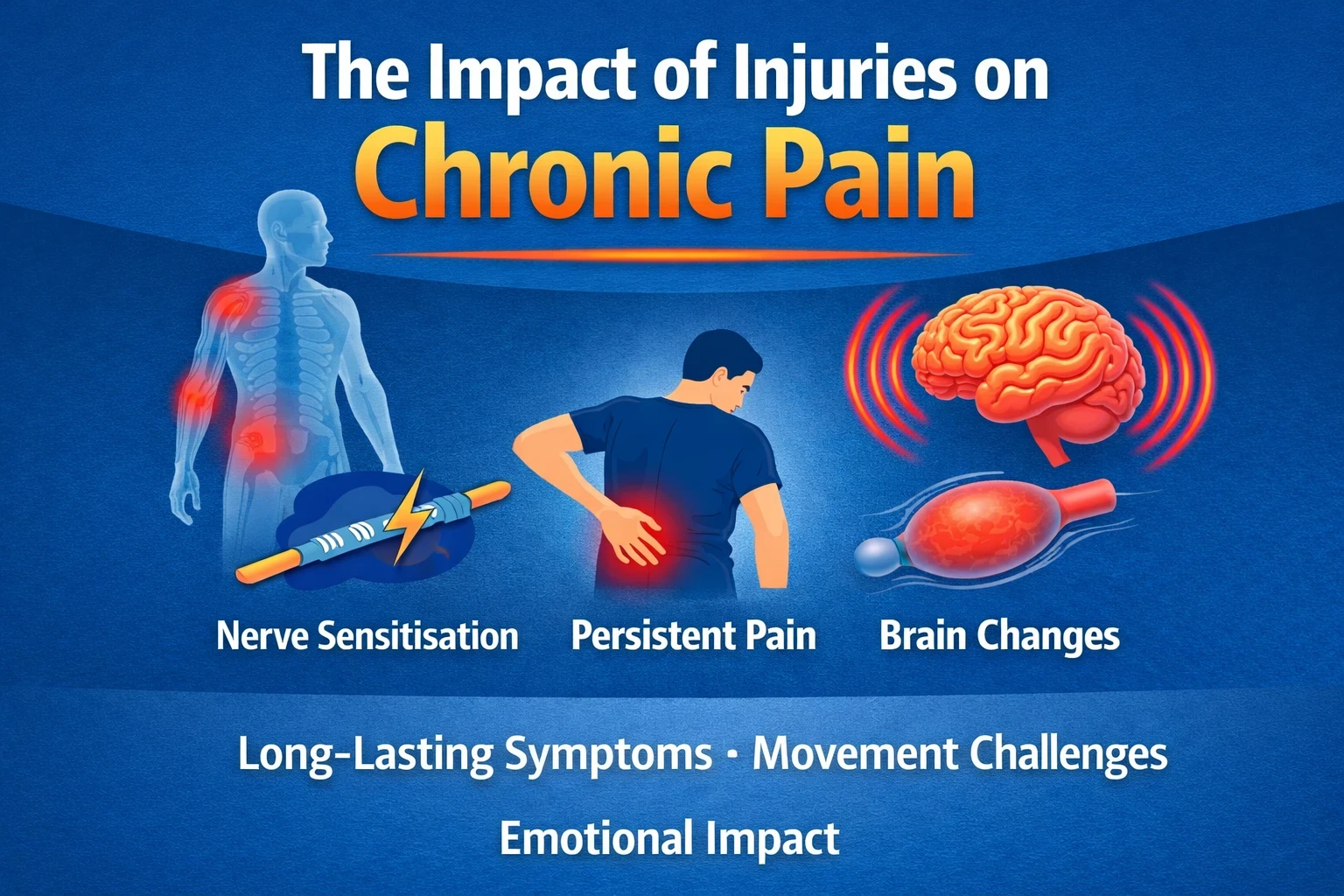
Chronic pain is typically defined as pain lasting longer than 12 weeks. While injuries like sprains, fractures, or muscle tears usually heal within weeks, the nervous system can remain sensitive.
This means the impact of injuries on chronic pain is not always about ongoing damage. Instead, it often involves how the body processes pain signals over time.
For a deeper understanding of how long-term pain develops, explore chronic pain treatment options
How Injuries Trigger Long-Term Pain
When you get injured, the body naturally responds with inflammation and protective pain signals. This is helpful in the short term.
However, problems arise when the system does not “switch off.”
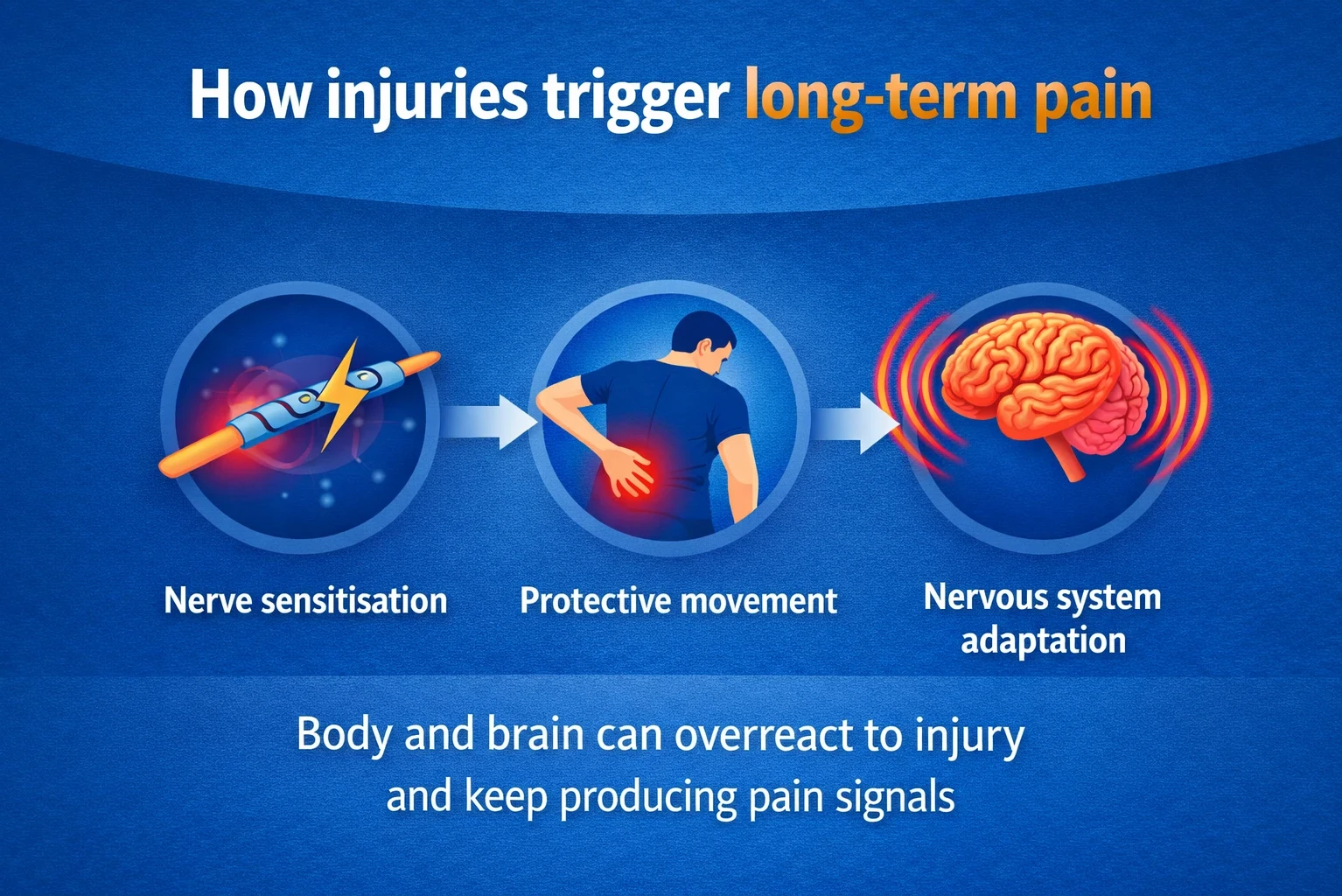
Here are the key mechanisms behind the impact of injuries on chronic pain:
1. Increased Pain Sensitivity
After an injury, nerves can become more sensitive. This is known as sensitisation.
Even small movements or light pressure may trigger pain, even when the tissue itself has healed.
2. Protective Movement Patterns
People often change how they move after an injury to avoid discomfort. While this helps initially, it can lead to:
- Muscle weakness
- Joint stiffness
- Poor posture
Over time, these changes reinforce pain patterns.
3. Nervous System Adaptation
The brain and spinal cord can become more responsive to pain signals. This is sometimes called central sensitisation.
As a result, the impact of injuries on chronic pain becomes more about the nervous system than the original injury.
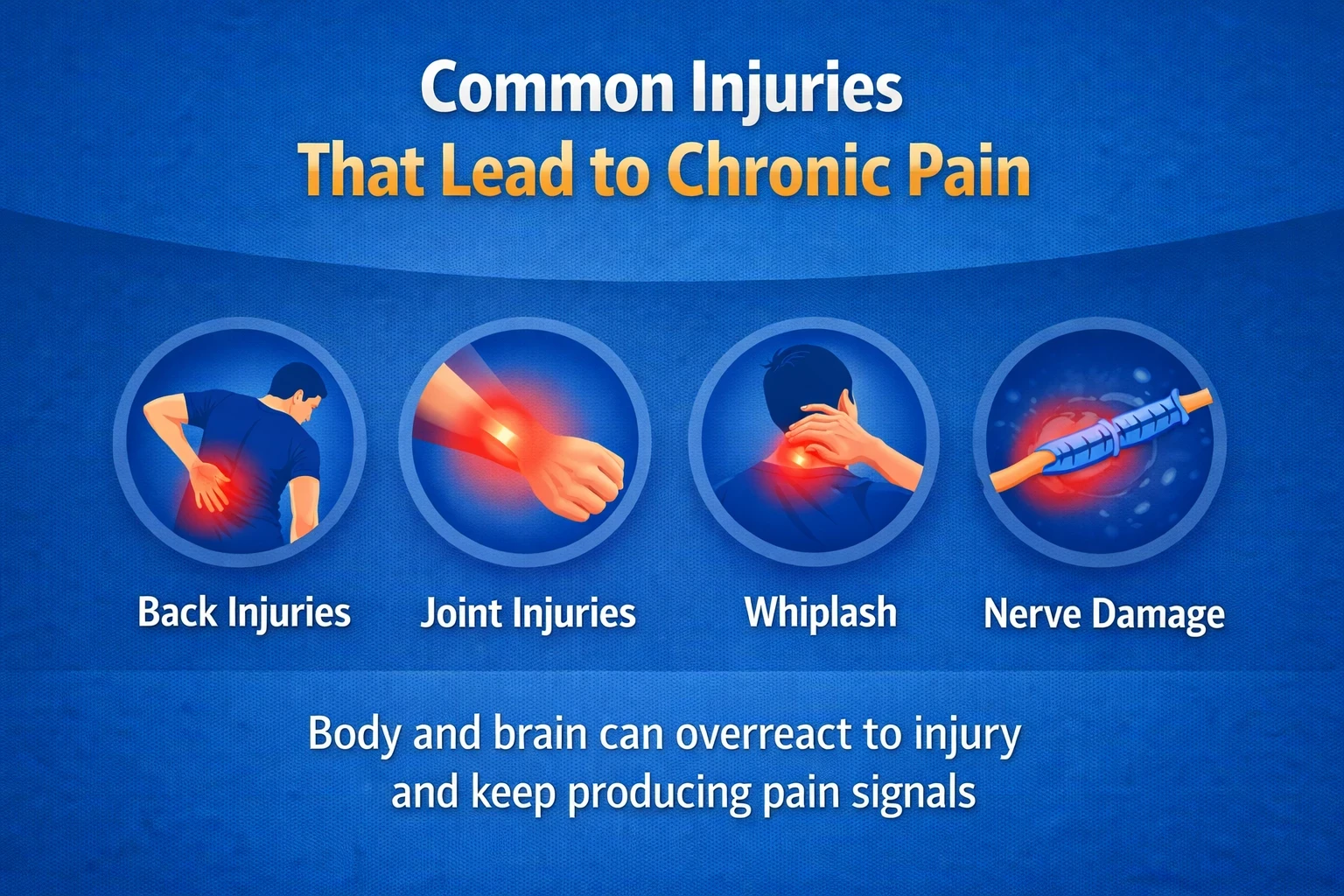
Common Injuries That Lead to Chronic Pain
Not all injuries result in long-term pain, but some are more likely to do so.
Soft Tissue Injuries
Muscle strains and ligament sprains can linger if not properly rehabilitated.
Joint Injuries
Knee, hip, and shoulder injuries often affect movement patterns, increasing the risk of chronic pain.
If hip-related issues are part of your situation, you can explore hip pain treatment complete guide to relief recovery and long term management.
Nerve-Related Injuries
Damage or irritation to nerves can cause ongoing pain signals, even after healing.
Repetitive Strain Injuries
Overuse injuries build gradually and are a major contributor to persistent pain conditions.
The Role of the Brain in Pain Persistence
One of the most important aspects of the impact of injuries on chronic pain is the brain’s involvement.
Pain is not just physical. It is processed and interpreted by the brain based on:
- Past experiences
- Stress levels
- Emotional state
- Beliefs about injury
This means two people with the same injury can have very different pain experiences.
The brain may continue producing pain signals as a protective response, even when there is no longer a physical threat.
Why Pain Can Continue After Healing
Many people feel frustrated when pain lingers after recovery. The reason often lies in how the body adapts.
Ongoing Inflammation
Low-level inflammation can persist, especially with poor recovery habits.
Deconditioning
Lack of movement weakens muscles and reduces joint stability.
Fear of Movement
Avoiding activity can reinforce pain pathways and reduce confidence.
This cycle highlights the true impact of injuries on chronic pain, where physical and psychological factors combine.
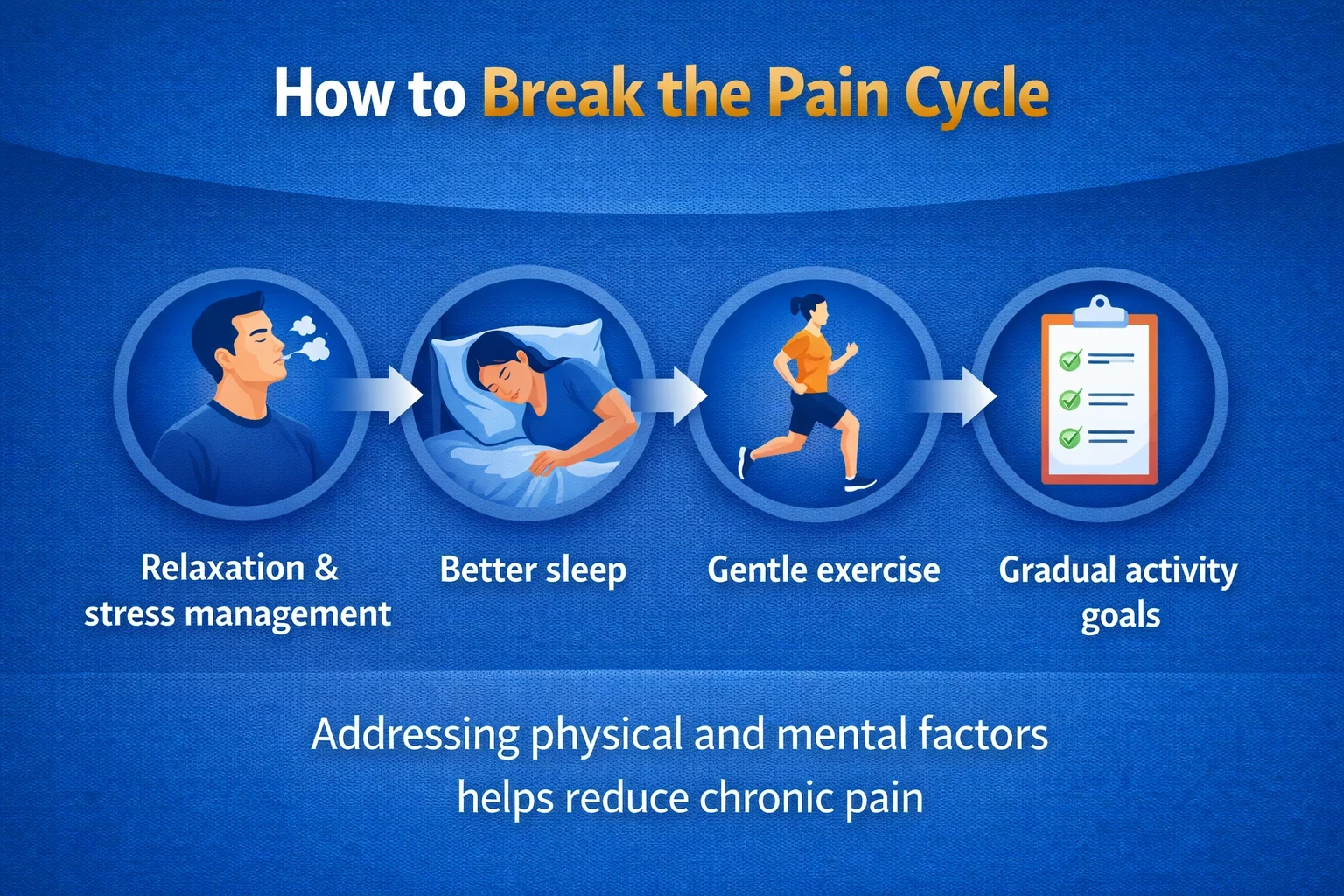
How to Break the Pain Cycle
The good news is that chronic pain after injury can often be improved with the right approach.
Gradual Movement and Exercise
Reintroducing movement helps rebuild strength and confidence.
Start small and increase gradually to avoid flare-ups.
You can explore chronic pain that moves around for structured guidance.
Pain Education
Understanding pain reduces fear and improves outcomes.
Learning that pain does not always equal damage can be a turning point.
Strength and Stability Training
Improving muscle support around joints reduces strain and helps prevent recurring pain.
Stress Management
Stress increases pain sensitivity. Techniques like breathing exercises and mindfulness can help calm the nervous system.
The Link Between Injuries and Other Chronic Conditions
The impact of injuries on chronic pain can also extend into other conditions.
For example:
- Previous injuries can contribute to back pain
- Joint injuries may increase arthritis risk
- Muscle imbalances can lead to widespread pain
If you’re dealing with multiple pain areas, explore chronic pain treatment options that actually work for a broader strategy.
Supportive Tools That May Help
In addition to movement and education, some tools may support recovery:
- Heat therapy for muscle relaxation
- TENS units for pain modulation
- Support braces for stability
- Massage tools for circulation
These tools do not fix the root cause, but they can make the recovery process more manageable.
More on HEAT therapy Here.
More on TENS products HERE
More on support braces Here
More on massage tools Here
When to Seek Professional Help
If pain persists beyond expected healing time, it may be worth getting support.
Consider help if:
- Pain limits daily activities
- Symptoms are worsening
- You feel stuck in a pain cycle
A structured plan can help address both the physical and neurological aspects of pain.
Final Thoughts
The impact of injuries on chronic pain goes far beyond the initial damage. It involves the nervous system, movement patterns, and even mindset.
Recovery is not just about healing tissue. It is about retraining the body and brain to feel safe moving again.
With the right approach, many people can reduce pain, improve function, and regain control over their daily lives.
Scientific Studies
https://pubmed.ncbi.nlm.nih.gov/24785431/
https://pubmed.ncbi.nlm.nih.gov/28192793/