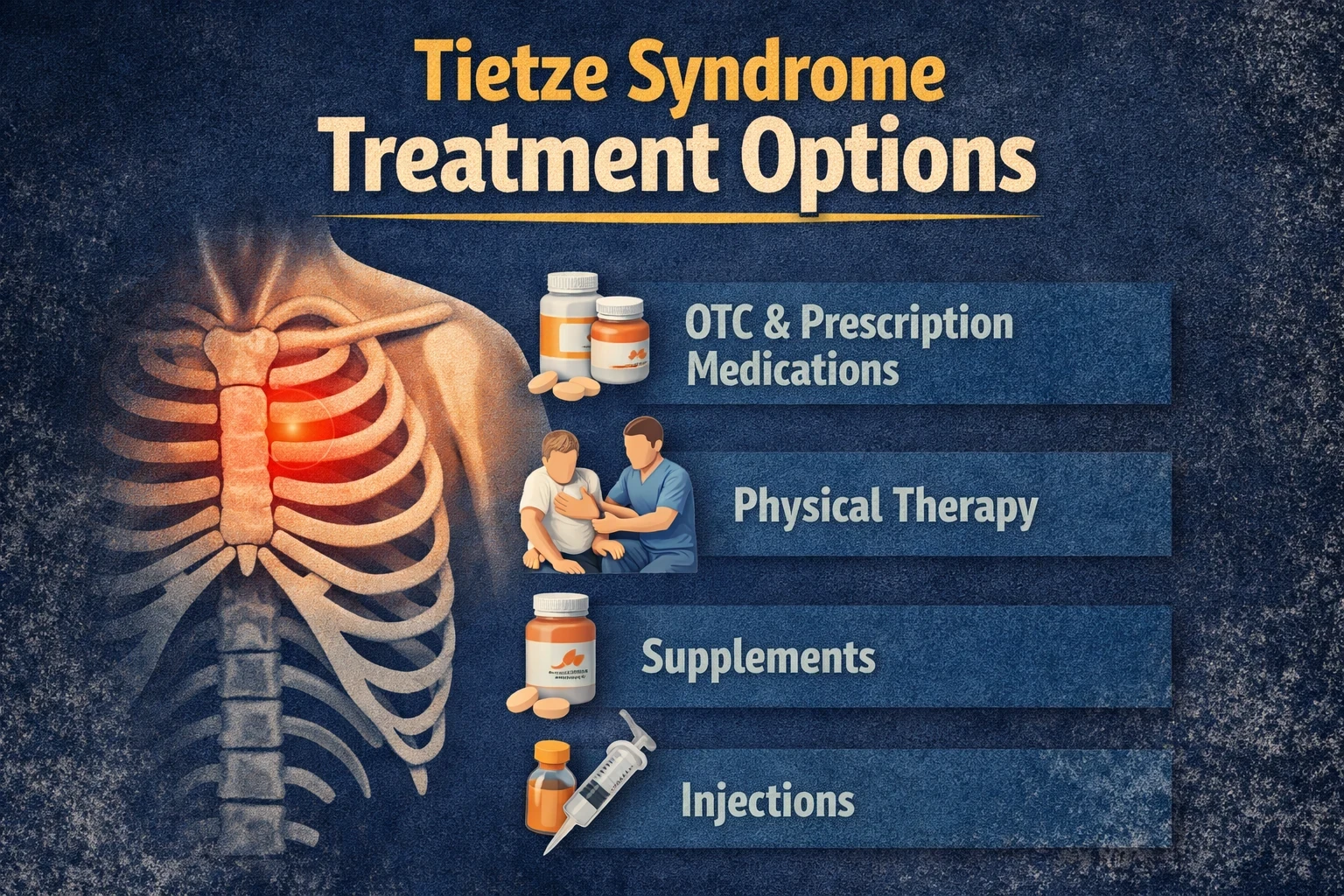
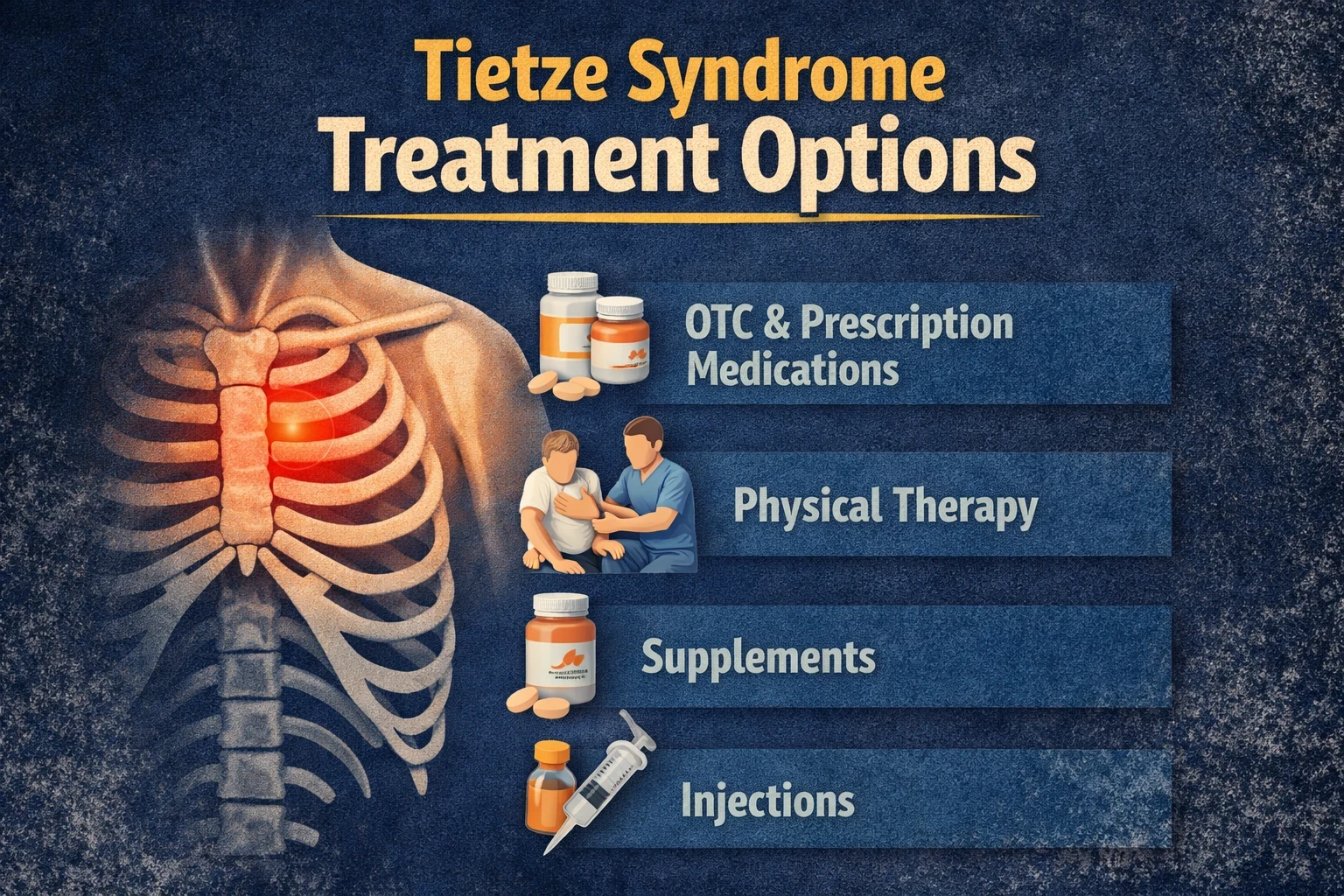
Tietze Syndrome Treatment Options
Tietze syndrome treatment options are essential for managing chest wall pain, swelling, and tenderness around the rib joints.
While the condition can feel alarming, especially due to its location, it is a benign inflammatory issue affecting the cartilage where ribs meet the breastbone. Understanding the right treatment approach can help reduce pain, improve movement, and ease anxiety around symptoms.
What Is Tietze Syndrome?
Tietze syndrome is a rare inflammatory condition involving the upper rib cartilage.
It typically presents with both pain and visible swelling, which helps distinguish it from similar conditions. Common symptoms include: Localised chest pain Swelling over a rib joint Pain with movement, coughing, or deep breathing For a deeper symptom breakdown, see Tietze syndrome symptoms what they feel like https://beyond-pain-relief.com/tietze-syndrome-symptoms-what-they-feel-like/
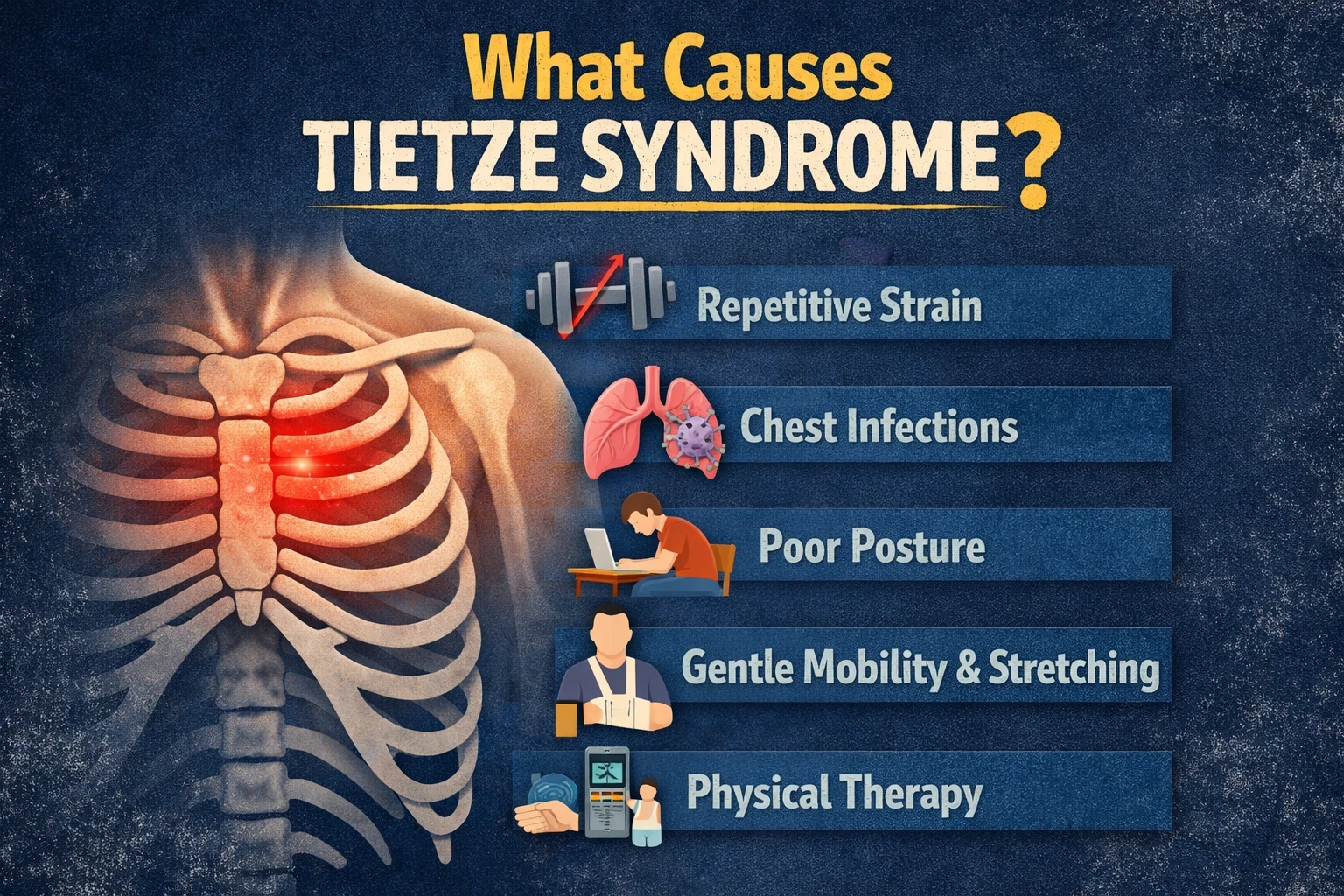
What Causes Tietze Syndrome?
There is no single cause, but several contributing factors are commonly linked: Repetitive strain or overuse Chest infections or persistent coughing Poor posture Minor trauma In most cases, symptoms develop due to irritation rather than structural damage.
How Pain Develops
Pain in Tietze syndrome is driven by both inflammation and nervous system sensitivity. This means: The area becomes tender and reactive Pain may feel stronger than expected Movement can trigger protective responses Understanding this helps reduce fear, which is often a key part of recovery.
Treatment Options
1. Relative Rest (Not Complete Rest)
One of the most effective Tietze syndrome treatment options is reducing aggravating activity without becoming inactive. Helpful adjustments: Avoid heavy lifting Reduce repetitive upper body strain Stay gently active Too much rest can actually increase stiffness and sensitivity.
2. Gentle Movement and Mobility
Movement is one of the most important long-term strategies. This may include: Light chest opening movements Shoulder mobility exercises Gradual return to normal activity This approach is also discussed in natural tietze syndrome cure honest options when there is no cure https://beyond-pain-relief.com/natural-tietze-syndrome-cure-honest-options-when-there-is-no-cure/
3. Breathing Retraining
Chest pain often leads to shallow breathing, which increases tension. Helpful techniques: Slow nasal breathing Diaphragmatic breathing Longer, relaxed exhale This helps reduce chest tightness and calm the nervous system.
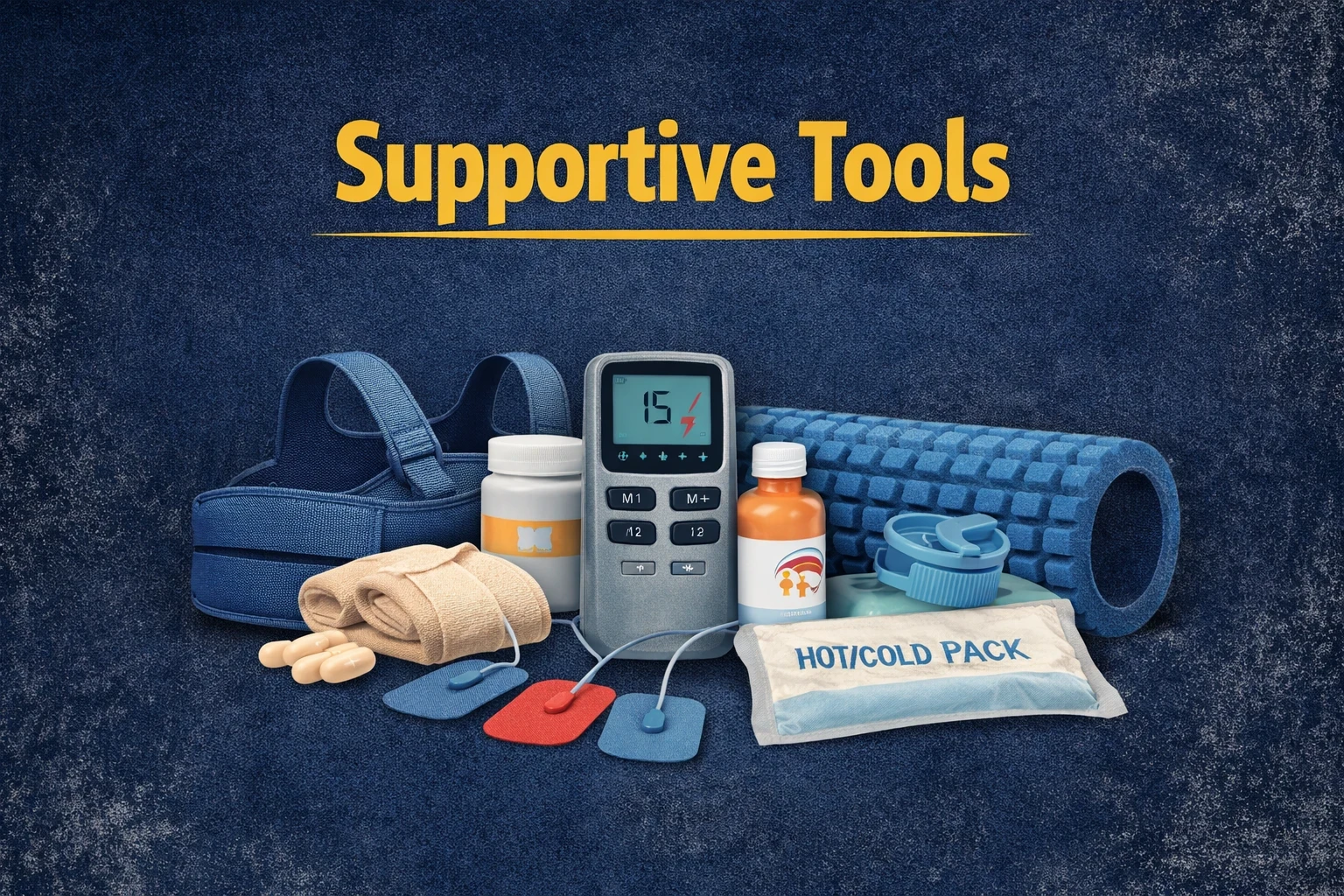
4. Heat and Cold Therapy
Simple but effective tools: Cold packs → reduce inflammation Heat → relax surrounding muscles
For cold and heat therapy packs Go Here
Use based on what feels better for your symptoms.
5. Posture and Load Management
Posture plays a major role in chest wall stress. Focus on: Sitting upright without stiffness Avoiding prolonged slouching Changing positions regularly Small adjustments can significantly reduce irritation.
6. Anti-Inflammatory Support
Reducing inflammation can support recovery.
Options include: Anti-inflammatory foods (omega-3s, turmeric) Hydration Short-term use of medication if needed
7. Supportive Tools and Supplements
Some people explore additional support, including: Heat wraps
For supplement-focused support, see best supplements for tietze syndrome affordable https://beyond-pain-relief.com/best-supplements-for-tietze-syndrome-affordable/
These should be viewed as supportive—not a cure.
Conditions That May Feel Similar
Tietze syndrome is often confused with:
Costochondritis
Rib joint irritation
Muscle strain
Understanding the difference improves treatment decisions.
Recovery Timeline
Recovery varies depending on severity and consistency. Typical patterns:
Mild cases: a few weeks
Moderate: several weeks to months or even years in some cases.
Flare-ups may come and go
Night-time symptoms are also common and can feel worse due to stillness and sensitivity patterns.
Secondary Benefits of Treatment
Following effective Tietze syndrome treatment options can lead to: Improved posture Better breathing Reduced pain sensitivity Increased confidence in movement
Safety and When to Seek Help
Seek medical advice if: Pain is severe or worsening Symptoms change suddenly You are unsure of the diagnosis Chest pain should always be assessed properly.
Limitations of Treatment
No instant cure Symptoms may fluctuate Trial and error is often needed This is a condition that improves gradually rather than instantly.
Balanced Perspective
Tietze syndrome can feel intense, but it is not dangerous. Most people improve with:
Reduced strain Gentle movement Better understanding of pain The goal is to restore normal function—not just eliminate symptoms.
FAQ
Is there a cure for Tietze syndrome?
There is no proven cure, but symptoms usually improve over time with the right approach.
What helps the most?
A combination of movement, reduced strain, and reassurance.
Can it come back? Yes, especially during periods of stress or overuse.
For more answers, see tietze syndrome faq https://beyond-pain-relief.com/tietze-syndrome-faq/
Scientific Studies https://pubmed.ncbi.nlm.nih.gov/28461967/ https://www.ncbi.nlm.nih.gov/pmc/articles/PMC3093899/