Why Does Pain Move Around?
If you have ever wondered why does pain move around, you are not alone. Many people experience pain that seems to shift from one area of the body to another.
One day it may be in the neck, the next day in the shoulder, lower back, hip, or leg. This can be frustrating, confusing, and sometimes worrying.
Understanding why does pain move around can help reduce fear and provide reassurance that moving pain does not always indicate a serious injury.
In many cases, the nervous system, muscle tension, inflammation, or referred pain patterns play a significant role.
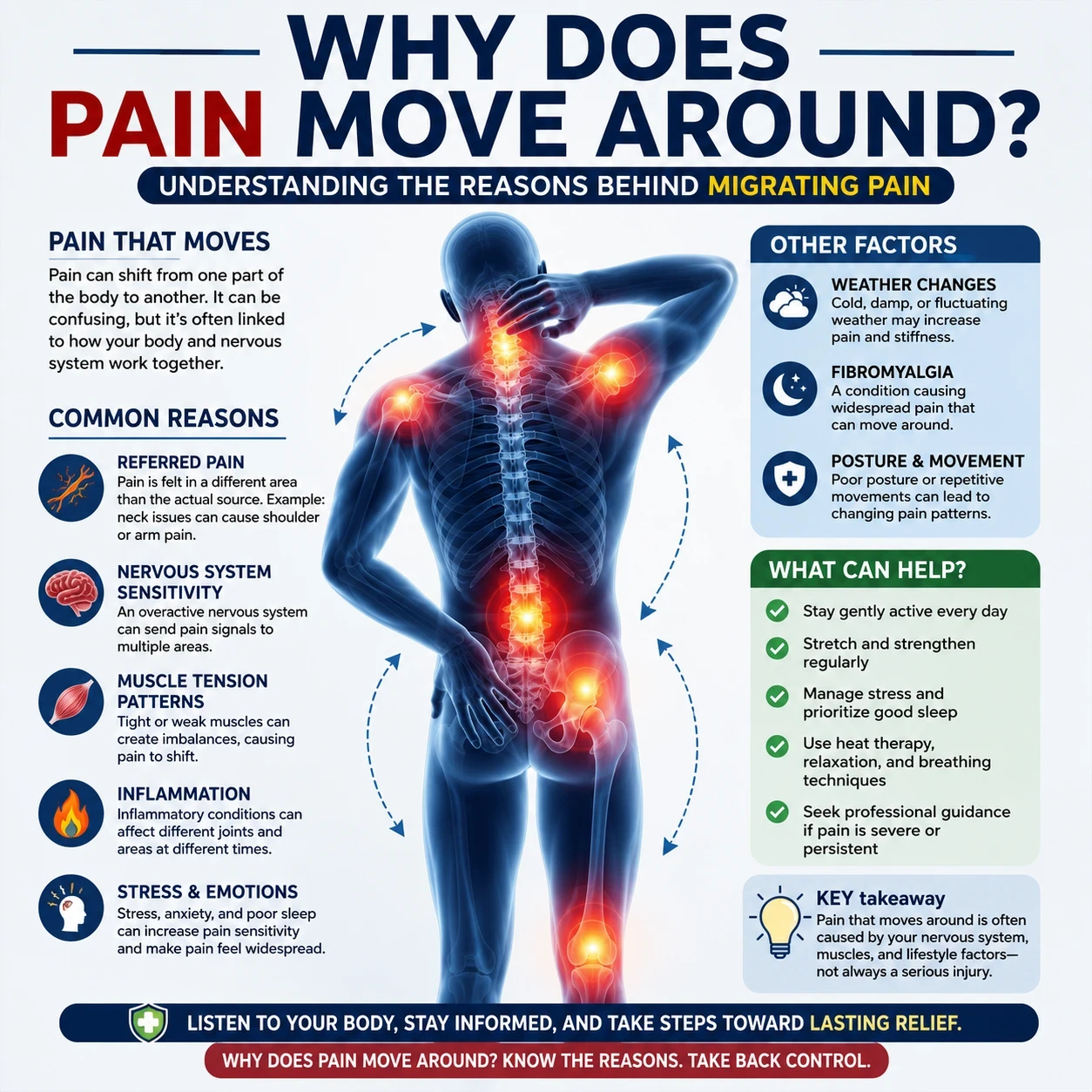
What Does It Mean When Pain Moves Around?
When pain changes location or seems to travel from one area of the body to another, it is often referred to as migrating pain or moving pain. Rather than remaining in one specific spot, symptoms may appear in different regions over time.
There are several reasons why does pain move around in the body. Sometimes the source of pain is not where the discomfort is actually felt. In other situations, the nervous system becomes more sensitive and begins sending pain signals from multiple locations.
Referred Pain Can Make Pain Feel Like It Is Moving
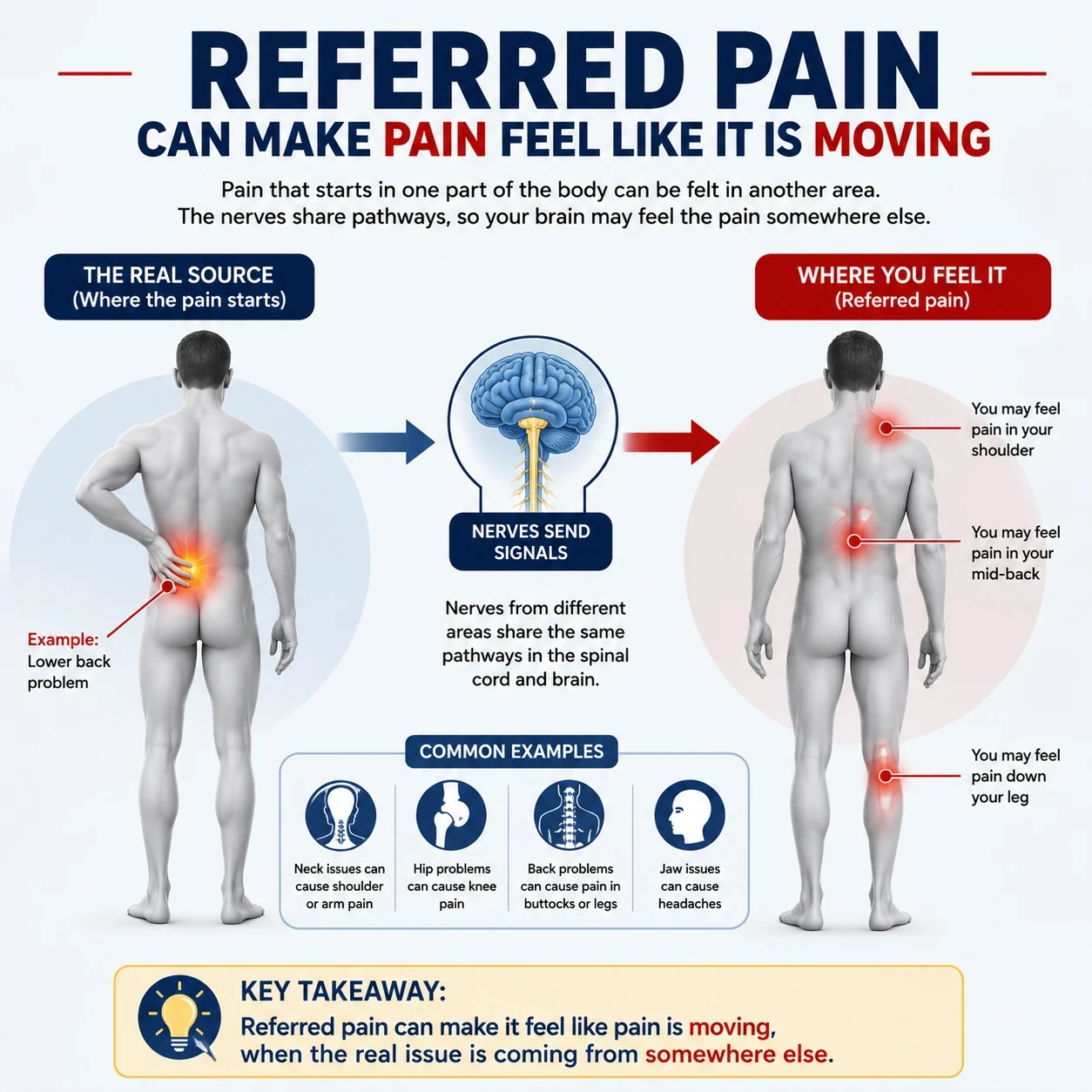
One of the most common explanations for moving pain is referred pain. Referred pain occurs when irritation in one area causes discomfort somewhere else.
For example:
- Neck problems can cause pain in the shoulder or arm.
- Hip problems can create discomfort in the knee.
- Back pain can travel into the buttocks or legs.
- Jaw issues may cause headaches or ear pain.
This happens because nerves from different parts of the body share pathways in the spinal cord and brain. As a result, the brain may interpret pain signals as coming from a different location.
The Nervous System May Become Overprotective
Another important reason why does pain move around is nervous system sensitization. When pain has been present for weeks, months, or years, the nervous system can become more reactive.
Instead of responding only to injury, the nervous system may begin reacting to normal movement, stress, poor sleep, or minor physical activity.
This heightened sensitivity can cause symptoms to appear in different areas at different times. The tissues themselves may be healthy, but the nervous system remains on high alert.
You can learn more about how the nervous system influences chronic discomfort in our guide to chronic pain symptoms.
Muscle Tension Patterns Can Change Location
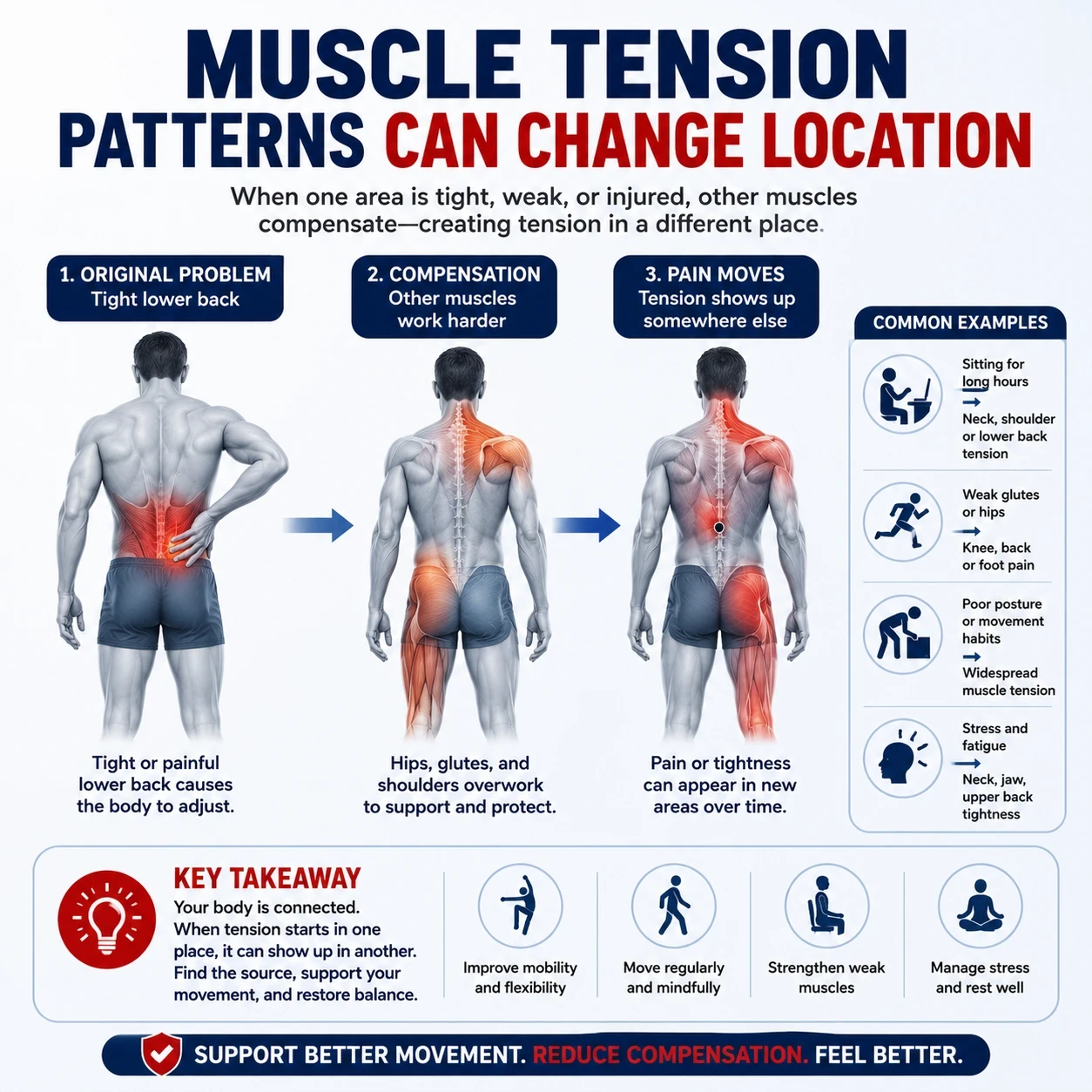
Muscles rarely work in isolation. When one muscle becomes tight or weak, other muscles often compensate.
For example, lower back pain may cause changes in walking patterns. Over time, extra strain can develop in the hips, knees, or ankles.
This chain reaction may create the impression that pain is moving around the body when, in reality, the body is adapting to protect an existing problem.
Long periods of sitting, poor posture, repetitive movements, and stress can all contribute to changing muscle tension patterns.
Inflammation Can Affect Multiple Areas
Certain inflammatory conditions can also explain why does pain move around. Conditions such as rheumatoid arthritis, lupus, psoriatic arthritis, and other autoimmune disorders may cause symptoms that shift between joints.
One day the hands may hurt, while the next day discomfort develops in the knees or feet.
If moving pain is accompanied by swelling, fatigue, unexplained weight loss, fever, or morning stiffness lasting more than an hour, it is important to seek medical advice.
Stress and Emotional Factors Can Influence Pain
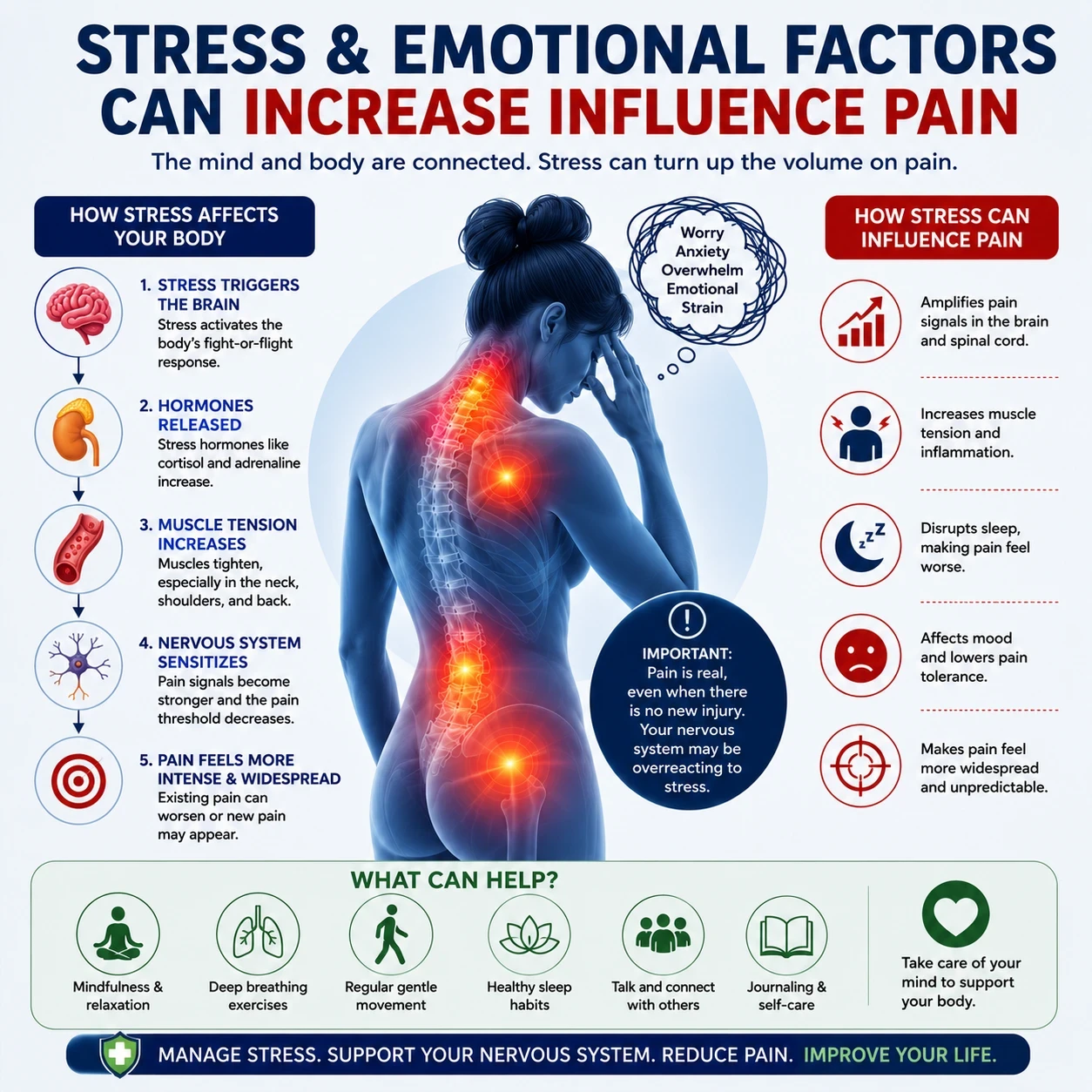
The mind and body are closely connected. Stress, anxiety, and emotional strain can increase muscle tension and nervous system sensitivity.
Many people notice that pain becomes more widespread during stressful periods. The pain is real, but stress can amplify how pain signals are processed by the brain.
Research has shown that chronic stress can increase inflammation and reduce the body’s ability to regulate pain effectively.
Learning relaxation techniques, mindfulness, breathing exercises, and improving sleep quality may help reduce symptoms.
Fibromyalgia and Widespread Pain
Fibromyalgia is another condition commonly associated with moving pain. People with fibromyalgia often experience discomfort in multiple areas of the body that can change from day to day.
Common symptoms include:
- Widespread muscle pain
- Fatigue
- Poor sleep
- Brain fog
- Tender points throughout the body
While the exact cause remains unclear, researchers believe nervous system sensitivity plays a major role.
Can Weather Changes Cause Pain to Move?
Some people report changes in symptoms when weather conditions change. Cold temperatures, damp weather, and fluctuations in air pressure may influence joint stiffness and muscle tension.
Although research findings are mixed, many individuals find that weather changes appear to affect the location and intensity of their pain.
When Should You Seek Medical Advice?
Although moving pain is often linked to muscle tension, referred pain, or nervous system sensitivity, certain situations require medical evaluation.
Speak with a healthcare professional if pain is accompanied by:
- Unexplained weight loss
- Fever or night sweats
- Severe weakness
- Loss of bladder or bowel control
- Persistent numbness
- Joint swelling
- Difficulty walking
These symptoms may indicate an underlying condition requiring further investigation.
Ways to Manage Moving Pain
If you are trying to understand why does pain move around, focusing on overall health rather than a single painful area may be helpful.
Strategies that may help include:
- Gentle daily movement
- Regular stretching
- Improving sleep quality
- Stress management techniques
- Heat therapy
- Maintaining good posture
- Strengthening weak muscles
- Staying physically active within comfortable limits
Many people also find relief by learning more about pain management techniques that support long-term recovery.
The Role of Movement in Pain Recovery
A common mistake is avoiding movement completely when pain shifts around the body. While rest may be useful during acute injuries, prolonged inactivity can contribute to stiffness, weakness, and increased sensitivity.
Gradual movement often helps calm the nervous system and improve confidence in daily activities.
For additional guidance, our article on best balance exercises for elderly discusses gentle ways to stay active and maintain mobility.
Final Thoughts
If you have been asking yourself why does pain move around, the answer is often more complex than a single injury or damaged tissue. Referred pain, nervous system sensitivity, muscle compensation, stress, inflammation, and chronic pain conditions can all contribute to shifting symptoms.
Understanding these mechanisms can reduce anxiety and help you focus on practical strategies that support recovery.
While moving pain should always be assessed if accompanied by concerning symptoms, it is often a sign that the body’s nervous system and movement patterns are playing a larger role than many people realize.
Scientific Research
Central Sensitization and Chronic Pain Research Study