How To Prevent Falls At Home Practical Guide To Help Prevent Falls
How to Prevent Falls at Home
How to prevent falls at home is an important question for older adults, caregivers, and anyone living with mobility challenges. Falls can lead to serious injuries, reduced confidence, and a loss of independence.
The good news is that many falls can be prevented with simple changes around the home and by using the right support products.
According to the CDC, falls are one of the leading causes of injury among older adults, yet many fall risks can be identified and reduced before an accident occurs.
Why Falls Happen at Home
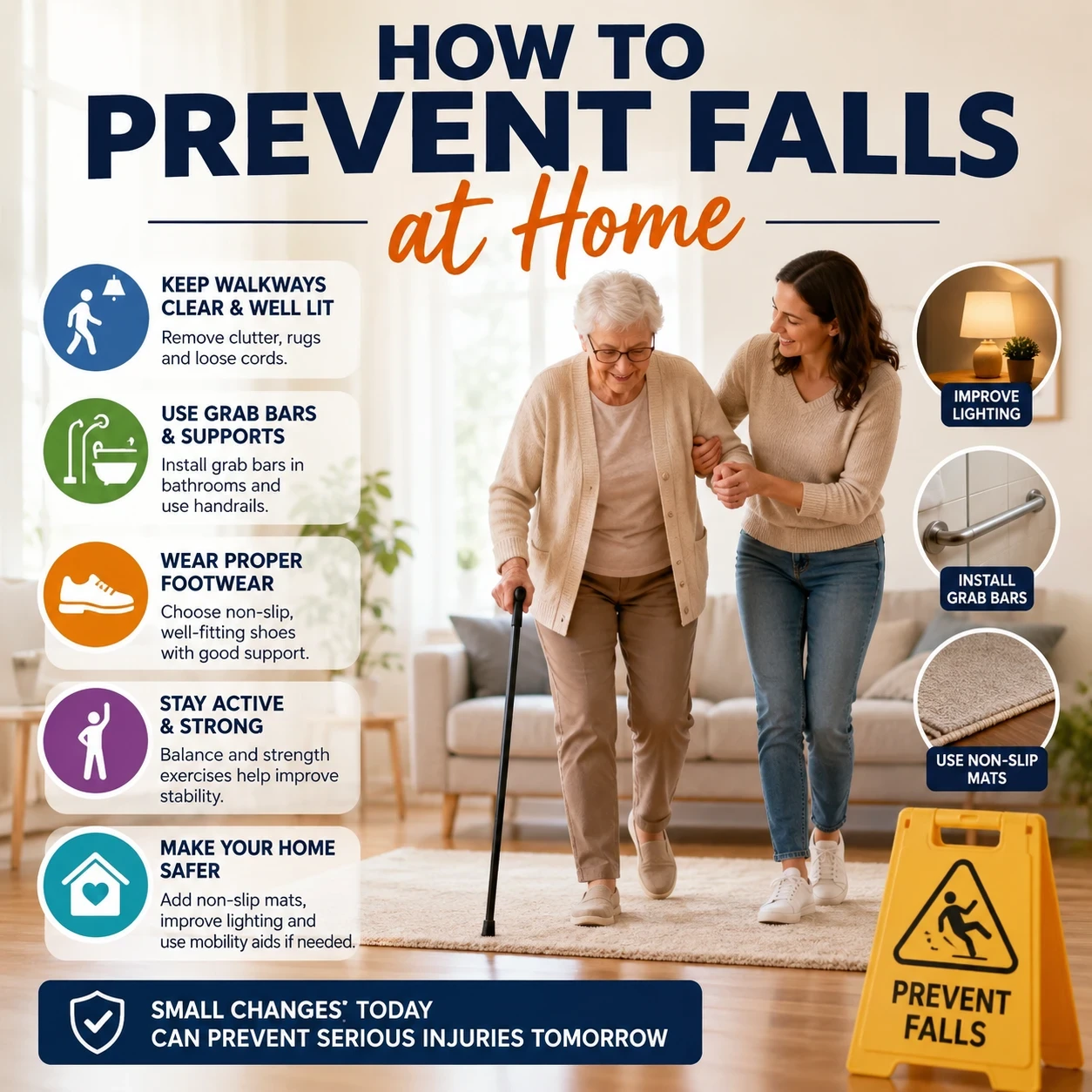
Many falls occur because of hazards that are easy to overlook. Loose rugs, poor lighting, cluttered walkways, slippery bathrooms, and uneven steps can all increase the risk of losing balance.
Physical factors can also contribute, including:
- Muscle weakness
- Joint pain and arthritis
- Poor vision
- Balance problems
- Dizziness
- Certain medications
- Foot pain or inappropriate footwear
Research shows that a combination of home modifications, exercise, and proper safety equipment can significantly reduce fall risk.
Keep Walkways Clear
One of the simplest ways to learn how to prevent falls at home is to remove obstacles from areas where you walk every day.
Take a walk through your home and look for:
- Loose electrical cords
- Shoes left on floors
- Small furniture in walkways
- Books, magazines, or boxes
- Loose rugs
Even a small object can become a tripping hazard, particularly during the evening when visibility is reduced.
Improve Lighting Throughout the House
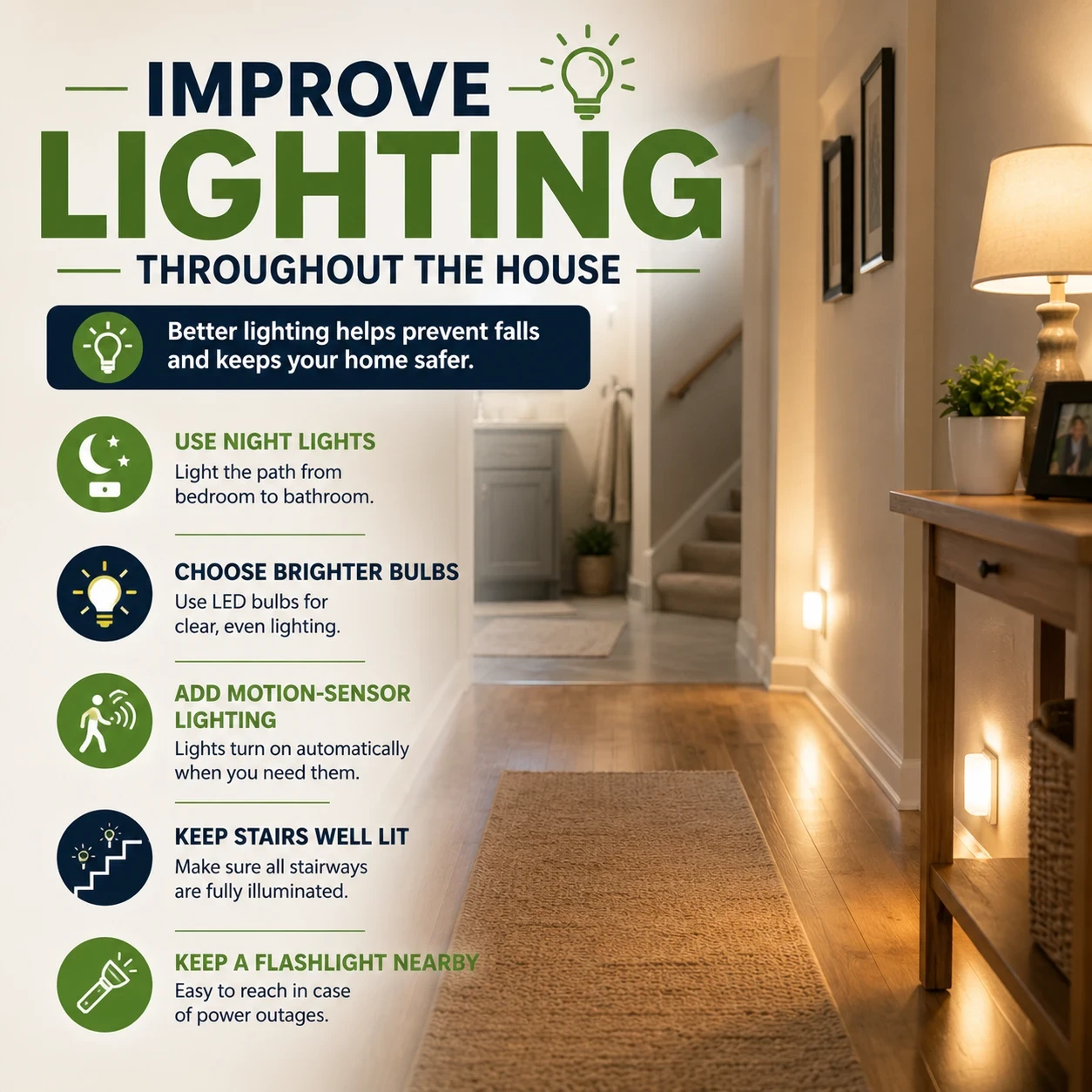
Poor lighting is a common cause of falls. Hallways, stairs, bathrooms, and bedrooms should be well illuminated.
Consider:
- Adding night lights
- Installing brighter bulbs
- Using motion-sensor lighting
- Keeping flashlights nearby
- Ensuring stairways are fully lit
Many people fall when getting out of bed during the night, so having a clear, illuminated path to the bathroom can make a significant difference.
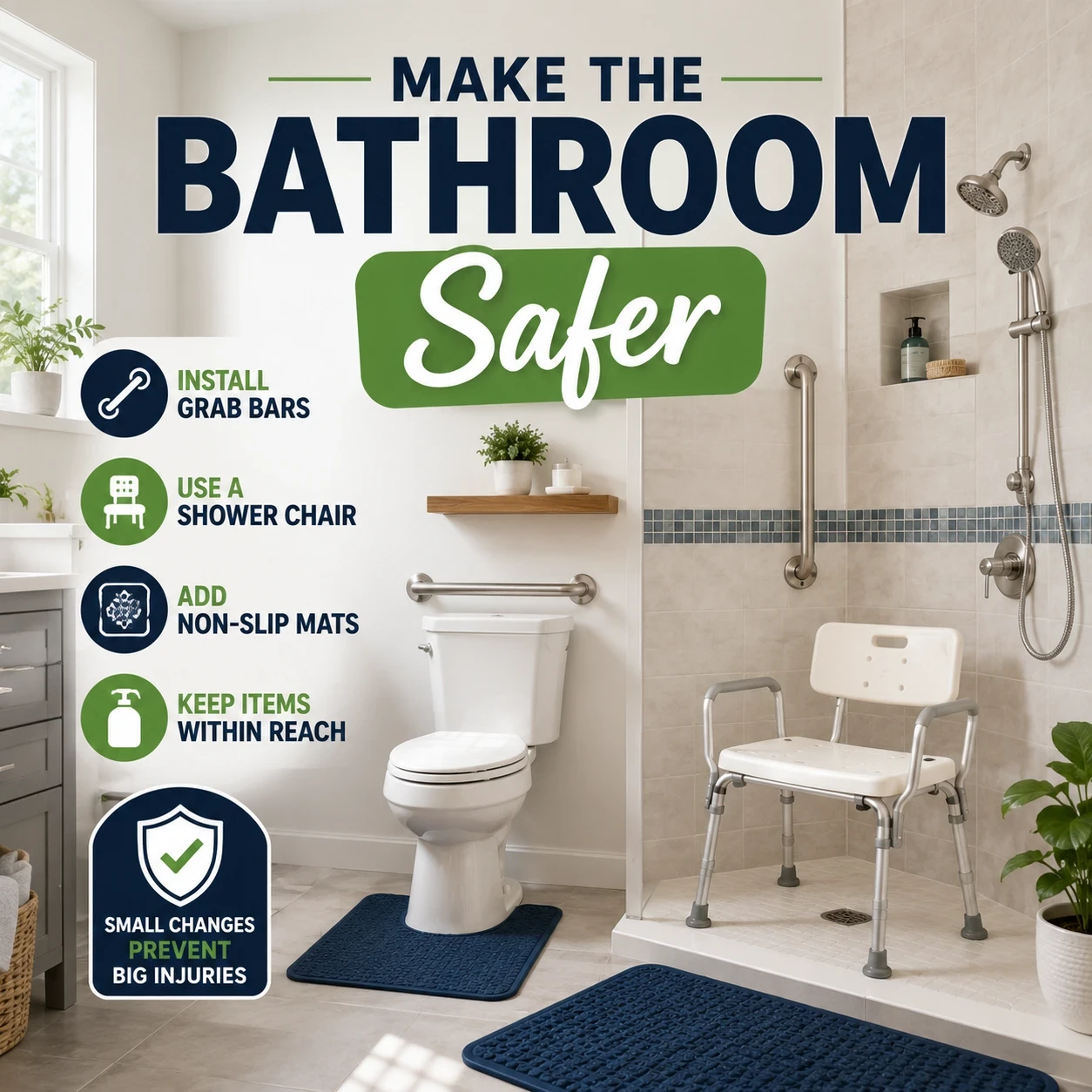
Make the Bathroom Safer key in how to prevent falls at home
The bathroom is one of the highest-risk areas in any home because water creates slippery surfaces.
Simple improvements include:
- Installing grab bars beside toilets
- Adding grab bars inside showers
- Using non-slip mats
- Using a shower chair
- Keeping toiletries within easy reach
Support rails can provide additional stability when sitting, standing, or moving around wet surfaces.
Products available through your affiliate partners that may help include grab rails, shower safety aids, transfer supports, and bathroom mobility products available from The Wright Stuff bathroom safety range and mobility products from Vive Health.
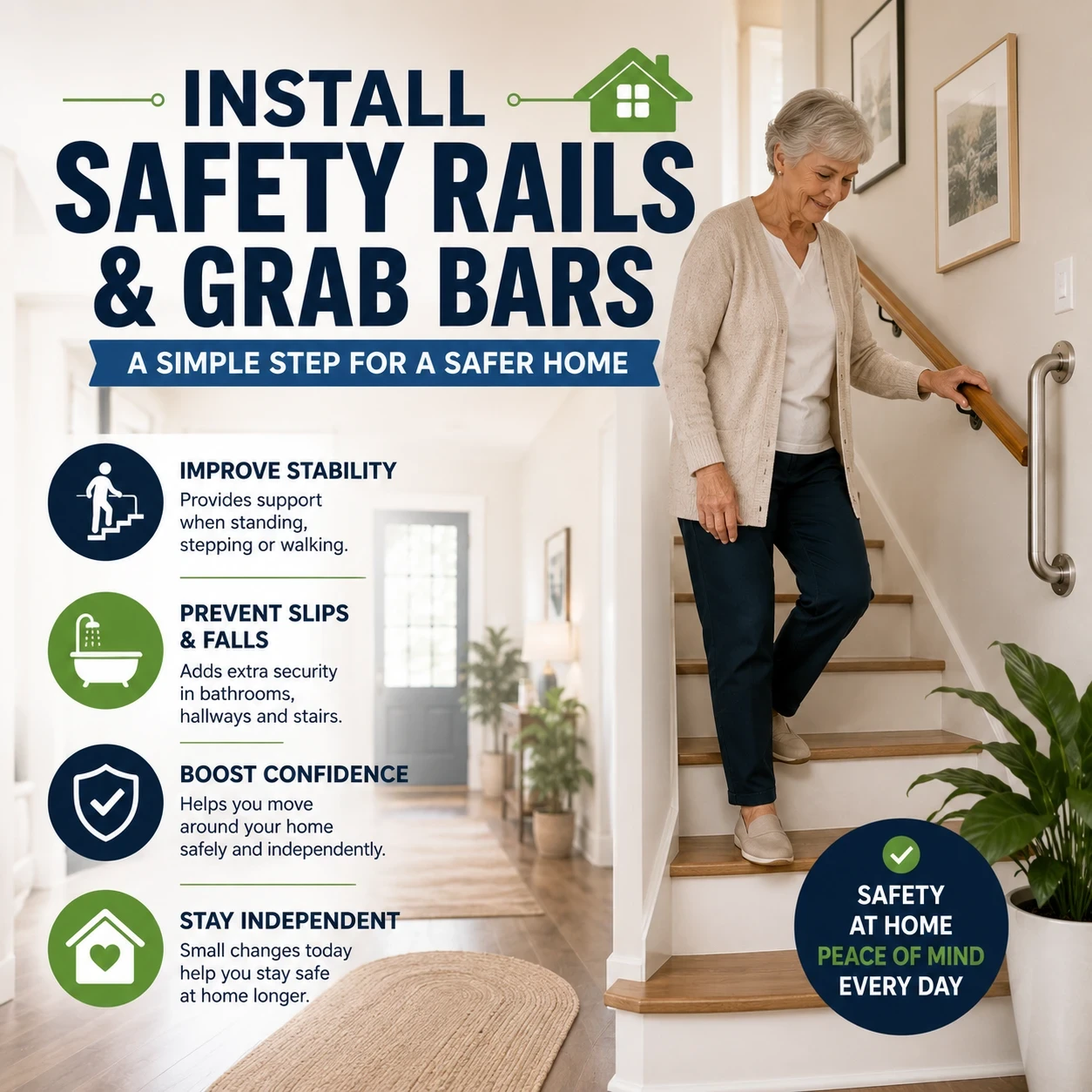
Install Safety Rails and Grab Bars
Grab bars are among the most effective home modifications for preventing falls.
Good locations include:
- Bathrooms
- Near toilets
- Along hallways
- At entrances
- Beside steps
Studies consistently show that home safety modifications reduce fall risk and help people maintain independence.
Wear Proper Footwear Indoors
Many people walk around the house in socks, slippers, or bare feet. While comfortable, these can increase the chance of slipping.
Choose footwear that:
- Has non-slip soles
- Fits securely
- Provides arch support
- Offers good grip on smooth floors
Footwear plays an important role in maintaining balance and reducing falls.
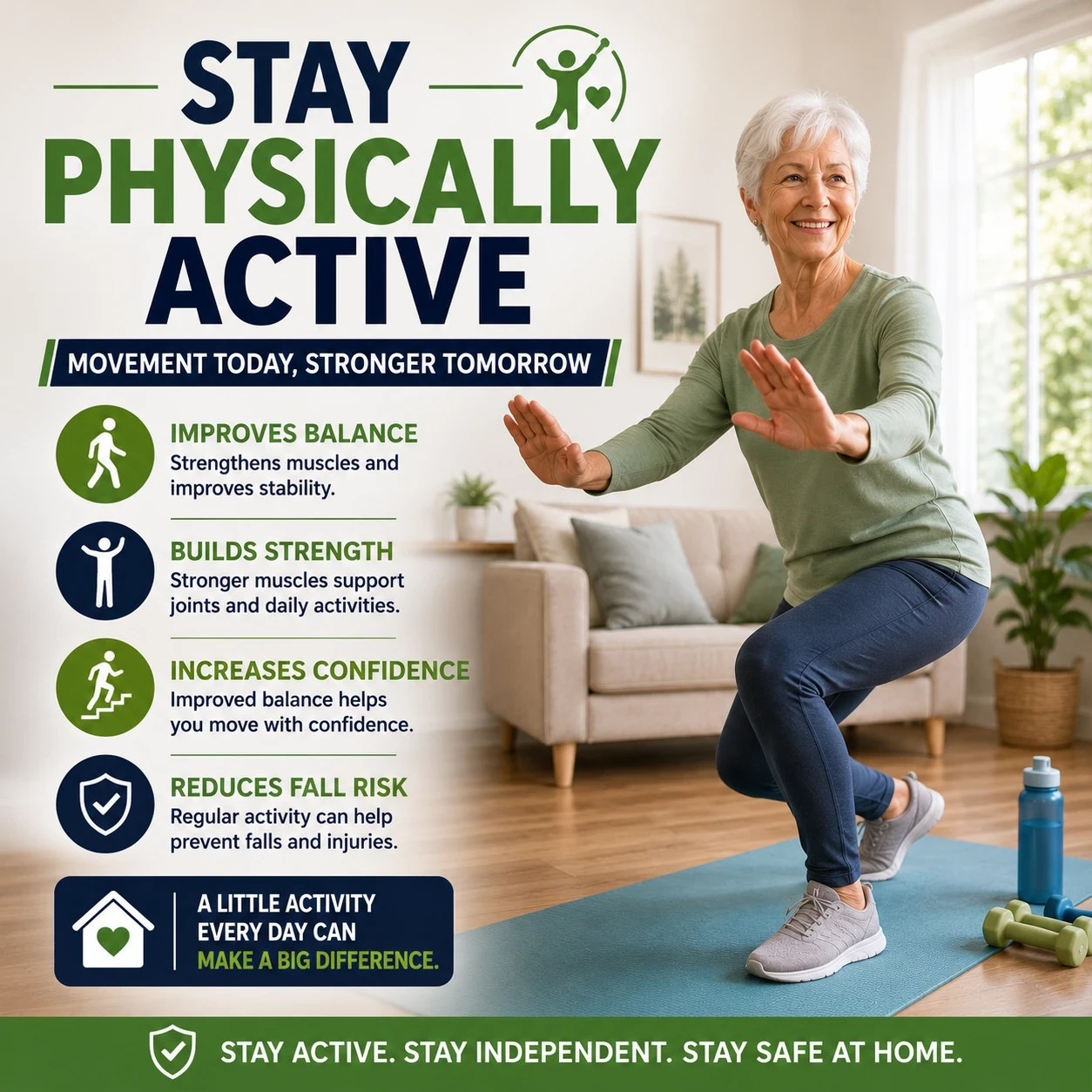
Stay Physically Active
Learning how to prevent falls at home is not only about changing your environment. Improving strength and balance can be equally important.
Activities that may help include:
- Walking
- Tai Chi
- Gentle strength training
- Balance exercises
- Flexibility exercises
Regular movement helps maintain muscle strength, coordination, and stability. Even a few minutes each day can make a difference.
These articles may also help.
joint pain causes and relief options lower back pain treatment strategies how to relieve creaky joints
Review Your Medications
Some medications may increase fall risk by causing:
- Drowsiness
- Dizziness
- Reduced alertness
- Changes in blood pressure
If you have experienced a fall or feel unsteady, speak with your healthcare professional about reviewing your medications. Research shows that medication reviews can reduce fall risk in older adults.
Mobility Products That May Help
For people who feel less stable, various support products can improve confidence and safety in how to prevent falls at home.
Some useful options available through The Wright Stuff and Vive Health include:
- Grab bars and support rails
- Shower chairs
- Raised toilet seats
- Walkers
- Canes
- Bed rails
- Transfer aids
- Mobility supports
Choosing the right equipment may help reduce fall risk while making daily activities easier and safer.
Fall Prevention Checklist
Use this quick checklist:
- Remove loose rugs
- Clear clutter from walkways
- Improve lighting
- Install grab bars
- Use non-slip bathroom mats
- Wear supportive footwear
- Stay physically active
- Review medications regularly
- Consider mobility aids if needed
- Keep frequently used items within easy reach
Frequently Asked Questions
What is the biggest cause of falls at home?
Loose rugs, clutter, poor lighting, slippery bathrooms, and stairs are among the most common causes of household falls.
Do grab bars really help prevent falls?
Yes. Properly installed grab bars can provide support when standing, sitting, or moving through higher-risk areas such as bathrooms.
Can exercise reduce the risk of falling?
Regular exercise can improve balance, strength, coordination, and confidence, all of which may help reduce fall risk.
Which rooms have the highest fall risk?
Bathrooms, stairways, bedrooms, and poorly lit hallways tend to be the most common locations for falls.
Final Thoughts
Understanding how to prevent falls at home can help protect your health, independence, and quality of life.
Small improvements such as better lighting, safer bathrooms, supportive footwear, and the use of appropriate mobility aids can dramatically reduce the risk of accidents.
By taking a proactive approach today, you can create a safer home and know how to prevent falls at home in a safe environment for yourself or a loved one.
Read the best balance exercises for elderly.
Scientific Studies
https://pmc.ncbi.nlm.nih.gov/articles/PMC8246567
https://www.cdc.gov/falls/about/For