Best Balance Exercises for Elderly
Best balance exercises for elderly is a topic that becomes increasingly important as we age. Good balance helps maintain independence, improves confidence when walking, and may reduce the risk of falls.
The encouraging news is that balance can often be improved with simple exercises that require little or no equipment.
Whether you are looking to stay active, feel steadier on your feet, or support a loved one, incorporating balance training into a daily routine can provide significant benefits.

Why Balance Becomes More Challenging With Age
As people get older, several factors can affect balance. Muscle strength may decline, joints may become stiffer, vision can change, and reaction times may slow.
Common contributors include:
- Reduced leg strength
- Arthritis and joint discomfort
- Back pain
- Foot problems
- Poor posture
- Reduced physical activity
- Medication side effects
Many of these factors can be improved through best balance exercises elderly through regular movement and exercise.
How Balance Exercises Help
The best balance exercises for elderly individuals target the muscles used for standing, walking, and changing direction safely. These exercises can improve coordination, strengthen stabilizing muscles, and increase confidence during everyday activities.
If fall prevention is one of your goals, you may also find our guide on how to prevent falls at home helpful.

1. Standing on One Foot
This simple exercise challenges balance and strengthens the muscles around the ankles, knees, and hips.
To perform:
- Stand beside a sturdy chair.
- Hold the chair lightly if needed.
- Lift one foot slightly off the ground.
- Hold for 10 to 20 seconds.
- Repeat on the opposite side.
As confidence improves, gradually reduce the amount of support used.
2. Heel-to-Toe Walk
This exercise helps improve walking stability and coordination.
To perform:
- Place the heel of one foot directly in front of the toes of the other.
- Walk forward slowly.
- Focus on maintaining balance.
- Use a hallway wall for support if necessary.
This movement mimics situations where precise foot placement is required.
3. Sit-to-Stand Exercise
Getting up from a chair safely is an important daily activity.
To perform:
- Sit in a sturdy chair.
- Cross your arms or place hands lightly on the armrests.
- Stand up slowly.
- Return to sitting with control.
- Repeat 10 times.
This best balance exercises for elderly helps strengthen the thighs, hips, and core muscles.

4. Side Leg Raises
Strong hip muscles play a key role in maintaining balance while walking.
- Stand behind a chair.
- Lift one leg out to the side.
- Keep your body upright.
- Lower slowly.
- Repeat 10 to 15 times per side.
Side leg raises target muscles that help stabilize the pelvis.
5. Marching in Place
Marching improves coordination and strengthens the muscles used during walking.
- Stand near a counter or sturdy chair.
- Lift one knee at a time.
- Maintain an upright posture.
- Continue for 30 to 60 seconds.
This exercise can also help improve confidence when navigating uneven surfaces.
6. Weight Shifts
Weight shifting teaches the body to remain stable while transferring weight from one side to another.
- Stand with feet shoulder-width apart.
- Shift your weight onto one leg.
- Hold briefly.
- Return to the centre.
- Repeat on the opposite side.
This simple best balance exercises for elderly closely mimics many everyday movements.
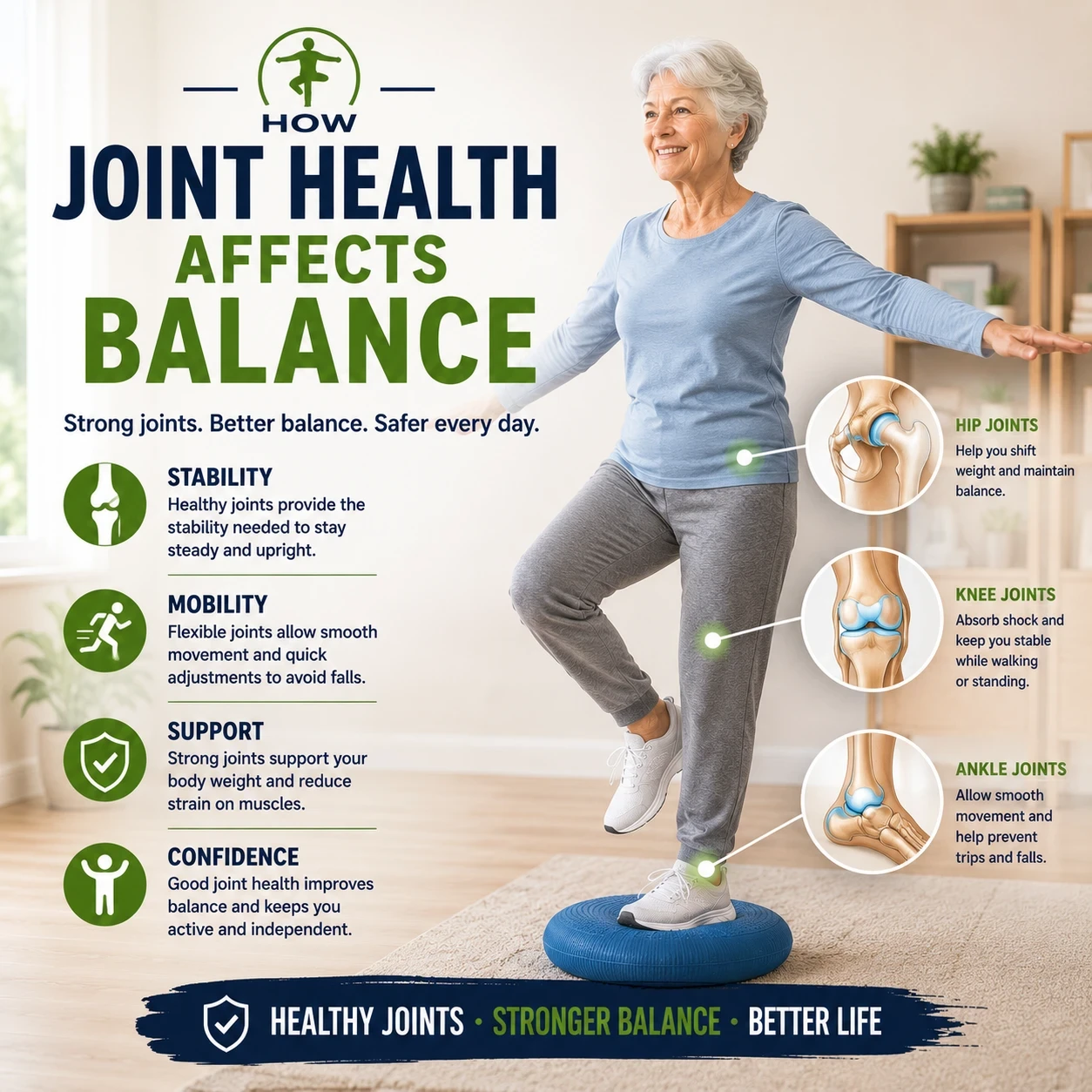
How Joint Health Affects Balance
Joint discomfort can lead to altered movement patterns and reduced confidence when walking.
If stiffness is affecting mobility, our guides on joint pain causes and relief options and how to relieve creaky joints may provide additional support.
How Back Pain Can Influence Stability
The muscles of the lower back and core play an important role in balance. Weakness, pain, or reduced mobility in these areas can increase the likelihood of losing stability.
Our guide on lower back pain treatment strategies explores approaches that may help improve movement and function.
Helpful Mobility Products
Some people benefit from additional support while building strength and balance.
Products available from Vive Health and
The Wright Stuff that may help include:
- Walking canes
- Walkers
- Balance support rails
- Bed rails
- Bathroom safety products
- Transfer aids
These products can help create a safer environment while working on mobility goals.
Frequently Asked Questions
How often should elderly people perform balance exercises?
Many experts recommend best balance exercises elderly at least three times per week, although daily practice may provide additional benefits.
Can balance improve at any age?
Yes. Research suggests that balance, strength, and mobility can often improve with regular exercise regardless of age.
How long does it take to notice improvements?
Many people begin noticing improvements in confidence and stability within several weeks of consistent practice.
Should balance exercises be performed every day?
Light balance activities can often be performed daily, provided they are appropriate for your fitness level and health status.
Final Thoughts
The best balance exercises for elderly individuals are often simple, safe, and easy to perform at home. Standing on one foot, heel-to-toe walking, sit-to-stand movements, marching, and weight shifts can all help improve stability. Combined with a safe home environment and appropriate support products, these exercises may help maintain independence and reduce the risk of falls for years to come.
Scientific Study