Chronic Pain Symptoms: Understanding The Signs And Finding Support
Chronic Pain Symptoms
Chronic pain symptoms can affect sleep, movement, mood, work, family life, and confidence.
I understand what you are going through everyday and I hope that this article is a help to you.
When pain continues for months, it can feel exhausting, frustrating, and sometimes lonely.
However, understanding what is happening in the body may help you feel more in control.
Chronic pain is not “just in your head.” It is a real experience that can involve the muscles, joints, nerves, immune system, brain, and emotional wellbeing.
For many people, the hardest part is not only the pain itself, but the way it interrupts normal daily life.
What Is Chronic Pain?
Chronic pain is usually described as pain that lasts longer than three months. It may begin after an injury, surgery, illness, arthritis flare, back problem, nerve irritation, or ongoing health condition.
In some cases, the original injury heals, but the pain continues.
This can happen because the nervous system becomes more sensitive.
Instead of calming down after the original problem improves, the body may continue sending pain signals.
That does not mean the pain is imaginary. It means the pain system may be working too hard.
Common Symptoms
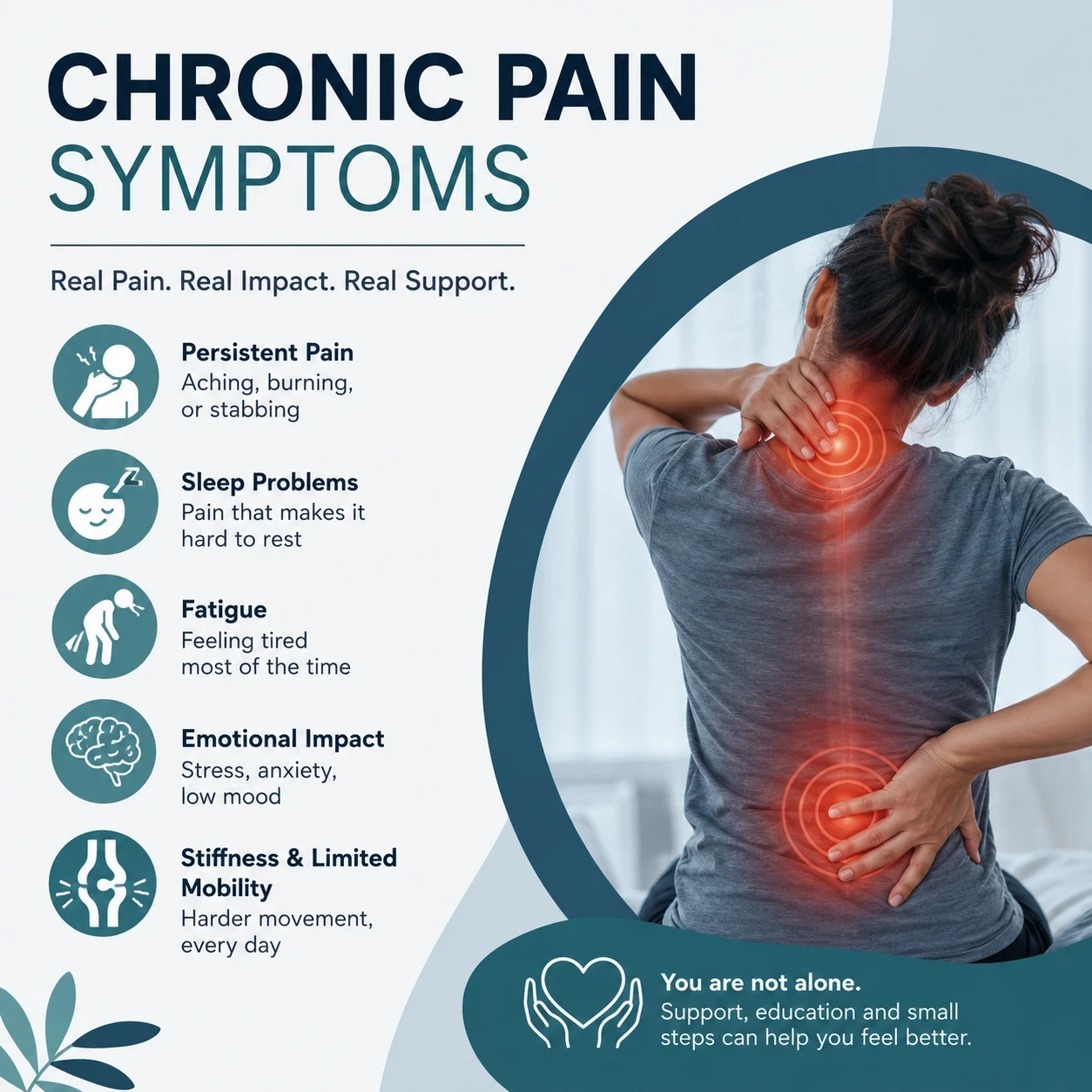
Chronic pain symptoms vary from person to person. Some people feel a dull ache. Others feel burning, stabbing, throbbing, tightness, tingling, or pressure.
Common symptoms may include:
- Persistent aching or soreness
- Sharp or stabbing pain
- Burning sensations
- Muscle tightness
- Joint stiffness
- Nerve tingling or numbness
- Fatigue
- Poor sleep
- Reduced mobility
- Pain that comes and goes
- Pain that spreads to nearby areas
Some people experience symptoms in one area, such as the lower back, hip, neck, shoulder, or knee. Others may feel pain in several parts of the body at once.
How It Can Affect Daily Life
Living with chronic pain symptoms can change how you move through the day.
Simple tasks like getting dressed, walking upstairs, cleaning, gardening, driving, or sitting for long periods may become more difficult.
For many people, the day starts with stiffness.
Others feel better in the morning but struggle later after activity. Some people avoid movement because they fear making things worse.
Unfortunately, too much rest can sometimes lead to more stiffness, weakness, and sensitivity.
If back pain is part of your daily struggle, this guide on chronic back pain treatment may help you understand supportive options.
Sleep Problems and Chronic Pain
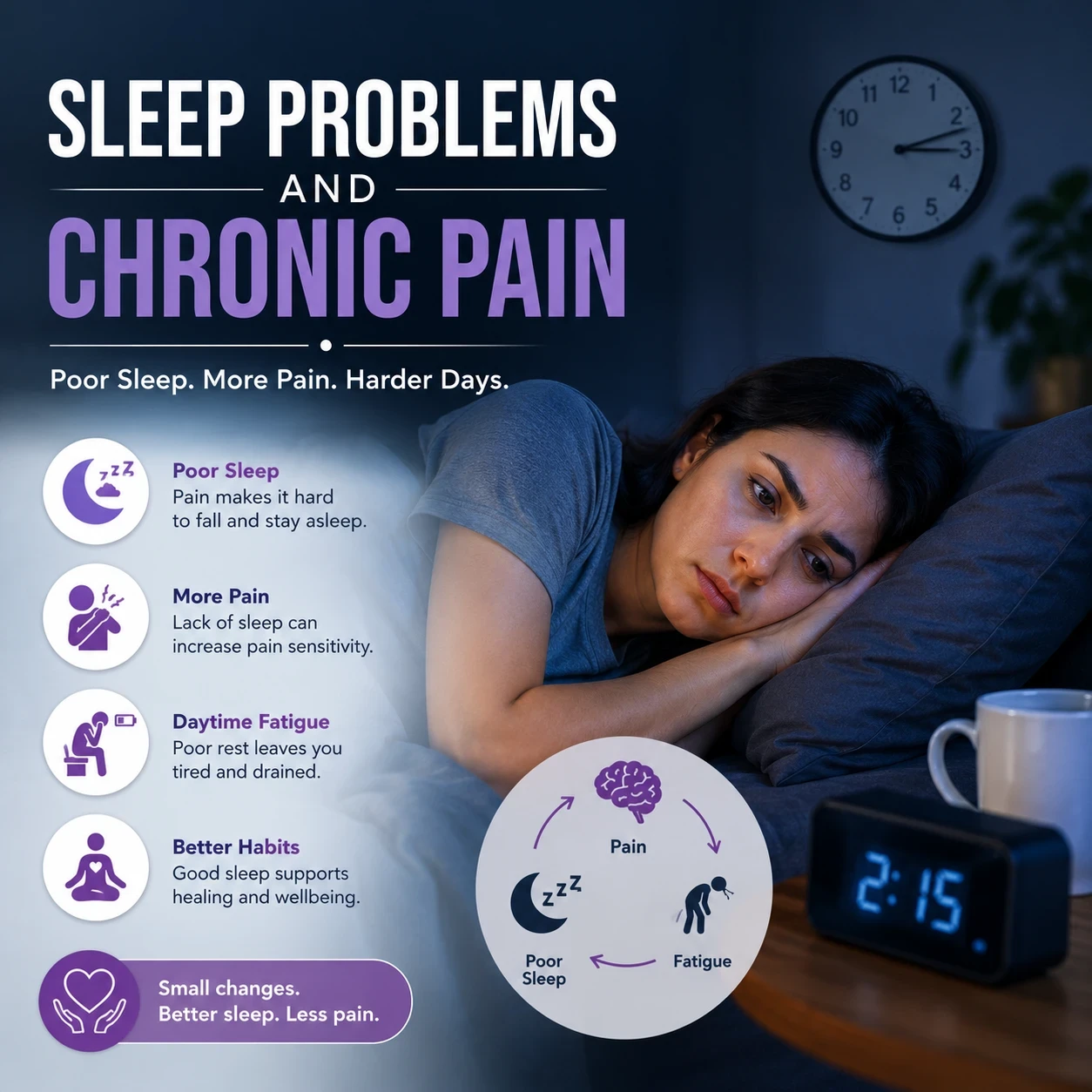
Poor sleep is one of the most difficult chronic pain symptoms to manage.
Pain can make it hard to fall asleep, stay asleep, or find a comfortable position.
Then, the next day, tiredness can make pain feel even stronger.
This creates a frustrating cycle. Pain affects sleep.
Poor sleep increases pain sensitivity. Then the body becomes more tense and less resilient.
People with chronic pain may notice:
- Waking frequently during the night
- Morning stiffness
- Feeling tired even after sleeping
- Difficulty relaxing in bed
- More pain after a poor night’s sleep
Improving sleep habits does not cure chronic pain overnight. However, better rest can support healing, mood, energy, and daily coping.
This article on the best sleep aids for chronic pain may help.
Emotional Symptoms of Chronic Pain
Chronic pain does not only affect the body. It can also affect confidence, patience, relationships, and mental wellbeing.
People living with chronic pain symptoms may feel anxious about the future.
They may worry about work, family responsibilities, medical appointments, or whether the pain will ever improve.
Low mood is also common. When pain stops you from doing the things you enjoy, it can feel like part of your normal life has been taken away.
That emotional weight is real and deserves compassion.
Learning how pain works may help reduce fear.
This article on brain fog and chronic pain explains what happens if you miss out on sleep.
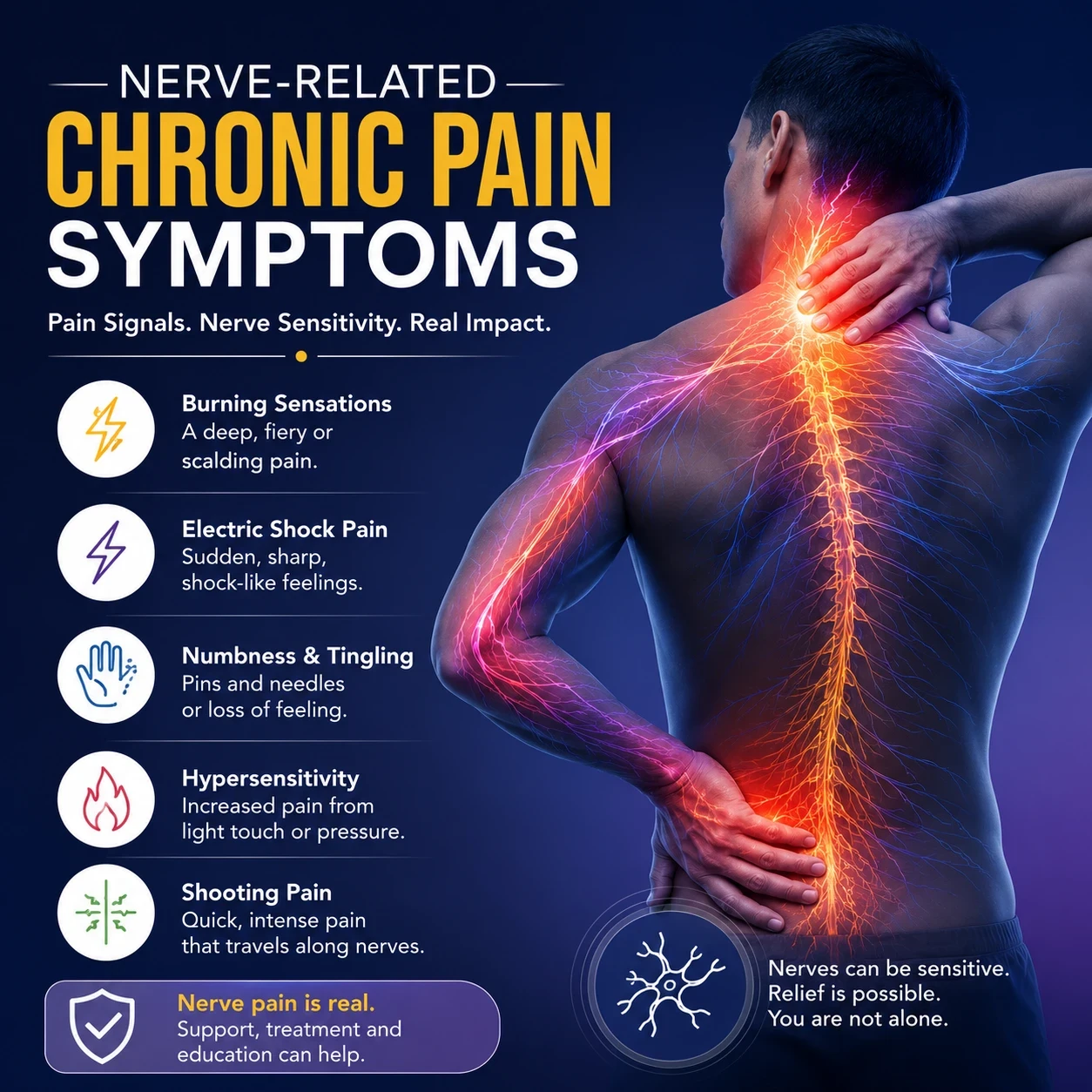
Nerve-Related Chronic Pain Symptoms
Some chronic pain symptoms are linked to irritated or sensitive nerves. Nerve pain can feel different from muscle or joint pain.
Nerve-related symptoms may include:
- Burning pain
- Electric shock sensations
- Pins and needles
- Numbness
- Tingling
- Shooting pain
- Extreme sensitivity to touch
These symptoms may appear with sciatica, diabetic nerve pain, post-surgical pain, trapped nerves, or other nerve-related conditions. Because nerve pain can be complex, professional assessment is often helpful.
Why Chronic Pain Symptoms Can Flare Up
One of the most confusing things about chronic pain is that symptoms can change from day to day.
You may feel better one day and worse the next, even without a new injury.
Common flare triggers may include:
- Poor sleep
- Stress
- Overactivity
- Long periods of sitting
- Weather changes
- Illness
- Emotional strain
- Skipping movement for too long
A flare does not always mean damage has increased. Sometimes it means the body is more sensitive than usual. Understanding pain flares may help you respond more calmly when symptoms rise.
When To Seek Medical Advice
Although many chronic pain symptoms can be managed with a combination of lifestyle support and professional care, some signs should not be ignored.
Speak with a healthcare professional if you experience:
- Severe or worsening pain
- Unexplained weight loss
- Fever with pain
- New weakness
- Loss of bladder or bowel control
- Severe numbness
- Pain after a serious fall or accident
- Pain that is affecting your ability to function
Getting help does not mean you are failing. It means you are giving yourself the best chance of understanding the problem and finding a safer path forward.

Practical Ways To Support Chronic Pain Symptoms
There is rarely one single answer for chronic pain. Most people do better with a combination of small, steady changes.
Helpful strategies may include gentle walking, stretching, strength exercises, heat therapy, relaxation, pacing activity, improving sleep routines, and learning more about pain science.
The key is consistency. Doing a small amount regularly is often better than doing too much on a good day and crashing afterwards.
Frequently Asked Questions
What are the most common chronic pain symptoms?
The most common chronic pain symptoms include aching, stiffness, burning pain, fatigue, poor sleep, reduced movement, tingling, and pain that lasts longer than three months.
Can chronic pain symptoms move around the body?
Yes. Some people feel pain in one area, while others notice symptoms spreading or changing. This can happen when nerves, muscles, joints, and the pain system become more sensitive.
Can stress make chronic pain worse?
Yes. Stress can increase muscle tension, affect sleep, and make the nervous system more alert. This may increase pain sensitivity.
Does chronic pain always mean permanent damage?
No. Chronic pain can continue even after tissues have healed. In many cases, the nervous system remains sensitive and continues producing pain signals.
Can chronic pain improve?
Yes. Many people improve with the right combination of education, movement, pacing, sleep support, stress management, and medical guidance.
Final Thoughts on Chronic Pain Symptoms
Chronic pain symptoms can be tiring, confusing, and emotionally draining. However, understanding the signs can help you feel less alone and more prepared to manage them.
You do not need to solve everything in one day. Small steps matter. Better sleep, gentle movement, pacing, support, and education can all help you rebuild confidence over time.
Research Study: Chronic Pain Overview