
TENS Therapy Benefits For Back Pain Extra Relief Use At Home
TENS Therapy Benefits for Back Pain
TENS therapy benefits for back pain are one reason many people with ongoing discomfort are exploring drug-free pain relief options. Back pain can interfere with work, sleep, exercise, and everyday activities.
While there is no single treatment that works for everyone, TENS therapy has become a popular option because it is non-invasive, easy to use at home, and may help reduce pain levels without medication.
TENS stands for Transcutaneous Electrical Nerve Stimulation. It uses small electrical impulses delivered through adhesive pads placed on the skin.
These impulses target nerves in the painful area and may help reduce how pain signals are perceived by the brain. Research suggests TENS can provide short-term pain relief for many people, although results vary from person to person.

What Is TENS Therapy?
TENS therapy uses a portable device connected to electrode pads. The pads are placed around the painful area of the back. Once activated, the device sends gentle electrical pulses through the skin.
Many experts believe these electrical signals may help block pain messages travelling to the brain while also encouraging the release of natural pain-relieving chemicals within the body.
Modern TENS units are small, lightweight, and easy to use at home, making them a convenient option for people looking for additional support alongside exercise, stretching, and other treatments.

TENS Therapy Products for Back Pain
If you are considering TENS therapy, these options may be worth exploring:
Many users find TENS most helpful when combined with movement, stretching, and a structured recovery plan rather than relying on the device alone.
Key TENS Therapy Benefits for Back Pain
1. Drug-Free Pain Relief
One of the biggest TENS therapy benefits for back pain is the ability to manage discomfort without relying solely on pain medication.
This can be particularly attractive for people who want to reduce medication use or those seeking additional support between physiotherapy sessions.
Research reviews have found moderate evidence that TENS can reduce pain intensity during or immediately after treatment sessions.
2. Easy Home Use
Most TENS devices are designed for home use. Once you understand pad placement and settings, treatment can be carried out almost anywhere.
Many people use their TENS unit while relaxing, reading, working at a desk, or watching television.
This convenience makes it easier to use regularly as part of a wider pain management routine.
3. May Improve Daily Activity
Back pain often leads people to avoid movement.
When pain levels decrease, even temporarily, it may become easier to perform daily activities, gentle exercises, and rehabilitation programs.
Some physiotherapists use TENS as a tool to create a short-term pain relief window that allows people to move more comfortably.
4. Adjustable Intensity
TENS devices usually allow users to adjust intensity levels according to comfort.
This flexibility means treatment can often be personalised. Research indicates that stronger but comfortable stimulation levels may provide better pain relief results than very low settings.
5. Low Risk of Serious Side Effects
When used correctly, TENS therapy is generally considered safe.
Most reported side effects are minor and may include temporary skin irritation beneath the electrode pads. Serious complications are uncommon.

Who May Benefit From TENS Therapy?
TENS therapy is often used by people experiencing:
- Chronic lower back pain
- Muscle-related back pain
- Post-exercise soreness
- Degenerative spinal conditions
- Recovery after some injuries
- General persistent back discomfort
However, response to treatment varies. Some people notice meaningful relief while others experience little change.
This is one reason healthcare professionals often recommend trying TENS alongside other evidence-based approaches rather than viewing it as a standalone cure.
Getting the Most From TENS Therapy
To maximise TENS therapy benefits for back pain, consistency matters.
Many users find better results when they:
- Use the device regularly
- Place pads correctly around painful areas
- Combine treatment with exercise
- Maintain good posture habits
- Follow physiotherapy advice
- Stay physically active where possible
Correct pad placement is especially important. Electrodes are usually positioned around the painful area rather than directly on the spine itself.
Additional Back Pain Resources
For a broader approach to recovery, these guides may help:
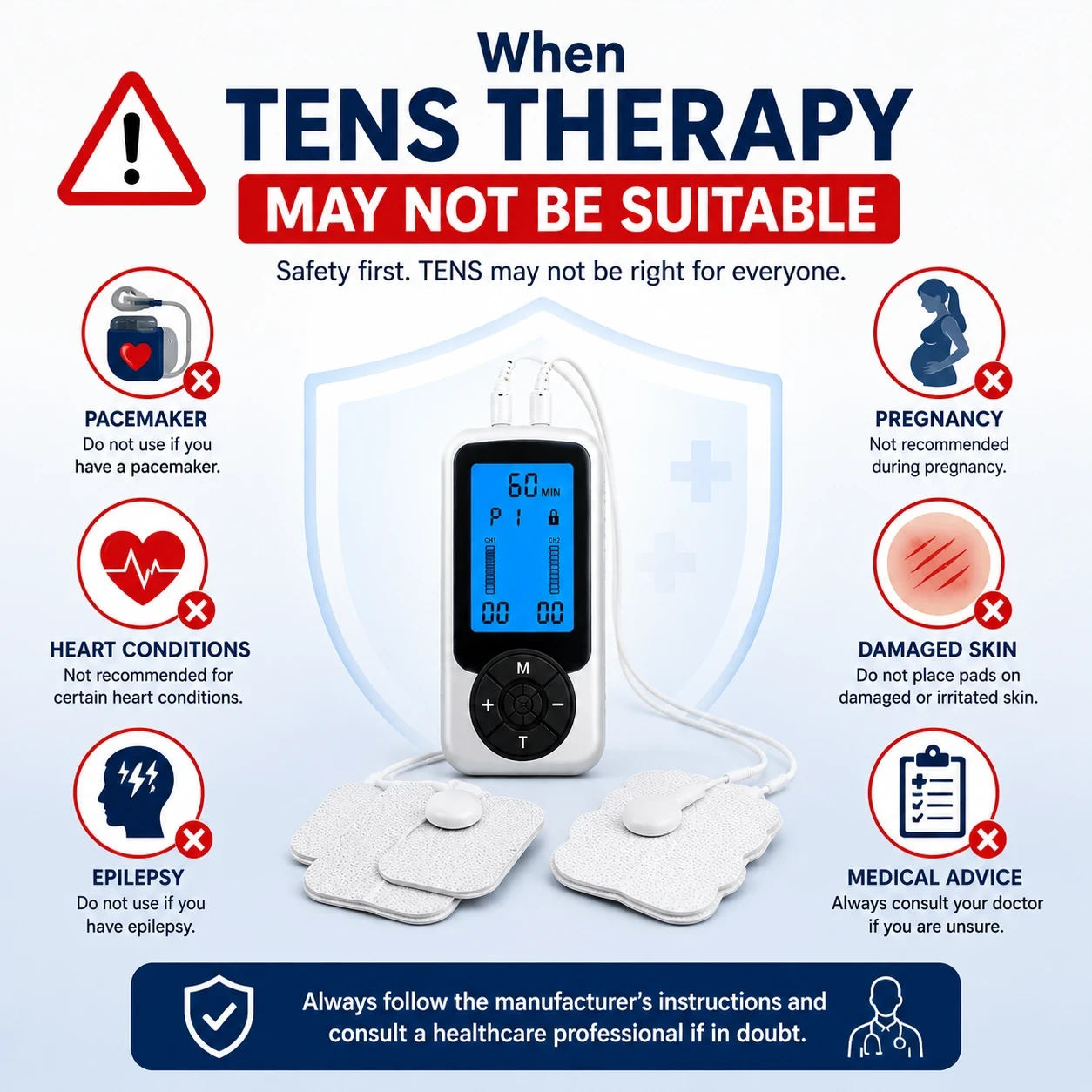
When TENS Therapy May Not Be Suitable
Although generally safe, TENS may not be appropriate for everyone.
You should seek medical advice before using TENS if you:
- Have a pacemaker
- Have certain heart conditions
- Have epilepsy
- Are pregnant
- Have damaged skin where pads would be placed
Always follow manufacturer instructions and consult a healthcare professional if you are unsure.
What Does the Research Say?
Research on TENS therapy and back pain has produced mixed findings over the years.
Some older studies found limited evidence for chronic back pain, while more recent reviews involving thousands of participants suggest TENS can provide meaningful short-term pain reduction when used at appropriate intensity levels.
Researchers continue to investigate which patients benefit most and which treatment settings produce the strongest results. Current evidence suggests TENS may help reduce pain intensity for many users, especially when used as part of a comprehensive pain management plan.
Final Thoughts on TENS Therapy Benefits for Back Pain
TENS therapy benefits for back pain include drug-free pain relief, convenience, adjustable treatment settings, and the potential to support movement and rehabilitation.
While it may not eliminate pain completely, many people find it provides enough relief to help them stay active and participate more fully in recovery.
Like most back pain treatments, the best results often come from combining TENS therapy with exercise, mobility work, posture improvements, and healthy daily habits.
A well-rounded approach typically offers the greatest chance of long-term improvement.
Scientific Research
BMJ Open: Efficacy and Safety of TENS for Pain Relief