Can Diabetics Use Heating Pads? Yes and No, Find out Why.
Can Diabetics Use Heating Pads?
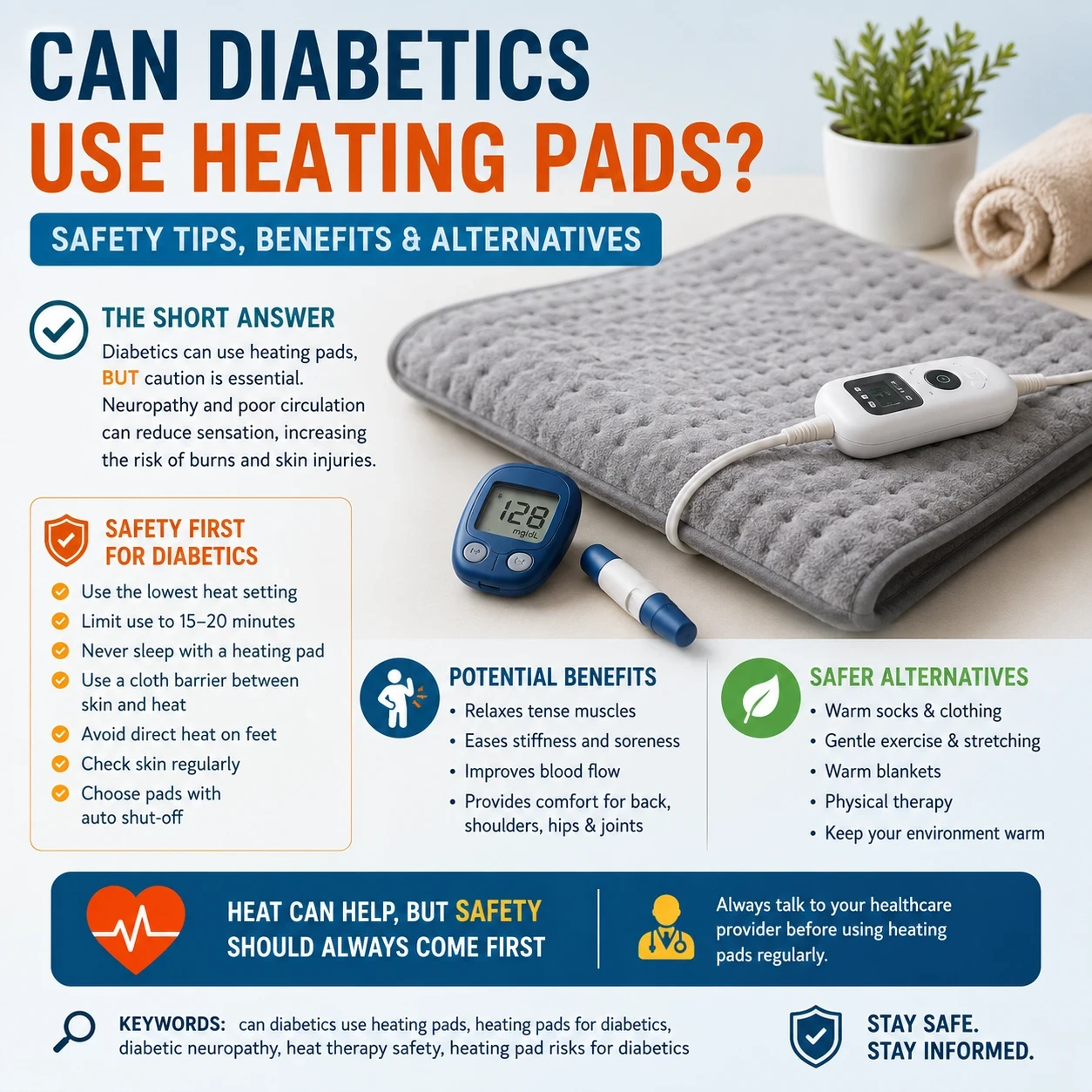
Can diabetics use heating pads? The answer depends on the person, their circulation, and whether they have diabetic neuropathy.
Many people with diabetes experience muscle stiffness, joint pain, cold feet, or discomfort that makes heat therapy appealing.
Heating pads may help relax muscles and improve comfort, but they also come with important safety risks for diabetics, especially those with reduced sensation in their feet or legs.
For some people, careful use of low-level heat may be acceptable. Others may need to avoid direct heat completely. Understanding the risks and using heating pads safely is extremely important.
If you are looking for supportive heat therapy products, these heating pad options may help provide gentle warmth and comfort:
Why They Can Be Risky
The main concern when asking can diabetics use heating pads is diabetic neuropathy. Neuropathy is nerve damage caused by diabetes. It can reduce feeling in the feet, legs, and hands. This means a person may not notice when a heating pad becomes too hot.
Research and medical experts warn that diabetics with nerve damage are at greater risk of burns, skin injuries, and infections from heating pads or electric blankets.
Even a mild burn can become serious in someone with diabetes because healing may be slower. Poor circulation can also increase the risk of ulcers and skin breakdown.
Some diabetics use heating pads safely for short periods on areas like the back, shoulders, or hips. However, extra caution is needed around the feet and lower legs.
Signs You Should Avoid Heating Pads
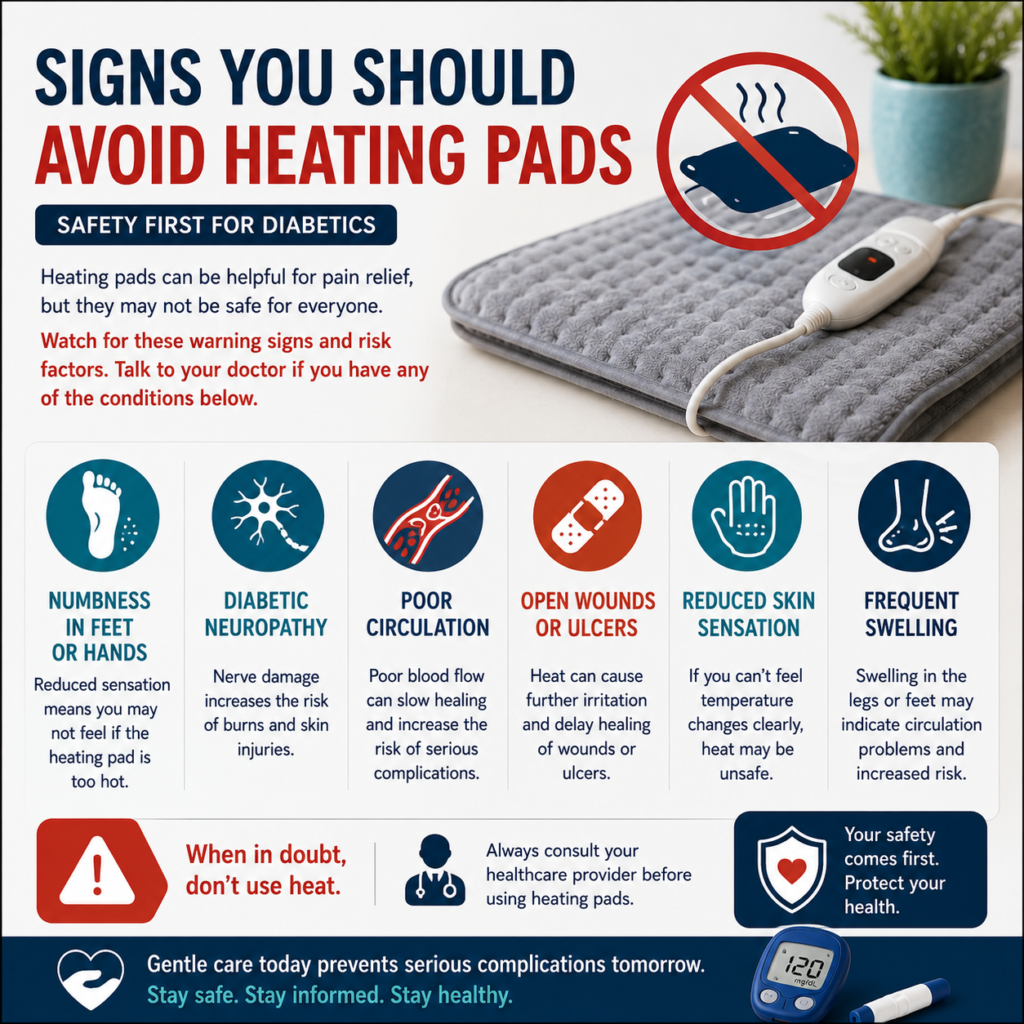
You should speak with your doctor before using heat therapy if you have:
- Numbness in the feet or hands
- Diabetic neuropathy
- Poor circulation
- Open wounds or ulcers
- Reduced skin sensation
- Frequent swelling in the legs or feet
If you cannot clearly feel temperature changes, heating pads may not be safe. Medical sources specifically advise diabetics with neuropathy to avoid prolonged direct heat exposure.
People sometimes fall asleep with heating pads switched on. This can be dangerous for diabetics because burns may happen without being noticed until skin damage has already occurred.
Safer Ways to Use Them
For diabetics without significant nerve damage, careful heating pad use may still be possible. The key is using low heat for short periods while checking the skin regularly.
Helpful safety tips include:
- Use the lowest heat setting
- Limit use to 15–20 minutes
- Never sleep with a heating pad
- Place a cloth barrier between skin and heat
- Check skin often for redness
- Avoid placing heat directly on the feet
- Choose pads with auto shut-off protection
Heating pads with adjustable temperature controls and automatic timers may help reduce risk.
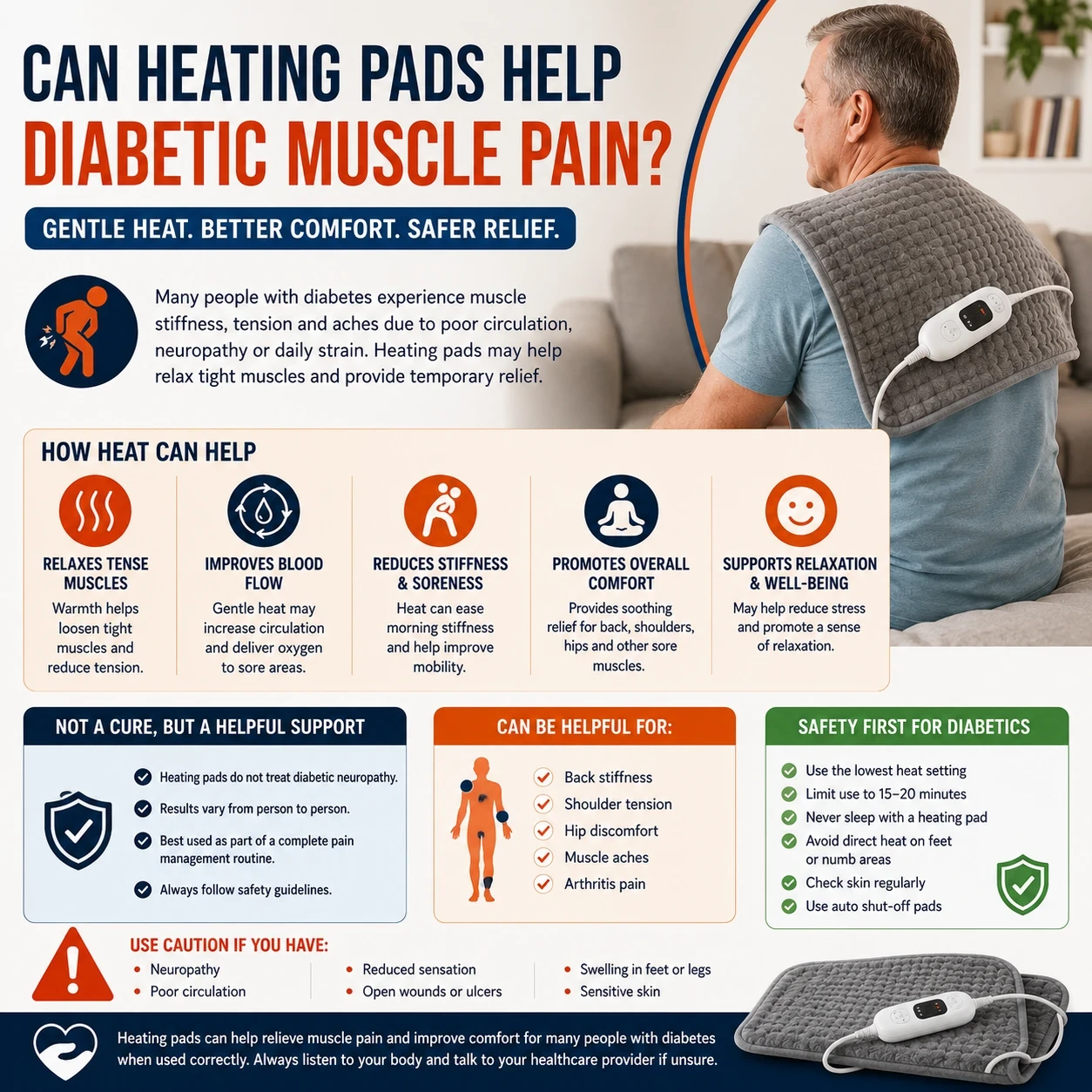
Can Heating Pads Help Diabetic Muscle Pain?
Many diabetics experience muscle tension, stiffness, or joint discomfort unrelated to neuropathy. Heat therapy may help relax tight muscles and temporarily improve comfort.
Warmth can sometimes increase blood flow to stiff areas and reduce feelings of tightness. Some people find heat useful for:
- Back stiffness
- Shoulder tension
- Hip discomfort
- Arthritis pain
- Mild muscle aches
However, heating pads are not considered a treatment for diabetic neuropathy itself. Some medical policies note there is limited evidence that heating pads improve nerve damage pain directly.
Many people combine gentle heat with stretching, walking, and supportive therapies for better overall comfort.
You may also find these related guides helpful:
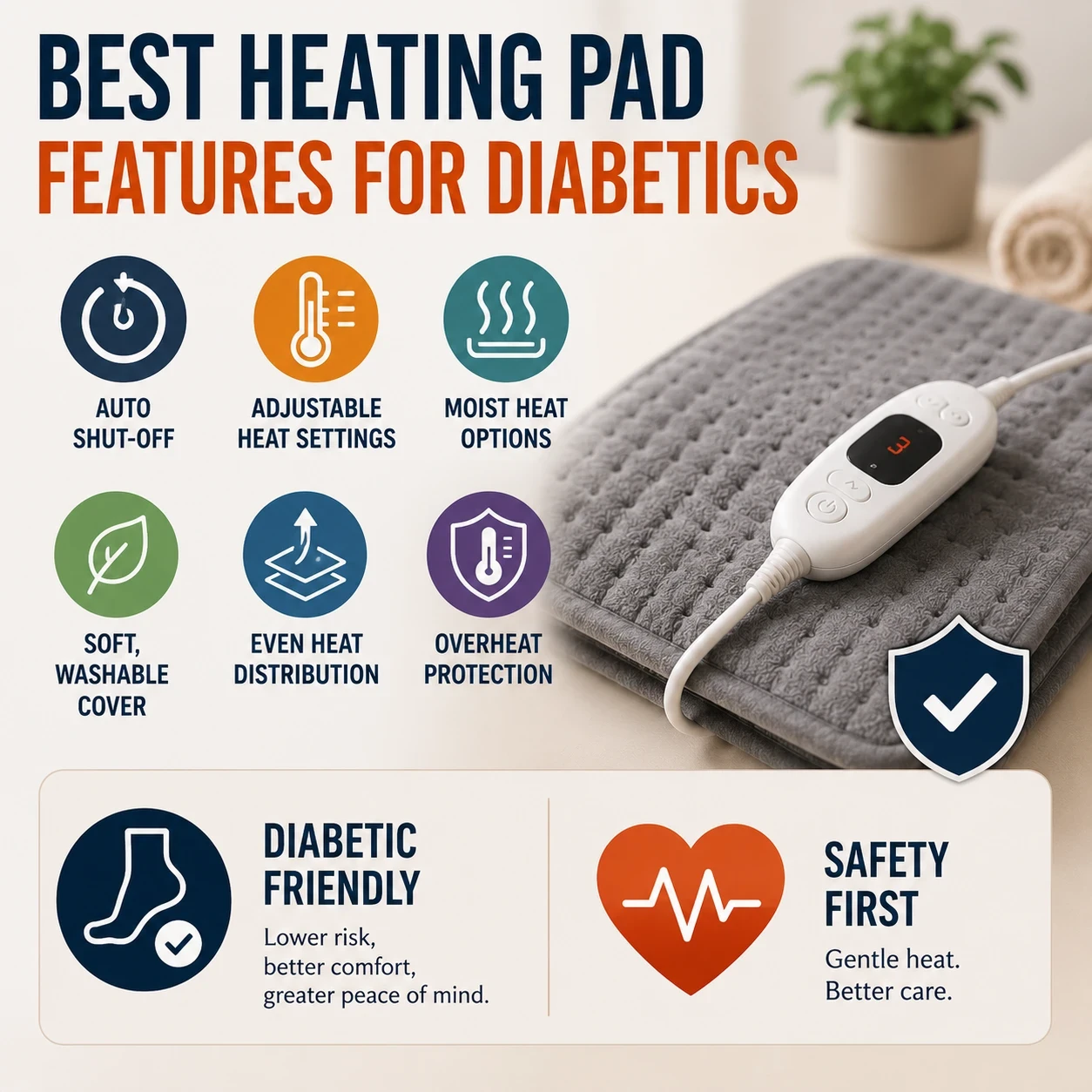
Best Heating Pad Features to look for
If your healthcare provider says heat therapy is appropriate, certain features may make heating pads safer.
Look for:
- Auto shut-off timers
- Multiple heat settings
- Moist heat options
- Soft washable covers
- Even heat distribution
- Overheat protection
Larger heating pads may also spread heat more evenly instead of concentrating heat into one small area.
Alternatives to Heating Pads for Diabetics
If direct heat is too risky, there are safer ways to stay warm and comfortable.
Alternatives may include:
- Warm socks
- Layered blankets
- Gentle exercise
- Warm clothing
- Movement breaks
- Stretching routines
- Physical therapy
Medical experts often recommend warming the room instead of directly heating numb feet or legs.
For people with diabetes and cold feet, proper circulation management is often more important than strong external heat.
When to Stop Using a Heating Pad
Stop using a heating pad immediately if you notice:
- Red or irritated skin
- Swelling
- Blisters
- Burning sensations
- Increased numbness
- Skin discoloration
Always inspect the skin after heat therapy. Small injuries can become serious faster in diabetics.
If you are unsure whether heating pads are safe for your condition, it is best to ask your healthcare provider before using one regularly.
Final Thoughts on Can Diabetics Use Heating Pads
Can diabetics use heating pads safely? In some cases, yes — but caution is essential. People with diabetic neuropathy or poor circulation face a higher risk of burns because they may not feel excessive heat properly.
Low heat settings, short sessions, and heating pads with automatic shut-off features are usually safer choices. Many diabetics should avoid placing direct heat on the feet entirely.
Heat therapy may still help reduce stiffness and improve comfort when used carefully and responsibly. The safest approach is always controlled heat, regular skin checks, and medical guidance when needed.
Research Study
Severe Burn Injury and Heat Exposure in Diabetic Neuropathy Patients