
Magnesium For Restful Sleep Calm The Senses Sleep Well
Magnesium for Restful Sleep
Magnesium for restful sleep is getting more attention for a simple reason: many people feel wired at night even when they are exhausted.
A tired body does not always mean a calm nervous system.
When stress stays high, muscles stay tense, and the mind keeps racing, sleep can become lighter, shorter, and less refreshing. Magnesium is involved in hundreds of processes in the body.
It plays a part in muscle relaxation, nerve signalling, stress regulation, and sleep rhythm support.
While it is not a magic fix, it can be a useful part of a wider evening routine that supports better rest over time. If your goal is deeper, calmer, more consistent sleep, magnesium for restful sleep is worth understanding properly.

Why Magnesium Matters for Sleep
Sleep is not only about feeling tired. Good sleep depends on the body shifting into a more relaxed state.
That means the nervous system needs to settle, stress hormones need to reduce, and physical tension needs to come down. Magnesium helps support that process. It is often discussed because it may help the body relax rather than stay in a constant state of alertness.
This is one reason so many people explore magnesium when they struggle with falling asleep or waking repeatedly through the night.
You can read more about the benefits of magnesium for overall health and recovery.

How Magnesium for Restful Sleep May Work
Magnesium for restful sleep may help through several different pathways rather than one single effect.
It supports nervous system calm
One of the biggest reasons people use magnesium for restful sleep is its connection to relaxation.
When the nervous system is overstimulated, it can feel hard to switch off mentally.
Magnesium helps support calmer signalling in the body, which may make bedtime feel less tense and more natural.
It may help ease physical tension
Some people do not realise how much body tension affects sleep.
Tight muscles, jaw clenching, restlessness, and general physical unease can all make it harder to settle.
Magnesium is often used because it supports muscle relaxation as well as nerve balance.
It may support better evening recovery.
Sleep and recovery are closely linked.
If the body is under heavy stress from work, exercise, poor routine, or ongoing tension, sleep quality can suffer.
Magnesium can fit into a recovery-focused plan, especially for active people.
You can explore this further in magnesium benefits for athletes and recovery support.
It may support stress regulation Stress is one of the biggest reasons sleep breaks down.
When stress stays elevated into the evening, restful sleep becomes harder to reach.
Magnesium for restful sleep is often part of a strategy aimed at lowering overall tension levels.
Shop for Quality Assured Magnesium Supplements at HerbsPro HERE.
Learn more about how magnesium supports stress regulation naturally.
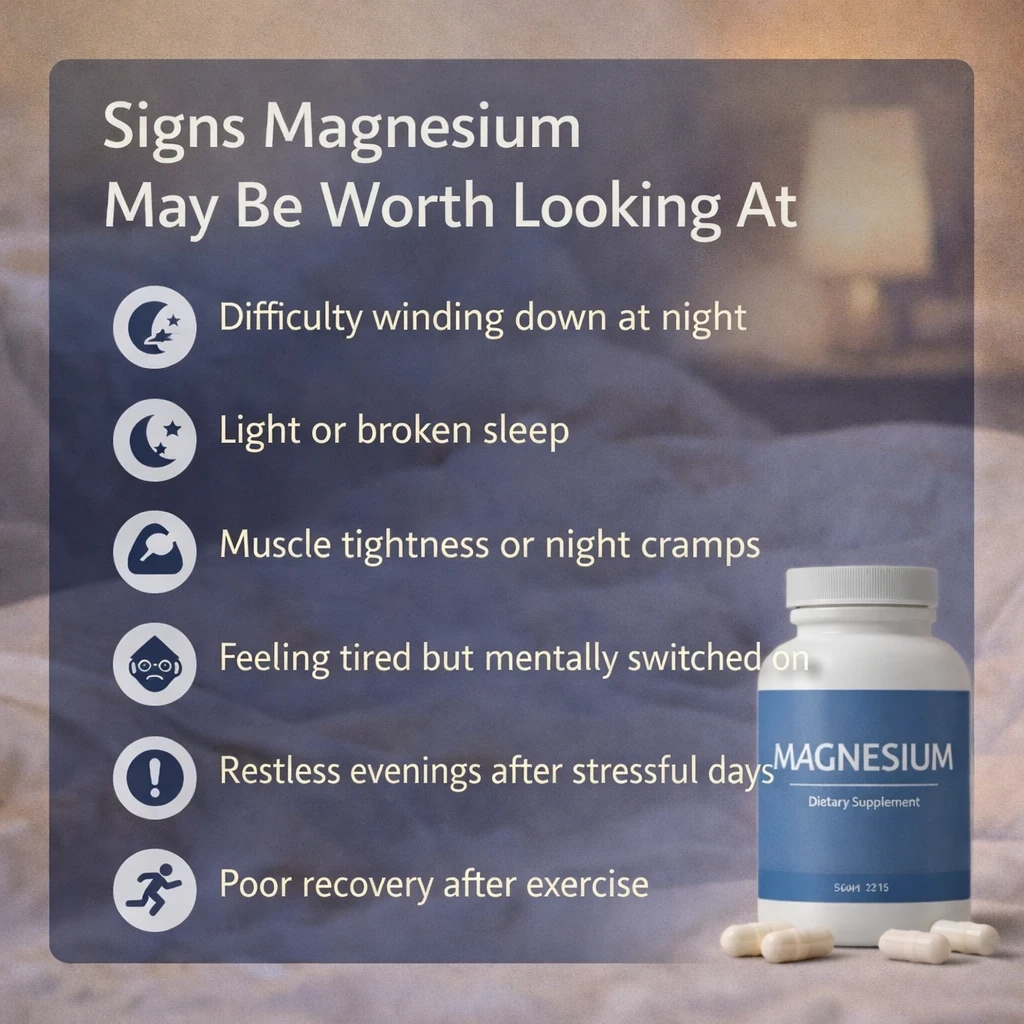
Signs Magnesium May Be Worth Looking At
Magnesium may be relevant if someone regularly notices:
difficulty winding down at night
light or broken sleep
muscle tightness or night cramps
feeling tired but mentally switched on
restless evenings after stressful days
poor recovery after exercise
That does not automatically mean deficiency is the cause.
Sleep problems are usually multi-factorial.
Still, magnesium for restful sleep may be a useful support tool when part of the bigger picture points toward stress, tension, or low intake.

Best Types of Magnesium for Sleep
Not every magnesium form is used for the same reason.
This matters because many people buy the first supplement they see without checking what type it contains.
Magnesium glycinate
Highly absorbable and commonly used for calming support.
Often preferred for evening use.
Magnesium citrate
Widely available and may support digestion, but not always ideal before bed for some.
Magnesium threonate
Often discussed for brain and nervous system support and mental relaxation.
Magnesium malate
More commonly used for daytime support rather than specifically for sleep.
How to Use Magnesium for Restful Sleep
Magnesium for restful sleep works best when used consistently and sensibly.
Timing
Most people take it in the evening, around 30–60 minutes before bed.
Dose
Start moderate and increase gradually if needed.
More is not always better.
Routine matters
Magnesium for restful sleep tends to work better when paired with:
reduced screen time at night a cooler,
darker bedroom
a consistent bedtime
less late caffeine a calm wind-down routine
Food Sources of Magnesium
Supplements get most of the attention, but food still matters.
People looking at magnesium for restful sleep should also consider daily intake.
Good sources include: pumpkin seeds
almonds
leafy greens
dark chocolate
legumes
avocados
Combining diet and supplementation often works best.
Benefits Beyond Sleep
Magnesium is rarely only about sleep. Some people use it because it may support:
muscle comfort recovery after exercise
stress resilience
nervous system balance
general relaxation

A Balanced View
Magnesium for restful sleep can be useful, but it should be presented realistically.
It may help some people noticeably, while others experience more subtle improvements.
It is not a cure for deeper sleep issues on its own.
The best results usually come when magnesium for restful sleep is combined with good sleep habits, stress management, and consistent routines.
FAQ
What is the best magnesium for restful sleep?
Magnesium glycinate is often preferred due to its calming properties and good absorption.
How long does it take to work?
Some people notice changes within a few nights, while others need 1–2 weeks of consistent use.
Can I take magnesium every night?
Yes, many people take it daily within recommended doses.
Does magnesium help with stress at night?
It may help support relaxation, especially when stress is a contributing factor.
Is food or supplementation better?
Both matter.
Food should be the foundation, with supplements used when needed. Scientific Studies https://pubmed.ncbi.nlm.nih.gov/23853635/ https://pubmed.ncbi.nlm.nih.gov/26536471/
