Heat Therapy for Pain Relief: A Complete Guide to Safe, Effective Support for Everyday Pain
Heat therapy for pain relief is one of the simplest ways to reduce stiffness, ease muscle tightness, and make movement feel more comfortable. It is widely used for back pain, neck tension, sore muscles, joint stiffness, and the kind of everyday aches that build up from work, poor posture, stress, or inactivity. Many people turn to it because it is easy to use at home, does not require complicated equipment, and can become part of a steady self-care routine.
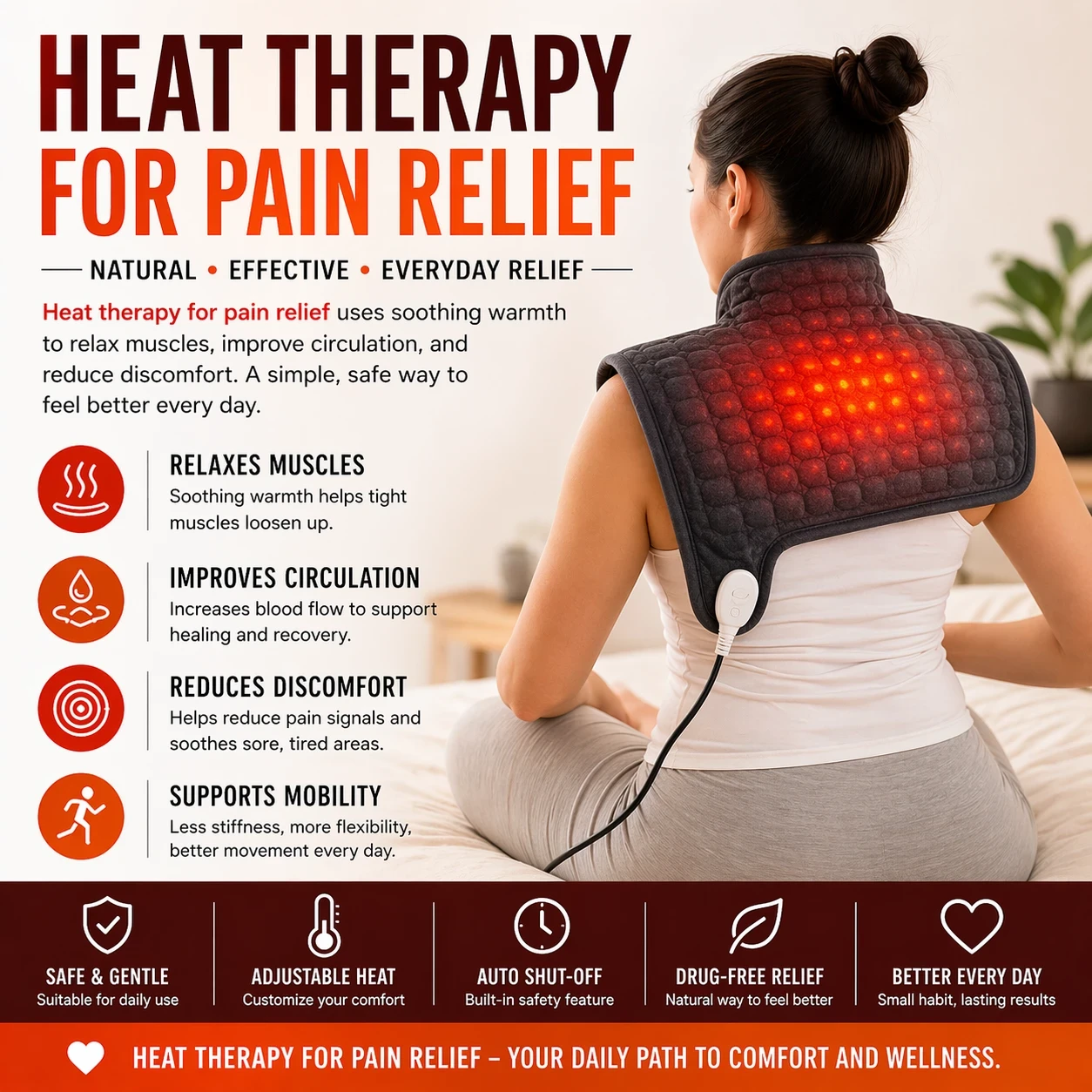
Used properly, heat therapy for pain relief can help muscles relax, improve circulation, and reduce the sense of tightness that often makes pain feel worse. It is not a cure for every condition, but it can play an important role in a broader pain-management plan. For people dealing with recurring discomfort, it often becomes one of the most reliable tools in the house.
This guide explains how heat works, when to use it, when not to use it, how to choose the right products, and how to build a routine that gives steady and realistic results.
What Is Heat Therapy for Pain Relief?
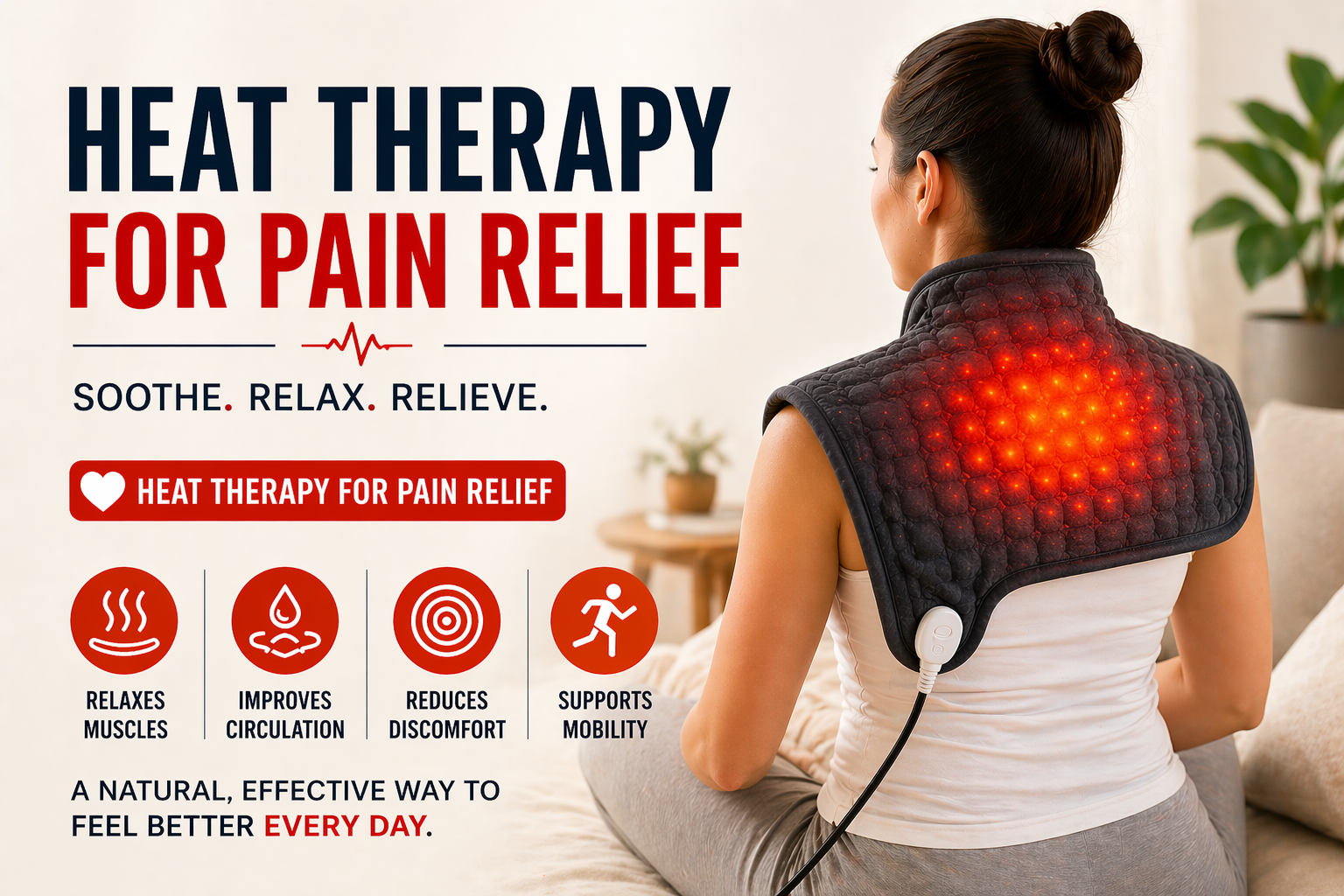
Heat therapy for pain relief means applying warmth to a sore, stiff, or uncomfortable area of the body to encourage relaxation and improve comfort. The heat can come from a standard heating pad, moist heat pack, heated wrap, far infrared device, or wearable heat belt. Some people also use warm baths or hot water bottles, although dedicated devices tend to give more consistent coverage and temperature control.
The reason heat feels so helpful is that warmth encourages blood vessels to open slightly, which supports circulation in the treated area. It also helps tense muscles loosen up. When muscles are less guarded and tissue feels less rigid, movement tends to become easier and pain often feels less sharp or less overwhelming.
If you want a related overview, this article on infrared therapy benefits explains more about how deeper heating approaches may support recovery and comfort.
How Heat Works in the Body
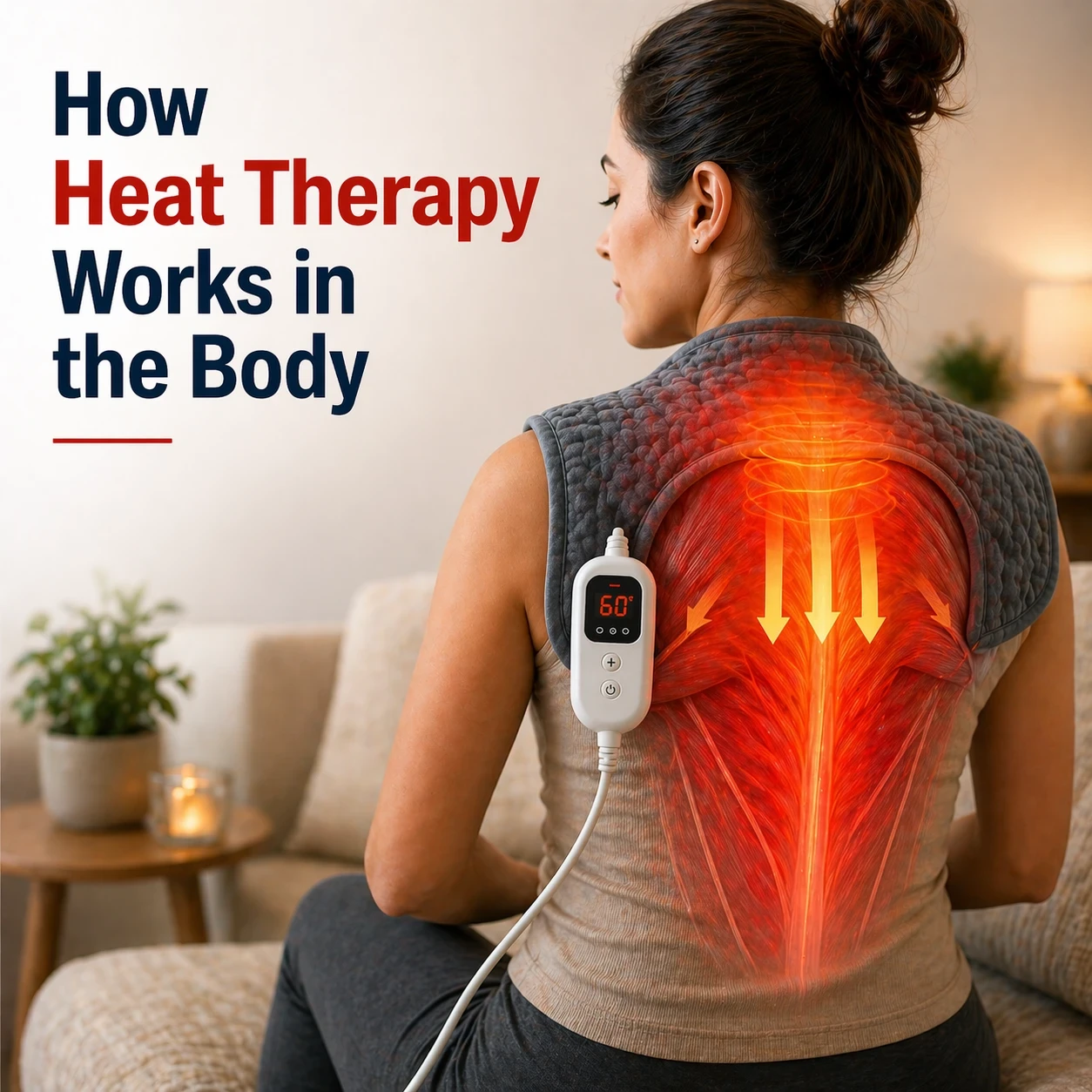
Heat therapy for pain relief works through a few simple but important physical effects. First, warmth helps improve local blood flow. Better circulation means the tissues receive more oxygen and nutrients, which can support comfort and recovery. Second, heat helps reduce muscle guarding. When muscles stay tense for too long, they can create a cycle of pain, limited movement, and more tension. Heat helps interrupt that cycle.
Third, warmth can make joints and surrounding soft tissues feel less stiff. This is one reason so many people like using heat in the morning before starting the day, or before gentle stretching. Finally, heat can alter how pain feels. It does not erase the cause, but it can lower the intensity of the discomfort enough to let a person move more naturally.
- Improved circulation: more blood flow to sore areas
- Muscle relaxation: less tightness and guarding
- Better flexibility: easier movement in stiff tissues
- Comfort support: pain can feel less intense and less sharp
When Heat Therapy Helps Most
Heat therapy for pain relief tends to work best for ongoing stiffness and tension rather than fresh injury. It is often useful when pain feels dull, tight, stiff, aching, or sore rather than hot, swollen, or inflamed. Common examples include chronic lower back pain, stiff neck and shoulders, tight hips, sore muscles after overuse, and arthritis-related stiffness that feels worse after resting.
It can also be helpful for people who spend long hours sitting, driving, working at a desk, or doing repetitive tasks. In these situations, muscles often stay in one position too long and begin to feel locked up. Heat can be a simple way to unwind that tension.
For readers focused on neck-specific use, this guide on infrared therapy techniques for neck pain relief may help you apply the same ideas more directly.
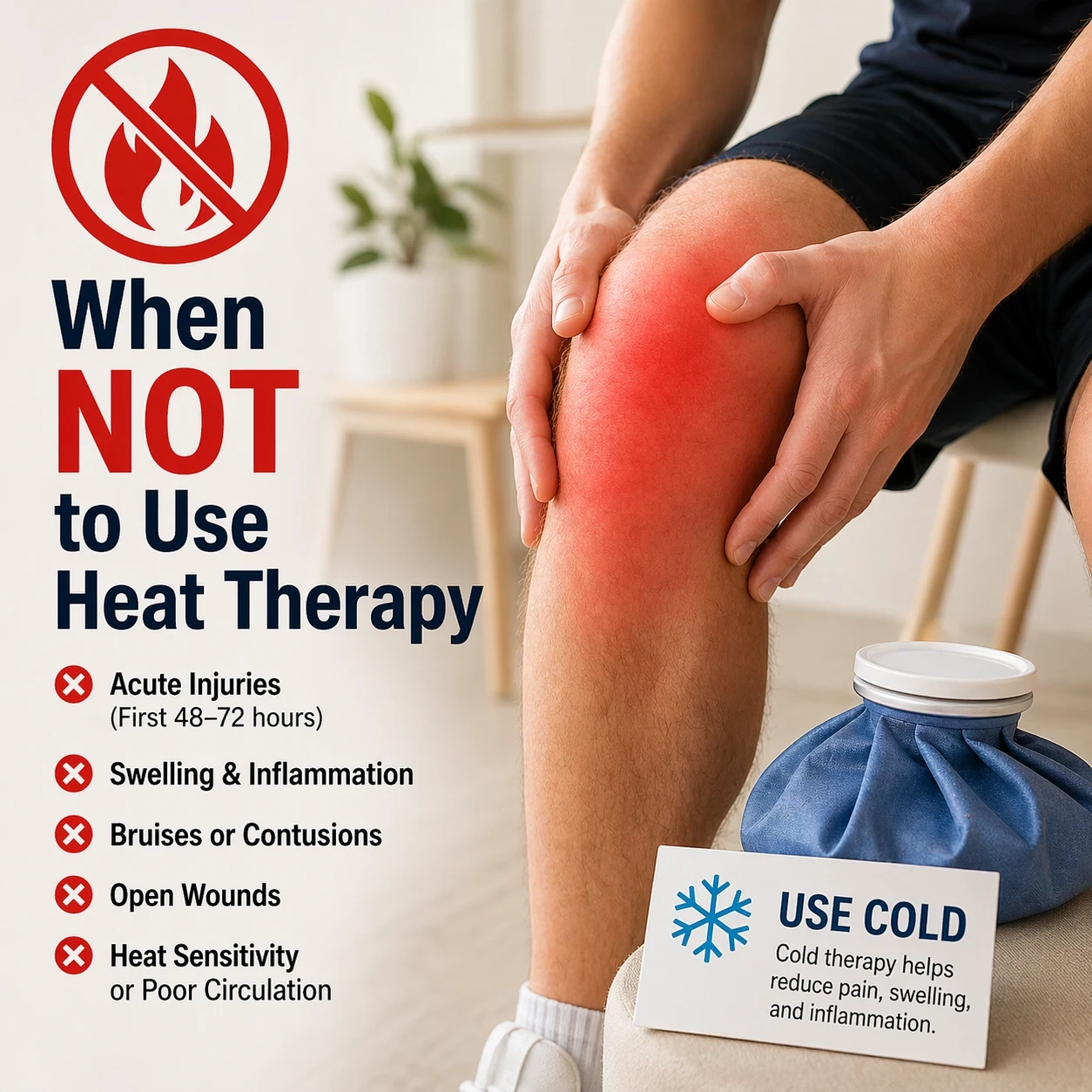
When Not to Use Heat
Although heat therapy for pain relief can be very effective, it is not always the right choice. Heat is usually not the best first option for a fresh injury, visible swelling, or an area that feels hot and inflamed. In those cases, cold therapy may be more appropriate early on. Heat should also be avoided over open wounds, active infections, or areas where the skin has poor sensation. If you cannot feel temperature properly, the risk of irritation or burns is higher.
If a condition is severe, unexplained, rapidly worsening, or linked with major weakness, fever, numbness, or loss of function, home heat should not replace proper medical assessment.
Heat Therapy vs Cold Therapy
People often ask whether they should use heat or cold. The simplest rule is this: cold is usually better for fresh inflammation, while heat therapy for pain relief is usually better for stiffness and chronic tension. Cold tends to calm swelling and numb sharp discomfort. Heat tends to relax tissue and improve mobility.
That means someone with a brand-new ankle sprain may start with cold, while someone with long-standing tight shoulders from desk work may get much more benefit from heat. Some people even use both at different times depending on how the body feels that day.
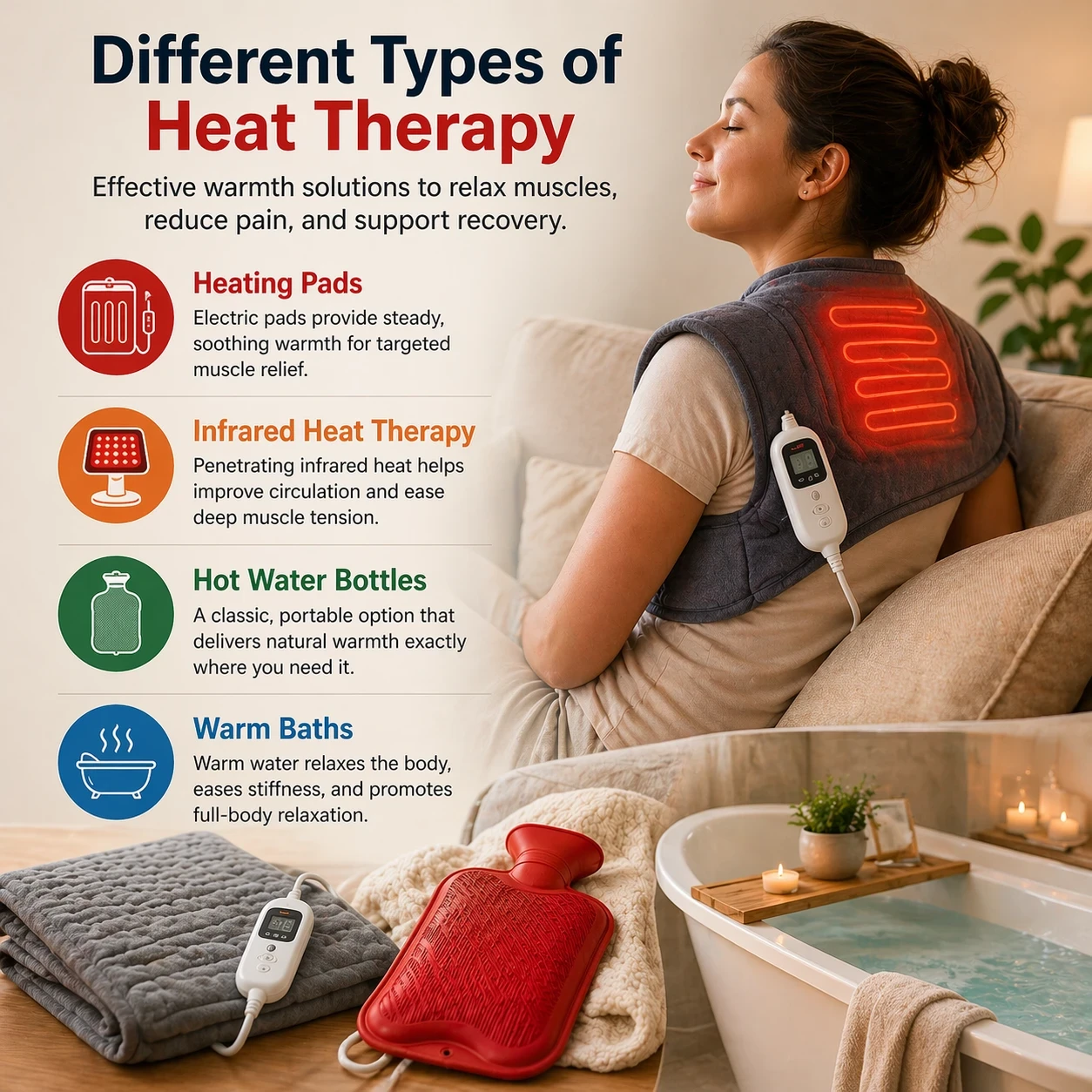
Different Types of Heat Therapy
Standard Electric Heating Pads
These are the most familiar option. They are easy to use, widely available, and useful for back pain, neck tension, and general muscle soreness. The main difference between low-quality and better-quality options is usually how evenly they heat and how well they maintain temperature.
Moist Heat Packs
Moist heat can feel stronger and more penetrating for some people. It is often used for short sessions and may work well for tight muscles that need a deeper warming sensation.
Far Infrared Heat
Far infrared options are designed to heat tissue differently from surface-only warmth. Many users prefer them for ongoing pain because the heat can feel deeper and more even. If you want to explore that in more detail, see infrared therapy for pain relief.
Wearable Heat Belts and Wraps
These are useful for people who want heat around the lower back, hips, shoulders, or neck without having to lie still. They can be practical for home use, short work breaks, or recovery in the evening.
How to Use Heat Therapy Properly
Heat therapy for pain relief works best when it is used in a steady and sensible way. Most sessions last between 15 and 30 minutes. The heat should feel warm and soothing, not aggressive or hard to tolerate. Very high temperatures are not necessary and usually do not improve results. In fact, going too hot can make the area more irritated.
It often helps to use heat before gentle stretching, walking, or mobility work. Heat prepares the tissue, and then movement helps the body keep some of that improved looseness.
For chronic problems, consistency matters more than intensity. A moderate daily session will usually be more helpful than a very hot session used only once in a while.
- Use moderate heat, not extreme heat
- Start with 15 to 20 minutes and adjust if needed
- Check the skin regularly during use
- Use heat before light movement or stretching
- Stay consistent for chronic stiffness problems
Daily Routines That Make Heat More Effective
One reason heat therapy for pain relief works so well is that it fits naturally into daily life. A simple morning session can loosen the lower back, neck, or hips before the day begins.
A late-afternoon or evening session can help unwind tension that has built up from sitting, lifting, or repetitive work.
Before bed, heat may help the body settle down, especially if pain tends to spike after a long day.
You do not need a complicated routine. Even one or two regular sessions each day can be enough. The key is to match the routine to the pattern of your pain. If mornings are worst, use heat early. If pain builds through the day, use it after work or after activity.
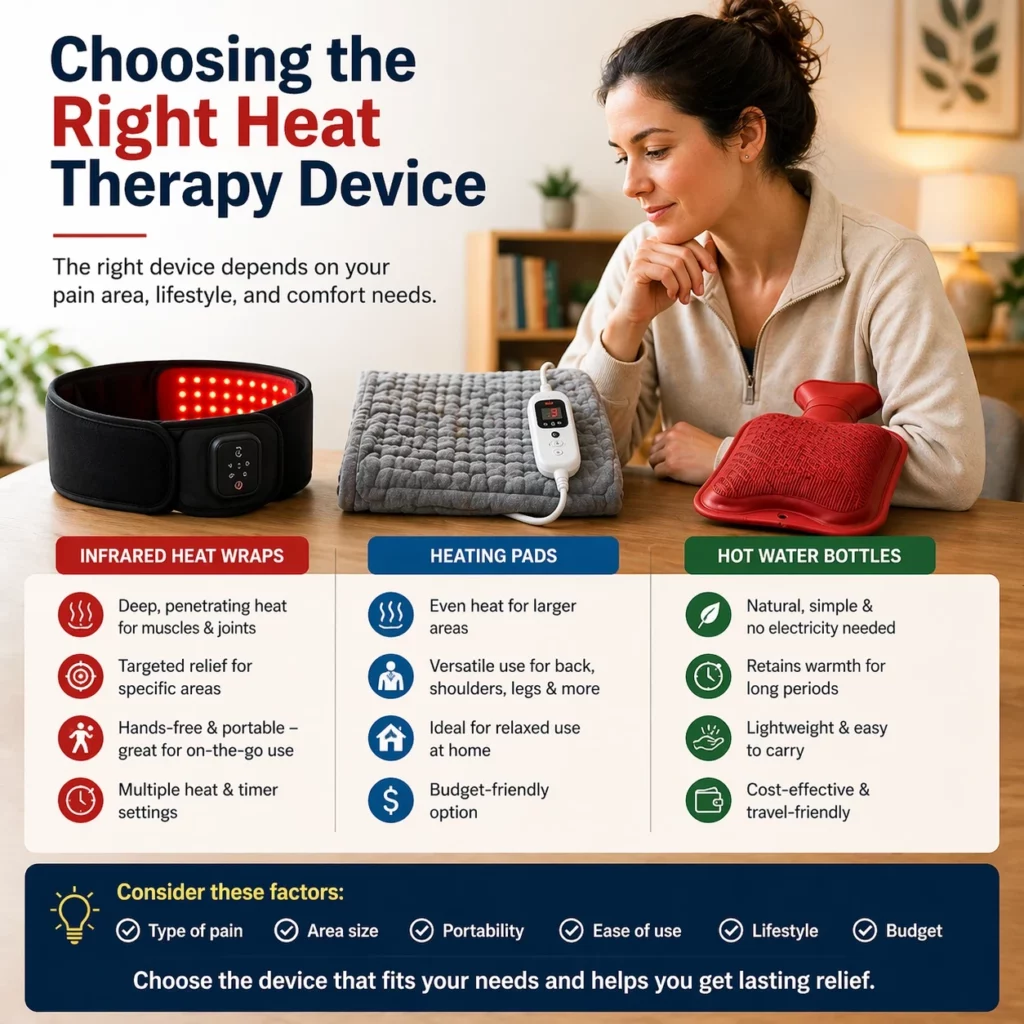
Choosing the Right Device
Not all devices are equal. The success of heat therapy for pain relief often depends on whether the product delivers steady, even warmth and covers the painful area properly. A weak pad with uneven heating is less likely to help than a well-made device that maintains its temperature and fits the body area well.
Brands like UTK focus on products designed around far infrared heat and stone-based materials such as jade, tourmaline, amethyst, and graphene-related designs. For people wanting more targeted options, the following product pages may be useful:
- UTK Amethyst Heating Pad for Back Pain Relief
- UTK Neck and Shoulder Heating Pad with Jade and Tourmaline
- UTK Amethyst Healing Stone Heat Pad
- UTK Graphene Far Infrared Heating Pad for Neck and Shoulder Relief
- UTK Large Heating Pad for Neck, Shoulder, and Full Back
- UTK Far Infrared Heating Pad for Back Pain Relief
- UTK Heating Pad for Neck and Shoulders
- UTK Amethyst Heated Chair Pad
- UTK Far Infrared Hip Heating Pad for Sciatica Relief
- UTK Cordless Far Infrared Heating Belt for Lower Back Pain Relief
What to Look for When Buying
If you are comparing products, think about the body area first. A large back pad is not the same as a neck wrap or hip-specific design. Heat therapy for pain relief is more effective when the device matches the painful region well. Also look for adjustable temperature settings, reliable shut-off features, comfortable materials, and coverage that fits the body instead of leaving gaps.
It also helps to think about when you will use the device. If you want evening recovery on the sofa, a large pad may be best. If you want something more flexible, a wrap or belt may make more sense.
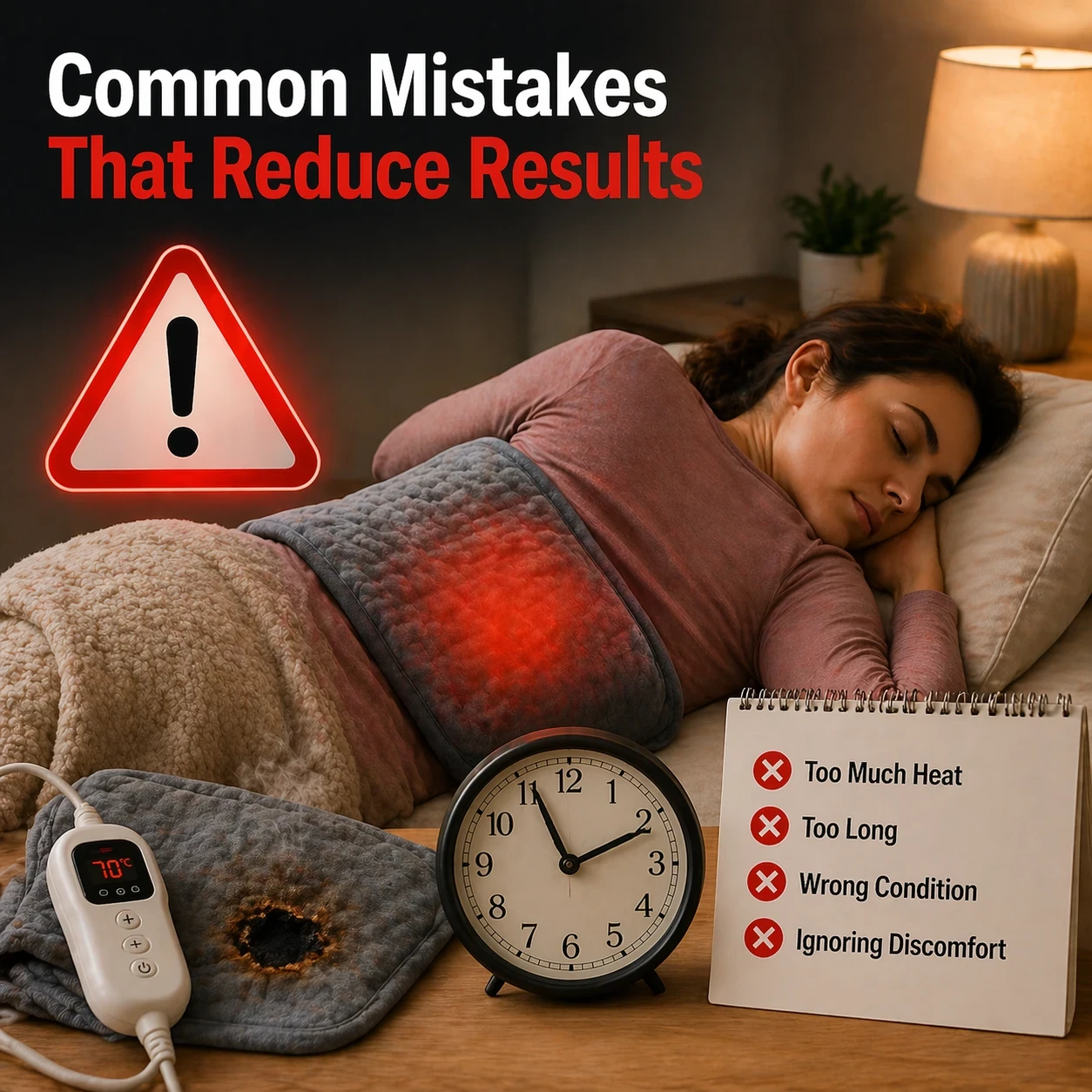
Common Mistakes That Reduce Results
A few simple mistakes can make heat less effective. One is using it too rarely. Another is choosing a product that is too small or does not fit the target area. Some people also turn the temperature up too high and end up feeling irritated rather than relaxed. Others use heat but never follow it with movement, which means the body quickly returns to its old pattern of stiffness.
Heat therapy for pain relief usually works best when it is part of a wider routine that includes walking, stretching, posture changes, and better pacing during the day.
Conditions That Often Respond Well
Heat therapy for pain relief is often used for chronic lower back pain, neck and shoulder tightness, arthritis-related stiffness, sore gluteal muscles, hip tension, sciatica-related muscle guarding, and general muscular discomfort after repetitive activity. It can also be useful for people who feel worse after sitting too long, travelling, or sleeping in awkward positions.
Balanced Expectations
Heat can be very helpful, but realistic expectations matter. Heat therapy for pain relief is a support tool, not a magic fix. It may reduce pain, improve movement, and help you feel more in control, but deeper problems still need a broader approach. Strength, mobility, pacing, sleep, and sometimes professional assessment still matter.
FAQ: Heat Therapy for Pain Relief
How often can I use heat therapy for pain relief?
Many people use it once or twice a day for 15 to 30 minutes, depending on the area and the type of device.
Is heat better than cold for back pain?
For chronic tight or stiff back pain, heat therapy for pain relief is often the better option. For a fresh injury with swelling, cold may be better at first.
Can I use heat before exercise?
Yes. A short heat session before walking or stretching can help the body feel looser and more ready to move.
Do infrared devices work differently?
Many people feel that infrared options provide a deeper kind of warmth than standard pads, especially for ongoing stiffness problems.
Can I fall asleep using a heating device?
It is safer not to, unless the product is specifically designed with strong safety features and automatic shut-off. Even then, caution is sensible.
Scientific References
https://pubmed.ncbi.nlm.nih.gov/19917153/
https://pubmed.ncbi.nlm.nih.gov/23741038/