Best Exercises For Hip Pain Do These At Home
Best Exercises for Hip Pain
Best exercises for hip pain can play a powerful role in improving mobility, reducing stiffness, and helping you return to normal movement patterns.
When done correctly and consistently, these exercises support joint health, strengthen surrounding muscles, and reduce the load on sensitive structures.
Many people dealing with hip discomfort find that targeted movement is one of the most effective long-term strategies.
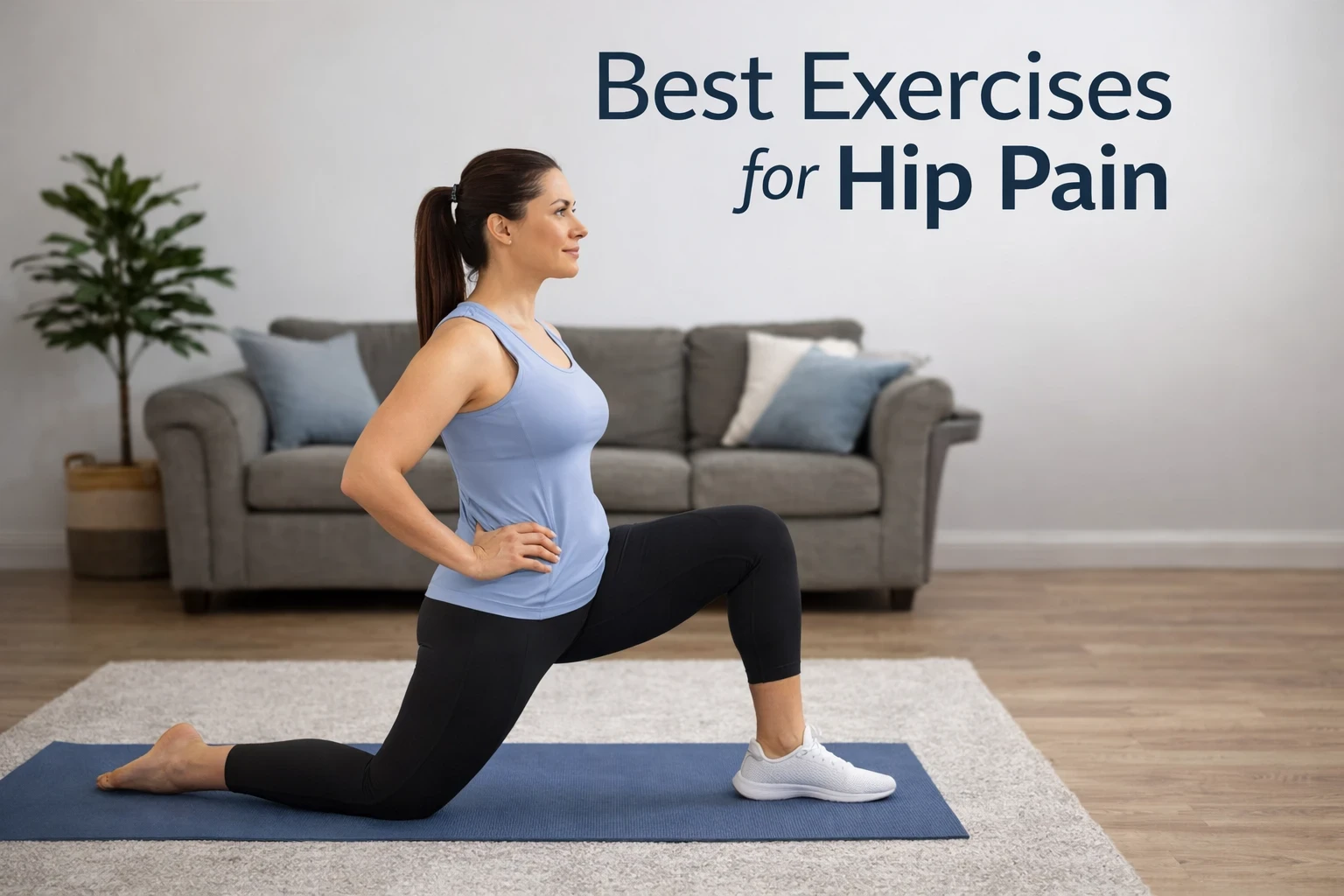
Why Movement Matters for Hip Pain
Hip pain is often linked to muscle weakness, poor movement patterns, or joint stiffness rather than structural damage alone.
That’s why improving how your body moves can significantly reduce symptoms.
Learning about how pain signals are generated can help you understand why gentle, controlled exercise is so important for recovery.
When you stay active, you improve blood flow, reduce inflammation, and help your nervous system become less sensitive to pain signals.
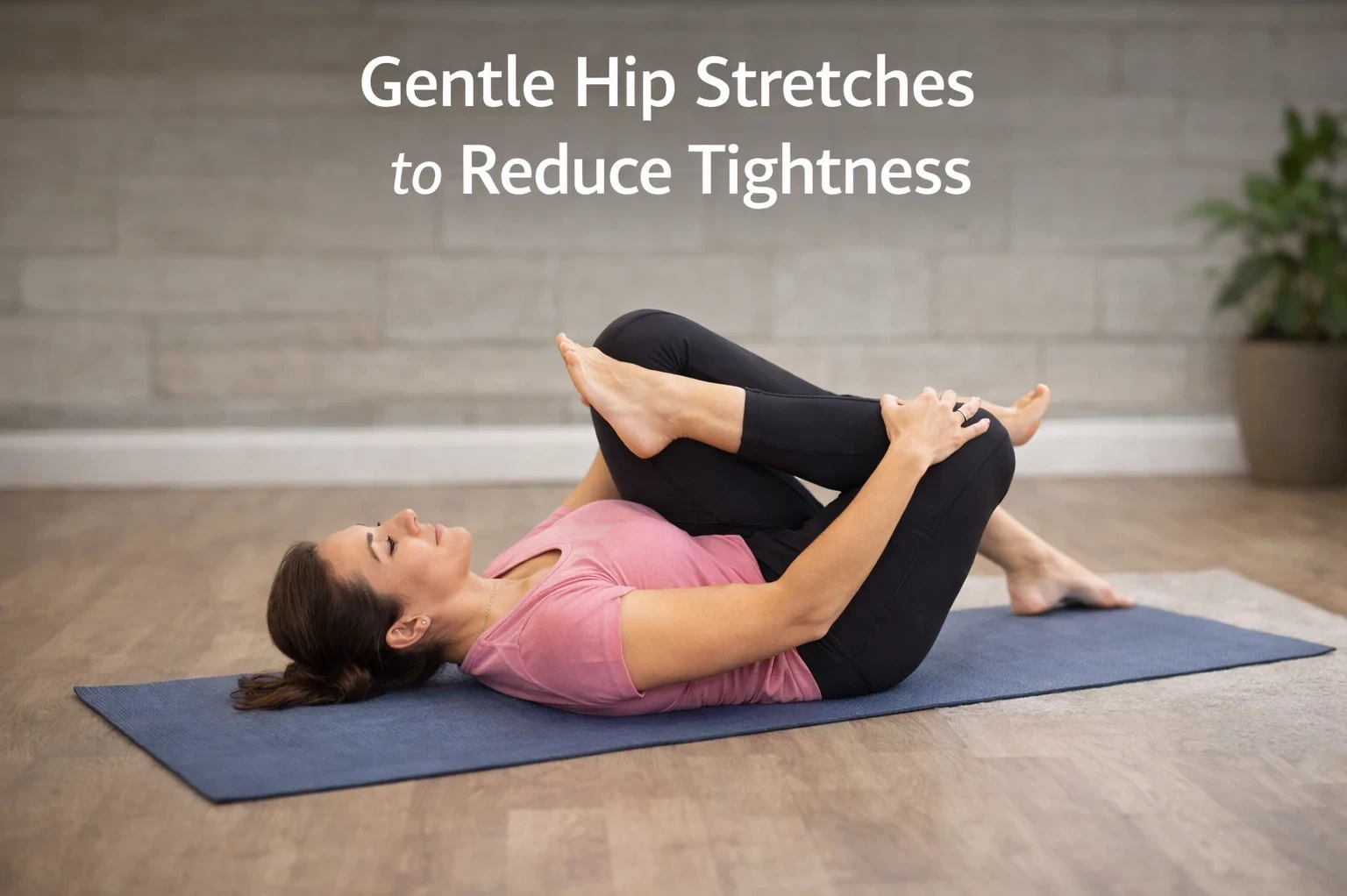
Gentle Stretching Exercises
Stretching helps reduce tightness in muscles around the hip, particularly the hip flexors, glutes, and hamstrings.
Kneeling Hip Flexor Stretch Start in a half-kneeling position with one foot forward.
Gently push your hips forward while keeping your back straight. Hold for 20–30 seconds and repeat on both sides.
Figure-4 Stretch
Lie on your back, cross one ankle over the opposite knee, and gently pull the supporting leg toward your chest.
This stretch targets the glutes and outer hip.
These simple movements are among the best exercises for hip pain because they immediately improve flexibility and reduce tension.

Best Strengthening Exercises for Hip Pain Stability
Building strength around the hip joint is essential for long-term relief.
Weak muscles can place extra stress on the joint.
Glute Bridges
Lie on your back with knees bent and feet flat on the floor. Lift your hips slowly, squeezing your glutes at the top. Hold briefly, then lower.
Side-Lying Leg Raises
Lie on your side and lift your top leg upward while keeping it straight.
This strengthens the hip abductors, which are crucial for stability.
If you’re dealing with persistent discomfort, exploring hip pain relief products alongside exercise can provide additional support during recovery.
Mobility Exercises to Improve Range of Motion
Mobility work helps your hip joint move more freely and reduces stiffness.
Hip Circles
Stand upright and slowly rotate one knee in a circular motion. Keep the movement controlled and pain-free.
Seated Internal Rotations
Sit with your knees bent and feet flat.
Rotate your lower leg inward and outward without moving your upper leg.
These movements are simple but highly effective as part of the best exercises for hip pain routine.
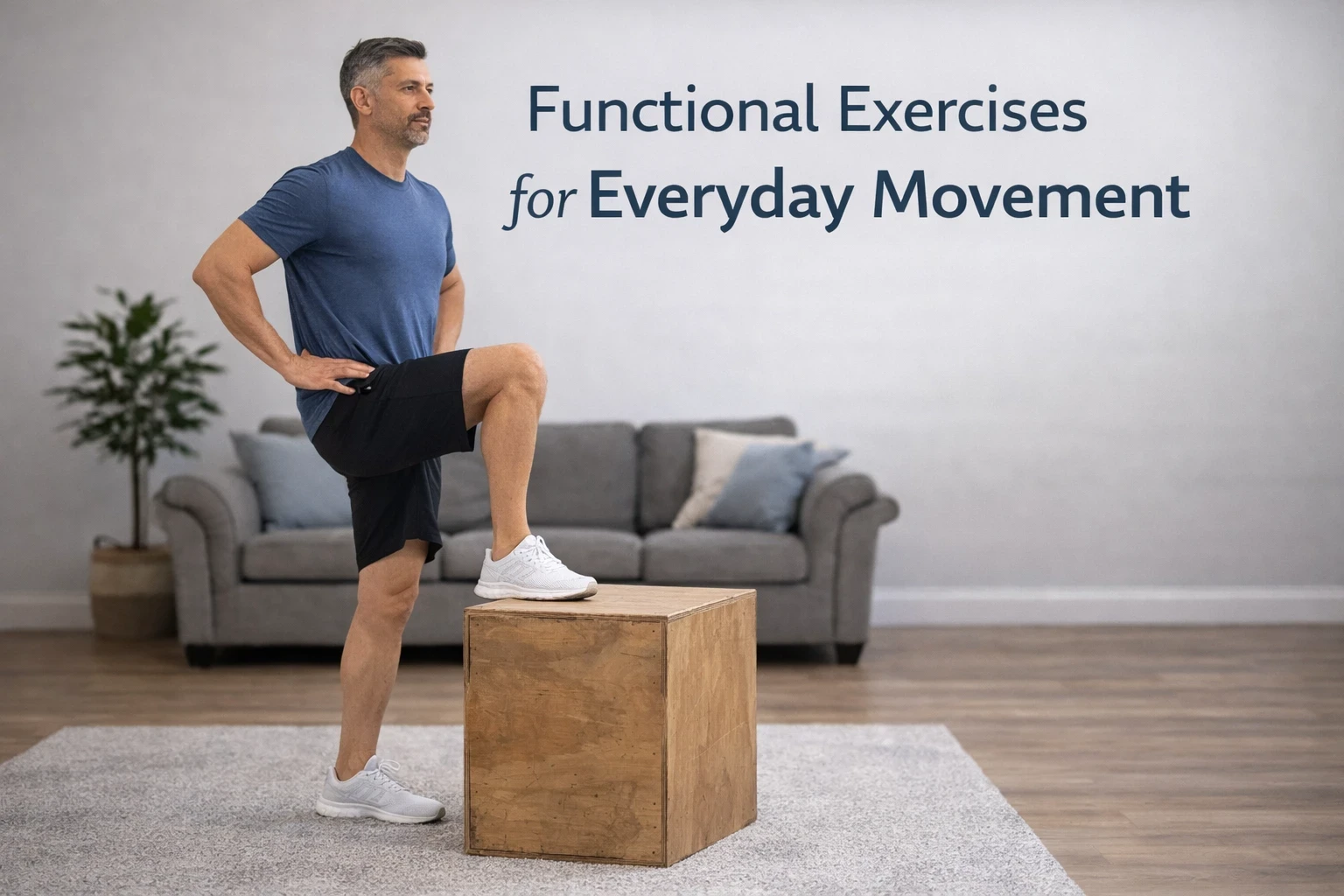
Functional Exercises for Daily Movement
Functional exercises help your body perform everyday tasks more efficiently.
Sit-to-Stand
Practice standing up from a chair without using your hands. This builds strength and coordination.
Step-Ups
Use a low step and step up with one leg, then step down slowly. This mimics real-life movement and improves hip strength.
For a deeper understanding of how movement affects recovery, you can explore movement, load, and pain sensitivity and how gradual progression supports healing.
Low-Impact Activities That Help
Some of the best exercises for hip pain aren’t traditional “exercises” at all but activities that keep you moving gently.
- Walking on even ground
- Swimming or water therapy
- Cycling with low resistance
These options reduce joint stress while keeping muscles active.
When to Be Cautious
Not all exercises are suitable for every type of hip pain. Avoid movements that cause sharp or worsening pain.
Start slowly and build up over time. Consistency matters more than intensity.
If your pain is linked to specific conditions like bursitis, you may benefit from learning more about natural support for hip bursitis alongside exercise.
Building a Simple Routine
A balanced routine using the best exercises for hip pain might look like this:
- 5 minutes of gentle stretching
- 10 minutes of strengthening exercises
- 5 minutes of mobility work
- Light walking or activity
Done regularly, this approach can significantly improve how your hips feel and function.

Additional Benefits Beyond Pain Relief
Exercise doesn’t just reduce pain—it improves overall health. Regular movement supports better posture, improves circulation, and enhances mood.
It also helps reduce fear around movement, which is often a hidden driver of ongoing discomfort.
A Balanced Perspective
While exercise is highly effective, it’s not an instant fix.
Progress takes time, and results often come gradually. The goal is to build resilience in your body rather than chase quick relief.
Listening to your body, staying consistent, and gradually increasing activity levels will give you the best chance of long-term improvement.
FAQ: Best Exercises for Hip Pain
What is the best exercise for hip pain?
Glute bridges and gentle stretches are among the best starting points because they strengthen and loosen key muscles.
How often should I do hip exercises?
Aim for 4–5 times per week, depending on your comfort level and recovery.
Can exercise make hip pain worse?
Yes, if done incorrectly or too aggressively. Always start slowly and avoid sharp pain.
Is walking good for hip pain?
Yes, walking is one of the best low-impact activities for improving hip function.
How long does it take to see results?
Most people notice improvements within a few weeks of consistent exercise.
Scientific Studies
https://pubmed.ncbi.nlm.nih.gov/28504080/
https://pubmed.ncbi.nlm.nih.gov/30747379/