
Best Herbal Supplements For Sleep How They Work
Best Herbal Supplements for Sleep
Best herbal supplements for sleep are becoming a popular option for people struggling with restless nights, poor sleep quality, or difficulty falling asleep.
Many individuals prefer natural approaches that support the body’s internal rhythms rather than relying solely on medication.
This guide explores how these supplements work, which ones are most commonly used, and how they may fit into a balanced sleep routine.

What Are Herbal Supplements for Sleep?
Herbal supplements for sleep are plant-based compounds traditionally used to promote relaxation, calm the nervous system, and support deeper sleep cycles.
Unlike pharmaceutical sleep aids, they often work gently by influencing natural processes such as hormone balance and stress regulation.
For a broader understanding of how sleep connects to discomfort and recovery, explore natural remedies for pain and sleep.
How Herbal Supplements for Sleep Work
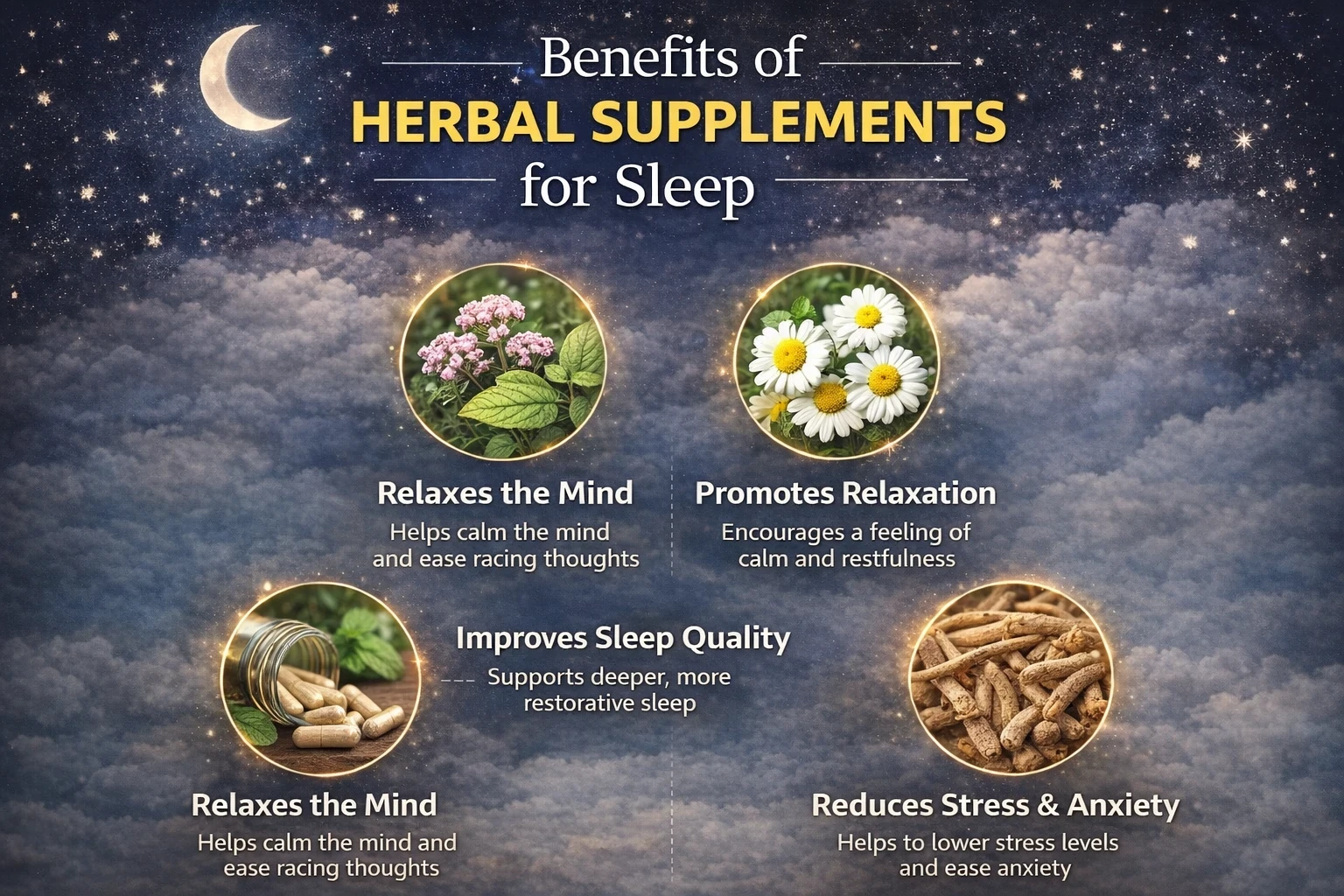
Herbal supplements for sleep typically support the body in three key ways:
- Encouraging relaxation by calming the nervous system
- Supporting natural melatonin production
- Reducing stress hormones like cortisol
Some herbs interact with neurotransmitters such as GABA, which helps slow down brain activity and prepare the body for rest.
Others may improve sleep quality indirectly by easing tension, discomfort, or mental overstimulation.
Most popular Herbal Supplements for Sleep
Let’s take a more detailed look at the more popular options:
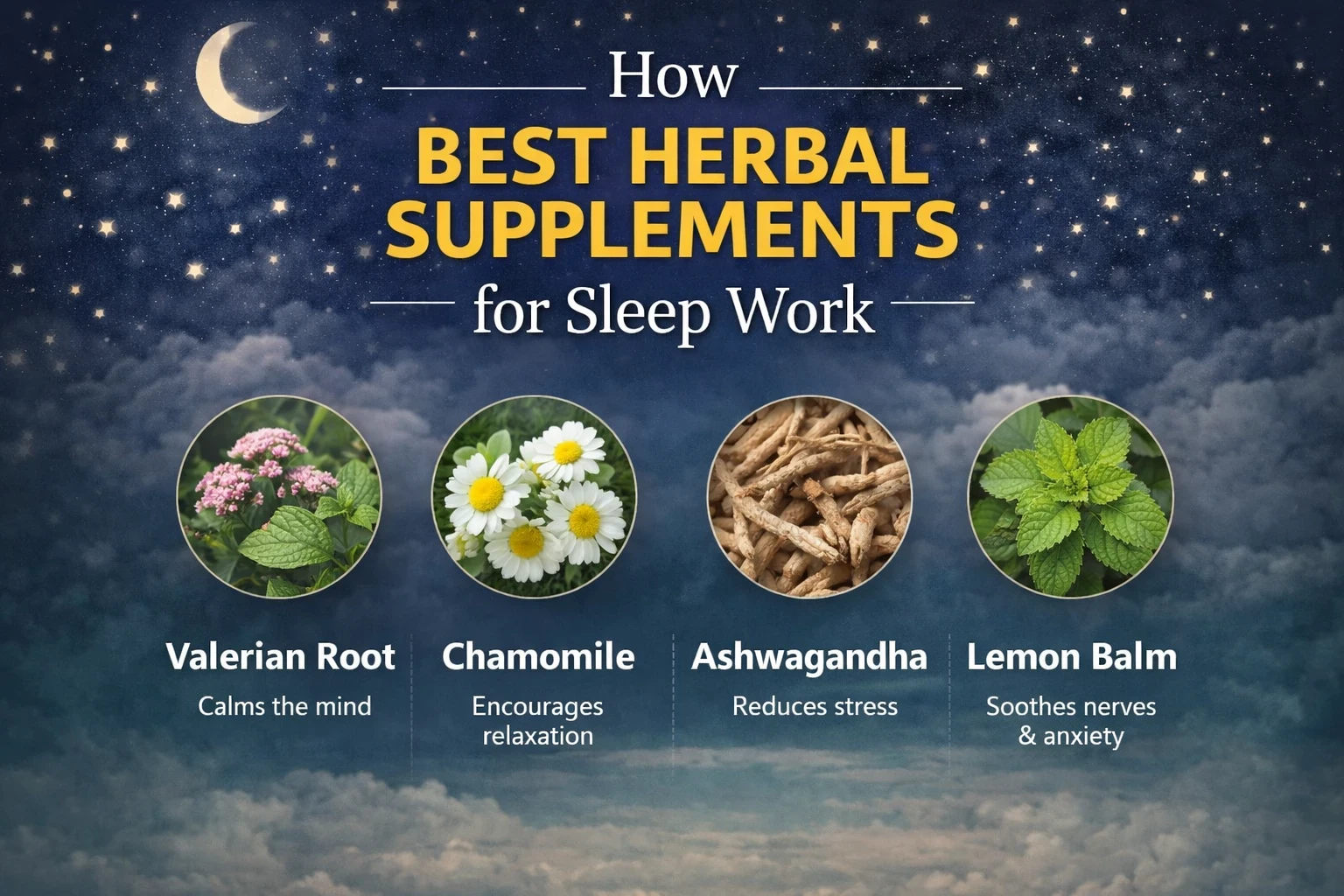
1. Valerian Root
Valerian root is one of the most researched herbal sleep aids. People have reported that valerian root helps reduce the time getting to sleep thus improving overall sleep quality.
2. Chamomile
Chamomile is commonly consumed as a tea but is also available in supplement form. It contains antioxidants that may promote relaxation and reduce mild anxiety.
3. Ashwagandha
Ashwagandha is an adaptogenic herb often used in Ayurveda. It helps the body manage stress, which can be a major barrier to quality sleep.
4. Passionflower
Passionflower may increase GABA levels in the brain, helping calm racing thoughts and promote a more restful state.
5. Lemon Balm
Lemon balm is known for its calming effects and is often combined with other herbs to support relaxation and sleep.
Conditions That May Benefit
Supplements of a herbal nature for sleep may be helpful for people experiencing:
- Stress-related insomnia
- Mild anxiety affecting sleep
- Irregular sleep patterns
- Sleep disturbances linked to chronic discomfort
If sleep issues are linked to long-term conditions, understanding the root cause is important. You can explore more in understanding pain persistence.

How to Use Herbal Supplements Safely
While herbal options are generally considered gentle, it is still important to use them correctly:
- Begin with a low dosage and watch for any changes in how your body responds.
- Avoid combining multiple supplements without guidance
- Take supplements 30–60 minutes before bedtime
- Maintain a consistent sleep routine
If you are unsure how lifestyle factors influence your sleep, check persistent pain.
Supporting Better Sleep Naturally
Herbal supplements tend to work best when combined with healthy habits. Consider adding:
- A consistent sleep schedule
- Reduced screen time before bed
- Relaxation techniques such as breathing exercises
- A comfortable sleep environment
These lifestyle factors can significantly enhance the effects of the best herbal supplements for sleep.
Secondary Benefits of Herbal Sleep Support
Many herbal supplements offer additional benefits beyond sleep, including:
- Reduced stress and anxiety
- Improved mood balance
- Better recovery from physical strain
- Support for overall nervous system health
This makes them appealing for people looking to improve both sleep and general wellbeing.
Limitations and Realistic Expectations
It’s important to understand that supplements from herbs are not instant solutions.
Results can vary depending on the individual, lifestyle, and underlying causes of sleep problems.
Some people may notice improvements within days, while others may require consistent use over several weeks.
Safety and Quality Considerations
When choosing the best herbal supplements for sleep, quality matters:
- Look for third-party tested products
- Choose reputable brands
- Avoid unnecessary additives or fillers
- Check for clear ingredient labeling
If you are taking medication or have underlying health conditions, it is always wise to seek professional advice before starting new supplements.
A Balanced Perspective
Supplements from herbs for sleep can be a valuable part of a broader sleep strategy.
However, they work best when combined with healthy habits, stress management, and an understanding of what is disrupting sleep in the first place.
Natural solutions are not about quick fixes—they are about supporting the body in a sustainable and balanced way.
Frequently Asked Questions
What are the best herbal supplements for sleep?
Supplements for sleep typically include valerian root, chamomile, ashwagandha, passionflower, and lemon balm.
These herbs are commonly used to promote relaxation and support natural sleep cycles without harsh side effects.
How long do herbal supplements take to work?
Some people notice improvements within a few days, while others may need 1–2 weeks of consistent use.
Supplements to help with sleep often work gradually by supporting the body’s natural rhythms rather than forcing sleep.
Are herbal sleep supplements safe to use every night?
Most herbal options are considered safe for short-term nightly use when taken as directed.
However, it’s a good idea to take breaks and avoid long-term reliance without professional advice.
Can herbal supplements replace sleeping pills?
The best herbal supplements for sleep may help reduce the need for sleeping pills in mild cases, but they are not a direct replacement for prescription medication.
Always consult a healthcare professional before making changes.
Do herbal supplements help with anxiety-related sleep problems?
Yes, many herbs like ashwagandha and passionflower are known for their calming effects.
They may help reduce anxiety, which can make it easier to fall and stay asleep.
Can I combine different herbal supplements for sleep?
Some supplements are combined in formulas, but mixing multiple herbs on your own should be done cautiously.
Start with one option and assess how your body responds before adding others.
Are there any side effects?
Side effects are usually mild but may include drowsiness, digestive upset, or headaches in some individuals. Choosing high-quality products can help reduce the risk.
When is the best time to take herbal sleep supplements?
Most herbal supplements should be taken 30–60 minutes before bedtime to allow their calming effects to take hold.
Do herbal supplements improve deep sleep?
Supplements for sleep may support deeper, more restorative sleep by calming the nervous system and reducing nighttime awakenings.
Who should avoid herbal sleep supplements?
People who are pregnant, breastfeeding, taking medication, or managing chronic health conditions should consult a healthcare provider before using herbal supplements.
Scientific Studies
https://pubmed.ncbi.nlm.nih.gov/15649737/
https://pubmed.ncbi.nlm.nih.gov/19593179/