Reasons for Persistent Pain
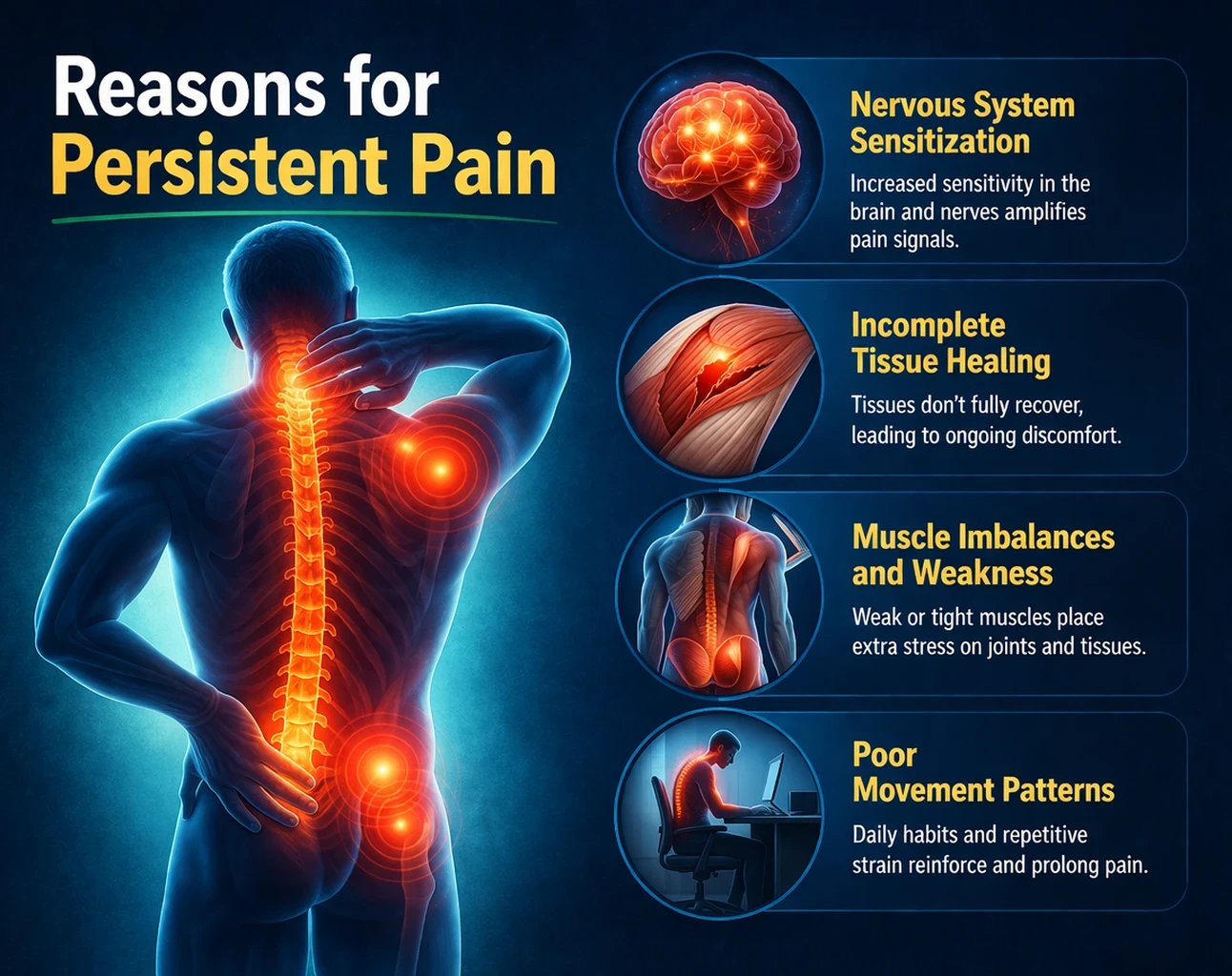
Reasons for persistent pain are often more complex than a single injury or condition. Many people expect pain to fade once tissues heal, yet for some, discomfort continues for months or even years. Understanding why this happens is the first step toward managing symptoms and improving quality of life.
What Is Persistent Pain?
Persistent pain, sometimes called chronic pain, is pain that lasts longer than the typical healing time—usually beyond three months.
Unlike acute pain, which signals immediate injury, persistent pain often reflects changes in how the body and nervous system process signals.
For a deeper breakdown of long-term pain patterns, explore chronic pain treatment complete guide to relief recovery and long-term management.
How Pain Becomes Persistent
The body’s pain system is designed to protect you. However, when pain continues, the system itself can become more sensitive. This process, known as central sensitization, means that even normal movements or mild stimuli may feel painful.
Over time, the brain and nervous system can “learn” pain, making it stick around even after tissues have healed.
Common Reasons for Persistent Pain
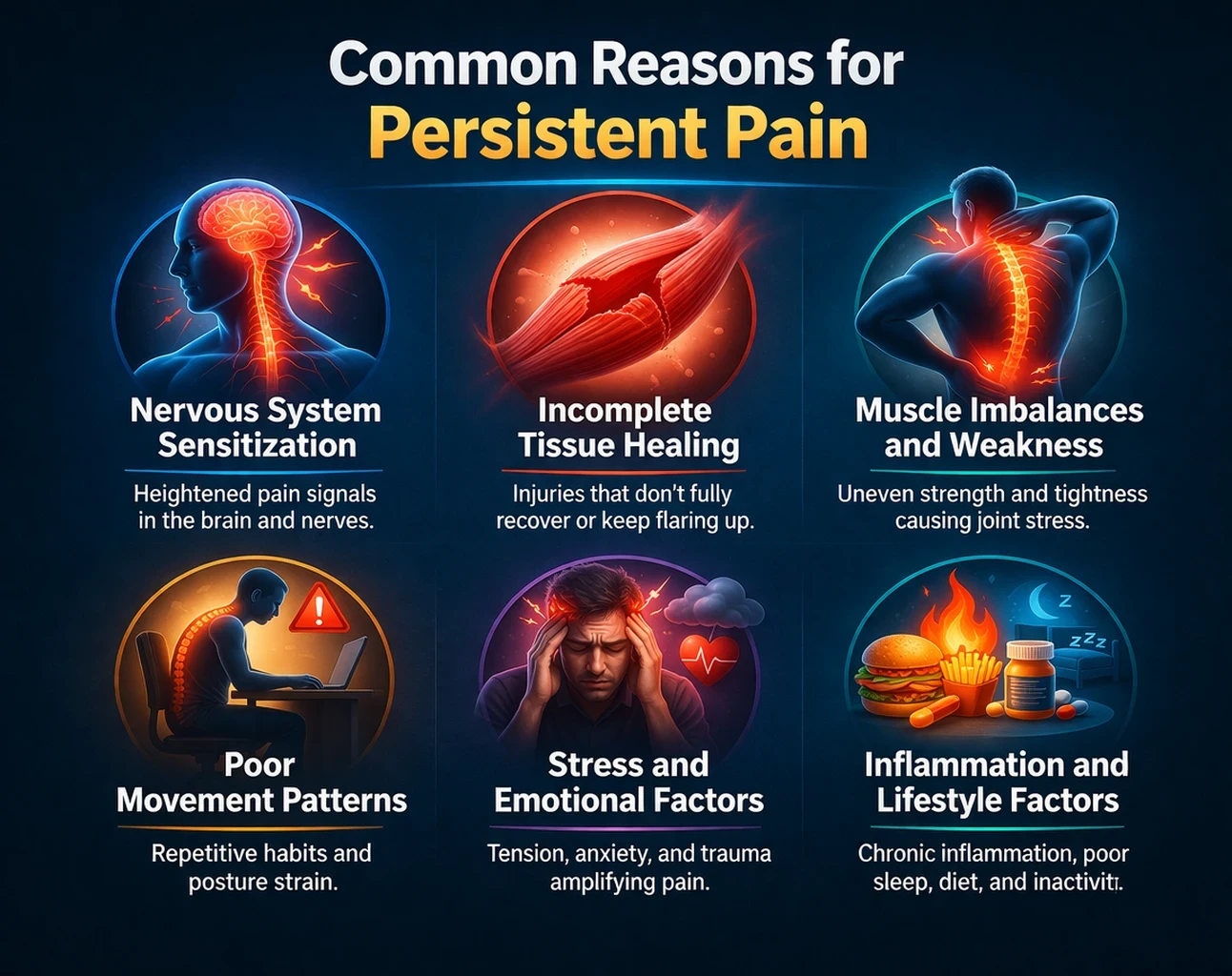
1. Nervous System Sensitization
One of the most important reasons for persistent pain is increased sensitivity in the nervous system. When pain signals are repeatedly triggered, the brain becomes more responsive.
This can lead to:
- Pain lasting longer than expected
- Increased response to small triggers
- Pain spreading beyond the original area
You can learn more about this process in nerve pain treatment guide for long-term relief.
2. Incomplete Tissue Healing
Sometimes tissues don’t fully recover due to:
- Repeated strain
- Poor blood supply
- Ongoing inflammation
Conditions like tendon injuries or joint issues can quietly persist, contributing to ongoing discomfort.
3. Muscle Imbalances and Weakness
Weak or tight muscles can place uneven stress on joints and tissues. Over time, this imbalance becomes one of the hidden reasons for persistent pain.
For example:
- Tight hip flexors can contribute to lower back pain
- Weak glutes can affect hip stability
- Poor posture can strain the neck and shoulders
Addressing these imbalances is key to long-term improvement.
4. Poor Movement Patterns
The way you move every day matters more than most people realise. Repetitive habits like sitting too long, lifting incorrectly, or favoring one side of the body can reinforce pain.
Explore best exercises for hip pain relief and movement correction to understand how movement can either worsen or reduce symptoms.
5. Stress and Emotional Factors
Stress doesn’t just affect your mind—it also impacts your body. Emotional strain can increase muscle tension and amplify pain signals.
Common effects include:
- Tight shoulders and neck
- Increased sensitivity to discomfort
- Reduced pain tolerance
This connection is one of the most overlooked reasons for persistent pain.
6. Inflammation and Lifestyle Factors
Chronic low-grade inflammation can keep pain active in the body. Diet, sleep, and activity levels all play a role.
Key contributors include:
- Poor nutrition
- Lack of sleep
- Sedentary lifestyle
For more on this, see natural remedies for inflammation and pain management.
7. Previous Injuries
Old injuries can leave lasting effects even after apparent recovery. Scar tissue, altered movement patterns, or lingering sensitivity may continue to trigger discomfort.
This is why pain sometimes returns in the same area months or years later.
8. Fear of Movement
When pain sticks around, it’s natural to avoid movement. However, too much avoidance can weaken muscles and increase stiffness, creating a cycle.
This fear-avoidance pattern is one of the key reasons for persistent pain continuing longer than expected.
The Role of the Brain in Persistent Pain
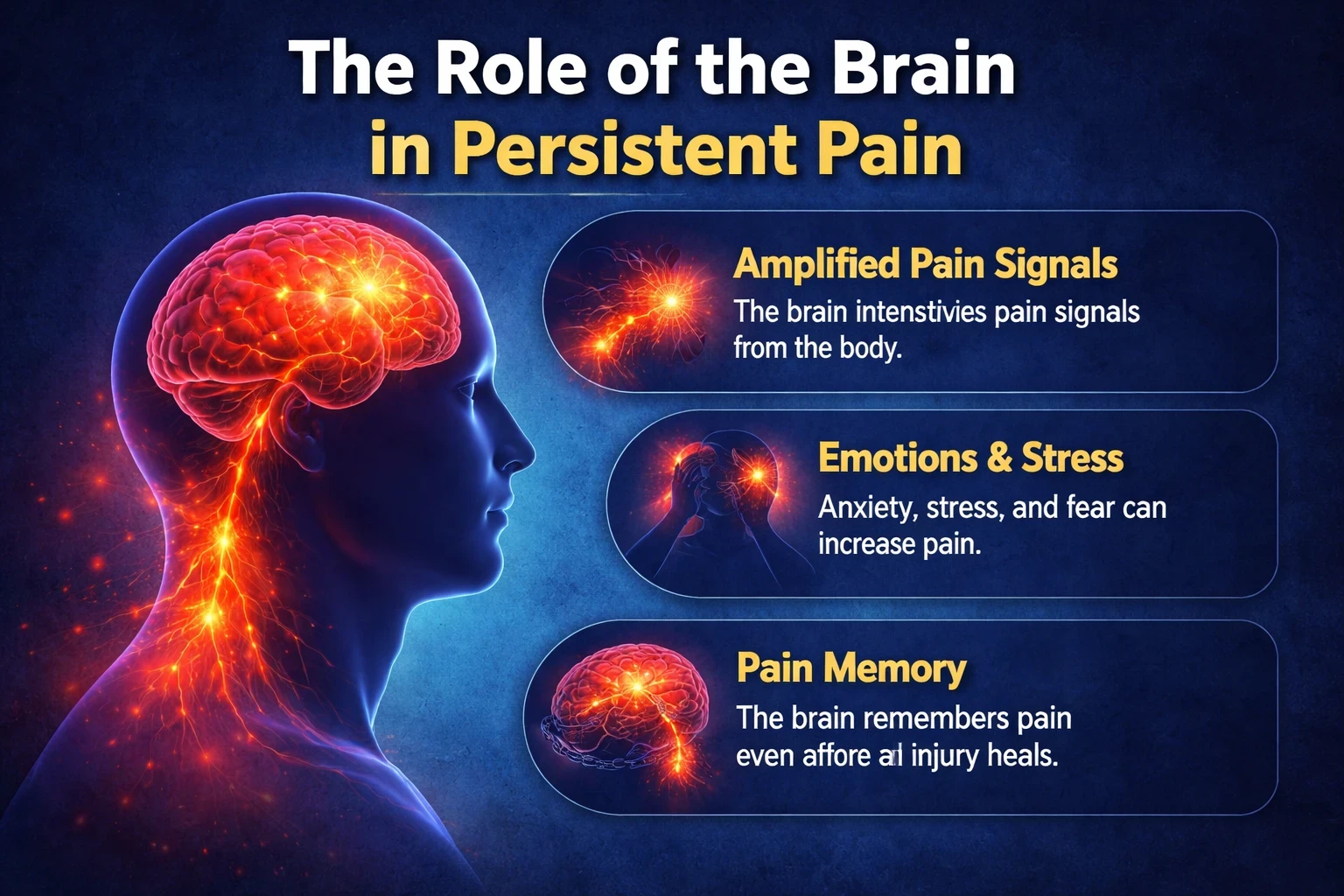
Pain is not just physical—it’s also processed in the brain. Over time, the brain can become more efficient at producing pain signals, even when there’s no clear injury.
This doesn’t mean the pain isn’t real. It simply means the system has become overprotective.
Understanding this can help reduce fear and improve recovery outcomes.
Conditions Commonly Linked to Persistent Pain
Several conditions are often associated with long-term pain, including:
- Back pain
- Arthritis
- Fibromyalgia
- Nerve-related pain
- Hip and joint issues
Each of these may involve a combination of the reasons for persistent pain discussed above.
How to Break the Pain Cycle
While persistent pain can feel overwhelming, there are ways to reduce its impact.
Gradual Movement and Exercise
Gentle, consistent movement helps retrain the body and reduce sensitivity. The goal is not to push through pain, but to build tolerance gradually.
Improving Strength and Flexibility
Balanced muscles support joints and reduce strain. Strength training and stretching can address underlying imbalances.
Stress Management
Techniques such as breathing exercises, mindfulness, or relaxation can help calm the nervous system.
Better Sleep Habits
Sleep is essential for recovery. Improving sleep quality can significantly reduce pain sensitivity.
Supportive Tools and Products
Some people benefit from supportive options such as:
These tools don’t fix everything, but they can support a broader recovery plan.
For Heat or cold therapy products Go Here.
For TENS machines Go Here.
For Orthopedic supports Go Here.
For Nutritional Supplements Go Here.
The Importance of a Long-Term Approach
There is rarely a quick fix when it comes to the reasons for persistent pain. Instead, improvement comes from consistent, small changes over time.
This includes:
- Building strength gradually
- Improving daily habits
- Reducing stress triggers
- Staying active without overdoing it
Patience plays a big role in recovery.
Balanced Perspective
It’s important to recognise that persistent pain is real, even when scans or tests don’t show clear damage. At the same time, pain does not always mean ongoing harm.
By understanding the reasons for persistent pain, you can shift from fear and frustration toward a more practical, manageable approach.
Scientific Studies
https://pubmed.ncbi.nlm.nih.gov/28192789/
https://www.ncbi.nlm.nih.gov/pmc/articles/PMC5476783/