Chronic health pain conditions explained
Chronic Pain Health Conditions Explained Clearly
Chronic Pain Health Conditions affect millions of people every day. Chronic pain can change how the body feels, moves, and reacts. They can also affect mood, sleep, and daily confidence. Many people live with pain for years without clear answers.
These types of pain health conditions are usually defined as pain that lasts longer than three months. This pain continues even after normal healing should have happened. In some cases, there was no obvious injury. The pain still feels very real. It is not imagined or exaggerated.
People that suffer daily often feel misunderstood. Friends may not see visible signs. Scans may appear normal. This does not mean nothing is wrong. What it does mean is that changes in the pain system have occurred.
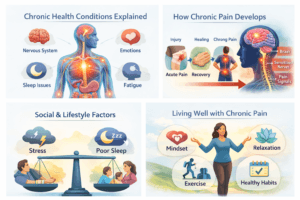
Pain Is Not Always Damage
Pain does not always equal injury. Pain is a protective signal created by the brain. The brain decides when pain is needed. It uses information from the body, nerves, and past experiences.
In chronic pain health conditions, this system becomes too protective. The brain stays on high alert. Safe movements can feel dangerous. Normal sensations can feel painful.
This process is called sensitisation. It means the nervous system reacts more strongly than needed. Sensitisation is common in long-lasting pain.
How Chronic Pain Develops
Many of these conditions begin with a real injury. This could be a strain, surgery, illness, or inflammation. Early pain is helpful. It encourages rest and healing.
Over time, tissues heal. Pain should reduce. In chronic pain, this does not always happen. The nervous system keeps sending danger signals.
Stress plays a role. Fear plays a role. Poor sleep also plays a role. The brain learns pain patterns. These patterns can stay active.
This does not mean damage is ongoing. What it does mean is that the pain system is overactive.
Common Chronic Pain Health Conditions
There are many chronic pain health conditions. Some are more widely known. Others are less understood.
Lower back pain is very common. Pain may continue long after healing. Imaging often shows no clear cause.
Arthritis can cause long-term pain. Sometimes pain levels are higher than joint damage suggests.
Fibromyalgia causes widespread pain. Fatigue is common. Sensitivity to touch is common.
Migraine is another chronic pain condition. It involves head pain and nervous system sensitivity.
Nerve pain can also become chronic. It may feel sharp, burning, or electric.
These chronic pain health conditions often overlap. Having one of these conditions can mean getting another one.
The Nervous System and Pain
The nervous system controls pain signals. It includes the brain, spinal cord, and nerves. In chronic pain health conditions, this system changes.
Nerves may fire more easily. The spinal cord may amplify signals. The brain may interpret signals as threats.
Pain becomes less about tissue damage. It becomes more about protection. This explains why pain can persist without injury.
Understanding this reduces fear. Fear often increases pain.
Emotions and Chronic Pain
Emotions affect pain levels. Anxiety increases pain sensitivity. Low mood does the same.
Pain also affects emotions. Living with pain is exhausting. It can lead to frustration and isolation.
This creates a cycle. Pain increases stress. Stress increases pain.
Breaking this cycle is possible. Education helps. Support helps.
Sleep and Pain Sensitivity
Sleep problems are very common in chronic pain health conditions. Pain disrupts sleep. Poor sleep increases pain.
This cycle can feel endless. Even small sleep improvements can help.
Regular sleep times matter. Reducing screen use helps. Calm routines support recovery.
Better sleep often reduces pain intensity.
Movement and Safety
Many people with chronic pain health conditions such as arthritis fear movement. They worry about damage. This fear is understandable.
Avoiding movement can increase sensitivity. Muscles become weaker. Confidence reduces.
Gentle movement helps retrain the nervous system. Walking is a good start. Stretching can help.
The goal is safety, not pushing through pain. Progress should be slow and controlled.
The Role of Thoughts and Beliefs
Beliefs influence pain. If pain is seen as dangerous, the brain reacts strongly. If pain is understood, fear reduces.
Learning about chronic pain health conditions changes how pain feels. Knowledge calms the nervous system.
Pain education is powerful. It reduces threat. It improves confidence.
Social and Lifestyle Factors
Social support matters. Feeling understood reduces pain intensity. Isolation increases distress.
Daily habits matter too. Nutrition supports nervous system health. Hydration supports recovery.
Stress management helps. Breathing exercises help. Quiet time helps.
Small changes add up over time.
Living Well With Chronic Pain
Chronic pain health conditions do not define a person. Life can still be meaningful. Progress is possible.
Pain may not disappear completely. But it can become less intense. It can become less controlling.
Understanding pain is the first step. Removing fear is the second step. Gentle action is the third step.
Chronic pain should improve when the nervous system feels safe.
Final Thoughts
Chronic pain health conditions are complex but understandable. They involve the brain, nerves, and lived experience. Pain is real, even without damage.
Clear information reduces fear. Calm movement rebuilds confidence. Support improves outcomes.
Living with chronic pain is challenging. But understanding changes everything.https://beyond-pain-relief.com/arthritis-pain-relief/
Scientific Studies
 Previous Post
 Next Post