Fibromyalgia And Chronic Pain Sleep Issues
Fibromyalgia and Chronic Pain Sleep Issues
Fibromyalgia and chronic pain sleep issues are not simply about difficulty falling asleep.
Instead, they often sit at the center of the condition itself.
- Even after eight hours in bed, the body may feel stiff, foggy, and unusually sensitive.
As a result, exhaustion becomes part of daily life.
However, understanding the link between pain and sleep can reduce frustration and guide practical improvements.

What Are Fibromyalgia and Chronic Pain Sleep Issues?
What are Fibromyalgia and chronic pain sleep issues.?
Fibromyalgia is a long-term pain condition marked by widespread tenderness and nervous system hypersensitivity. In addition, disrupted sleep is one of its most persistent features.
People experiencing fibromyalgia and chronic pain sleep issues commonly report:
- Difficulty falling asleep
- Frequent waking during the night
- Light, non-restorative sleep
- Morning stiffness and fatigue
If you want a clearer picture of how widespread symptoms can feel, see fibromyalgia pain symptoms: widespread and confusing.
Because deep sleep phases are often interrupted, the body misses essential repair time. Consequently, muscles remain tender and energy stores stay low.
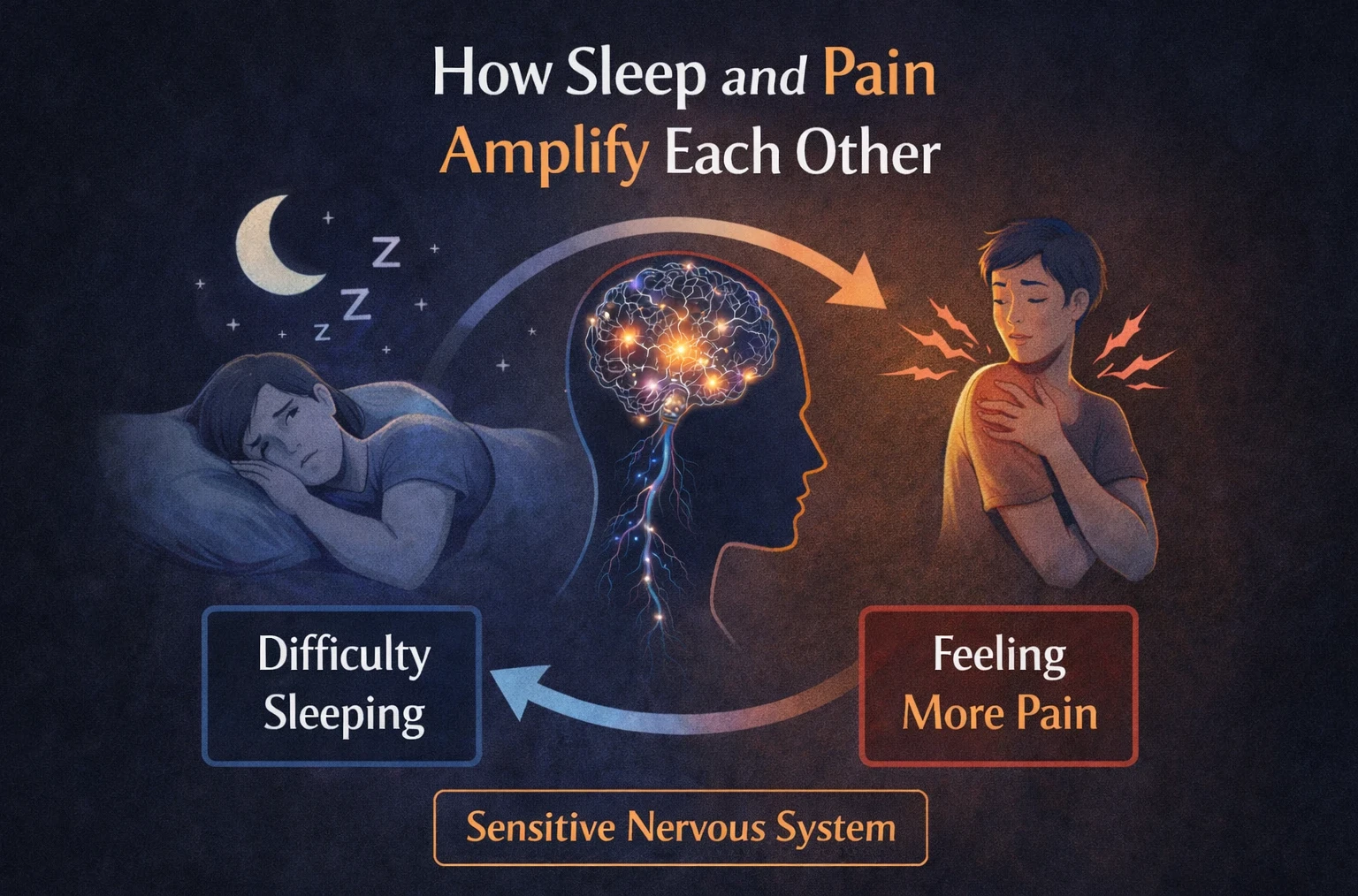
How Sleep and Pain Amplify Each Other
Sleep and pain work in a two-way loop. When sleep quality drops, pain sensitivity increases the next day. Meanwhile, higher pain levels make it harder to fall and stay asleep.
This nervous system sensitivity is explained in more detail in fibromyalgia pain explanation.
Research shows that fragmented deep sleep reduces growth hormone release.
As a result, tissue repair slows. Over time, this creates a reinforcing cycle of:
- Increased pain sensitivity
- Lower stress tolerance
- Mood fluctuations
- Reduced physical resilience
Therefore, improving even one part of the sleep cycle can gradually lower overall symptom intensity.
Why Fatigue Feels So Heavy
Fatigue linked to fibromyalgia is not ordinary tiredness. Instead, it feels like energy never fully recharges. Even after resting, exhaustion lingers.
Because fibromyalgia and chronic pain sleep issues interfere with restorative stages, the brain often remains partially alert overnight.
Consequently, mornings can feel overwhelming.
In addition, cognitive clarity may decline. Concentration, memory, and decision-making can suffer. Over time, this mental strain adds another layer of stress.
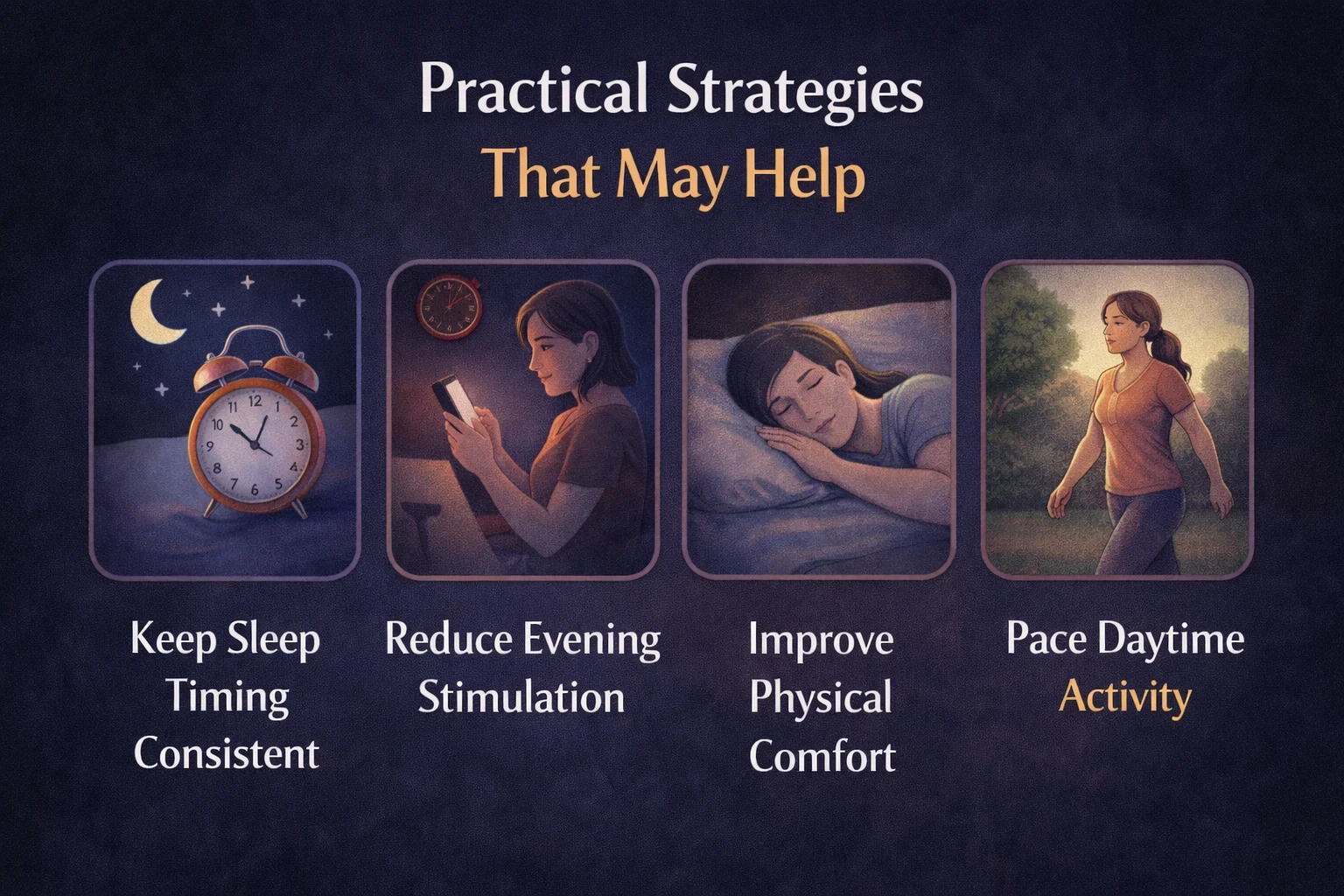
Practical Strategies That May Help
There is no single solution. However, steady adjustments often create measurable improvement.
1. Keep Sleep Timing Consistent
Going to bed and waking at roughly the same time helps regulate circadian rhythm. Even on weekends, maintaining consistency supports nervous system balance.
2. Reduce Evening Stimulation
Bright screens and late-night stimulation delay sleep onset. Instead, calming habits prepare the body for rest:
- Gentle stretching
- Warm showers
- Slow breathing
- Dim lighting
Together, these signals encourage deeper sleep.
3. Improve Physical Comfort
Pain that spikes at night needs direct attention. Supportive pillows, mattress adjustments, and light heat therapy may reduce discomfort.
You can explore practical options in fibromyalgia pain relief products: what helps and what to expect.
Small changes in comfort often reduce fibromyalgia and chronic pain sleep issues over time.
4. Pace Daytime Activity
Although it may seem counterintuitive, gentle daytime movement improves nighttime sleep pressure.
Short walks or light mobility exercises often deepen rest later.
However, overexertion can worsen symptoms. Therefore, pacing remains essential.
For broader medical and non-medical approaches, see treatment options for fibromyalgia pain.
The Role of Stress
Stress strongly influences fibromyalgia and chronic pain sleep issues.
When stress hormones remain elevated, the body struggles to enter deep sleep stages.
Therefore, calming the nervous system is not optional — it is therapeutic.
Helpful approaches include:
- Guided relaxation
- Journaling before bed
- Gentle mindfulness
- Professional support when needed
Even short daily relaxation practices can shift sleep quality gradually.
When to Seek Further Evaluation
Sometimes additional sleep disorders overlap with fibromyalgia, including sleep apnea or restless legs syndrome.
If loud snoring, gasping, or intense leg discomfort occurs at night, medical evaluation is appropriate.
Addressing overlapping conditions may significantly reduce chronic pain sleep issues.
A Balanced Perspective
There is no instant cure for chronic pain sleep issues related to Fibromyalgia.
Nevertheless, progress is possible. Small habits practiced consistently often outperform dramatic changes.
Most importantly, disrupted sleep is not a personal weakness.
Rather, it reflects a sensitive nervous system that needs steadiness and support.
With pacing, stress regulation, physical comfort adjustments, and appropriate guidance, sleep can improve gradually — and gradual improvement still counts.
Scientific Studies
- Nonrestorative sleep and fibromyalgia symptom severity
- Sleep disturbance and pain sensitivity in fibromyalgia