Fibromyalgia Pain Symptoms
Fibromyalgia pain symptoms can feel confusing, widespread, and unpredictable.
For many people, the pain moves around the body, shifts in intensity, and comes with fatigue or “brain fog.”
Understanding fibromyalgia pain symptoms clearly can reduce fear and help you respond in a supportive, steady way rather than constantly chasing the pain.
Fibromyalgia is considered a chronic pain condition that affects how the nervous system processes signals.
It is not simply muscle strain or joint damage.
The discomfort is real, but the driver is often sensitivity rather than structural injury.
What Are Fibromyalgia Pain Symptoms?
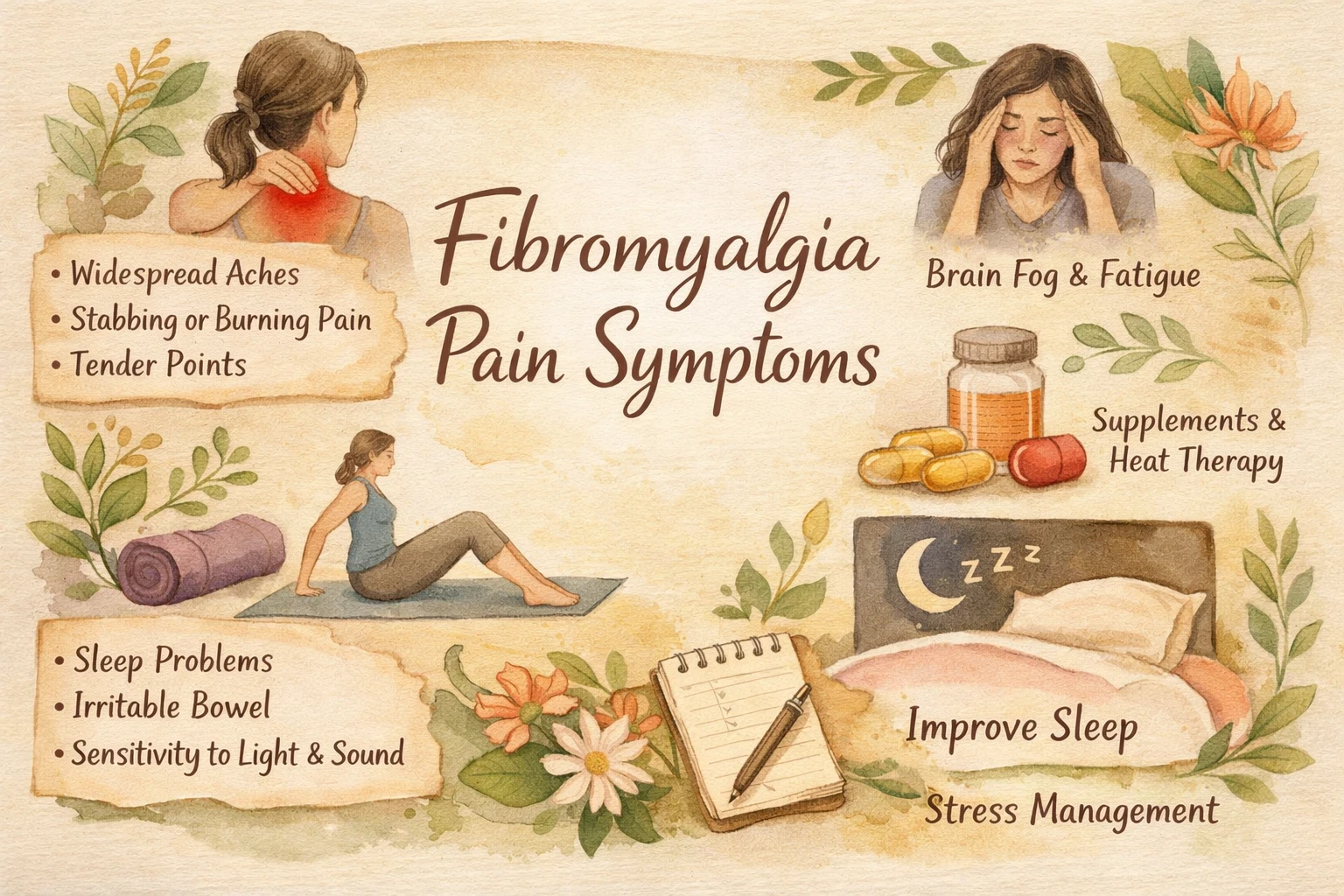
Fibromyalgia pain symptoms usually involve widespread aching on both sides of the body and above and below the waist.
The pain can feel:
• Deep and dull
• Burning or electric
• Stabbing in certain spots
• Tender to light pressure
• Worse after poor sleep
Many people also report stiffness in the morning, similar to arthritis, but without visible joint swelling.
To understand how long-term pain conditions behave, you may find it helpful to read: https://beyond-pain-relief.com/what-is-chronic-pain-a-clear-human-explanation/
Fibromyalgia fits within that broader picture of chronic pain sensitivity.
Common Associated Symptoms
Fibromyalgia pain symptoms rarely exist alone. They often come with:
• Persistent fatigue
• Unrefreshing sleep
• Brain fog (difficulty concentrating)
• Headaches
• Irritable bowel symptoms
• Sensitivity to light, sound, or temperature
This cluster can make everyday life feel heavier than it should.
Research suggests altered pain processing in the central nervous system plays a role.
A scientific overview can be found here: https://pubmed.ncbi.nlm.nih.gov/32370994/
Why the Pain Moves
One frustrating part of fibromyalgia pain symptoms is how the discomfort seems to migrate.
One day it is the shoulders.
The next it is the hips or legs.
This shifting pattern is typical of nervous system–driven pain.
It does not usually indicate new injury.
Instead, it reflects sensitivity levels rising and falling.
If you want a deeper look at how sensitivity develops, this article explains it clearly: https://beyond-pain-relief.com/movement-load-and-pain-sensitivity/
Understanding this can reduce the fear that something new is “going wrong” each time pain changes location.
Tender Points and Pressure Sensitivity
Historically, doctors used specific tender points to help diagnose fibromyalgia.
While diagnosis now focuses more on widespread pain and symptom patterns, many people still notice extreme tenderness in certain areas, including:
• Neck and shoulders
• Upper back
• Hips
• Knees
• Elbows Even light touch can feel amplified.
This does not mean the tissue is damaged. It reflects heightened signal processing.

Sleep and Fibromyalgia Pain Symptoms
Sleep disruption is one of the biggest amplifiers of fibromyalgia pain symptoms.
Poor-quality sleep increases nervous system reactivity, which can make pain feel louder the next day.
Look at ways to improve your nighttime routine, that can help a lot.
Small habits like consistent bedtimes, reducing late-night stimulation, and managing stress before bed can calm overall sensitivity.
You may also find this helpful: https://beyond-pain-relief.com/sleep-hygiene-tips-practical-habits-that-improve-sleep-quality/
Better sleep does not cure fibromyalgia, but it often lowers symptom intensity.
Movement: Gentle but Consistent
Many people fear movement when pain is widespread. However, complete rest can increase stiffness and sensitivity.
Gentle, consistent movement often helps:
• Walking
• Light stretching
• Swimming
• Low-impact strength work
• Yoga or tai chi
The key is pacing. Short sessions done regularly are more helpful than intense bursts followed by long rest periods.

Supportive Tools That May Help
Fibromyalgia pain symptoms are complex, and management usually involves layering strategies rather than relying on one fix.
Some people explore:
• Magnesium supplements (when appropriate)
• Omega-3 fatty acids
• Heat therapy
• Massage or myofascial release
• Cognitive behavioural strategies
Always discuss supplements or new treatments with a healthcare professional, especially if you are on medication.
Go to Amazon here for more information on supportive tools for fibromyalgia.
What Fibromyalgia Pain Symptoms Are Not
It is important to clarify what fibromyalgia pain symptoms typically are not:
• They do not usually cause joint damage
• Standard imaging tests may not show the condition
• They are not “all in your head”
• They are not a sign of progressive tissue breakdown
The absence of visible damage can make the condition harder to explain, but it does not invalidate the experience.
A Steadier Way Forward
Living with fibromyalgia pain symptoms can feel overwhelming, especially when the pain shifts or flares unexpectedly.
But patterns usually emerge over time. Helpful long-term strategies include:
• Pacing daily activity
• Prioritising sleep
• Managing stress levels
• Building gradual strength
• Staying socially connected
The aim is not perfection. It is consistency.
When fear decreases, the nervous system often settles.
When sleep improves, pain often softens.
When movement becomes predictable and safe, flare-ups can reduce in intensity.