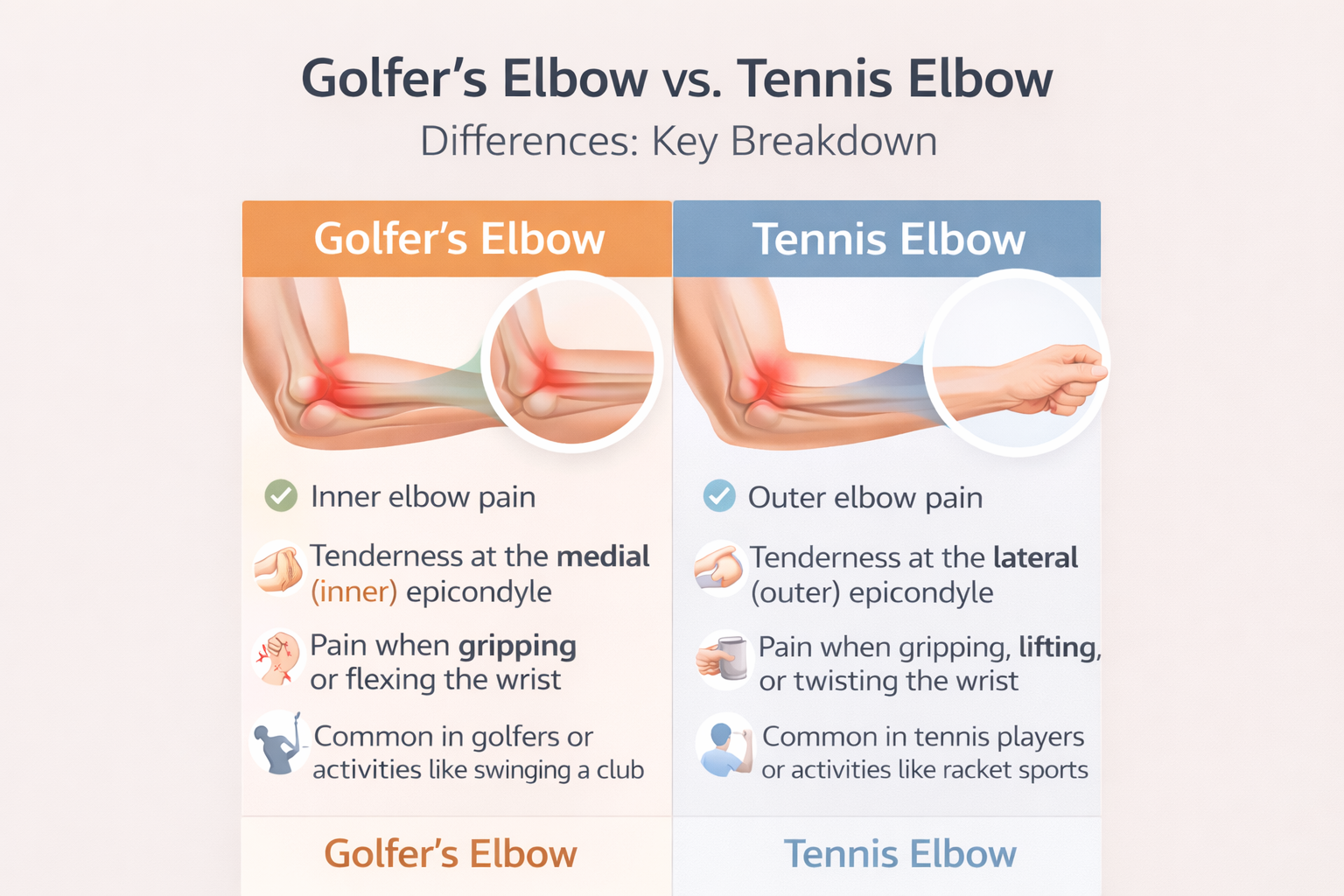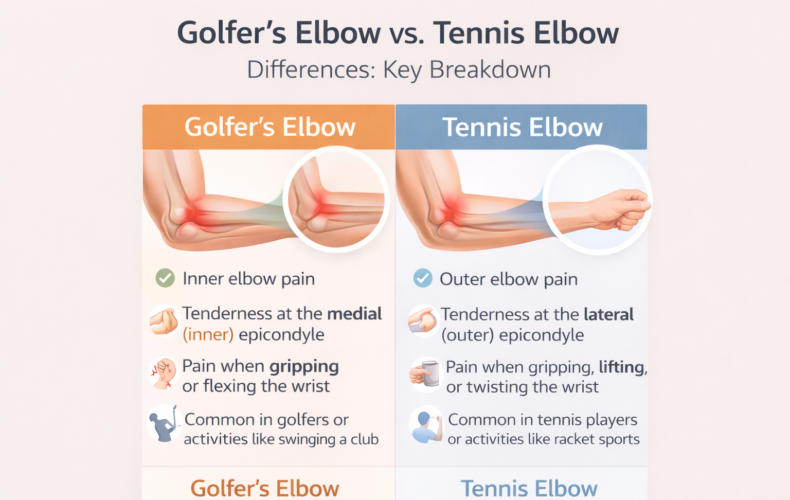
Golfers Elbow Vs Tennis Elbow Differences Which do you have.?
Golfers Elbow vs Tennis Elbow
Golfers elbow vs tennis elbow differences are often misunderstood, even though both conditions affect the elbow and can cause significant discomfort.
If you’ve ever felt pain when gripping, lifting, or even shaking hands, understanding these differences can help you choose the right recovery approach and avoid making symptoms worse. While the names suggest they are sports injuries, both conditions are far more common in everyday life.
Work habits, repetitive strain, and poor movement patterns are often the real cause.
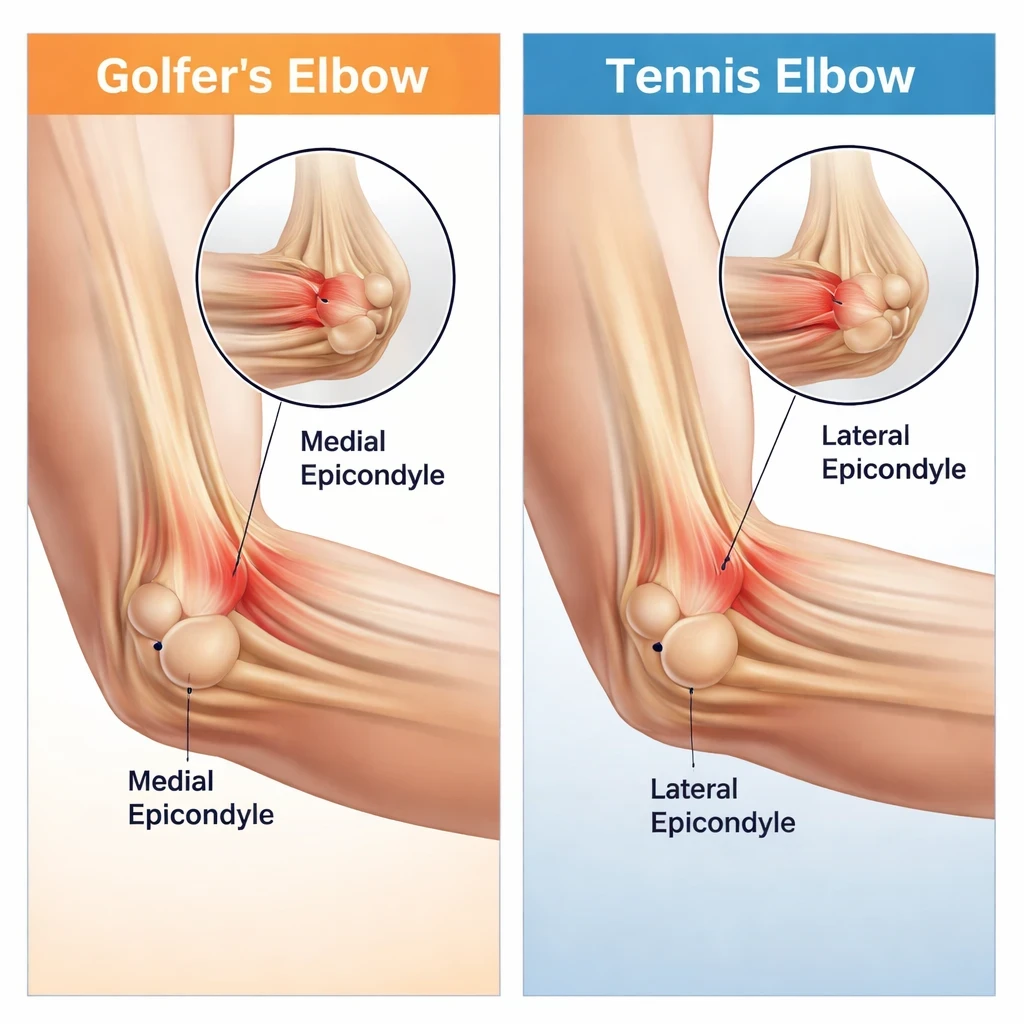
What Is Golfer’s Elbow?
Golfer’s elbow, medically known as medial epicondylitis, affects the inner side of the elbow.
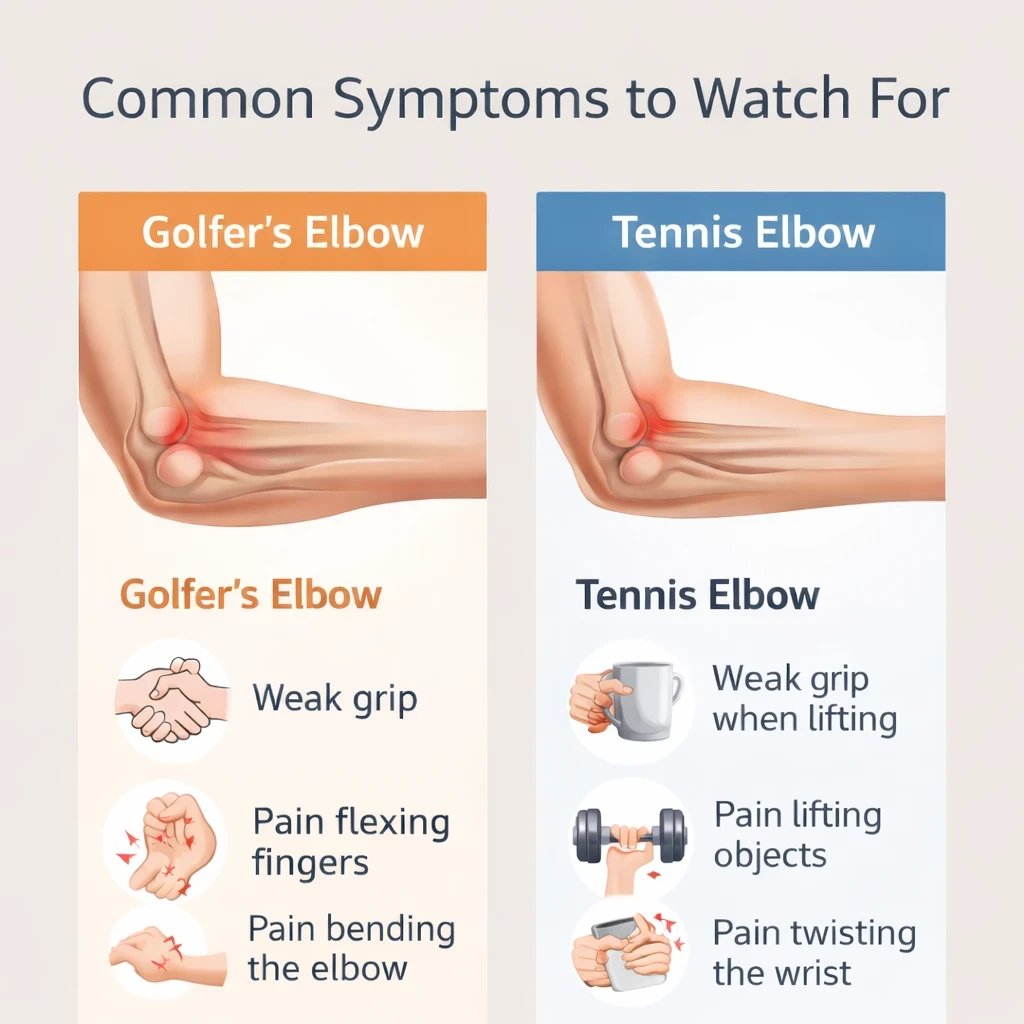
It develops when the tendons that attach to the medial epicondyle become overloaded due to repeated stress. Repetitive gripping Wrist flexion movements Lifting with poor form Gym or manual work Pain often spreads down the inside of the forearm and may worsen when bending the wrist or gripping tightly.
What Is Tennis Elbow?
Tennis elbow, or lateral epicondylitis, affects the outer side of the elbow.
It occurs when the tendons responsible for wrist extension become irritated or strained. Repetitive lifting or tool use Typing or mouse overuse Racquet sports with poor technique Overuse of forearm muscles Pain is usually felt on the outside of the elbow and can worsen when lifting objects or extending the wrist.
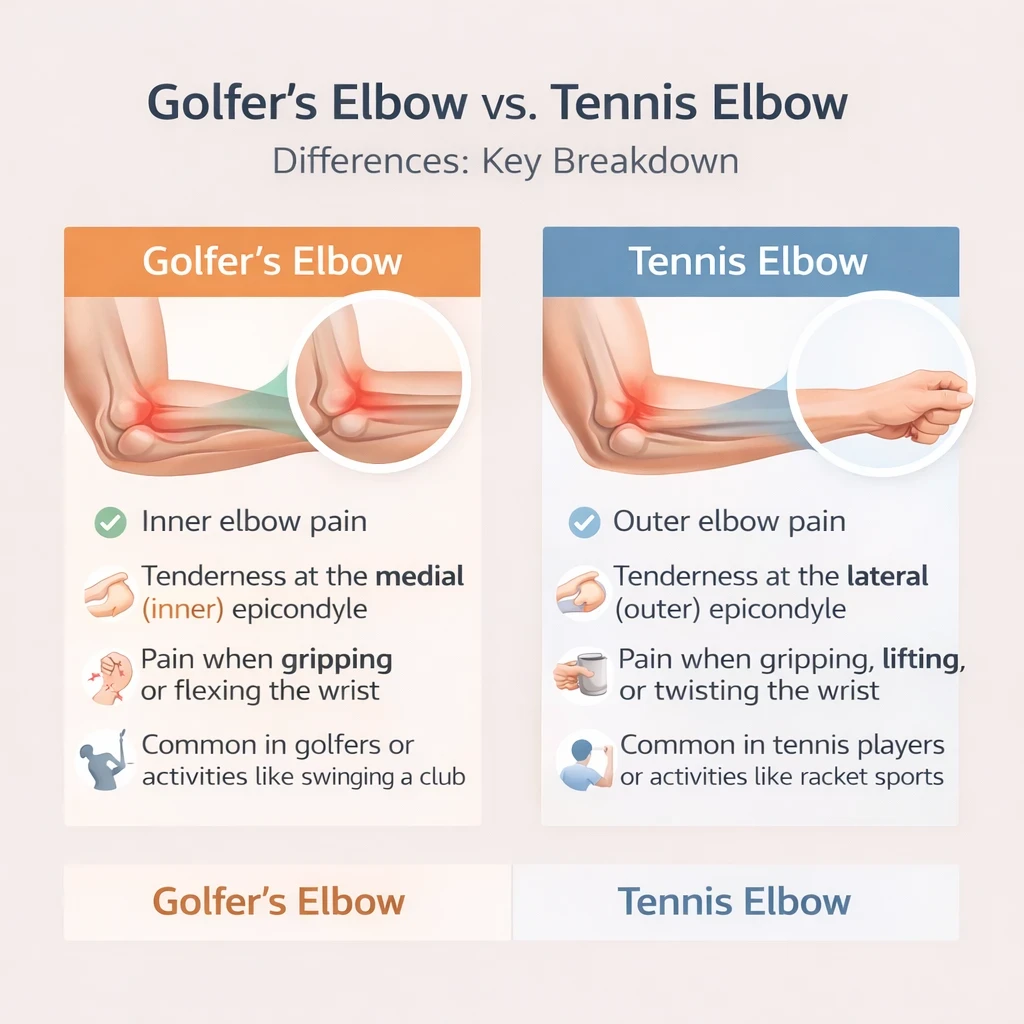
Golfers Elbow vs Tennis Elbow Differences (Key Breakdown)
Understanding the core Golfers elbow vs tennis elbow differences comes down to location, movement, and muscle involvement.
Pain Location Golfer’s elbow
→ Inner elbow
Tennis elbow
→ Outer elbow Movement
That Triggers Pain Golfer’s elbow
→ Pain with wrist flexion
Tennis elbow
→ Pain with wrist extension
Muscle Groups Involved Golfer’s elbow
→ Flexor muscles
Tennis elbow
→ Extensor muscles
Common Causes
Golfer’s elbow → Repetitive gripping and curling Tennis elbow → Repetitive lifting and extending
Why These Differences Matter
Recognising Golfers elbow vs tennis elbow differences is important because using the wrong treatment approach can delay recovery.
Stretching the wrong muscles can increase irritation Using the wrong brace may not provide relief.
Continuing the same movement patterns can worsen symptoms.
If you want a deeper understanding of recovery strategies, see Tennis Elbow Treatment for Pain Relief and Recovery.
How to Relieve Both Conditions Safely
Reduce Load First Avoid:
Heavy gripping
Repetitive lifting
Poor technique
Gentle Stretching
Golfer’s elbow
→ Stretch wrist flexors
Tennis elbow
→ Stretch wrist extensors
Gradual Strengthening Start light Move slowly Build progressively
Supportive Tools That May Help
Braces, compression sleeves, and massage tools can support recovery.
Go to Vive Health for more information. Here.
Can You Have Both at the Same Time?
Yes, although less common, both sides of the elbow can be affected if there is repeated strain and poor recovery.
What Research Suggests
Modern research shows tendon overload is the main issue rather than simple inflammation.
Common Mistakes to Avoid
Ignoring early pain Resting too long Returning too quickly Using the wrong exercises
A Balanced Perspective
Recovery takes time and consistency. Quick fixes rarely work long-term.
FAQ:
Golfers Elbow vs Tennis Elbow Differences
What is the main difference between golfer’s elbow and tennis elbow?
The main difference is the location of pain.
Golfer’s elbow affects the inner elbow, while tennis elbow affects the outer elbow.
Which is more common, golfer’s elbow or tennis elbow?
Tennis elbow is generally more common due to everyday repetitive strain activities.
Can I treat both conditions the same way?
Some principles overlap, but exercises must target the correct muscle group.
How long does recovery take?
Recovery can take weeks to months depending on severity and consistency.
When should I seek professional help?
If pain persists, worsens, or affects daily life, seek professional guidance.
Conclusion
The key Golfers elbow vs tennis elbow differences come down to location, movement, and muscle involvement.
Understanding these differences helps you apply the correct treatment and recover more effectively. https://www.ncbi.nlm.nih.gov/pmc/articles/PMC3445129/