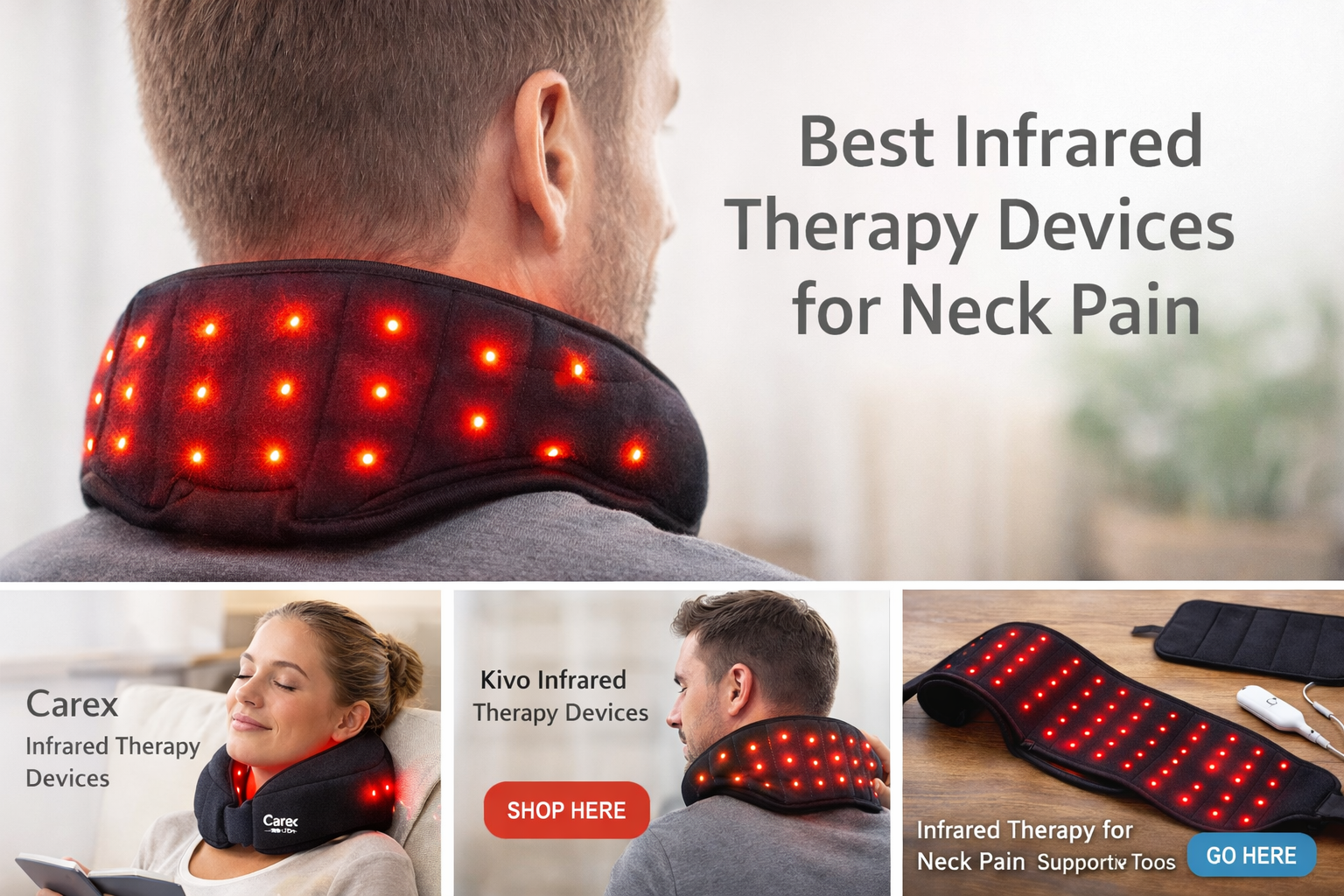
Best Infrared Therapy Devices for Neck Pain
Lets look closer at the best infrared therapy devices for neck pain.
If you’re dealing with ongoing stiffness, tension, or reduced movement, choosing the best infrared therapy devices for neck pain can make a noticeable difference.
The key isn’t just buying any device—it’s understanding which type actually suits how neck pain behaves.
Neck pain is often localized, posture-related, and persistent, which means targeted, consistent therapy works better than occasional treatments.
Infrared therapy fits well into that approach because it’s non-invasive, easy to use at home, and focuses directly on the affected area.

What Makes Infrared Therapy Useful for Neck Pain
Infrared therapy works by delivering light energy into the tissue. This isn’t heat in the traditional sense—it’s deeper and more controlled.
Benefits often reported include:
Improved blood flow to tight muscles
Reduced inflammation
Better mobility over time
A gradual decrease in discomfort
It’s particularly useful for:
Desk-related neck stiffness
Repetitive strain (including golf or manual work)
Muscle tension and poor posture
If you want a deeper understanding of how these devices function, this guide on infrared therapy for chronic pain relief explains the mechanism in more detail.
Types of Infrared Therapy Devices for Neck Pain
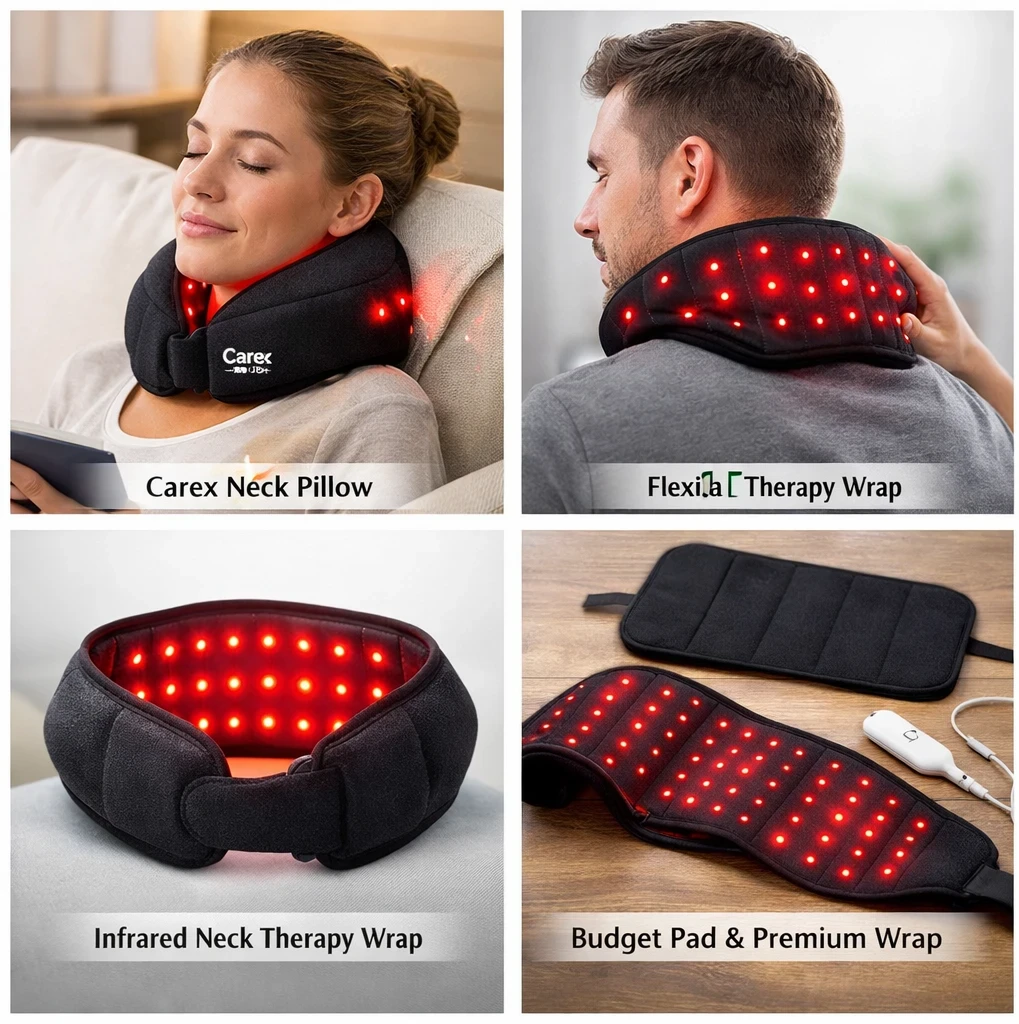
Not all devices are equal. The format matters just as much as the technology.
1. Wearable Wrap Devices
These wrap around the neck and shoulders.
Best for:
Consistent daily use
Hands-free treatment
Covering multiple pain points
They stay in contact with the skin, which improves effectiveness.
2. Neck Pillow Devices (Carex Style)
These are designed to support the neck while delivering infrared light.
Why people like them: Comfortable, especially when resting
Designed specifically for neck alignment
Easy to use without setup
If you want something simple and structured, the Carex range is a solid starting point.
You can explore their current options here:
Shop Carex infrared therapy devices Here:
3. Flexible Wrap Devices (Kivo Style)
These are more modern, flexible wraps that contour around the neck and shoulders.
What makes them different:
Broader coverage area
Often higher LED density
Can be used on multiple body parts
The Kivo style of device is more versatile, especially if pain isn’t limited to one small area.
You can explore those here: Explore Kivo infrared light therapy devices Here.
Carex vs Kivo – Which One Makes More Sense?
This is where most people get stuck, so here’s a simple way to think about it.
More structured and clinical
Focused specifically on neck positioning
Good for beginners or targeted relief
More flexible and adaptable Cover a larger area (neck + shoulders)
Better for ongoing or broader pain
There’s no “better” option—just a better fit for your situation.
What to Look for in the Best Infrared Therapy Devices for Neck Pain
To actually get results, a few details matter more than others:
Wavelength
Look for:
Around 660nm (surface tissue)
Around 850nm (deeper penetration) This combination supports both muscle and joint layers.
Fit and Contact
The device should:
Sit comfortably against the neck
Stay in place without constant adjustment
Loose contact reduces effectiveness.
Session Time
Most devices recommend: 10–20 minutes per session 1–2 times per day
Consistency matters more than intensity.
Coverage Area Small devices
= targeted relief Larger wraps = broader muscle support
For neck pain, slightly broader coverage often works better.
When Infrared Therapy May Help Most
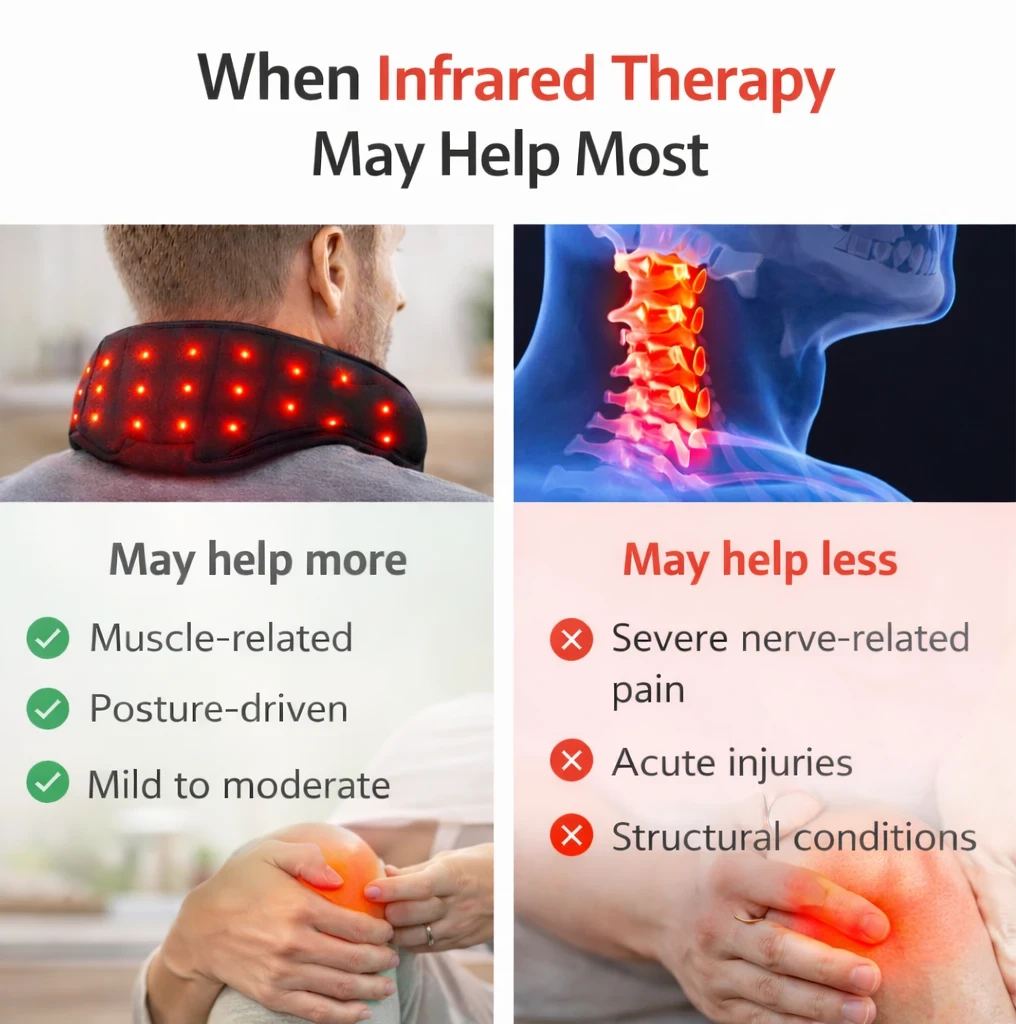
You’re more likely to benefit if your pain is:
Muscle-based (tightness, tension)
Linked to posture or repetitive use
Mild to moderate rather than severe structural injury
It may be less effective on its own for:
Acute injury Nerve compression issues
Advanced degenerative conditions
In those cases, it works better as part of a wider plan.

Other Supportive Options to Combine With Infrared Therapy
Infrared therapy works best when it’s not the only tool you’re using.
You might also consider:
Gentle mobility exercises
Posture correction strategies
Occasional use of TENS therapy. Go here.
Heat or contrast therapy If you’re exploring different approaches, this guide on TENS therapy gives a useful comparison.
What the Research Suggests
Clinical studies on low-level light therapy (LLLT) show:
Reduced pain scores in chronic neck pain patients Improved range of motion
Benefits increase with consistent use over time One example: https://pubmed.ncbi.nlm.nih.gov/19913903/
Balanced Perspective
Infrared therapy isn’t a quick fix.
What it can do:
Support recovery
Reduce daily discomfort Improve mobility gradually
What it won’t do:
Instantly eliminate chronic pain
Replace proper movement or treatment
Fix structural issues on its own
Think of it as a supportive tool, not a standalone solution.
Bottom Line
The best infrared therapy devices for neck pain are the ones you’ll actually use consistently.
Choose Carex if you want simplicity and structure
Choose Kivo-style wraps if you want flexibility and broader coverage
Both approaches can work well—the difference is how they fit into your routine.
Used regularly, infrared therapy can become a steady, low-effort way to manage neck pain without overcomplicating things.
Frequently Asked Questions
How often should I use infrared therapy for neck pain.?
Most devices are used for 10–20 minutes, once or twice daily. Consistency is more important than longer sessions.
How long does it take to see results?Some people notice relief within a few sessions, but most see better results after 1–3 weeks of regular use.
Is infrared therapy safe to use at home?Yes, when used as directed. Most modern devices are designed for safe, non-invasive home use.
Can infrared therapy help chronic neck pain?
It may help reduce discomfort and improve movement, especially when pain is muscle-related or posture-driven.
Can I use infrared therapy with other treatments?
Yes. It often works well alongside stretching, posture correction, or TENS therapy for better overall results.
Are wearable wraps better than handheld devices?
For neck pain, wearable wraps are usually more effective because they stay in place and provide consistent coverage.