Hip Pain Relief Sleeping On Side Try There To Relieve The Pain
Hip Pain Relief Sleeping on Side
Hip pain relief sleeping on side is one of the most common concerns for people dealing with discomfort at night.
Side sleeping is natural for many people, but without proper support, it can increase pressure on the hip joint and surrounding tissues.
Small changes in positioning, support, and recovery strategies can make a big difference in reducing pain and improving sleep.
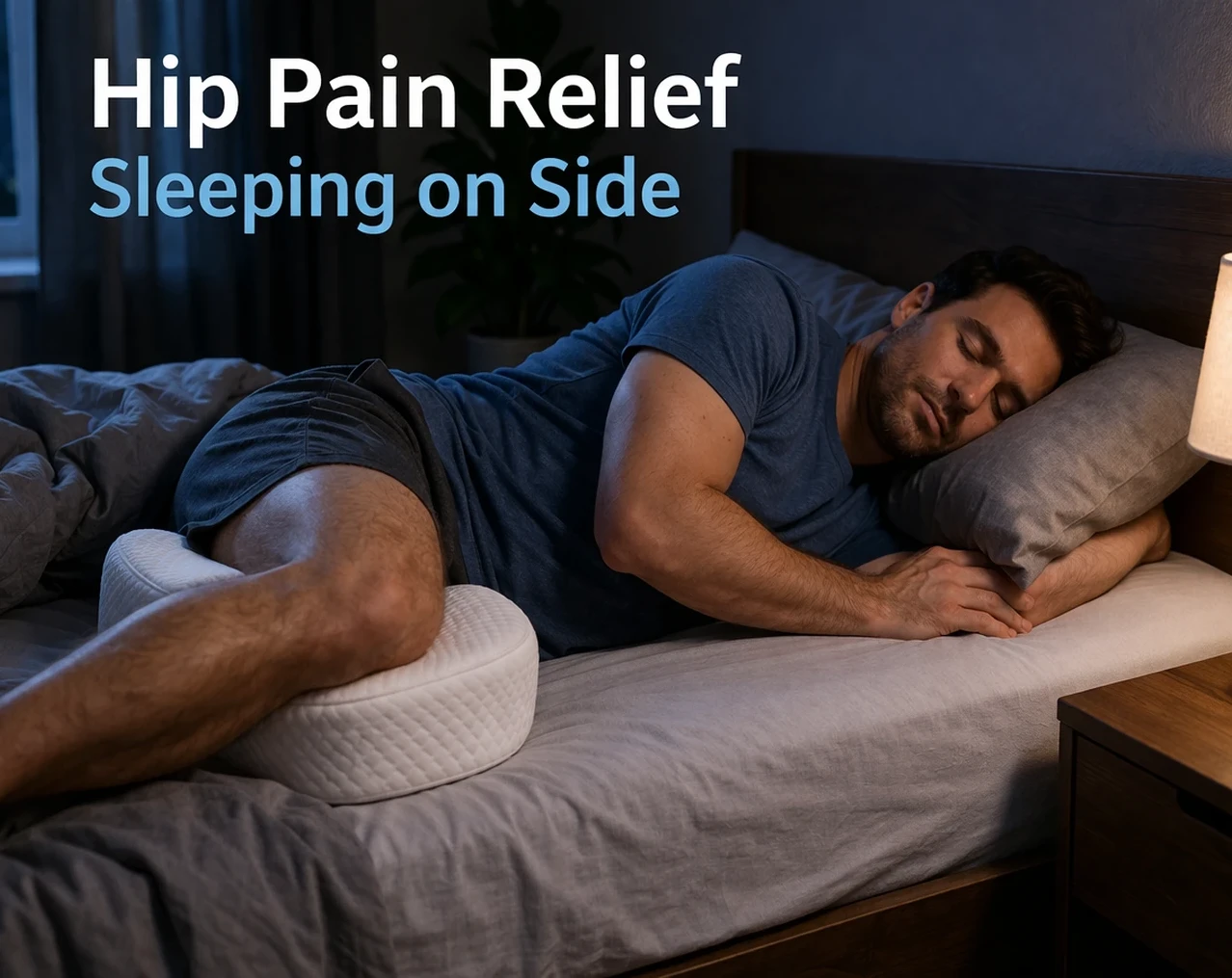
Why Hip Pain Gets Worse When Sleeping on Your Side
When you lie on your side, your body weight rests directly on the hip.
This creates compression in the muscles, tendons, and bursae around the joint.
If these tissues are already irritated, the added pressure can increase pain sensitivity.
Alignment is another key factor. If your spine and pelvis are not supported, the hip can rotate slightly during sleep.
This leads to strain that builds overnight and often results in stiffness in the morning.
To better understand underlying causes, visit hip pain treatment complete guide to relief recovery and long-term management.
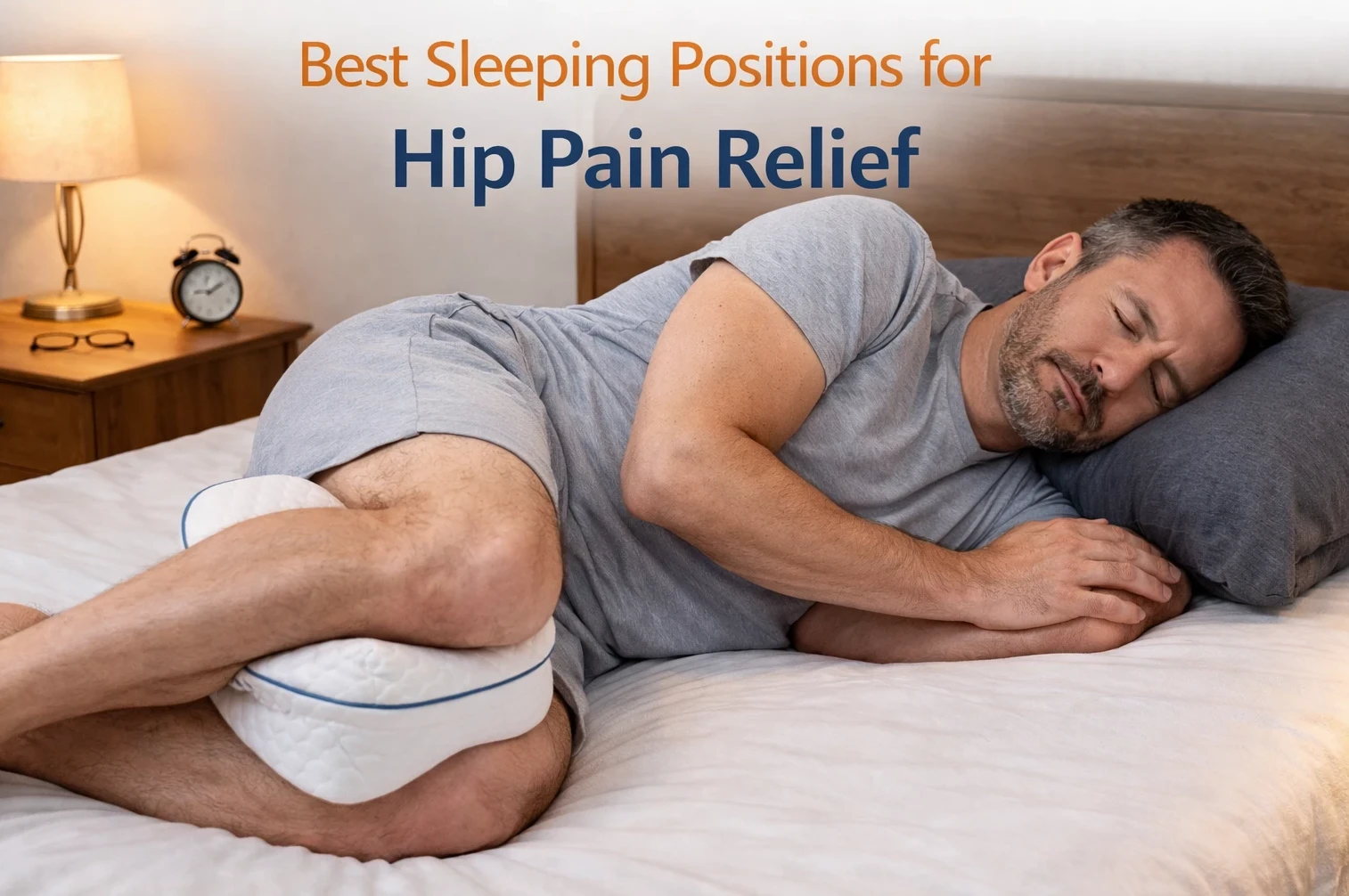
Best Sleeping Positions for Hip Pain Relief
The goal of hip pain relief sleeping on side is to reduce pressure and keep the body aligned.
Use a Pillow Between Your Knees
This keeps your hips level and prevents twisting through the pelvis. A firm pillow works best to maintain spacing.
Slightly Bend Your Knees
A relaxed, slightly bent position reduces tension in the hips and lower back. Avoid curling too tightly.
Sleep on the Non-Painful Side
If one hip is more sensitive, lying on the opposite side can reduce pressure and allow the area to settle.
Support the Top Leg
Using a longer pillow to support your top leg prevents it from dropping forward, which often causes hip strain.
You can improve these results further by adding mobility and strengthening work from best exercises for hip pain.
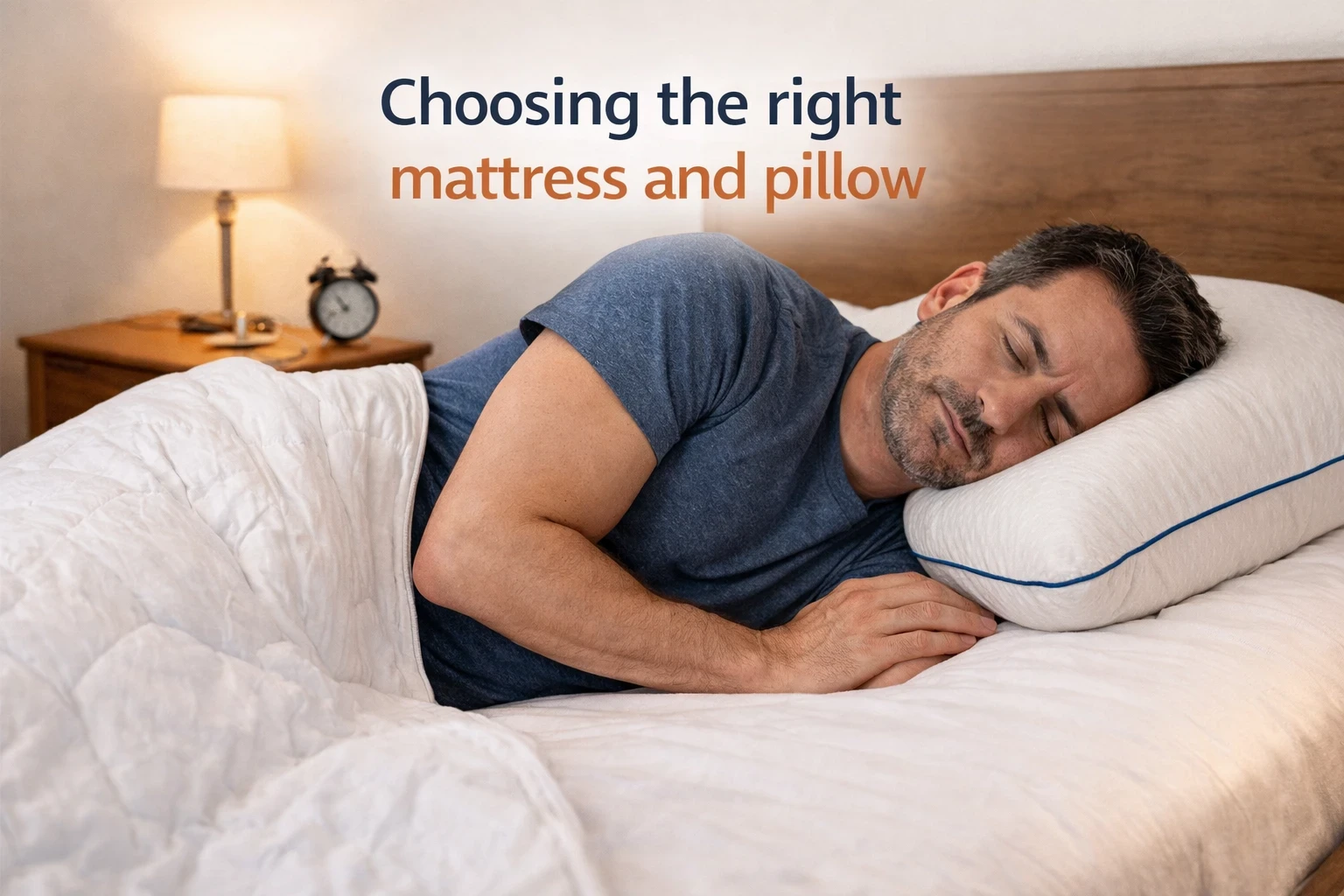
Choosing the Right Mattress and Pillow
Your sleep setup has a direct impact on hip comfort.
A mattress that is too firm can increase pressure on the hip, while one that is too soft may cause your body to sink and lose alignment.
A medium-firm mattress usually provides the best balance of support and cushioning.
Your pillow should keep your neck in a neutral position. Poor neck alignment can travel down the spine and affect hip positioning.
Evening Strategies to Reduce Hip Pain
Preparing your body before sleep can improve hip pain relief sleeping on side.
Applying heat can relax muscles and improve circulation, while cold therapy may help reduce irritation after a long day.
Gentle stretching before bed can also reduce stiffness.
Focus on slow, controlled movements targeting the hips, glutes, and lower back.
You can explore more natural approaches in natural remedies for hip pain.
Strength and Stability for Long-Term Relief
While sleep positioning helps immediately, long-term improvement comes from building strength and stability around the hip.
Weak glutes and tight hip muscles can increase pressure on the joint.
Gradually strengthening these areas helps distribute load more evenly and reduces irritation.
Consistency matters more than intensity.
Small, regular improvements in strength and movement can significantly reduce symptoms over time.
For additional strategies, see hip pain recovery tips.
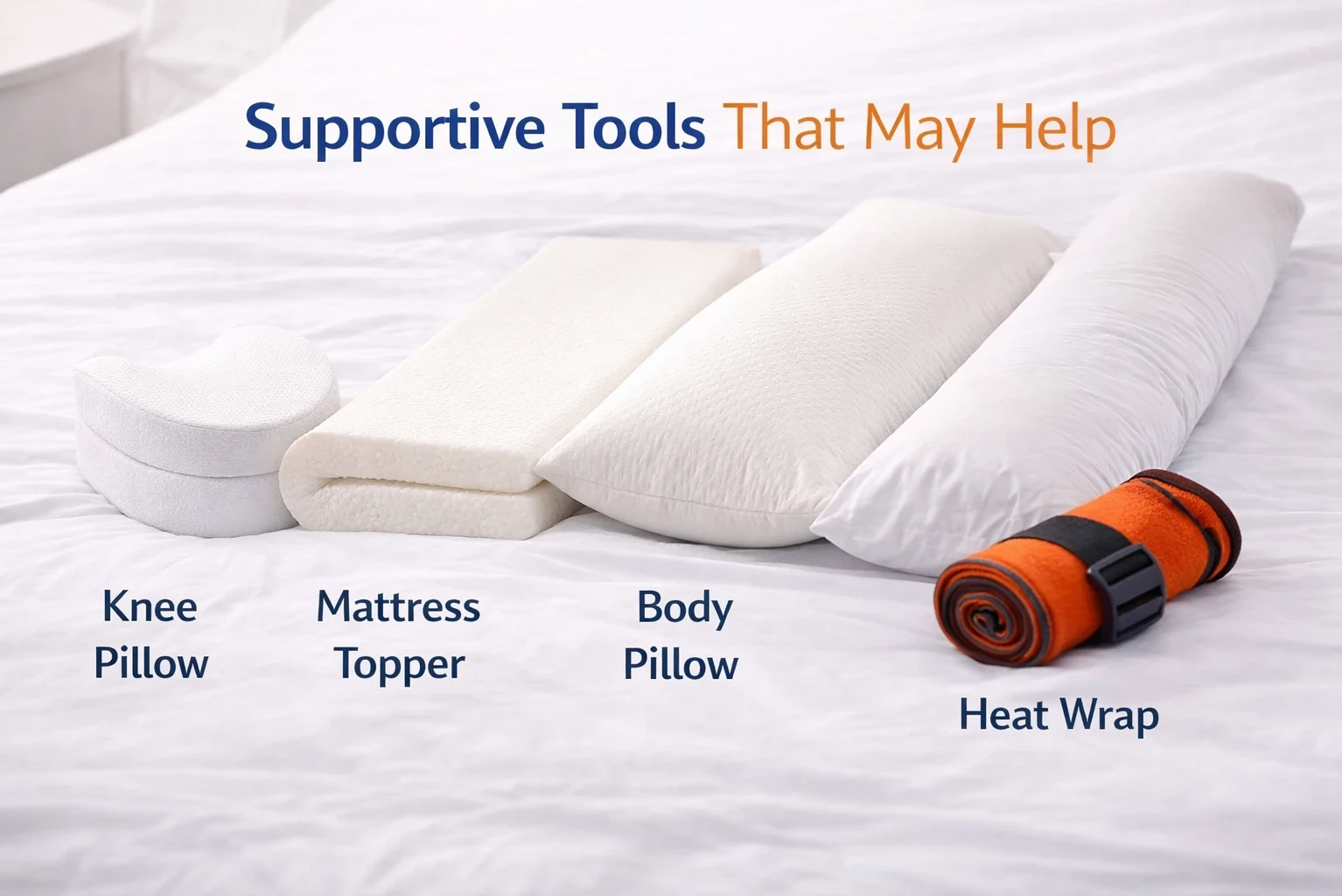
Supportive Tools That May Help
Certain tools can make side sleeping more comfortable:
- Knee pillows to maintain alignment
- Mattress toppers for pressure relief
- Body pillows for full support
- Heat wraps for pre-sleep relaxation
These can improve comfort while you work on addressing the root causes.
When to Take Hip Pain Seriously
If hip pain continues despite improving your sleeping setup, it may indicate an underlying issue such as bursitis, tendon irritation, or joint degeneration.
Pain that disrupts sleep regularly or limits daily activity should be assessed early to prevent long-term problems.
Small Changes That Add Up
Hip pain relief sleeping on side is often achieved through small, consistent changes.
Adjusting your sleep position, improving support, and building strength gradually can lead to better sleep and reduced discomfort.
Instead of trying to fix everything at once, focus on one improvement at a time.
Over time, these changes can significantly improve how your hips feel at night and during the day.
FAQ: Hip Pain Relief Sleeping on Side
Is side sleeping bad for hip pain?
No, as long as your body is properly supported and aligned.
What is the best position to reduce hip pain at night?
Sleeping on your side with a pillow between your knees is one of the most effective positions.
Can a bad mattress cause hip pain?
Yes, poor support or excessive firmness can increase pressure on the hip joint.
How quickly can hip pain improve with better sleep setup?
Many people notice improvements within a few weeks when combining positioning changes with movement and strength work.
Scientific Studies
https://pubmed.ncbi.nlm.nih.gov/28931453/
https://pubmed.ncbi.nlm.nih.gov/27469227/