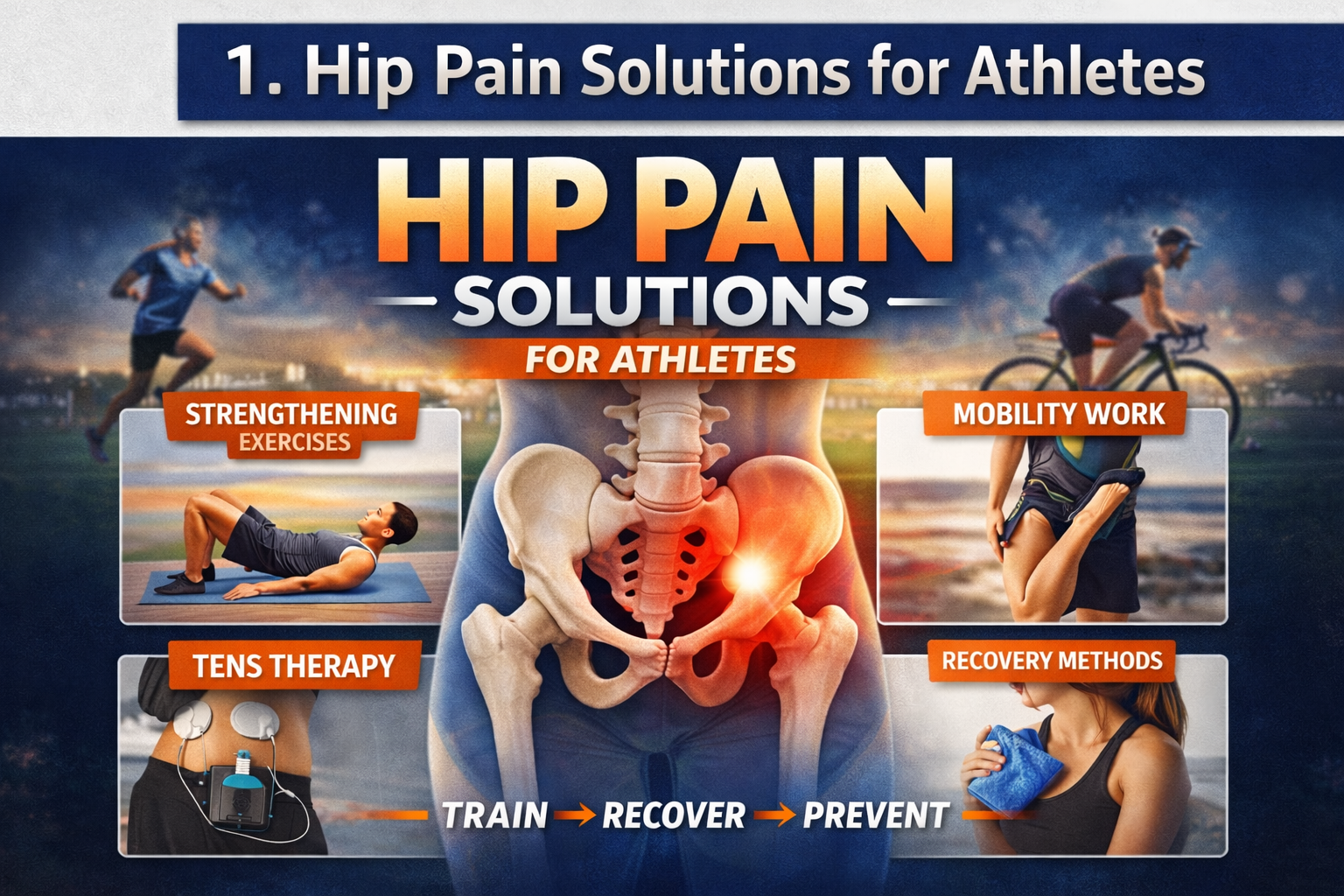
Hip Pain Solutions For Athletes: A Practical Guide To Recovery
Hip Pain Solutions for Athletes
Hip pain solutions for athletes are becoming increasingly important as more people push their bodies through sport, training, and competition.
Whether you’re a runner, golfer, footballer, or gym enthusiast, hip discomfort can quietly limit performance and, if ignored, lead to longer-term issues. This guide explains what causes hip pain, what actually helps, and how to apply these pain solutions for athletes without overcomplicating recovery.
What Causes Hip Pain in Athletes?
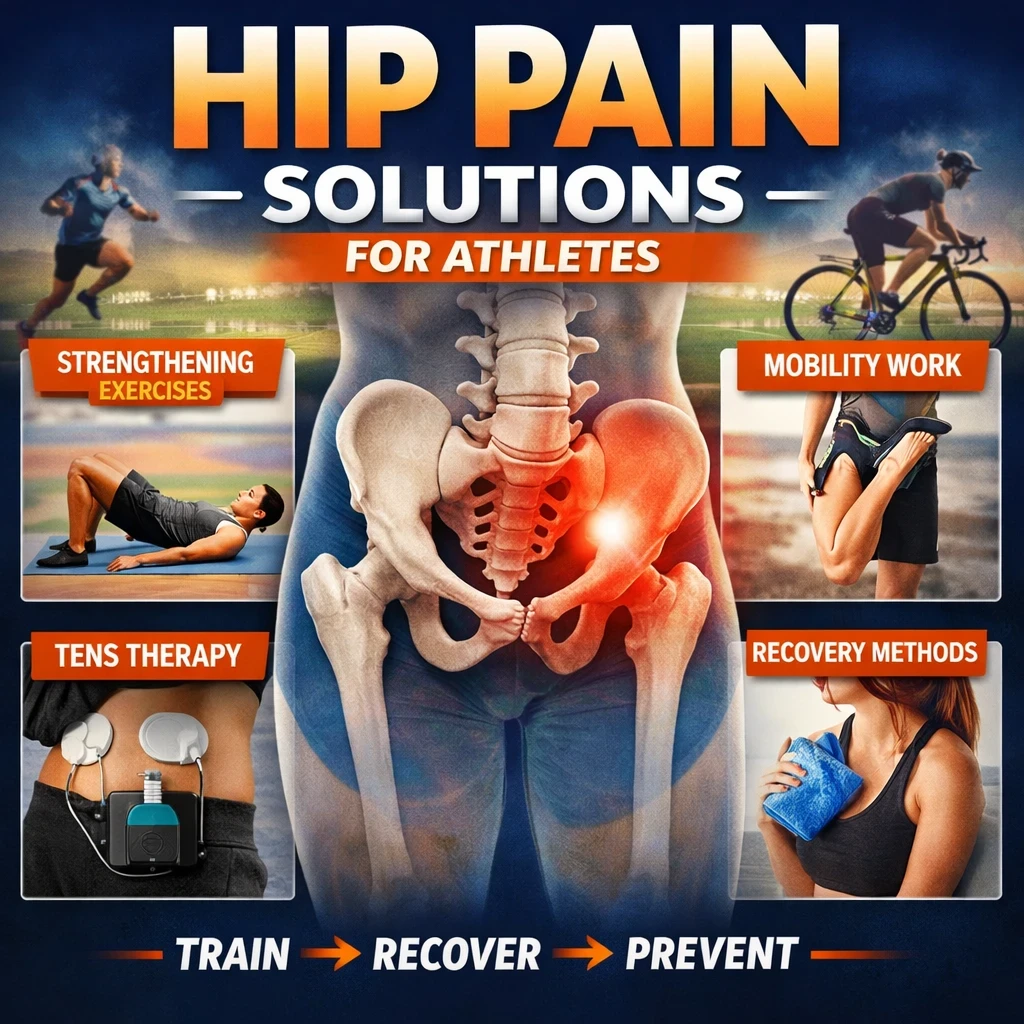
Athletic hip pain rarely comes from a single source. It’s usually a mix of load, movement patterns, and recovery habits.
Common causes include:
Overuse from repetitive movements (running, cycling)
Muscle imbalances between glutes, hip flexors, and core
Poor mobility or restricted joint movement
Sudden increases in training intensity
Weak stabilising muscles around the pelvis
For many athletes, the issue isn’t just the hip itself—it’s how the whole system works together.
Early Signs You Shouldn’t Ignore
Spotting symptoms early can help you apply the right hip pain solutions for athletes sooner.
Tightness in the front of the hip when walking or running
Sharp pain during rotation or twisting movements
Reduced range of motion
Pain that worsens after activity
A dull ache when sitting for long periods
These signals often show that your body is struggling to manage load efficiently.
Movement-Based Hip Pain Solutions for Athletes
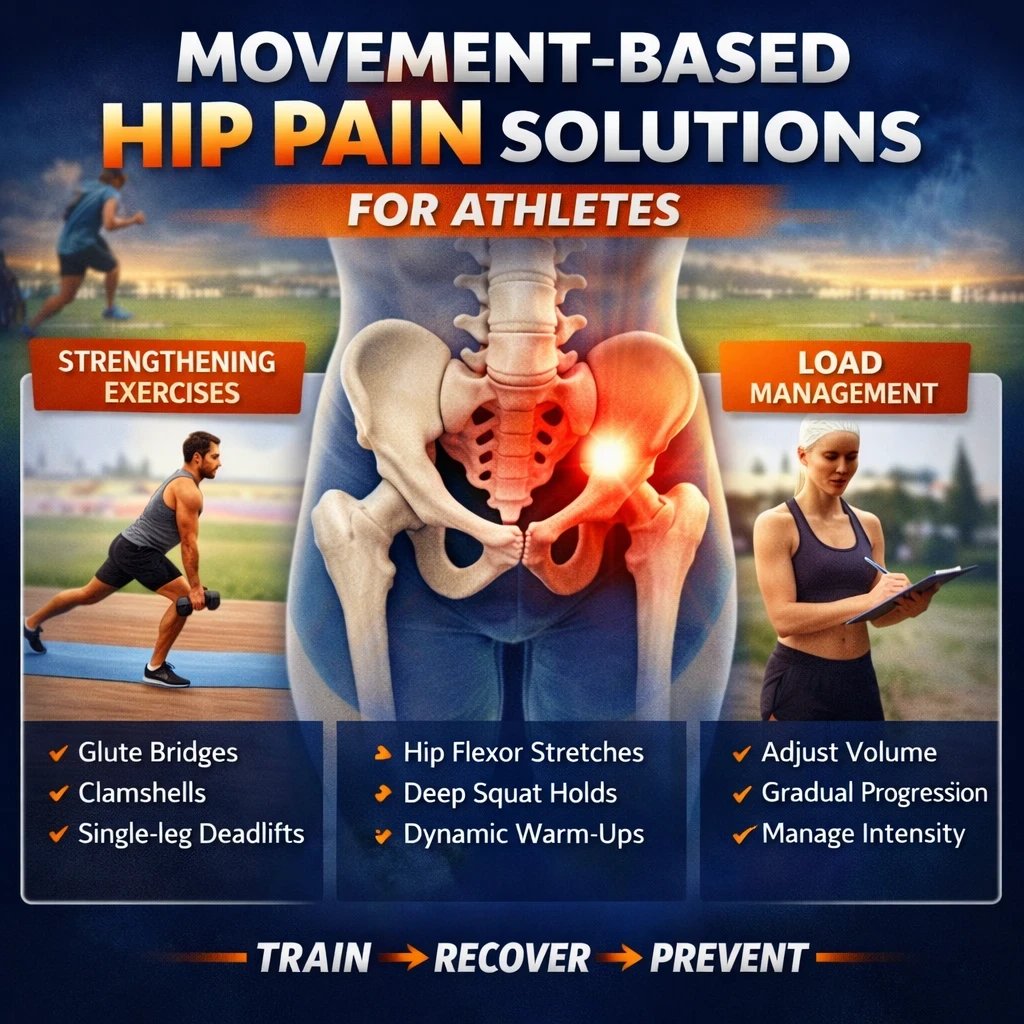
One of the most reliable hip pain solutions for athletes is improving how the body moves—not just resting.
Strengthening Key Muscle Groups
Focus on: Glutes (especially glute medius)
Core stabilisers Hamstrings
Simple exercises that may help:
Glute bridges
Clamshells Step-ups
Single-leg deadlifts
Strength creates stability, which reduces unnecessary strain on the hip joint.
Improving Mobility
Restricted hips force other areas to compensate.
Mobility work can help restore balance. Useful movements include:
Hip flexor stretches
Deep squat holds
Controlled hip rotations
Dynamic warm-ups before training
Mobility is about controlled, usable range rather than forcing flexibility.
Load Management
This is a key part of long-term hip pain solutions for athletes.
Instead of stopping activity completely, adjust:
Training volume Intensity
Frequency
Gradual progression tends to work better than sudden spikes in effort.
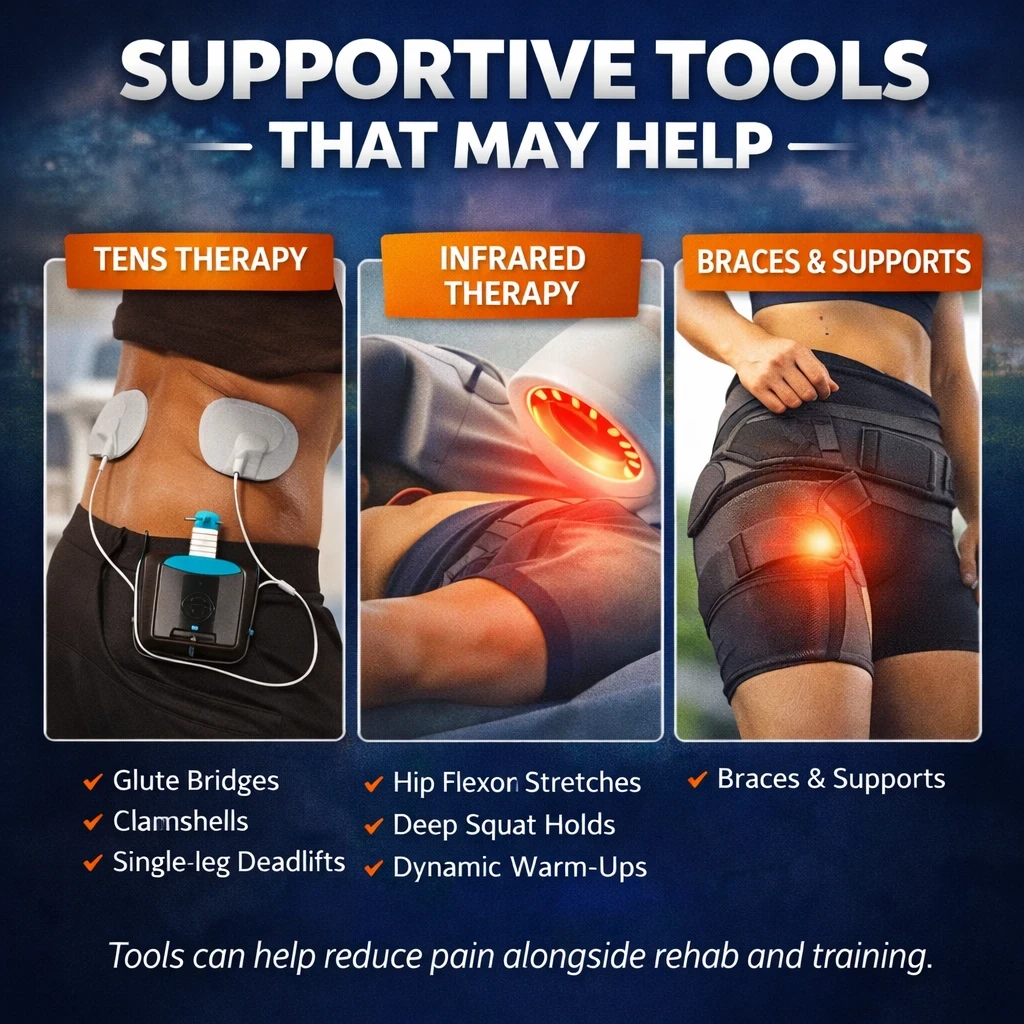
Supportive Tools That May Help
While movement is the foundation, certain tools can support these solutions for athletes when used correctly.
TENS Therapy for Pain Relief Transcutaneous Electrical Nerve Stimulation
(TENS) can help reduce discomfort by interrupting pain signals.
Learn more in What Is TENS Therapy and How Does It Work.
Shop for Quality Assured TENS Therapy products Here.
Infrared Therapy for Deeper Recovery
Infrared therapy may support circulation and muscle relaxation after intense training.
Learn more in Infrared Therapy for Pain Relief
Shop for infrared therapy products Here.
Bracing and Support Gear
Some athletes benefit from:
Compression shorts
Hip braces
Stability supports
These tools do not fix the root cause but may reduce strain during activity.
Shop for Bracing and Support gear Here.
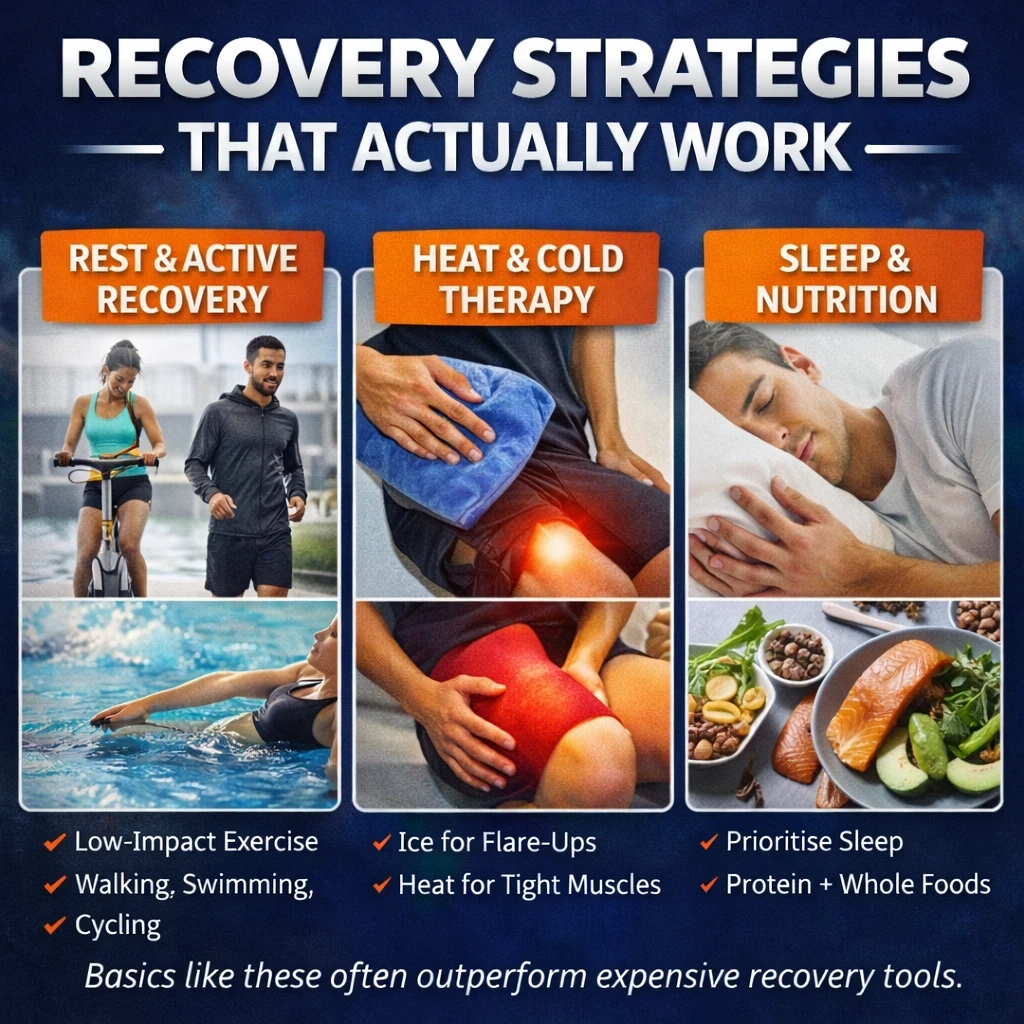
Recovery Strategies That Actually Work
Recovery habits are essential when applying hip pain solutions for athletes.
Rest and Active Recovery
Complete rest is not always necessary.
Instead: Swap high-impact training for low-impact alternatives
Use walking, swimming, or cycling
Keep the body moving without overloading it
Heat and Cold Therapy Ice may help calm flare-ups.
Shop Heat and Cold Therapy products Here.
Heat can relax tight muscles
Both can support short-term relief when used appropriately.
Sleep and Nutrition Recovery is also biological:
Prioritise consistent sleep
Stay hydrated
Include protein and anti-inflammatory foods
These basics often outperform expensive recovery tools.
When to Consider Professional Help
Consider expert input if hip pain solutions for athletes are not improving symptoms.
Pain lasts more than a few weeks
Movement becomes restricted Pain interferes with daily activities
Structural issues are suspected
A physiotherapist can assess movement patterns and guide a personalised plan.
Preventing Future Hip Pain
The best solutions for hip pain in athletes are those that prevent recurrence.
Build a Balanced Routine Include:
Strength training
Mobility work
Sport-specific drills
Avoid focusing only on performance.
Warm Up Properly
A good warm-up prepares the hip for load:
Dynamic stretches
Activation exercises
Gradual intensity increases
Listen to Your Body
Pain is feedback and should not be ignored repeatedly.
A Balanced Perspective
There is no single solution when it comes to hip pain solutions for athletes.
What works best is a combination of:
Smart training
Consistent strength work
Good recovery habits
Occasional use of supportive tools
The most effective hip pain solutions for athletes come from understanding how your body responds to movement, load, and recovery.
Frequently Asked Questions
What are the most effective hip pain solutions for athletes?
The most effective solutions for athletes combine strength training, mobility work, and proper load management.
Can hip pain go away on its own?
Mild hip pain can settle with rest, but without thses pain relief solutions for athletes, it may return.
Is it safe to train through hip pain?
Light discomfort may be manageable with modifications, but sharp or worsening pain should not be ignored.
How long does it take to recover from hip pain?
Minor cases may improve within 2–4 weeks, while persistent issues take longer depending on consistency with solutions for athletes.
Do athletes need imaging for hip pain?
Not always. Imaging is usually reserved for persistent or worsening symptoms.
Are stretching exercises enough to fix hip pain?
Stretching alone is rarely enough. Most solutions for athletes also include strengthening work.
What role does core strength play in hip pain?
Core strength supports pelvic stability and reduces strain on the hip.
Can recovery tools replace exercise-based rehab?
No. Tools may help symptoms, but exercise-based rehab is the foundation of hip pain solutions for athletes.
When should an athlete see a professional?
If pain persists for several weeks or limits movement, professional guidance is recommended.
Scientific Reference https://pubmed.ncbi.nlm.nih.gov/31045622/