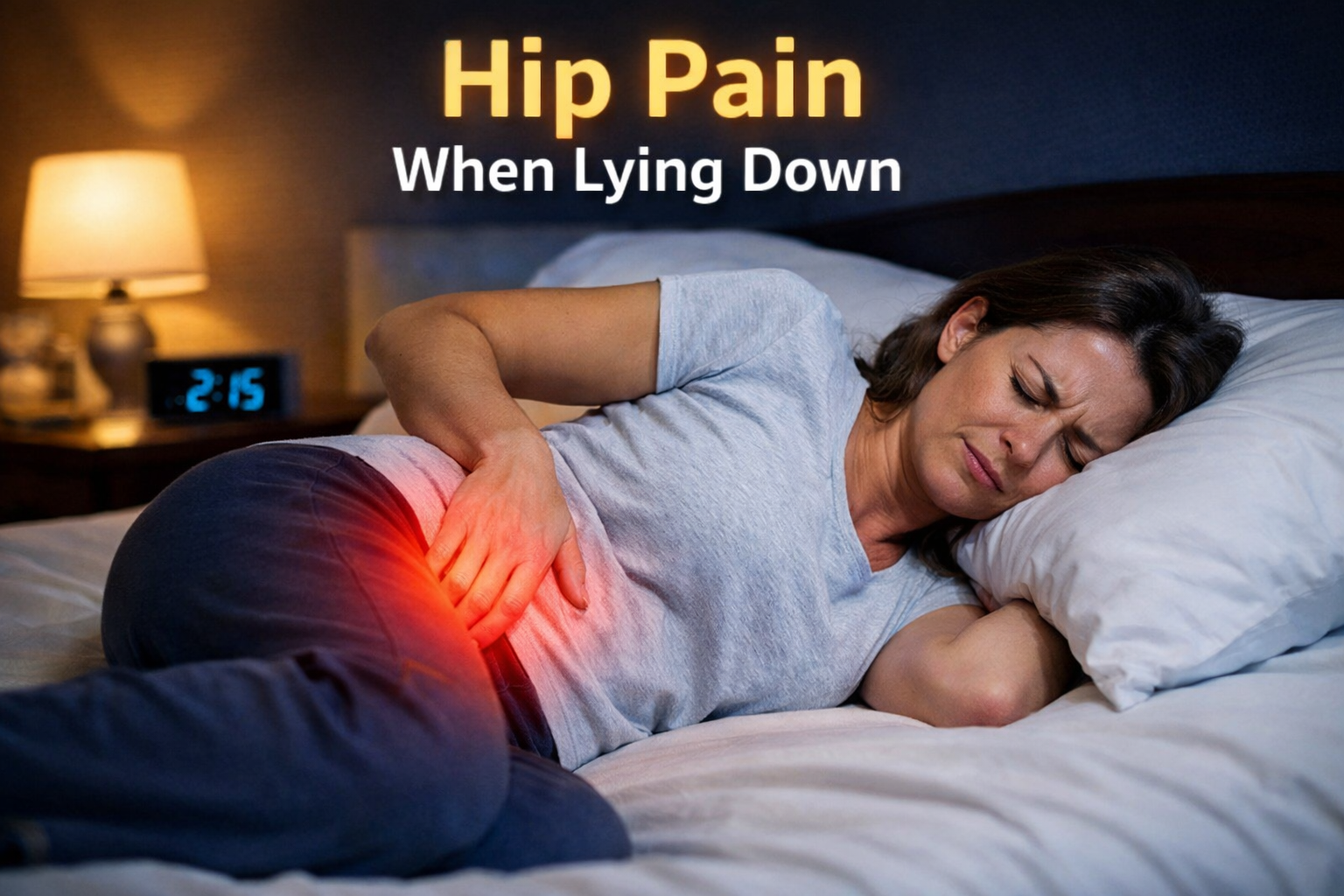
Hip Pain When Lying Down Even After Rest
Hip Pain When Lying Down
Hip pain when lying down can feel confusing, especially when rest is supposed to help recovery.
For many people, symptoms become more noticeable at night because the body is no longer distracted by movement. Understanding why this happens—and what may help—can make a real difference in comfort and sleep quality.
Why Hip Pain Feels Worse at Night
When you lie down, pressure shifts through the joints, muscles, and surrounding tissues. Reduced movement can also allow stiffness to build. In some cases, inflammation becomes more noticeable because there are fewer competing signals distracting the nervous system.
Research shows that pain often feels stronger at night due to reduced movement, lower levels of anti-inflammatory hormones, and increased nervous system sensitivity . This combination can make even mild hip discomfort feel more intense once you settle into bed.
Night-time discomfort is also linked to how the brain processes pain signals. As explained in this guide to how the brain processes pain, the brain can amplify sensations when the body is still and focused inward.

Common Causes of Hip Pain When Lying Down
Several conditions may contribute to hip pain when lying down. These range from mild irritation to more persistent issues.
1. Hip Bursitis
Inflammation of the bursae—small fluid-filled sacs that cushion the joint—can cause sharp pain when pressure is applied.
Lying on the affected side often makes symptoms worse.
If this sounds familiar, you can explore treatment options in this guide to hip bursitis treatment.
2. Muscle Imbalance and Tightness
Tight hip flexors or weak glute muscles can place uneven stress on the joint.
Over time, this imbalance may lead to discomfort that becomes more noticeable at rest.
3. Arthritis and Joint Changes
Degenerative changes in the hip joint can cause stiffness and aching, particularly after long periods of inactivity.
4. Referred Pain From the Lower Back
The hip and lower back are closely connected.
Issues such as nerve irritation or spinal stiffness can create pain that feels like it originates in the hip, even though the source may be elsewhere.
The Role of Sleep Position
Your sleeping position can either reduce or worsen hip pain when lying down. Small adjustments can make a noticeable difference.
- Side sleeping may increase pressure on the hip joint
- Back sleeping can reduce direct pressure but may increase stiffness
- Using pillows between the knees or under the legs may improve alignment
Finding a neutral, supported position helps reduce strain on the hip and surrounding muscles.
Nervous System Sensitivity and Pain
Pain is not always directly linked to tissue damage.
The nervous system plays a major role in how pain is experienced.
When sensitivity increases, even light pressure or normal movement can feel uncomfortable.
At night, fewer distractions and reduced activity can make these signals feel stronger, which is why symptoms may seem worse despite no clear change in the joint itself .
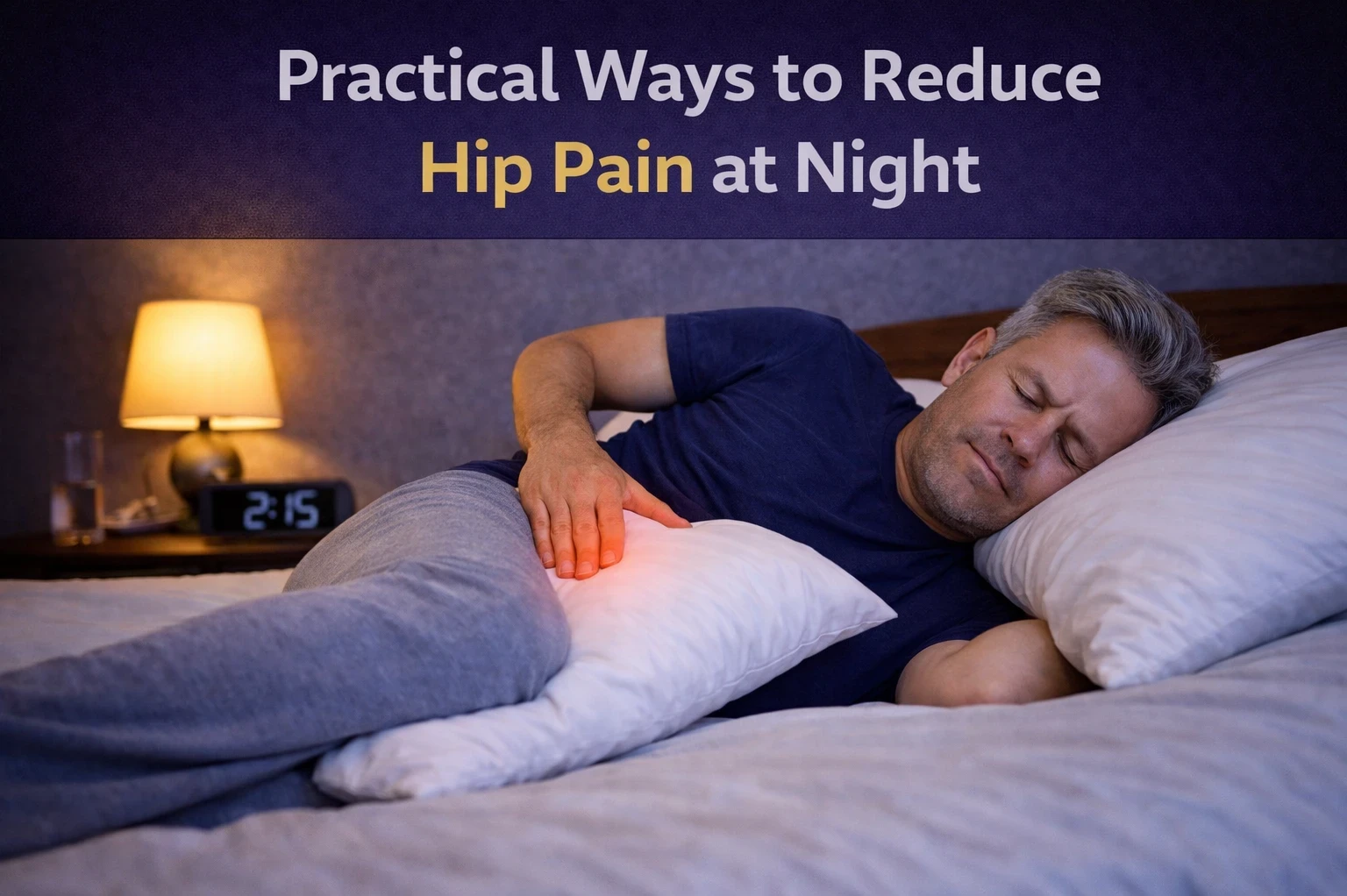
Practical Ways to Reduce Hip Pain at Night
There are several simple strategies that may help ease hip pain when lying down.
Gentle Movement Before Bed
Light stretching or controlled movement before sleep can reduce stiffness. This helps maintain joint mobility and prepares the body for rest.
Supportive Mattress and Pillow Setup
A mattress that is too soft or too firm can affect hip alignment. Adjusting pillow placement may also help keep the spine and hips in a more neutral position.
Heat Therapy
Applying gentle heat before bed may help relax muscles and improve circulation. This can reduce tension around the hip joint.
Go here for heat therapy products.
Gradual Strength and Mobility Work
Over time, improving strength and flexibility around the hips can reduce recurring discomfort. Consistency matters more than intensity.
A Balanced Perspective on Hip Pain
Hip pain when lying down does not always mean there is serious damage.
In many cases, it reflects a combination of sensitivity, posture, and movement patterns rather than a single structural issue.
Understanding how different factors interact—joint health, muscle balance, and nervous system response—can help guide more effective and sustainable approaches to relief.
When to Seek Further Advice
While most cases improve with simple strategies, medical advice may be needed if:
- Pain is severe or worsening
- There is significant swelling or redness
- Movement becomes increasingly limited
- Symptoms persist over several weeks
Early guidance can help rule out more serious conditions and provide a clearer path forward.
Frequently Asked Questions
Why is hip pain worse when lying on my side?
Pressure directly on the hip joint can irritate sensitive tissues, especially if inflammation or bursitis is present.
Can a mattress cause hip pain?
Yes, poor support or alignment can increase strain on the hips and surrounding muscles.
Is hip pain at night a sign of arthritis?
It can be, but not always. Muscle tightness, posture, and nervous system sensitivity are also common contributors.
Should I keep moving if I have hip pain?
Gentle, controlled movement is usually beneficial and may help reduce stiffness and sensitivity over time.
Scientific Studies
https://pubmed.ncbi.nlm.nih.gov/29626678/
https://pubmed.ncbi.nlm.nih.gov/25892672/