Hip Bursitis Treatment
Hip bursitis treatment is often discussed by people experiencing persistent outer hip pain that interferes with walking, sleep, or physical activity.
Hip bursitis occurs when a small fluid-filled sac called a bursa becomes irritated or inflamed around the hip joint.
These bursae normally act as cushions that reduce friction between muscles, tendons, and bone.
However, when inflammation develops, even simple movements may trigger discomfort.
Because of this, many people explore effective hip bursitis treatment strategies that calm irritation, restore mobility, and support long-term recovery.
Understanding the causes, symptoms, and treatment options can help individuals choose the most appropriate approach for their situation.
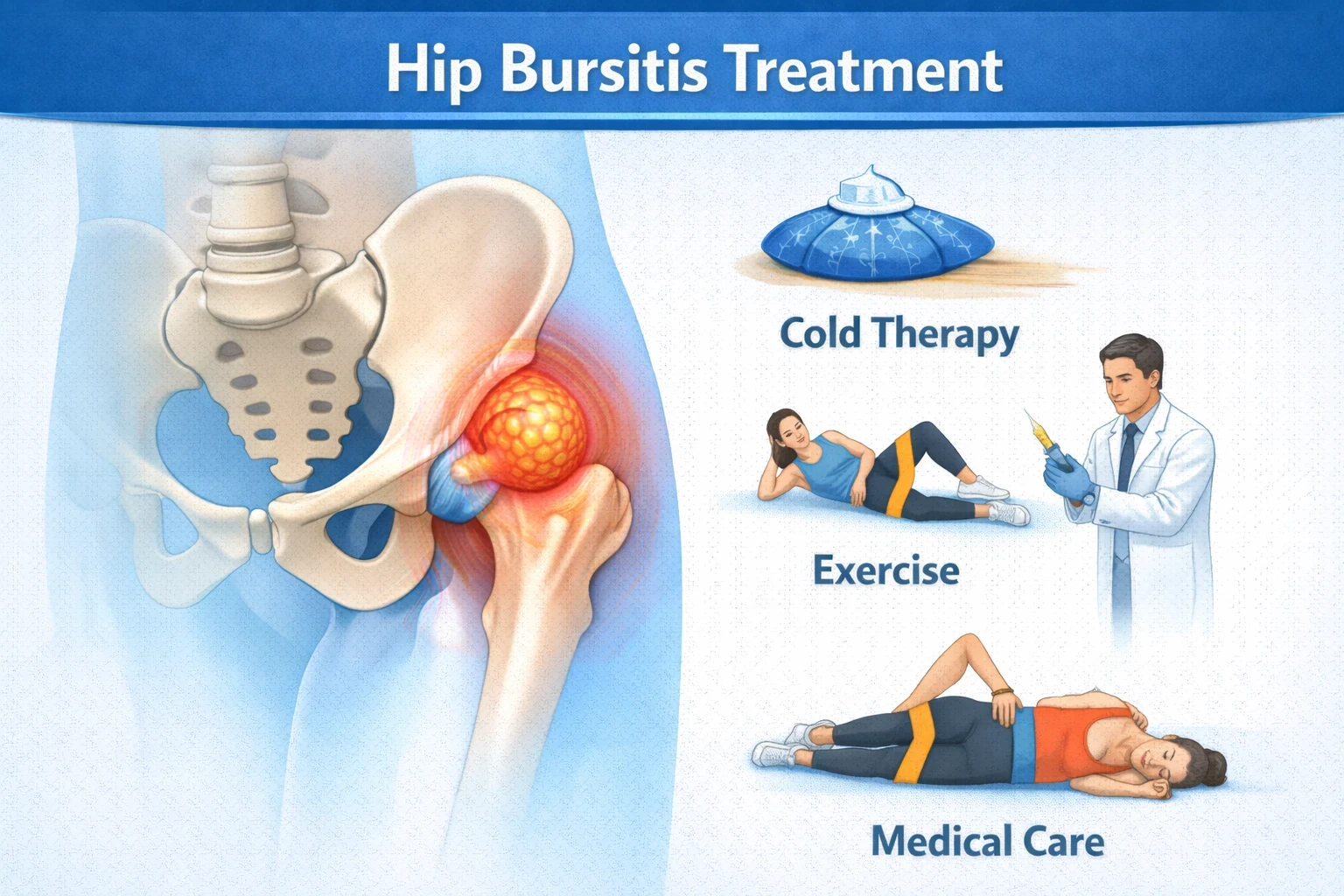
What Is Hip Bursitis
Hip bursitis refers to inflammation of one of the bursae located near the hip joint.
These small sacs normally reduce friction as muscles and tendons move across bone.
When the bursa becomes irritated, friction increases and pain may develop.
The most common form affects the greater trochanter, the bony point on the outer side of the hip.
Because many muscles pass over this area, repetitive movement or pressure may trigger inflammation.
Common symptoms include:
• Pain on the outer hip
• Tenderness when pressing the hip
• Pain when lying on the affected side
• Discomfort during walking or climbing stairs
• Stiffness after prolonged sitting
Symptoms may gradually worsen if the irritation continues.
For a broader overview of conditions that affect the hip, the guide on hip pain causes and treatment explains several possible contributors.
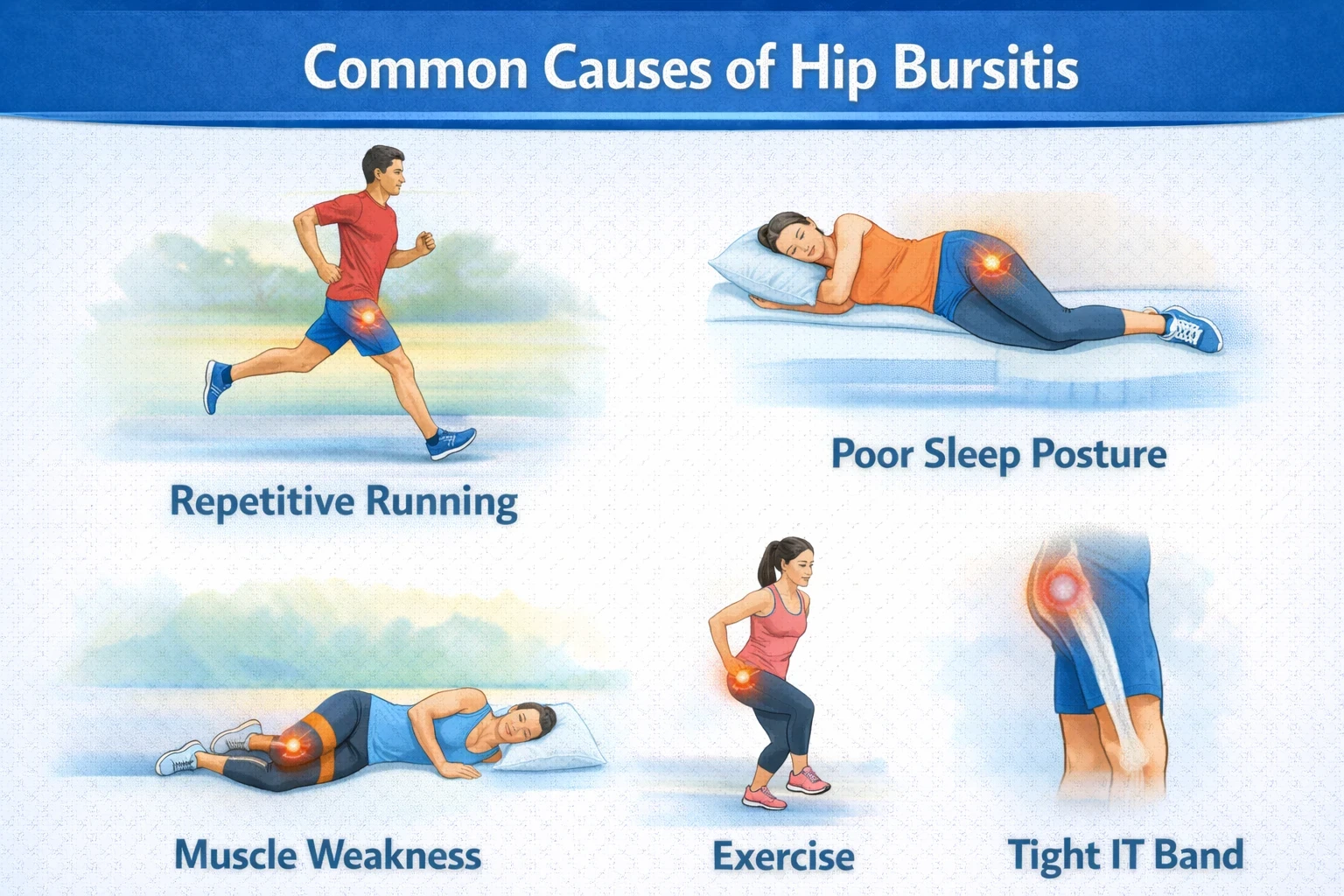
Common Causes of Hip Bursitis
Understanding the underlying cause is an important part of effective hip bursitis treatment.
In many cases, bursitis develops due to repetitive stress or mechanical strain.
Common causes include:
• Repetitive running or walking
• Prolonged pressure on one hip during sleep
• Weak hip stabilizing muscles
• Tight iliotibial band (IT band)
• Poor posture or movement mechanics
• Sudden increases in exercise intensity
• Previous hip injuries
Athletes and physically active individuals may develop bursitis due to repetitive training loads.
However, the condition can also occur in people who sit for long periods or sleep on one side.
Early Hip Bursitis Treatment Approaches
In the early stages, hip bursitis treatment often focuses on calming inflammation and reducing irritation.
Activity Modification
Firstly, reducing activities that aggravate the hip may allow the irritated bursa to settle.
This does not mean complete inactivity. Instead, temporary adjustments may help reduce stress on the joint.
Examples include:
• Reducing running or jumping
• Limiting stair climbing
• Avoiding prolonged standing on one leg
• Changing sleeping positions
Meanwhile, placing a pillow between the knees during sleep may reduce pressure on the hip.
Cold Therapy
Cold packs are commonly used in early hip bursitis treatment.
Applying cold to the outer hip for about 10–15 minutes may help calm inflammation.
Cold therapy is often most helpful after physical activity or during flare-ups.
Gentle Movement
Although rest may reduce irritation, complete immobility may cause stiffness.
Therefore, gentle movement and stretching may help maintain joint mobility without worsening symptoms.
Exercise and Rehabilitation
Exercise plays an important role in long-term hip bursitis treatment.
Strengthening surrounding muscles helps stabilize the hip joint and reduce stress on the bursa.

Glute Strengthening
The glute muscles support hip stability during walking and standing.
A commonly recommended exercise is the glute bridge.
Steps:
• Lie on your back with knees bent
• Place feet flat on the floor
• Slowly lift the hips upward
• Hold briefly at the top
• Lower with control
This exercise activates the glute muscles while minimizing strain on the hip.
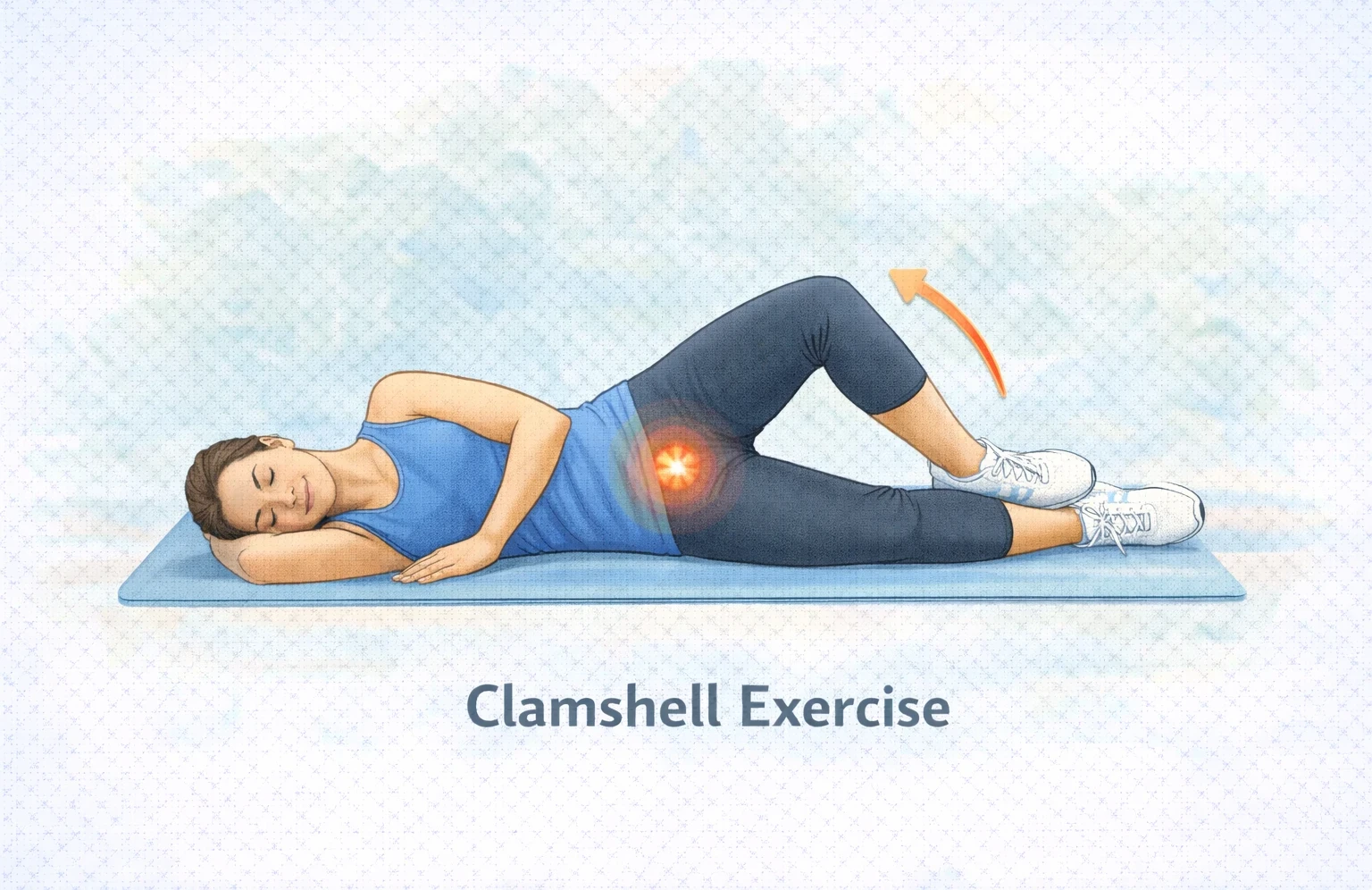
Clamshell Exercise
The clamshell strengthens the gluteus medius, a muscle that stabilizes the pelvis.
Steps:
• With knees bent lie on one side
• Keep feet together
• Lift the top knee slowly
• Pause briefly
• Return to the starting position
Regular practice may improve hip stability over time.
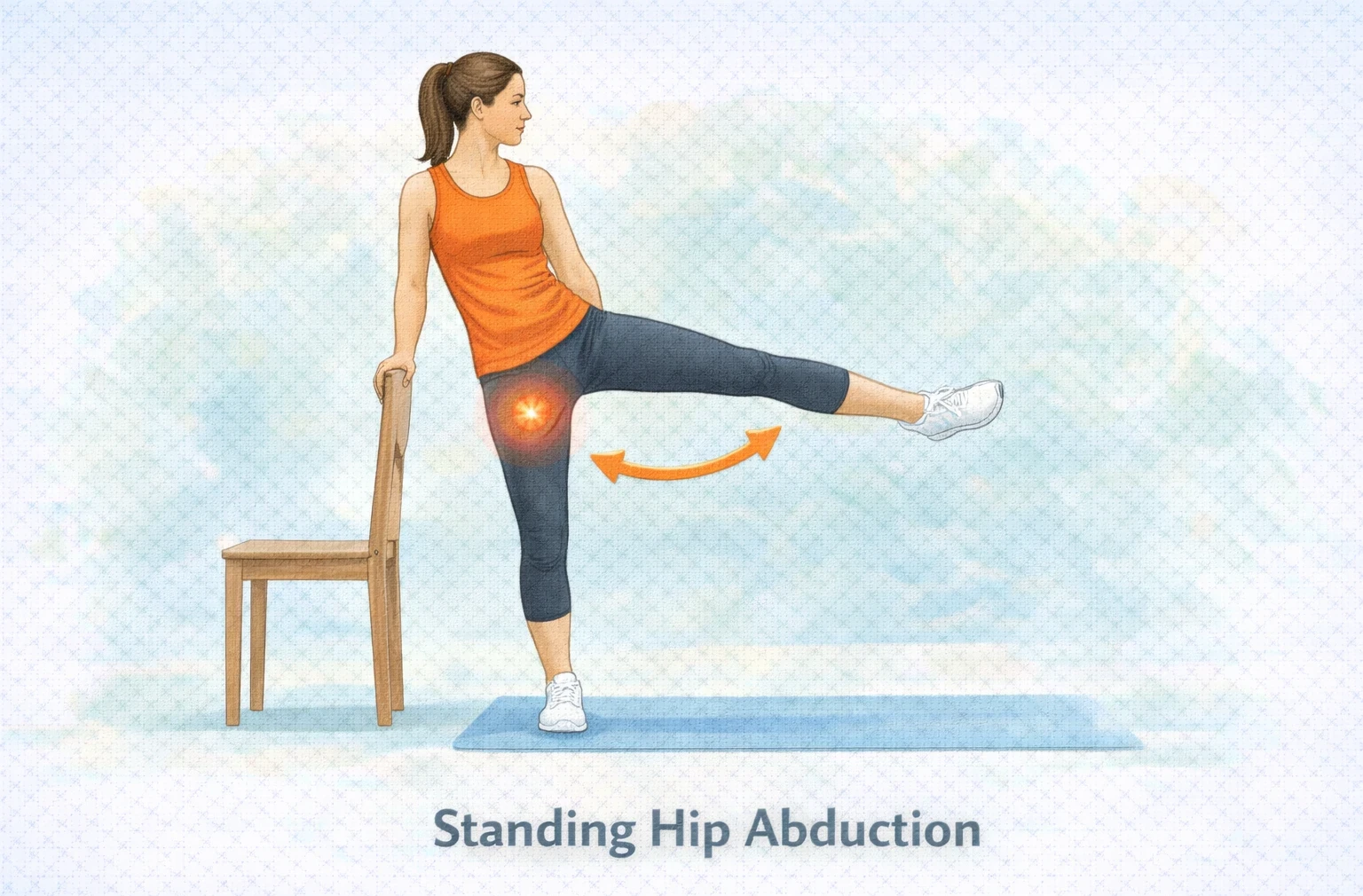
Standing Hip Abduction
Standing exercises prepare the hip for normal movement.
Steps:
• Stand upright with support if needed
• Lift one leg slowly to the side
• Keep the torso stable
• Lower the leg slowly
Controlled movements help strengthen hip stabilizing muscles.
For a deeper exploration of rehabilitation approaches, the article on hip bursitis pain management strategies discusses additional techniques.
Physical Therapy
Physiotherapy is often recommended as part of structured hip bursitis treatment.
A physiotherapist may evaluate:
• Walking mechanics
• Muscle imbalances
• Hip mobility
• Core strength
Based on these findings, a personalized exercise program may be developed.
Targeted rehabilitation often focuses on strengthening the glute muscles, improving hip flexibility, and correcting movement patterns.
These changes may help reduce pressure on the irritated bursa.
Supportive Hip Bursitis Treatment Options
In addition to exercise and activity modification, several supportive strategies may assist recovery.

Anti-Inflammatory Nutrition
Certain nutritional approaches may support inflammation balance.
Common examples include:
• Omega-3 fatty acids
• Turmeric extracts
• Magnesium support
• Rosehip supplements
These options are sometimes discussed as supportive tools alongside rehabilitation.
Get the best quality assured supplements for hip pain on HerbsPro here.
Pain Relief Strategies
Some people explore supportive products that may reduce hip discomfort during daily activities.
For example, supportive cushions, topical products, or mobility aids may reduce pressure on the hip joint.
The guide to top rated hip pain relief proven to work reviews several options that people commonly consider.
Sleep Position Adjustments
Sleep position can significantly influence hip bursitis symptoms.
Helpful adjustments may include:
• Sleeping on the unaffected side
• Placing a pillow between the knees
• Using a supportive mattress
Reducing pressure on the irritated hip may improve overnight comfort.
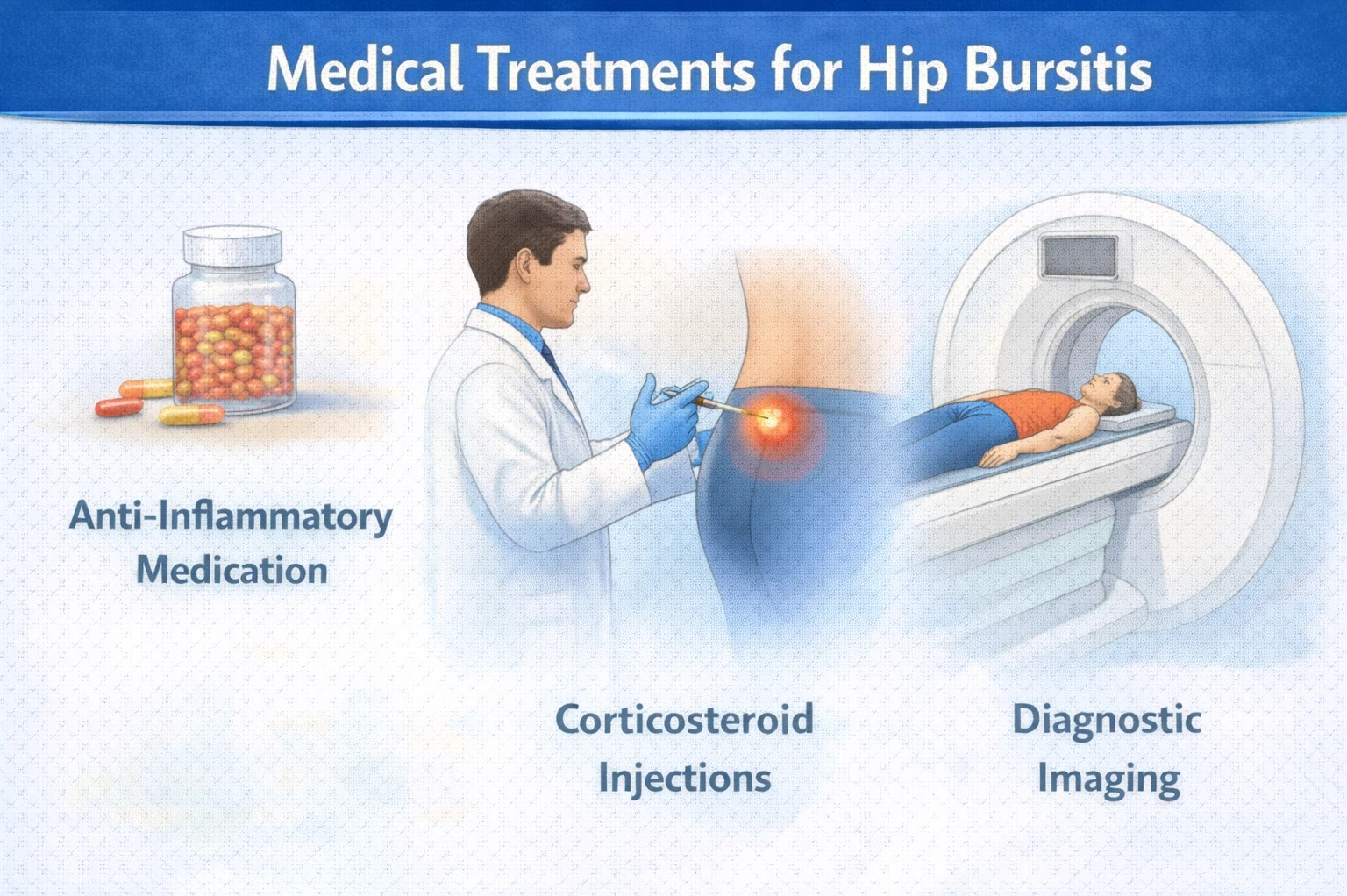
Medical Treatments for Hip Bursitis
Most cases of hip bursitis improve with conservative treatment. However, medical treatment may sometimes be necessary.
Common medical approaches include:
Anti-Inflammatory Medication
Doctors may recommend anti-inflammatory medication to help reduce inflammation and pain.
These medications are typically used for short periods.
Corticosteroid Injections
In some cases, corticosteroid injections may be used to calm inflammation inside the bursa.
These injections may provide temporary relief while rehabilitation exercises address underlying causes.
Diagnostic Imaging
If symptoms persist, doctors may recommend imaging tests such as ultrasound or MRI.
These tests help confirm the diagnosis and rule out other conditions.
Long-Term Prevention Strategies
Preventing recurrence is an important part of hip bursitis treatment.
Long-term prevention strategies often include:
• Regular hip strengthening exercises
• Gradual increases in training intensity
• Stretching tight hip muscles
• Improving walking or running mechanics
• Maintaining healthy body weight
Consistency with these habits may reduce the likelihood of future flare-ups.
When to Seek Medical Advice
Although many cases improve with conservative care, medical evaluation may be recommended if:
• Pain becomes severe
• Swelling or redness appears
• Symptoms persist for several weeks
• Hip movement becomes restricted
• Fever accompanies hip pain
In these situations, professional assessment may help determine the most appropriate treatment plan.
A Balanced Perspective
Hip bursitis can be frustrating, especially when it limits daily activity or exercise.
However, many individuals improve with a combination of activity modification, strengthening exercises, and supportive strategies.
A balanced hip bursitis treatment plan typically focuses on calming inflammation while gradually restoring strength and mobility.
With patience and consistent rehabilitation, many people regain comfortable hip movement and return to normal activity levels.
Scientific Studies
https://pubmed.ncbi.nlm.nih.gov/24662872/
https://pubmed.ncbi.nlm.nih.gov/25985244/
https://pubmed.ncbi.nlm.nih.gov/28765214/