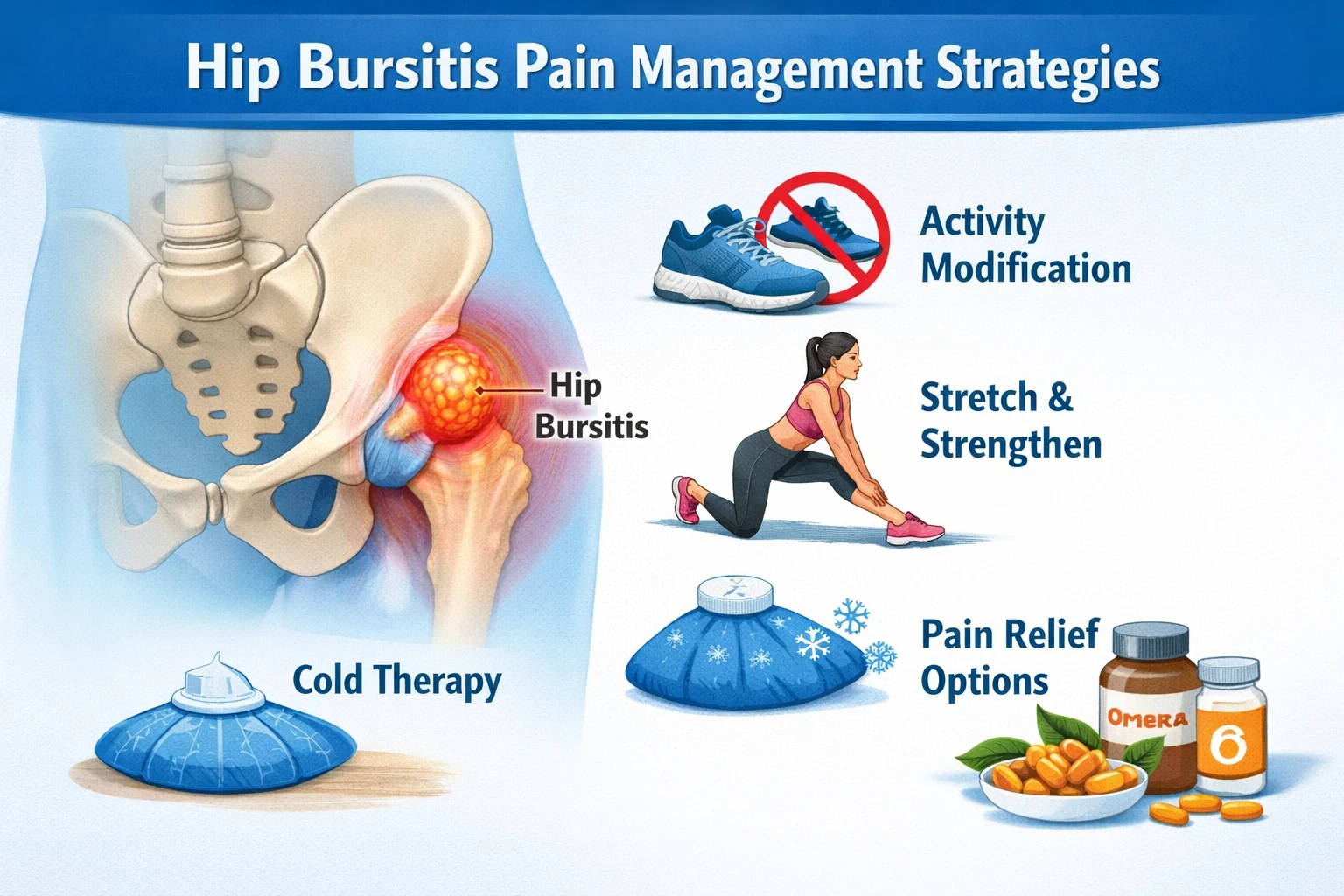
Hip Bursitis Pain Management Strategies
Hip bursitis pain management strategies are commonly discussed by people dealing with persistent hip discomfort that interferes with walking, sleep, and daily movement.
The condition occurs when small fluid-filled sacs called bursae become irritated around the hip joint.
These bursae normally act as cushions that reduce friction between muscles, tendons, and bone.
However, when the bursa becomes inflamed, even simple activities can become painful.
Many people therefore search for practical hip bursitis pain management strategies that support healing while improving daily function.
For a broader understanding of how persistent pain develops, you may find the guide to chronic pain explained helpful.
What Is Hip Bursitis?
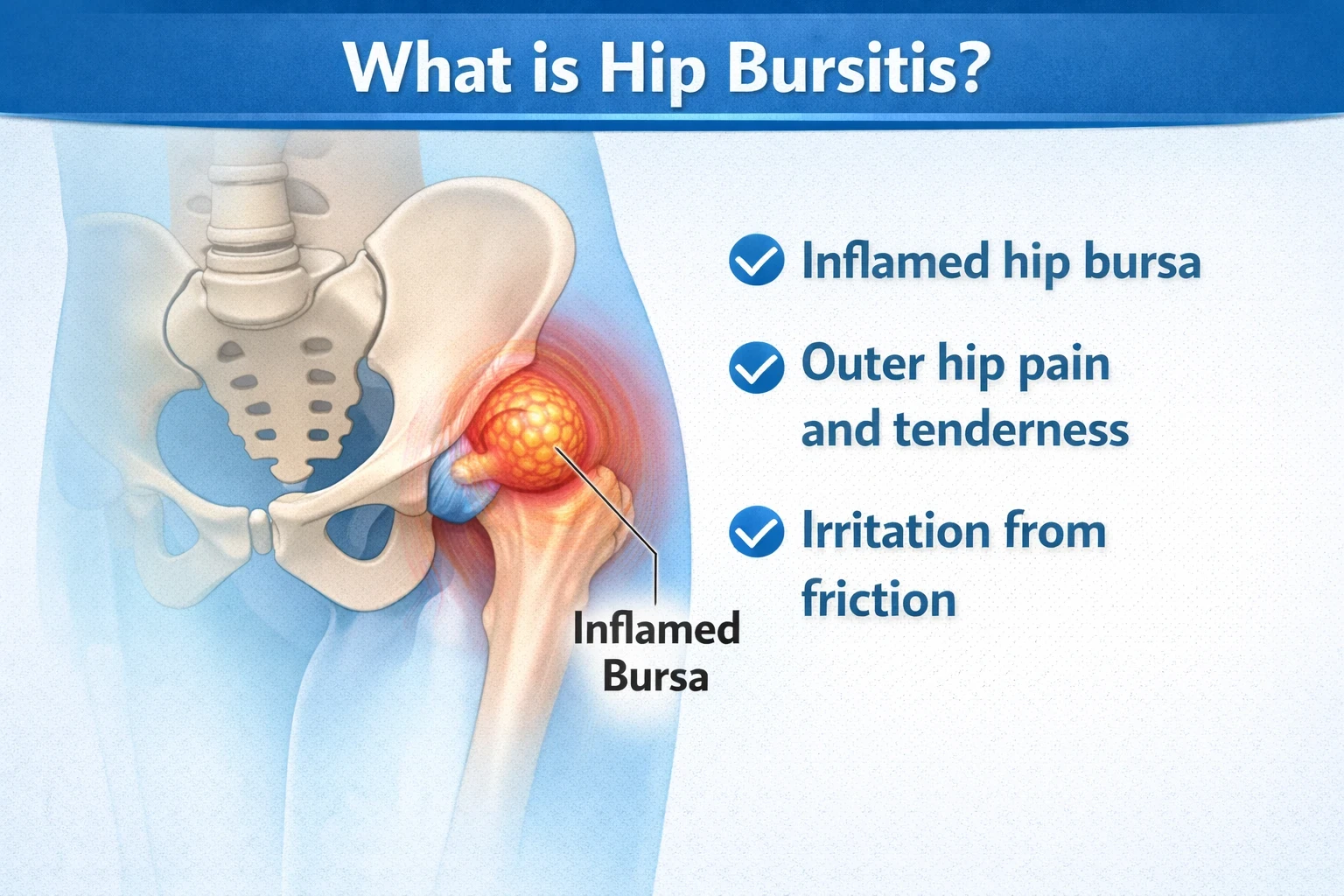
Hip bursitis refers to inflammation of the bursae around the hip joint.
These small sacs normally allow muscles and tendons to glide smoothly over bone. When irritation develops, friction increases and pain can occur.
The most common form affects the outer hip. This area is called the greater trochanter.
Because many muscles move across this region, repetitive stress can gradually irritate the bursa.
Typical symptoms include:
• Pain on the outer hip
• Tenderness when touching the area
• Pain when lying on one side
• Discomfort when climbing stairs
• Increased pain after long walks
However, symptoms may vary depending on the level of inflammation.
If you want to explore other possible causes of hip discomfort, the article on hip pain causes and treatment explains several related conditions.
Why Hip Bursitis Happens
Understanding the triggers behind hip bursitis is essential when applying hip bursitis pain management strategies.
In many cases, irritation develops slowly over time rather than from a single injury.
Common contributing factors include:
• Repetitive walking or running
• Prolonged pressure on the hip during sleep
• Weak glute muscles
• Tight hip tendons
• Sudden increases in physical activity
• Poor movement mechanics
When muscles around the hip become overloaded, the nervous system may also increase pain sensitivity.
For example, the article on movement load and pain sensitivity explains how increased load can amplify pain signals.
Therefore, managing both inflammation and movement patterns is often important.
Core Hip Bursitis Pain Management Strategies
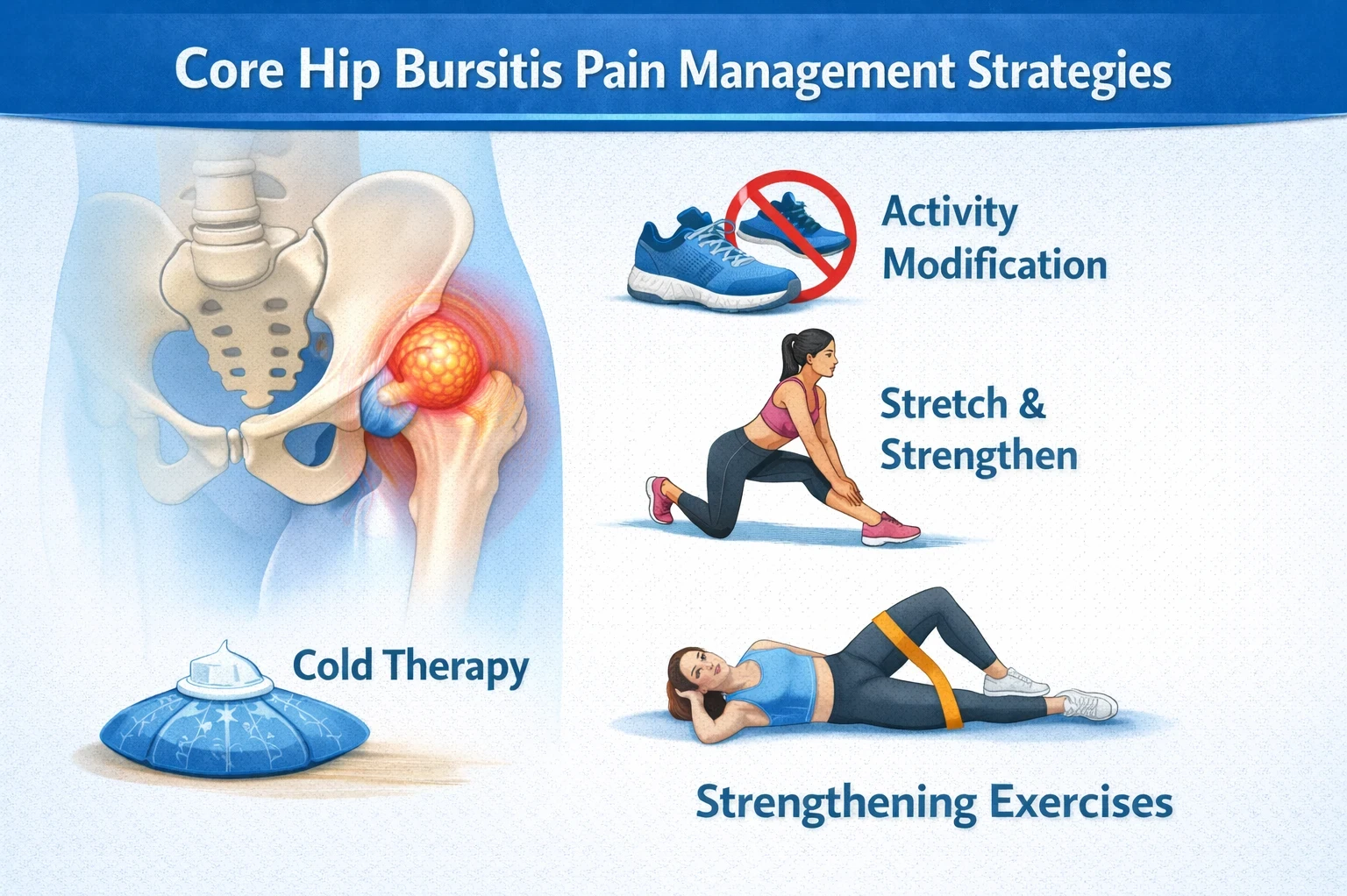
Several hip bursitis pain management strategies focus on reducing irritation while improving joint support.
Activity Modification
Firstly, temporary activity adjustments may help calm inflammation.
This does not mean complete rest. Instead, the goal is to reduce movements that repeatedly irritate the bursa.
Helpful adjustments may include:
• Limiting stair climbing
• Avoiding prolonged standing on one leg
• Reducing high-impact exercise
• Changing sleeping positions
Meanwhile, placing a pillow between the knees during sleep may reduce hip pressure.
Gentle Mobility and Stretching
Secondly, restoring flexibility around the hip can reduce tension on irritated tissues.
Gentle stretching may help maintain movement without aggravating symptoms.
Examples include:
• Hip flexor stretches
• Glute stretches
• Iliotibial band stretches
• Lower back mobility exercises
However, movements should always remain comfortable and controlled.
Strengthening the Hip Muscles
Strengthening exercises are another important part of hip bursitis pain management strategies.
Strong glute muscles help stabilize the hip joint and reduce strain on surrounding tissues.
Common strengthening exercises include:
• Clamshell exercises
• Glute bridges
• Side-lying leg raises
• Standing hip abduction
Over time, stronger stabilizing muscles may reduce pressure on the bursa.
Supportive Treatments That May Help
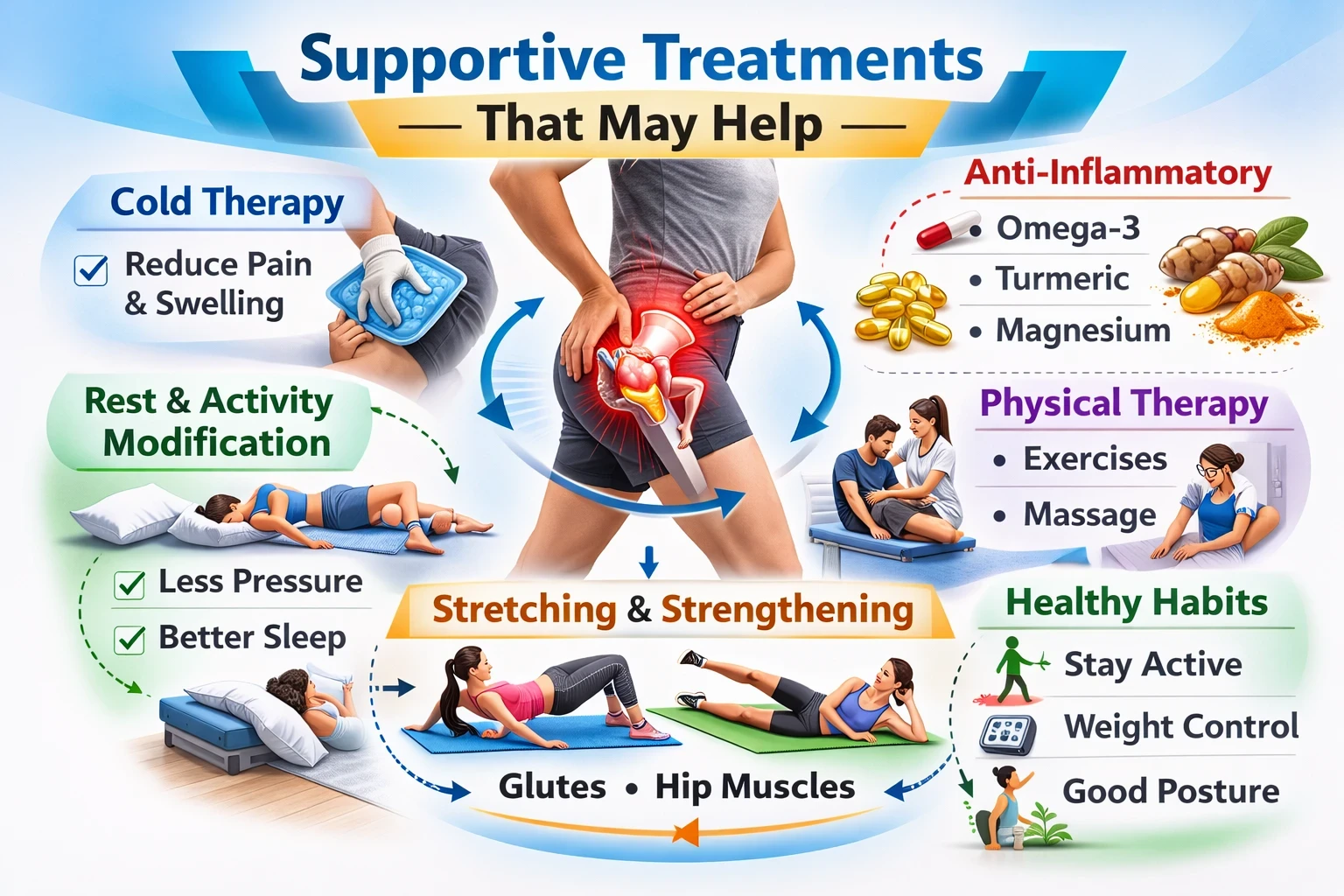
Several supportive approaches are often used alongside core hip bursitis pain management strategies.
Cold Therapy
Cold packs may help calm inflammation during flare-ups.
For example, applying a cold pack for 10–15 minutes after activity may help reduce irritation.
Go to Natural Herbal Packs for more information here.
Anti-Inflammatory Approaches
Some people explore natural anti-inflammatory options to support recovery.
Common options include:
• Omega-3 fatty acids
• Turmeric extracts
• Magnesium support
• Rosehip supplements
Because inflammation plays a role in many pain conditions, the guide to natural pain relief supplements discusses several supportive options.
Go to HerbsPro for Quality Assured pain relief supplements here.
Physical Therapy
Meanwhile, physiotherapy can provide targeted rehabilitation.
A therapist may assess movement patterns, posture, and muscle strength.
Consequently, a tailored exercise plan may reduce hip irritation while improving joint stability.
Secondary Benefits of Managing Hip Bursitis
Effective hip bursitis pain management strategies may provide benefits beyond reducing hip discomfort.
For example, improved hip stability can support overall mobility.
People often report:
• Better walking comfort
• Improved sleep quality
• Reduced stiffness
• Increased activity tolerance
Furthermore, stronger hip muscles can reduce strain on nearby joints such as the knees and lower back.
Safety Considerations
Although many hip bursitis pain management strategies are conservative, certain symptoms should be evaluated by a healthcare professional.
Medical advice may be helpful if:
• Pain becomes severe
• Swelling or redness develops
• Symptoms persist for several weeks
• Hip movement becomes limited
• Fever accompanies hip pain
In some cases, other conditions such as tendon injuries or arthritis may mimic bursitis symptoms.
Therefore, proper evaluation may sometimes be necessary.
Limitations and Individual Differences
Recovery from hip bursitis varies from person to person.
Some individuals improve within weeks. Others require longer rehabilitation.
Several factors influence recovery including:
• Activity level
• Muscle strength
• Previous injuries
• Age and general health
• Movement patterns
Therefore, hip bursitis pain management strategies are usually most effective when tailored to individual needs.
A Balanced Perspective
Hip bursitis can be frustrating, especially when it limits daily movement.
However, many people gradually improve when they apply the variation in strategies daily.
Combining activity adjustments, strengthening exercises, and supportive treatments may reduce irritation over time.
Consequently, patience and gradual progress often play an important role in recovery.
Scientific Studies
https://pubmed.ncbi.nlm.nih.gov/24662872/
https://pubmed.ncbi.nlm.nih.gov/28765214/
https://pubmed.ncbi.nlm.nih.gov/25985244/