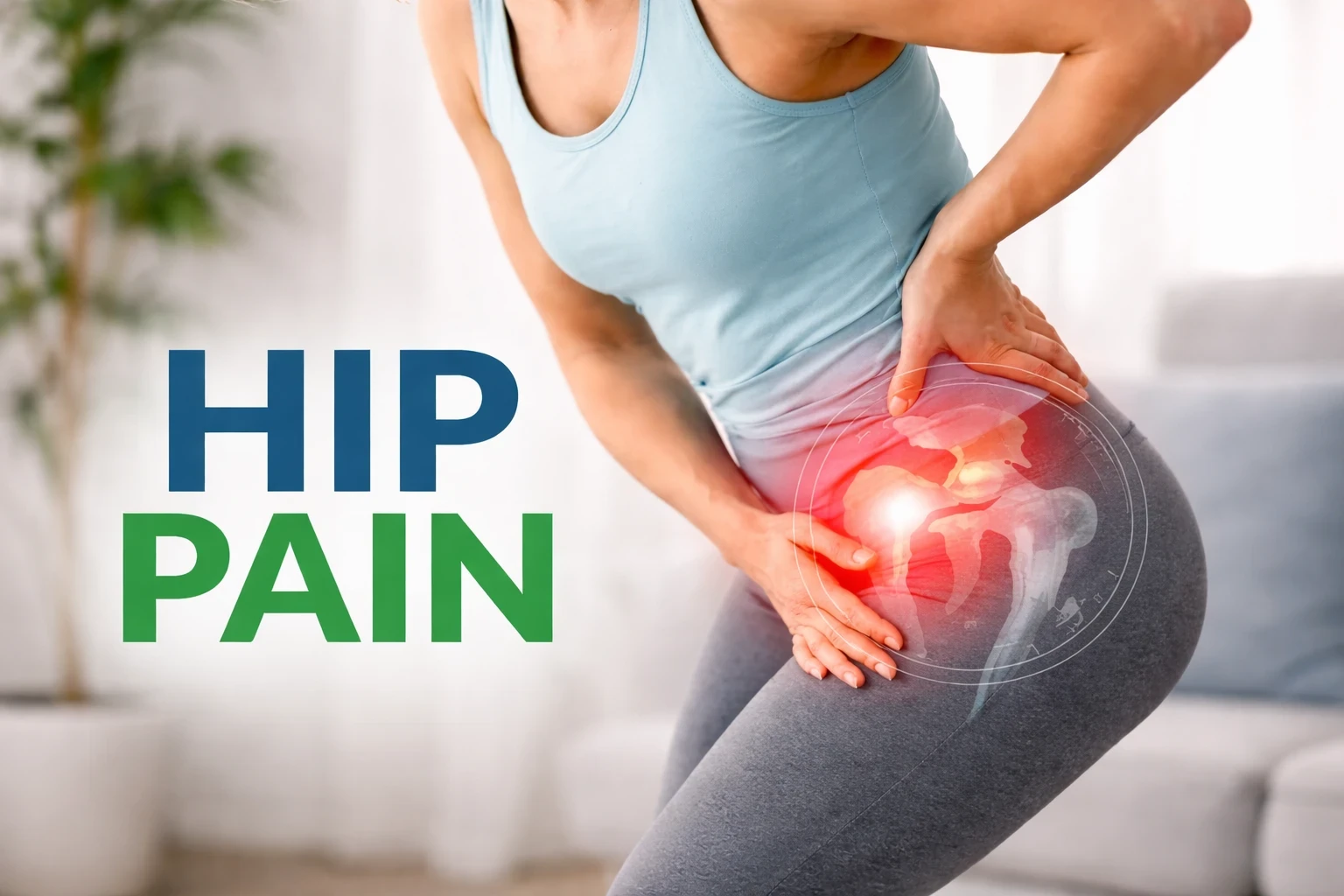
Hip Pain: A Clear, Human Guide To Causes, Relief, And
Hip Pain
Hip pain is one of the most common reasons people struggle with walking, sitting, sleeping, or staying active.
It can appear suddenly after an injury or develop slowly over time without a clear cause.
Understanding hip pain properly helps you respond with calmer, more effective choices instead of fear or over-treatment.
Hip pain is not always a sign of damage.
In many cases, it reflects how joints, muscles, tendons, nerves, and the nervous system interact under load, stress, and daily movement habits.
This pillar guide explains hip pain in a grounded, reassuring way — what it is, why it happens, and what actually helps over time.
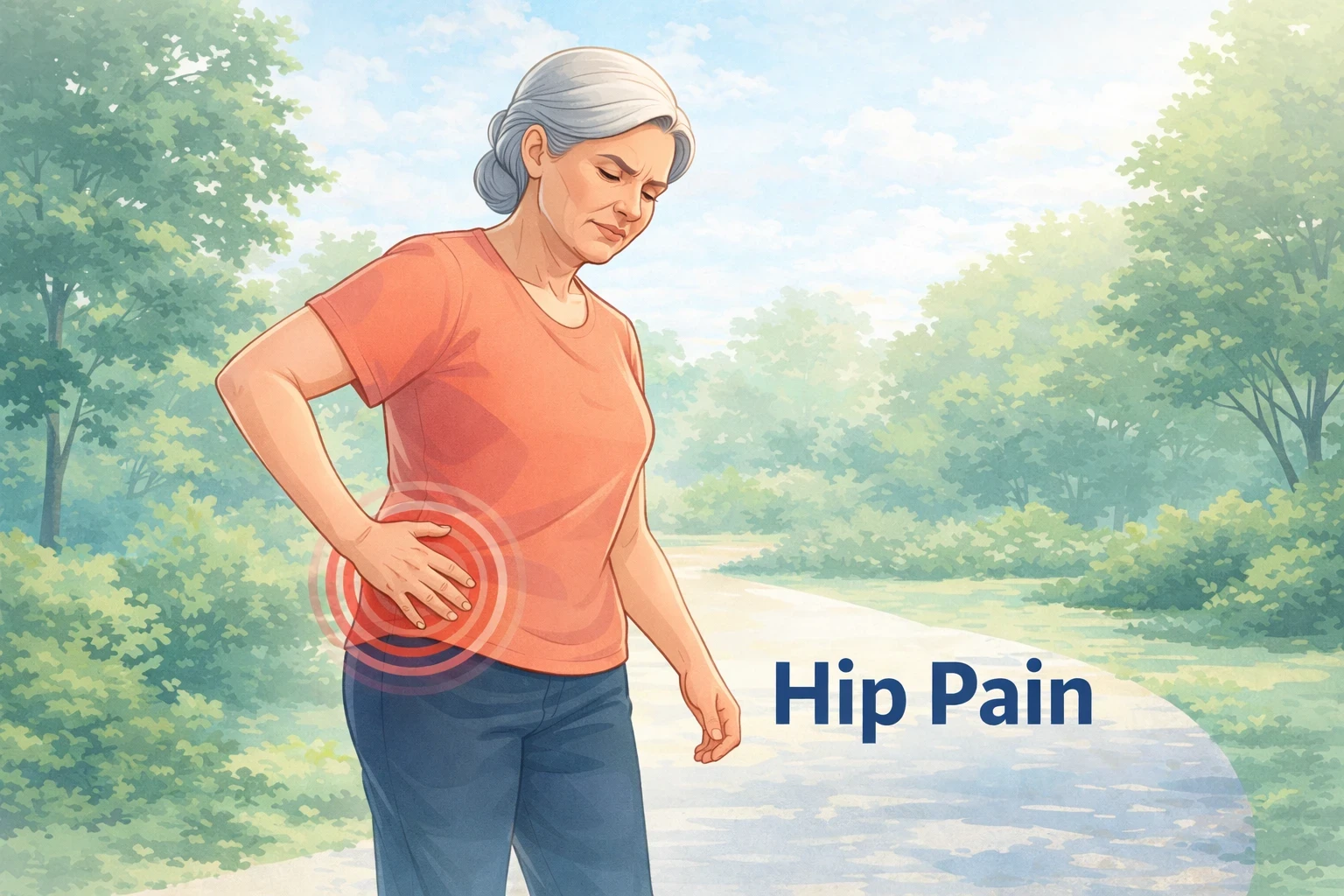
How the Hip Works (and Why It’s Sensitive)
The hip is a deep ball-and-socket joint designed to handle large forces.
It connects your spine to your legs and transfers load with every step, squat, or turn.
Key structures involved in hip pain include:
- The hip joint itself (cartilage and bone surfaces)
- Surrounding muscles (glutes, hip flexors, deep stabilisers)
- Tendons attaching muscles to bone
- Bursae (small fluid-filled cushions)
- Nearby nerves and connective tissue
Because the hip is a major load-bearing joint, even small changes in movement patterns, strength, or sensitivity can lead to discomfort.
Common Types of Hip Pain
Hip pain is often grouped by where it’s felt, which gives clues about contributing factors.
Front of the hip
Often linked with:
- Hip flexor strain or tension
- Joint irritation
- Prolonged sitting or repetitive bending
Side of the hip
Commonly associated with:
- Gluteal tendon sensitivity
- Greater trochanteric pain syndrome (often called bursitis)
- Reduced load tolerance
Back of the hip or buttock
May involve:
- Deep hip muscles
- Referred pain from the lower back
- Nerve sensitivity
Many people experience overlapping patterns, which is completely normal.
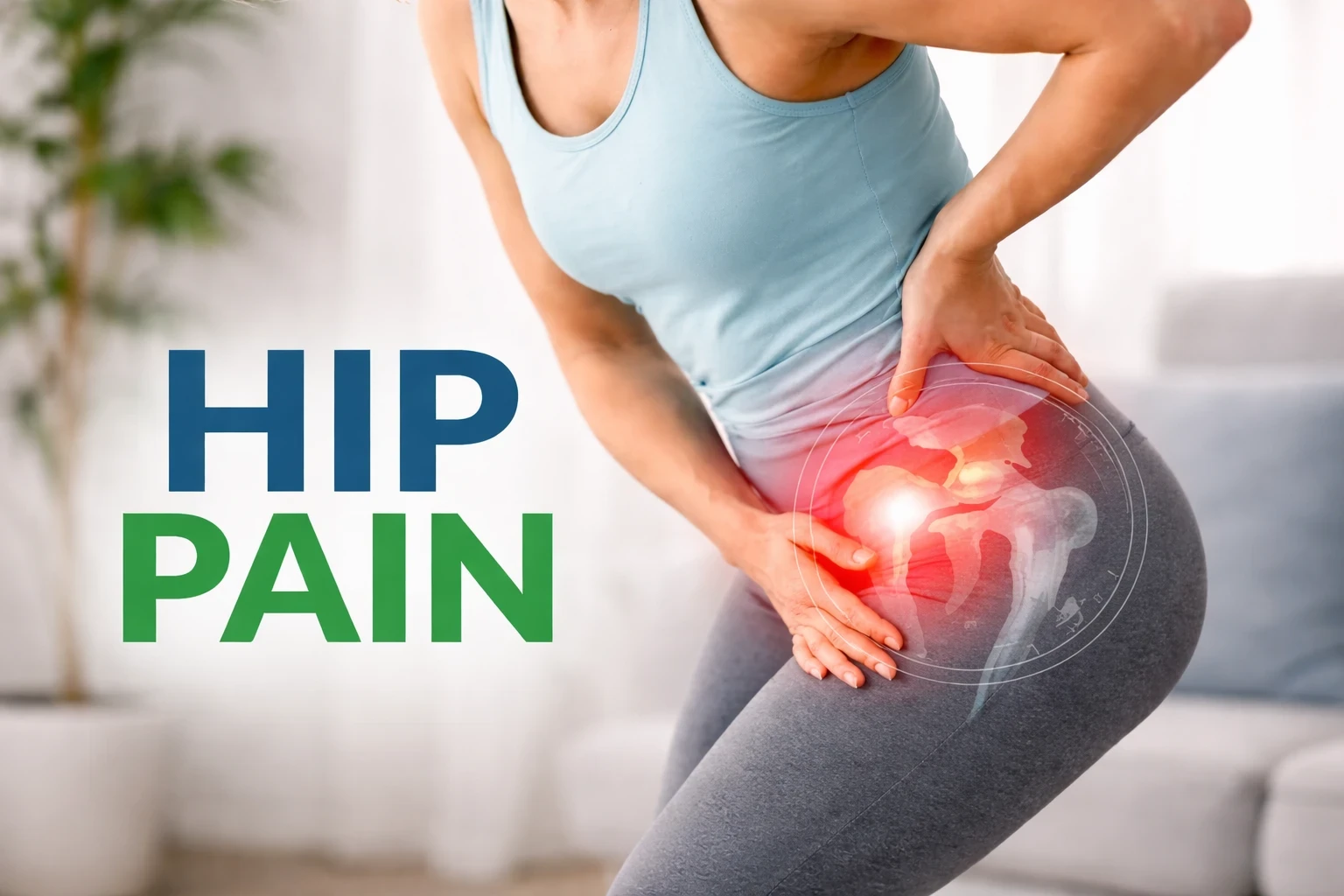
Hip Pain Does Not Always Mean Damage
One of the most important things to understand is that hip pain does not automatically equal structural damage.
Scans frequently show:
- Age-related changes that are not painful
- Findings present in people without symptoms
- Normal joints despite ongoing pain
This is explained in more depth in pain education research and is covered clearly here:
https://beyond-pain-relief.com/why-chronic-pain-occurs/
Pain is influenced by tissue health and the nervous system’s sensitivity — not just what shows up on imaging.
Why Hip Pain Can Become Persistent
The pain may linger when several factors stack together:
- Repeated overload without recovery
- Long periods of reduced movement
- Guarding or altered walking patterns
- Stress, poor sleep, or fear around movement
Over time, the nervous system can become more protective, amplifying signals even after tissues have settled.
Movement, Load, and Hip Pain
Avoiding movement completely often worsens hip pain in the long term. What helps instead is graded, confidence-building movement.
Helpful principles include:
- Starting below your flare threshold
- Using slow, controlled ranges
- Allowing mild discomfort but avoiding sharp pain
- Progressing gradually over weeks
This approach is explained clearly here:
👉 https://beyond-pain-relief.com/movement-load-and-pain-sensitivity/
Movement reassures the nervous system and rebuilds trust in the joint.
Daily Habits That Quietly Influence Pain
Small daily habits can have a big impact on hip comfort:
- Sitting for long periods without breaks
- Low chairs or deep sofas
- Sleeping positions that compress the hip
- Sudden spikes in activity after rest
Improving general ergonomics — especially sitting comfort — can reduce background irritation. This guide is useful for overall support:
👉 https://beyond-pain-relief.com/ergonomic-office-chairs-for-back-pain-relief/
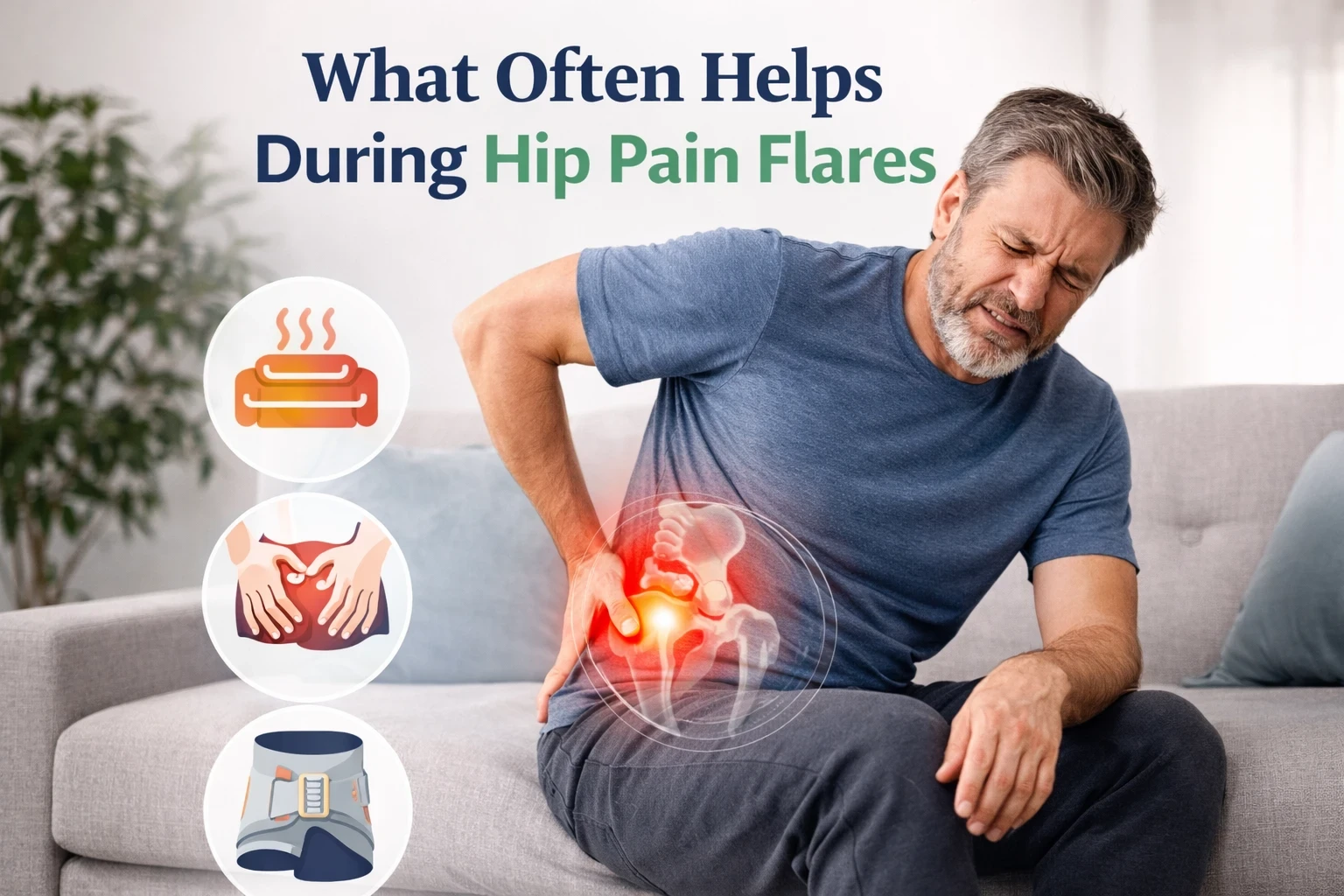
What Often Helps During Hip Pain Flares
During flares, the goal is settling sensitivity, not forcing progress.
Supportive options may include:
- Gentle heat or warmth
- Light self-massage around the hip (not directly on sharp pain)
- Temporary activity reduction (not full rest)
- Supportive seating or sleep positioning
Short-term tools can help — but long-term improvement usually comes from movement confidence, not passive fixes alone.
When to Seek Medical Input
The pain should be checked by a qualified professional if you notice:
- Sudden inability to bear weight
- Significant trauma or falls
- Fever, redness, or unexplained swelling
- Progressive weakness or numbness
Most hip pain, however, is non-dangerous and manageable with education, pacing, and appropriate movement.
Why Hip Pain Sometimes Becomes Chronic
Hip pain does not always settle quickly, especially when movement patterns, inflammation, muscle weakness, and nervous system sensitivity begin affecting each other over time. Some people recover within weeks, while others notice discomfort gradually becoming more persistent and unpredictable.
Long-term hip pain may develop when:
- Movement becomes limited
- Muscles weaken from inactivity
- Inflammation continues irritating tissues
- Walking patterns change
- Poor sleep affects recovery
- Stress increases muscle tension
- Nerves become more sensitive
Persistent discomfort does not always mean severe joint damage is present. In many cases, the body becomes increasingly protective around the hip region, causing stiffness, reduced confidence in movement, and greater pain sensitivity.
Hip Pain and Inflammation
Inflammation plays an important role in many hip conditions. While short-term inflammation helps the body recover from irritation or injury, ongoing inflammation may contribute to stiffness, swelling, and restricted movement.
Inflammation may affect:
- Tendons
- Bursae
- Joint cartilage
- Muscles surrounding the hip
- Nerve sensitivity
People often notice symptoms feel worse after overactivity, poor sleep, long periods sitting, or stressful periods. Gentle movement, pacing activity levels, and improving recovery habits may help calm irritation over time.
Hip Pain vs Sciatica
Hip pain and sciatica are often confused because both conditions may affect the hip, buttock, and upper leg region. However, they are not exactly the same.
True hip-related discomfort often stays closer to the joint itself or groin area, while sciatica usually involves irritation of the sciatic nerve travelling from the lower back down the leg.
Sciatica commonly causes:
- Burning pain
- Tingling
- Sharp shooting sensations
- Numbness
- Pain radiating below the knee
Some people experience both conditions together, particularly when lower back stiffness changes walking mechanics and increases stress through the hips.
Learn more about back pain vs sciatica symptoms and how nerve irritation may affect movement.
Hip Pain at Night
Many people notice hip pain becomes more uncomfortable at night. Sleeping positions, pressure on sensitive tissues, inflammation, and muscle tension may all contribute to worsening symptoms during rest.
Common nighttime triggers include:
- Sleeping on the affected side
- Joint stiffness after inactivity
- Poor mattress support
- Inflammation flare-ups
- Tight muscles around the hips
Some people find relief by placing a pillow between the knees, improving sleeping posture, or using gentle heat before bed.
How Sitting Too Long Can Affect the Hips
Modern lifestyles often involve long periods of sitting, which may increase stiffness and tightness around the hips. Sitting for extended periods can reduce circulation, tighten hip flexor muscles, and place additional pressure on sensitive joints.
People who sit for long hours may experience:
- Hip stiffness when standing
- Pain during walking
- Tight hip flexors
- Reduced mobility
- Lower back tension
Short walking breaks, stretching, and changing sitting positions regularly may help reduce stiffness during the day.
How Stress and Emotions Affect Hip Pain
Stress does not directly damage the hip joint, but it may increase muscle tension, inflammation sensitivity, and nervous system activity. During stressful periods, many people notice symptoms feel sharper, tighter, or more persistent.
Emotional stress may contribute to:
- Poor sleep
- Muscle guarding
- Reduced recovery
- Increased pain sensitivity
- Fatigue
Movement, relaxation strategies, walking, heat therapy, and pacing daily activities may help calm both physical and nervous system tension over time.
Hip Pain in Older Adults
Hip discomfort becomes more common with age because joints, muscles, and connective tissues gradually change over time. However, aging alone is not always the sole reason symptoms develop.
Many older adults remain highly active by focusing on:
- Consistent movement
- Strength exercises
- Balance training
- Walking routines
- Joint-friendly activity
- Managing flare-ups early
Maintaining confidence in movement is often just as important as managing pain itself.
How Movement Helps Support Recovery
Completely avoiding activity may sometimes increase stiffness and weakness around the hips. Gentle movement helps support circulation, flexibility, muscle strength, and confidence in daily activity.
Helpful forms of movement may include:
- Walking
- Swimming
- Cycling
- Stretching
- Mobility exercises
- Chair-based movement
- Light strengthening exercises
Consistency is usually more important than intensity. Small amounts of regular movement often feel more sustainable than occasional aggressive exercise sessions.
Understanding Hip Pain More Clearly
Hip pain is often influenced by multiple overlapping factors including inflammation, posture, movement habits, stress, muscle weakness, nerve irritation, sleep quality, and activity levels. Understanding these contributing factors may help people take a more balanced approach to long-term recovery and mobility.
Rather than relying on complete rest or pushing through severe discomfort, many people improve gradually through consistent movement, pacing, recovery strategies, and supportive therapies that help the body move with greater confidence over time.
A Calm Way Forward
It can feel limiting, but it is rarely a dead end.
With the right understanding, many people regain comfort, confidence, and function — even after months or years of symptoms.
Focus on:
- Learning how pain actually works
- Reducing fear around movement
- Building load gradually
- Supporting your body with sensible daily habits
Scientific Studies
https://pubmed.ncbi.nlm.nih.gov/24765243/
https://pubmed.ncbi.nlm.nih.gov/26676890/