Neck And Shoulder Pain Relief A Practical, Human Guide That Actually Helps
Neck and Shoulder Pain Relief:
Neck and shoulder pain relief is one of the most searched pain topics for a reason.
These areas carry physical load, emotional stress, and long hours of modern life.
Whether pain shows up as stiffness, burning, tightness, headaches, or aching between the shoulder blades, it often feels stubborn and hard to settle.
The good news is that neck and shoulder pain relief rarely depends on a single treatment.
It improves when you understand what is driving the pain and respond consistently, not aggressively.
Neck and shoulder pain is rarely caused by one damaged structure.
In most people, it is a combination of muscle tension, joint sensitivity, nervous system stress, posture habits, sleep position, and workload tolerance.
This is why scans are often normal, yet symptoms persist.
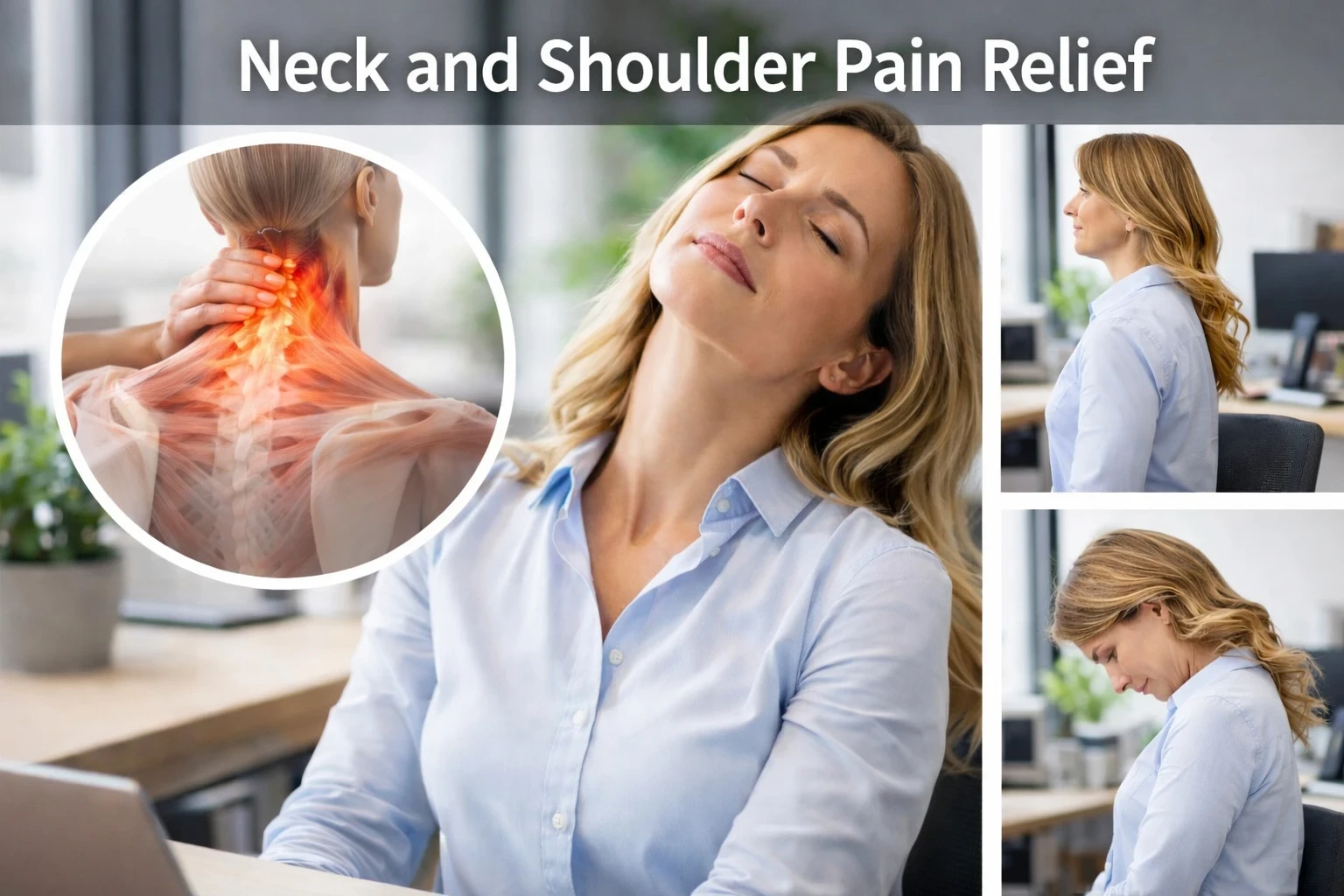
Why neck and shoulder pain becomes persistent
The neck and shoulders are designed for movement, not long periods of stillness.
When these areas stay in one position for hours—working at a desk, scrolling on a phone, driving, or sleeping awkwardly—tissues become sensitive.
Over time, the nervous system can begin to amplify normal signals.
This doesn’t mean the pain is imagined. It means the system is protective.
The body is trying to reduce perceived threat by increasing muscle tension and pain signals.
Learning how pain works is often the first step toward meaningful relief.
A clear explanation of this process is outlined here:
👉 https://beyond-pain-relief.com/what-is-chronic-pain/
Understanding pain reduces fear, and fear reduction alone can ease muscle guarding around the neck and shoulders.
Common patterns people notice
Neck and shoulder pain relief often feels confusing because symptoms vary day to day. Common patterns include:
- Morning stiffness that eases with gentle movement
- Pain that worsens during stressful periods
- Tight shoulders with headaches or jaw tension
- One-sided pain linked to mouse or phone use
- Flare-ups after poor sleep or long drives
These patterns suggest sensitivity rather than structural damage.
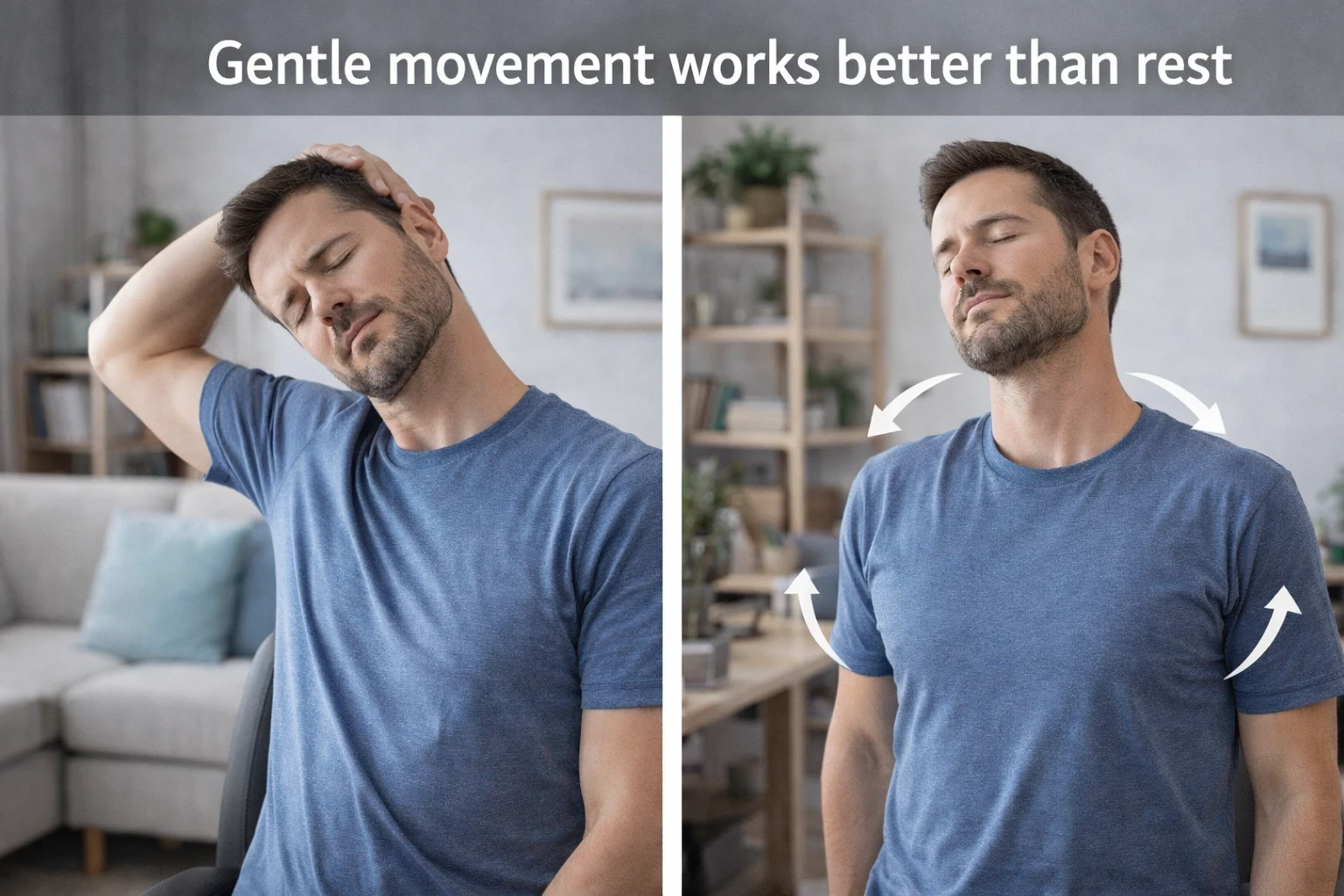
Gentle movement works better than rest
One of the biggest mistakes people make is resting too much. Avoidance can actually reinforce pain.
Gentle, frequent movement helps restore confidence and blood flow.
Helpful movements include:
- Slow neck rotations within comfort
- Shoulder rolls and shrugs
- Scapular retraction (drawing shoulders gently back)
- Light arm swings
- Short movement breaks every 30–45 minutes
Movement should feel safe, not forced. Pain relief improves when the body relearns that motion is not dangerous.
A deeper explanation of how movement load affects pain sensitivity can be found here:
👉 https://beyond-pain-relief.com/movement-load-and-pain-sensitivity/
Posture matters, but not in the way people think
Posture is not about sitting “perfectly.” No posture is safe if held too long. The goal for neck and shoulder pain relief is variety.
Helpful posture habits include:
- Changing positions often
- Supporting the arms to reduce shoulder load
- Keeping screens at eye level when possible
- Avoiding prolonged head-forward positions
Rather than correcting posture rigidly, focus on movement and comfort.
Stress and the neck–shoulder connection
The neck and shoulders respond quickly to emotional stress.
When stress is high, muscles tighten automatically.
This doesn’t mean stress is the cause of pain, but it can increase sensitivity.
Simple nervous-system calming strategies can help:
- Slow nasal breathing
- Longer exhales than inhales
- Short walks outdoors
- Gentle stretching without pushing
These approaches help the nervous system stand down, allowing muscles to relax.
Sleep and recovery considerations
Poor sleep increases pain sensitivity the next day.
For neck and shoulder pain relief, sleep position matters more than pillow brands.
Helpful tips include:
- Keeping the neck neutral rather than bent
- Supporting the arm if sleeping on your side
- Avoiding sleeping with arms overhead
- Adjusting pillows gradually, not abruptly
Sleep does not need to be perfect to support recovery. Small improvements add up.
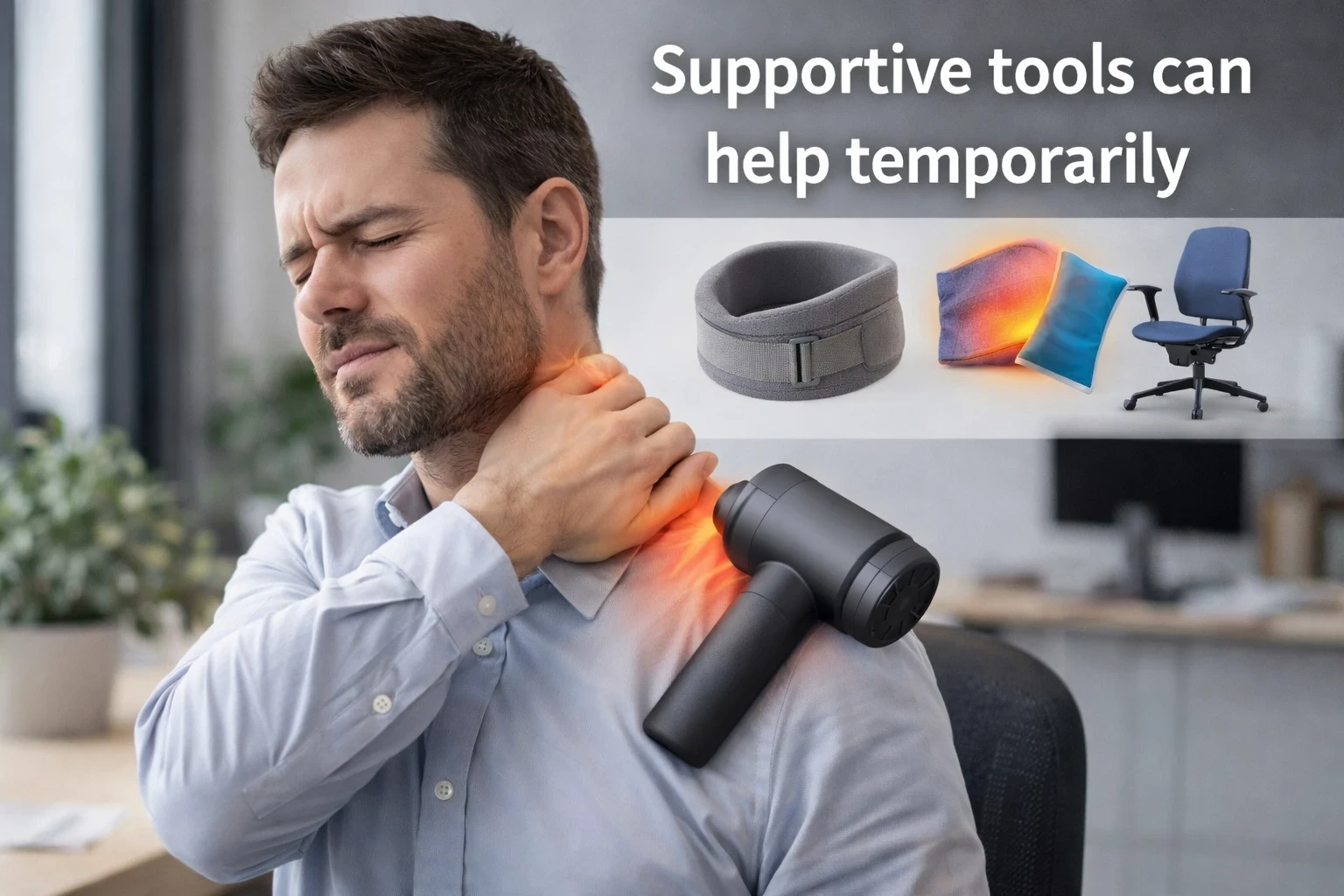
Supportive tools can help temporarily
Tools do not “fix” neck and shoulder pain, but they can support comfort during flares.
Common options people use include:
- Heat packs for muscle tension
- Brief use of soft braces during acute flares
- Ergonomic chairs or arm supports
- Self-massage tools used gently
These should be viewed as support, not solutions.
Long-term relief comes from restoring confidence in movement.
Check out these supports for neck and shoulder pain relief on Amazon here.
What long-term improvement really looks like
Neck and shoulder pain relief rarely happens overnight. Progress often shows up as:
- Shorter flare-ups
- Faster recovery after bad days
- Less fear around movement
- Improved tolerance for work and daily life
This is normal and expected. Pain systems change gradually.
When to seek professional input
If pain is worsening rapidly, associated with unexplained weakness, numbness spreading down the arm, severe trauma, or systemic symptoms, medical assessment is appropriate.
Most persistent neck and shoulder pain, however, improves with education, movement, and consistency.
Scientific reference
👉 https://pubmed.ncbi.nlm.nih.gov/31021627/
This is a very educational and informational article that I am certain applies to a lot of people. One pattern of symptoms that probably suggest sensitivity may be weather-related. A sudden change in temperature seems to cause “stiffness” in the neck and shoulder areas for some people. Is this correct?
Hi Kent,
Wherever in the world that people live damp weather on a continuous level doesn’t help with any kind of pain.
Thank you Fintan
This guide is incredibly practical — neck and shoulder pain can quietly build up from everyday habits like posture, screen time, and stress, not just injuries. I appreciate the focus on simple, human solutions instead of complicated routines. Poor posture and prolonged sitting are some of the most common contributors, so small adjustments can make a big difference over time.
In your experience, which single change tends to give people the fastest relief — posture correction, stretching, or strengthening exercises?
Hi Jenny,
Thank you, a balanced selection of posture correction, stretching and strengthening exercises is best, usually it’s not just one method but rather a combination of all three that works best for pain relief.
All the best,
Fintan