What Is Chronic Pain?
Whst is chronic pain.? Chronic pain affects millions of people worldwide, yet it is still widely misunderstood. Many individuals live with persistent discomfort long after an injury has healed or develop ongoing pain without a clear physical cause.
This can lead to frustration, confusion, and uncertainty about what is actually happening inside the body.
For many years, pain was viewed simply as a signal that tissue damage had occurred. While that explanation works for short-term injuries, it does not fully explain chronic pain.
Modern research shows that persistent pain is far more complex and involves interactions between the body, the brain, and the nervous system.
Understanding Chronic Pain
Understanding chronic pain can help people make better decisions about treatment, movement, and lifestyle strategies.
When individuals learn how pain works, they often feel more confident exploring solutions that support long-term recovery and improved quality of life.
This guide explains what chronic pain is, why it develops, how the nervous system becomes involved, and what current science suggests about managing persistent pain effectively.

What Is Chronic Pain?
Chronic pain is typically defined as pain that lasts longer than three months or continues beyond the expected healing time of an injury.
Unlike acute pain, which serves as a protective warning signal, chronic pain may persist even after tissues have healed.
Persistent pain can affect many parts of the body, including muscles, joints, nerves, and connective tissues.
Some people experience localized discomfort in one area, while others develop widespread sensitivity throughout the body.
Conditions that commonly involve chronic pain include arthritis, nerve injuries, persistent back pain, and conditions such as fibromyalgia pain symptoms, where the nervous system becomes highly sensitive.
Because chronic pain can involve multiple systems in the body, it is now widely recognized as a health condition in its own right rather than just a symptom of another problem.
External research supporting this understanding can be found in studies published through PubMed such as
https://pubmed.ncbi.nlm.nih.gov/34062144/
Why Pain Exists in the First Place
Pain is a protective biological mechanism. The nervous system is designed to detect potential threats to body tissues and send warning signals to the brain.
These signals originate from specialized nerve endings called nociceptors.
When they detect heat, pressure, or inflammation that could damage tissue, they send electrical signals through the spinal cord to the brain.
The brain then evaluates these signals and produces the experience we recognize as pain.
In acute injuries, this system works extremely well.
Pain encourages people to protect the injured area, rest, and avoid further damage while healing takes place.
However, when pain signals remain active for long periods, the nervous system may become increasingly sensitive.
This is one of the key reasons chronic pain can develop.
More information about how the nervous system processes pain signals can be found in research summaries such as
https://www.ncbi.nlm.nih.gov/books/NBK551562/
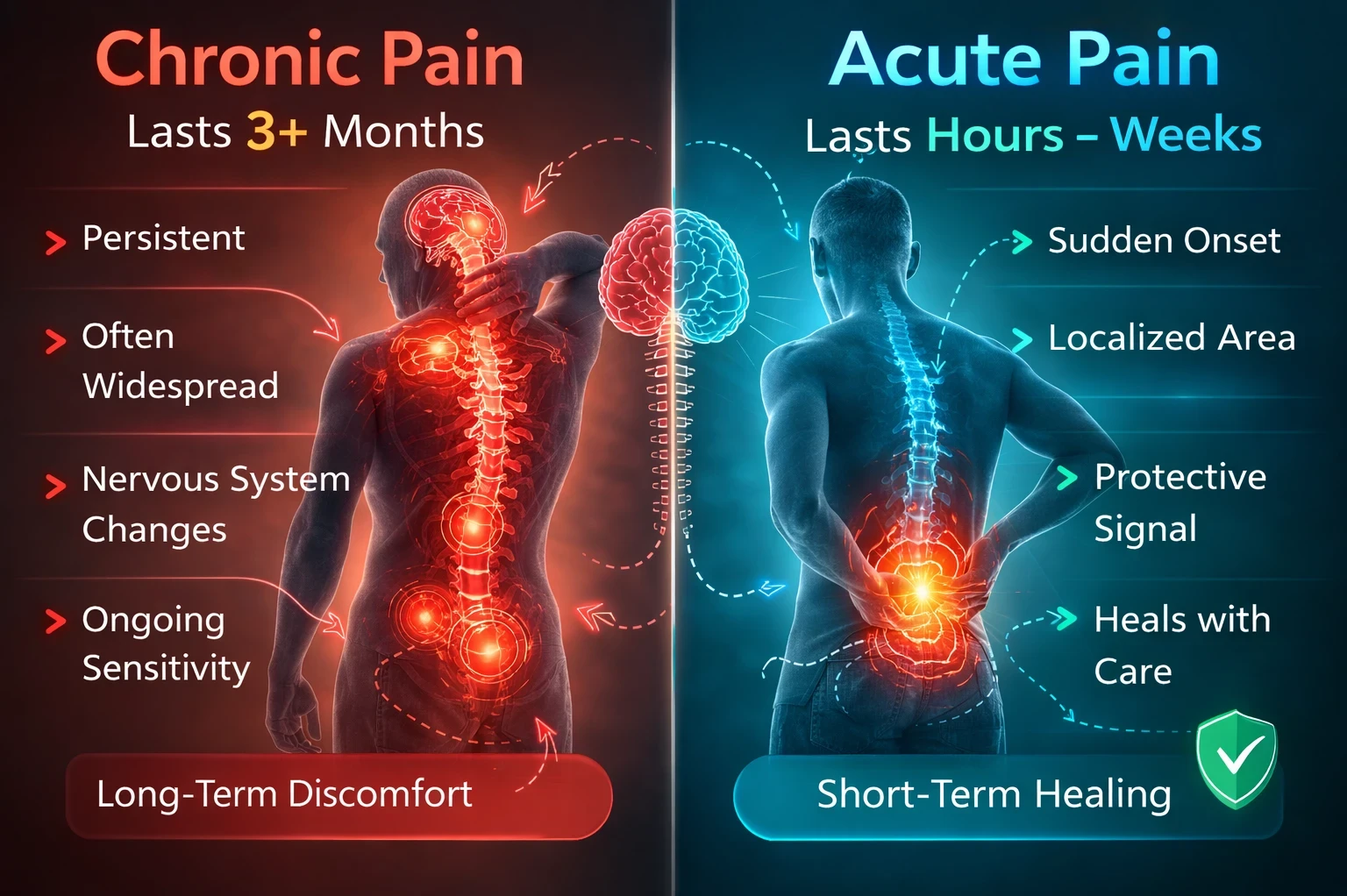
Acute Pain vs Chronic Pain
Understanding the difference between acute and chronic pain is essential.
Acute Pain
Acute pain typically appears suddenly and has a clear cause.
Examples include cuts, sprains, burns, or fractures.
The purpose of acute pain is protective. It signals that something is wrong and encourages rest or avoidance of harmful activities.
As the injury heals, the pain usually decreases and eventually disappears.
Chronic Pain
Chronic pain behaves very differently.
Instead of fading after healing, the pain continues for months or even years.
Sometimes people develop persistent pain without any identifiable injury.
Many people with spinal issues experience this type of persistent discomfort, which is discussed in more detail in chronic back pain treatment.
In chronic pain, the nervous system itself may become more sensitive. Signals that were once mild can start to feel painful.
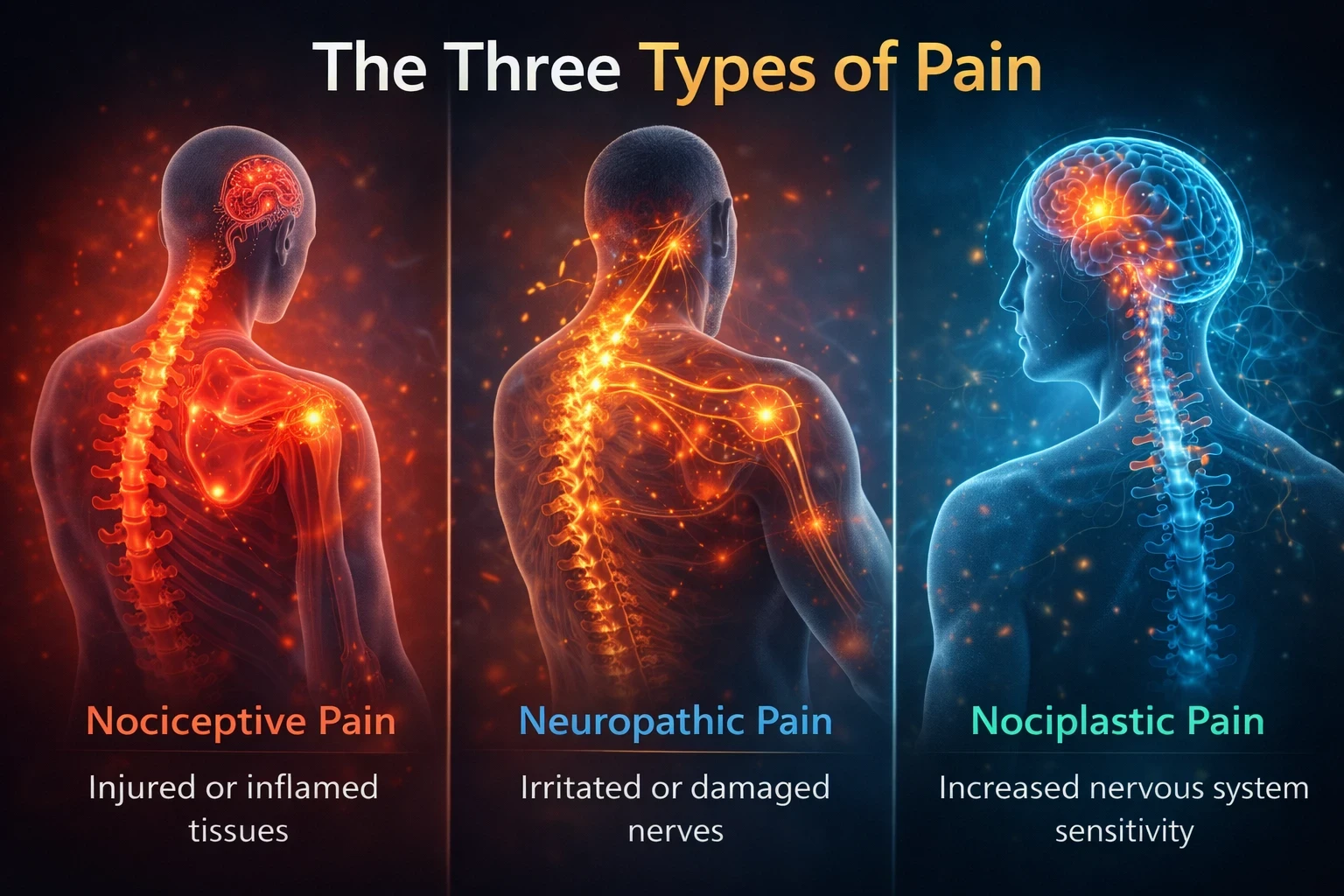
The Three Major Types of Pain
Researchers generally classify pain into three broad categories based on the underlying mechanism.
Nociceptive Pain
Nociceptive pain results from inflammation or tissue damage.
Examples include:
- muscle strains
- ligament injuries
- arthritis
- joint inflammation
Joint pain in areas like the hips can fall into this category and may require targeted treatment strategies such as those explained in hip pain treatment options.
Neuropathic Pain
Neuropathic pain occurs when nerves themselves are injured or irritated.
People often describe neuropathic pain as:
- burning
- stabbing
- electric shocks
- tingling sensations
Sciatica and diabetic neuropathy are common examples.
Nociplastic Pain
Nociplastic pain is a newer concept in pain science.
It occurs when the nervous system becomes overly sensitive and amplifies pain signals even when there is little or no tissue damage.
Fibromyalgia is one of the most well-known examples of nociplastic pain.
Research describing this mechanism can be found in studies such as
https://pmc.ncbi.nlm.nih.gov/articles/PMC7680716/
How the Nervous System Amplifies Pain
Persistent pain often involves changes within the nervous system itself.
This process is sometimes called central sensitization.
When pain signals are repeated over time, the nervous system may become more efficient at transmitting them. The brain begins interpreting signals more quickly and more intensely.
As a result:
- pain signals may become stronger
- normal sensations may feel uncomfortable
- everyday movements may trigger symptoms
This helps explain why chronic pain can continue even after tissues have healed.
Education about how pain works can often help reduce fear and improve confidence when returning to normal activities.
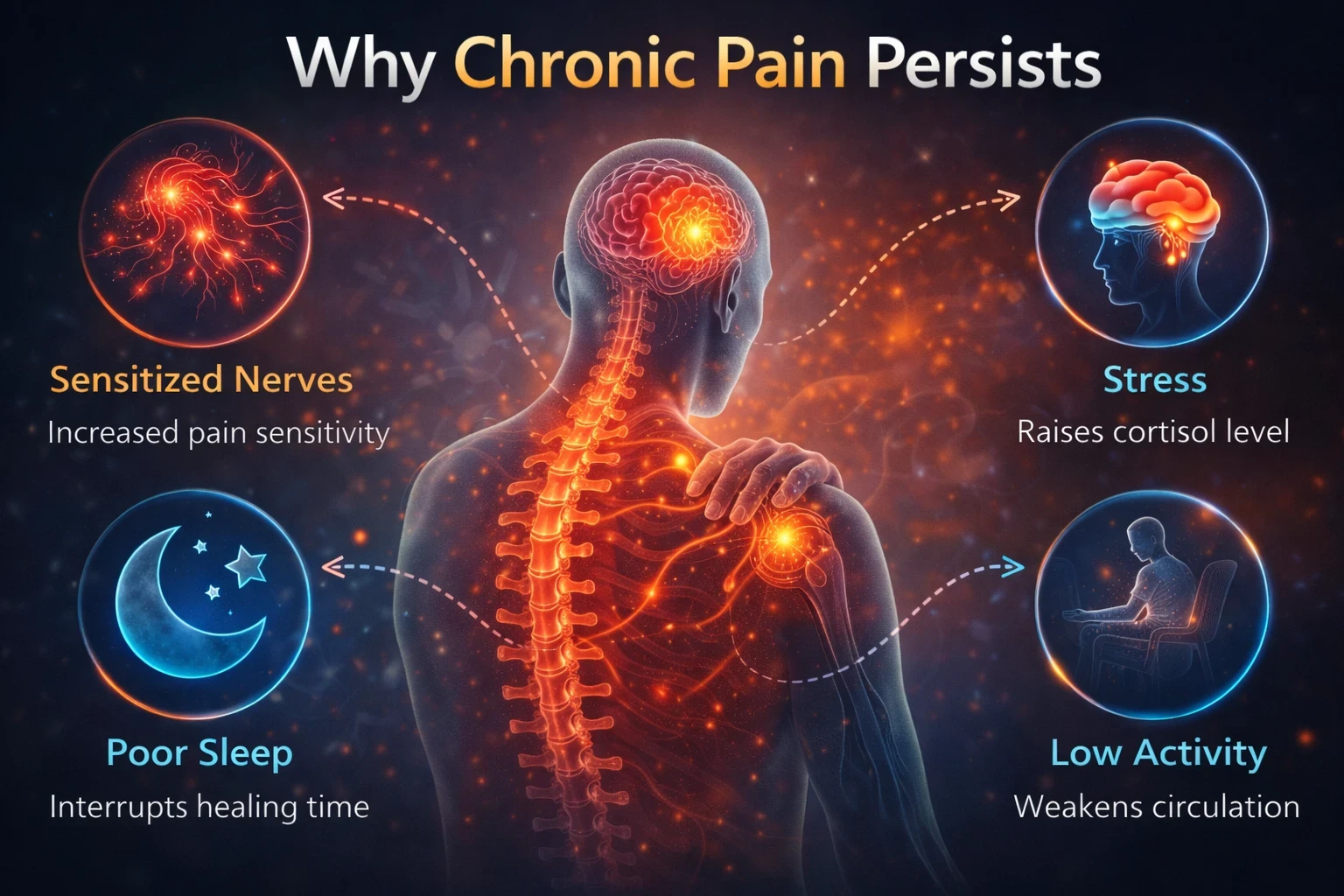
Why Chronic Pain Persists
Chronic pain rarely has a single cause. Instead, it often develops through a combination of interacting factors.
Previous Injury
An injury can trigger changes in the nervous system that persist long after tissues heal.
Inflammation
Low-grade inflammation can maintain ongoing sensitivity in pain pathways.
Stress
Stress hormones influence how the brain interprets sensory signals. High stress levels can increase pain sensitivity.
Sleep Disruption
Poor sleep reduces the body’s ability to regulate pain signals.
Sleep difficulties are particularly common in conditions like fibromyalgia, which are discussed in sleep disturbances in fibromyalgia.
Reduced Movement
Fear of pain can lead people to avoid movement. Over time this can weaken muscles and reduce physical resilience.
Each of these factors can interact, creating a cycle that maintains persistent pain.
The Brain’s Role in Pain
Pain is not produced in injured tissues. It is created by the brain after evaluating signals from the body.
The brain considers many factors when deciding whether to produce pain, including:
- past experiences
- emotional state
- stress levels
- expectations
- environmental context
For example, an athlete may continue playing during a competition despite an injury because the brain prioritizes performance in that moment.
Later, when the context changes, the pain becomes stronger.
This shows that pain is influenced not only by tissue signals but also by how the brain interprets them.

How Chronic Pain Affects Daily Life
Persistent pain can influence many aspects of everyday life.
Physical Function
People with chronic pain may find it difficult to walk long distances, exercise, or perform daily tasks.
Sleep
Pain often interferes with sleep, which can further increase pain sensitivity.
Many individuals living with fibromyalgia struggle with both pain and fatigue, which is explored in how fibromyalgia pain affects daily life.
Work and Productivity
Chronic pain is one of the leading causes of reduced work capacity worldwide.
Emotional Well-Being
Living with persistent pain can lead to frustration, anxiety, and mood changes.
Recognizing these broader effects helps explain why treatment often requires a comprehensive approach.
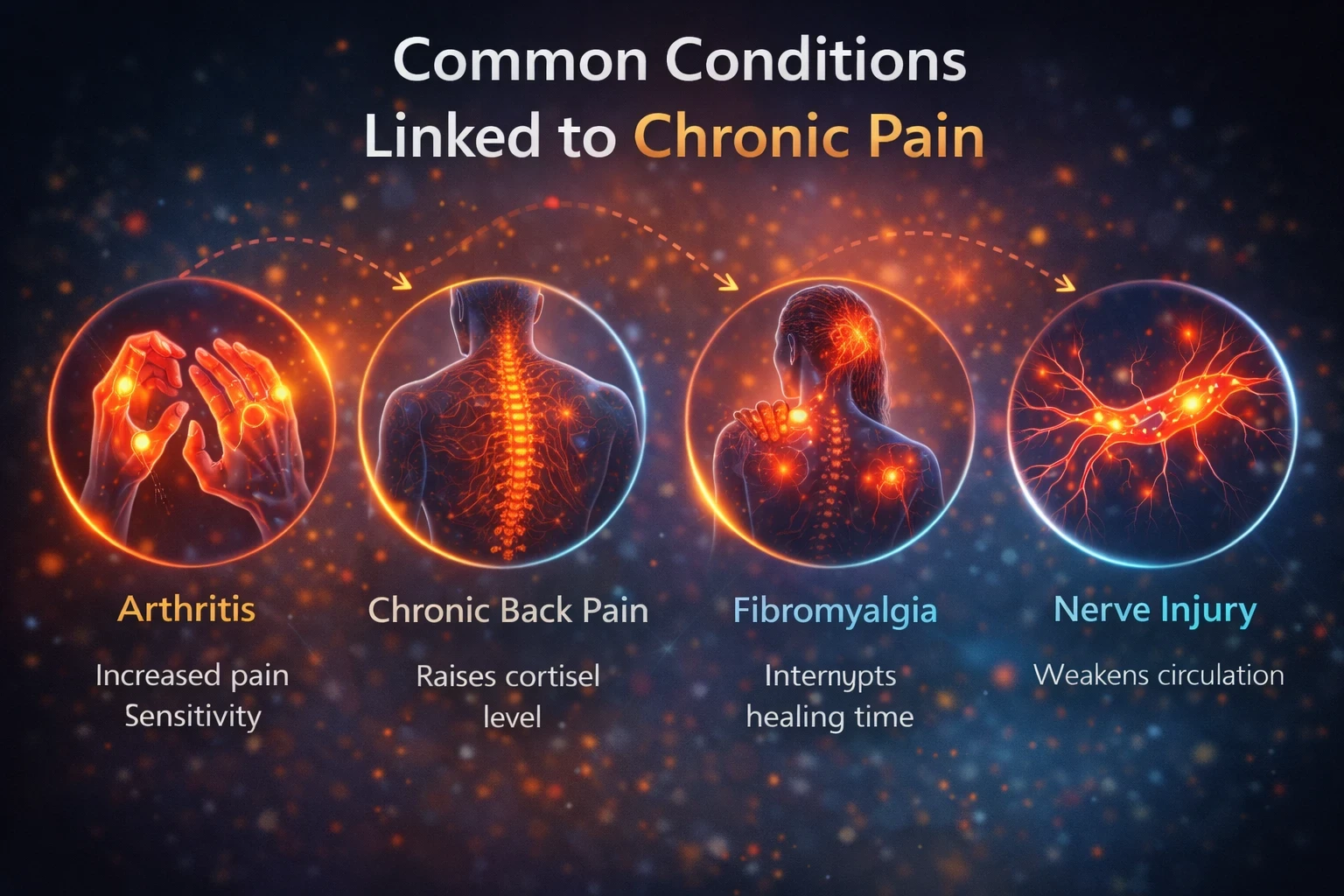
Common Conditions Linked to Chronic Pain
Many health conditions can involve persistent pain.
Examples include:
- arthritis
- fibromyalgia
- chronic back pain
- migraines
- nerve injuries
- bursitis
Hip bursitis is a common source of long-term hip discomfort and is discussed in hip bursitis treatment.
Why Medical Tests Sometimes Show Little Damage
Many people with chronic pain undergo imaging tests such as X-rays or MRI scans. Sometimes these tests show minimal structural damage.
This can be confusing because the pain is still very real.
Research has shown that structural changes do not always correlate with pain levels.
Many people without pain have spinal changes visible on scans, while some individuals with severe pain show little structural damage.
This highlights the importance of understanding how the nervous system processes pain signals.
Effective Approaches to Managing Chronic Pain
Because chronic pain involves multiple systems, treatment usually requires a combination of strategies.
Movement and Exercise
Gradual movement helps retrain the nervous system and improve physical resilience.
Stretching routines can help maintain joint mobility, such as those described in hip bursitis stretching routine.
Physical Therapy
Physiotherapists often focus on restoring movement, improving strength, and reducing nervous system sensitivity.
Stress Management
Relaxation techniques such as breathing exercises and mindfulness may help regulate the nervous system.
Ergonomic Adjustments
Improving posture and work environments can reduce strain on the body.
Many people benefit from ergonomic workstations discussed in ergonomic office chairs for back pain relief.
Supportive Tools
Some individuals also use supportive devices such as braces, heat therapy products, or recovery tools. These options are discussed in affordable back pain relief products that support everyday comfort.

Nutritional Support
Certain individuals explore nutritional approaches to support recovery, including supplements described in natural pain relief supplements.
The Importance of Gradual Progress
Recovery from chronic pain is rarely a straight line.
People often experience periods of improvement followed by temporary flare-ups.
A gradual approach is usually most effective.
Key principles include:
- starting with manageable activities
- increasing activity slowly
- allowing time for recovery
- focusing on consistent progress rather than perfection
This approach helps the nervous system adapt and gradually become less sensitive.
Living Well With Chronic Pain
Although chronic pain can be challenging, many people learn to manage symptoms and regain function.
Education, movement, and supportive healthcare guidance can help individuals build confidence and improve quality of life.
Over time, the nervous system can become less sensitive, allowing people to return to many activities they once avoided.
Key Takeaways
Chronic pain is a complex interaction between the body, brain, and nervous system.
Important points to remember include:
- chronic pain typically lasts longer than three months
- the nervous system can become more sensitive over time
- pain does not always indicate tissue damage
- movement, education, and lifestyle strategies play important roles in recovery
Understanding these principles can help people approach chronic pain with greater clarity and confidence.
External Scientific Studies